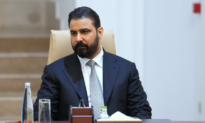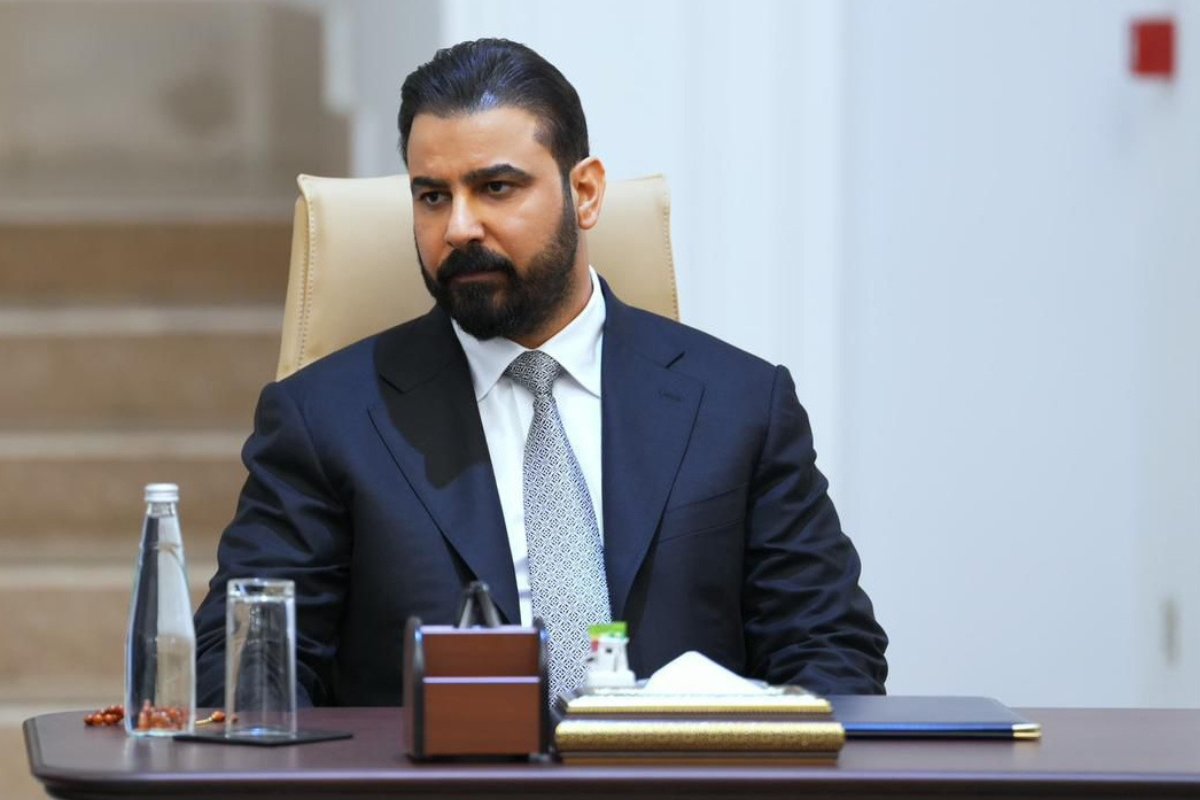
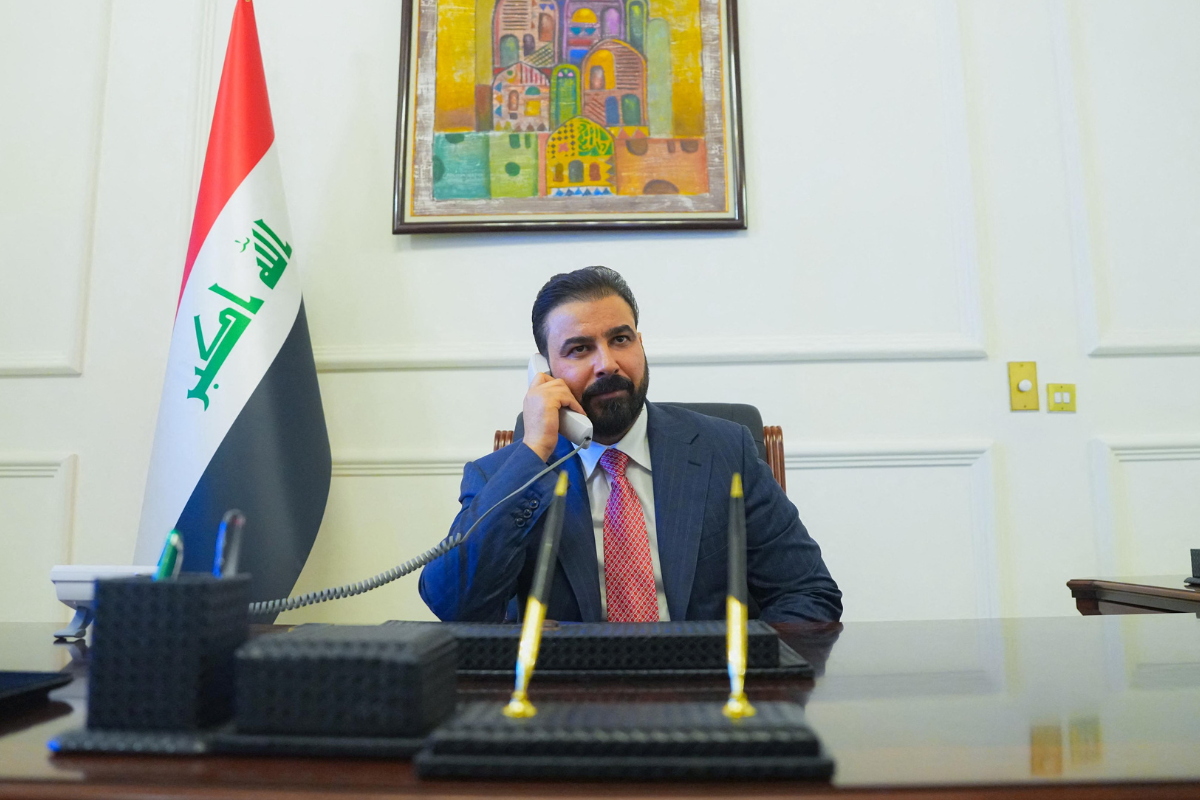
U.S. President Donald Trump on April 30 congratulated Ali Faleh al-Zaidi on his nomination as the next prime minister of Iraq, according to a statement from the Iraqi prime minister’s office.
During the call, Trump invited al-Zaidi to come to Washington for an official visit once the new Iraqi government is formed.
“The call included a review of the strategic bilateral relations between Iraq and the United States, and ways to develop and strengthen them in various fields, as well as the two sides’ emphasis on joint work and bilateral cooperation to consolidate stability in the region,” the statement reads.
Trump also congratulated al-Zaidi for his nomination in a post on Truth Social.
“We wish him success as he works to form a new Government free from terrorism that could deliver a brighter future for Iraq. We look forward to a strong, vibrant, and highly productive new relationship between Iraq and the United States,” Trump wrote on April 30.
“This is the beginning of a tremendous new chapter between our Nations — Prosperity, Stability, and Success like never seen before. Again, Ali, CONGRATULATIONS!”
Iraq’s dominant parliamentary bloc, the Coordination Framework—a coalition of Shiite parties that holds a majority in Iraq’s parliament—nominated al-Zaidi on April 27 after weeks of internal debate among its member parties.
Al-Zaidi is the chairman of Al-Janoob Islamic Bank and has not previously held political office, but emerged as a leading candidate in the final stages of discussions, bolstered by his economic background and business and investment connections.
Following his nomination, he promised to focus on making Iraq “a balanced country, regionally and internationally.”
“This appointment comes at a sensitive time that requires concerted efforts from all political and social forces,” al-Zaidi said.
Under Iraq’s constitution, the incoming prime minister has 30 days to present Cabinet nominations to parliament, which requires 167 votes to secure a vote of confidence.
If approved, al-Zaidi’s government will have to deal with the economic and political fallout from the Iran war, which spilled over into Iraq, while the closure of the Strait of Hormuz has disrupted the oil exports on which the country’s economy depends.
Trump’s Objections to al-Maliki
The call to the prime minister-designate and the Truth Social post signal Trump’s support for al-Zaidi, a businessman and political newcomer, after the U.S. president had previously expressed disapproval of the leading candidate for the role, former Prime Minister Nouri al-Maliki.
Trump wrote in a Jan. 27 post on X that Iraq “might make a very bad choice by reinstalling Nouri al-Maliki as Prime Minister.”
“Last time Maliki was in power, the Country descended into poverty and total chaos. That should not be allowed to happen again,” he said.
Al-Maliki was the prime minister of Iraq between 2006 and 2014.
Trump said that if al-Maliki were returned to power, the United States would no longer help Iraq.
The Coordination Framework had previously said it would back al-Maliki, but decided to shift to al-Zaidi.
During al-Maliki’s previous tenure as Iraq’s prime minister, the country experienced sectarian violence, a power struggle involving the Sunni and Kurdish minorities, and rising tensions with the United States.
His premiership came to a close in 2014 when he stepped down after the ISIS terrorist group seized large parts of Iraq. He has remained an influential figure, serving as vice president of the country twice since then, as well as leading the State of Law Coalition and maintaining ties with Iranian-backed factions in Iraq.
The U.S. administration had previously warned about Iranian influence in Iraq.
U.S. State Department spokesperson Tommy Pigott said in a Jan. 25 statement that Secretary of State Marco Rubio “emphasized that a government controlled by Iran cannot successfully put Iraq’s own interests first, keep Iraq out of regional conflicts, or advance the mutually beneficial partnership between the United States and Iraq.”
Guy Birchall and The Associated Press contributed to this report.
 Friends Read Free
Copy
Facebook
Tweet
Friends Read Free
Copy
Facebook
Tweet