
U.S. President Donald Trump has signed a proclamation to impose universal 50 percent tariffs on imports of some copper products starting Aug. 1.
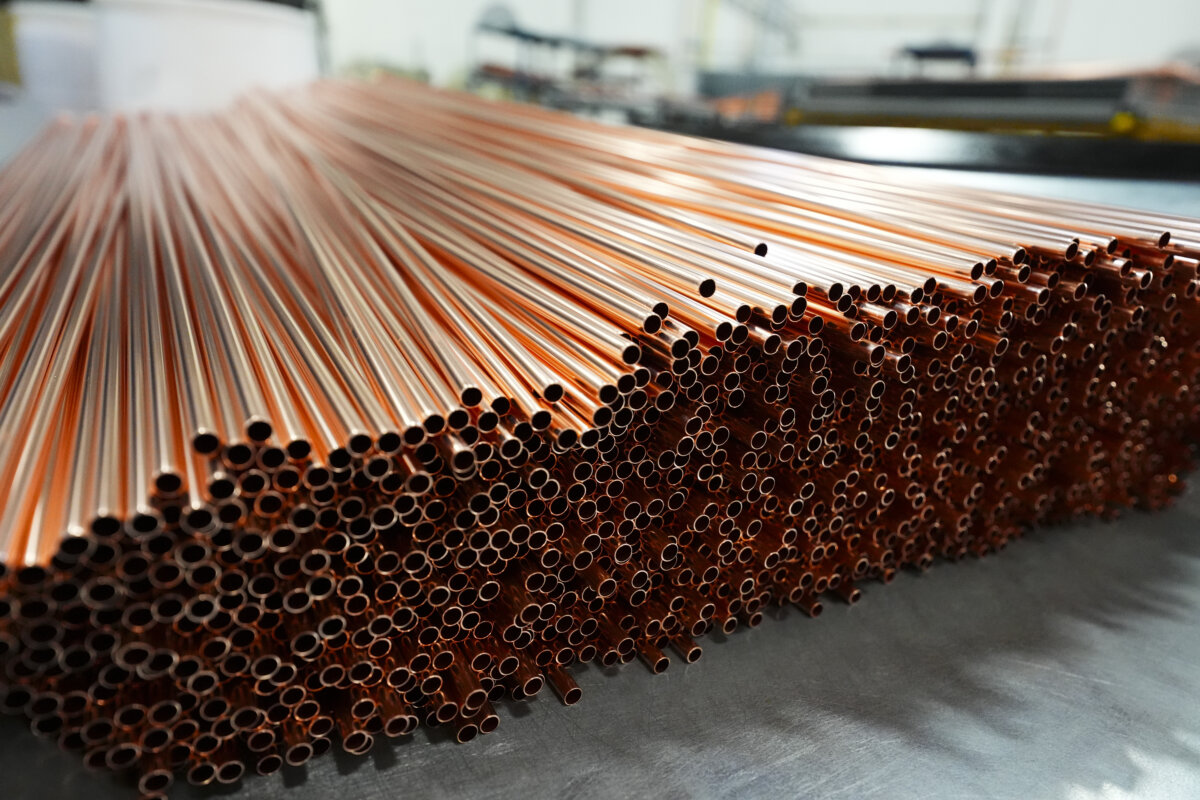
The proclamation signed July 30 imposes a 50 percent tariff on imports of semi-finished copper products, including copper pipes, wires, rods, sheets, and tubes, as well as copper-intensive derivative products, such as pipe fittings, cables, connectors, and electrical components, according to a fact sheet published by the White House.
However, the tariffs will not impact copper input materials such as copper ores, concentrates, mattes, cathodes, and anodes, as well as copper scrap.
Earlier this month when Trump announced his plans to impose a 50 percent tariff on copper imports into the United States, there was concern that the Canadian copper industry could be significantly impacted.
At the time, CEO Pierre Gratton of the Mining Association of Canada told The Epoch Times that the announcement was “very concerning” for Quebec’s copper industry.
Following the news that copper input materials would be excluded from the tariffs, Gratton noted the tariffs do not have much impact on the mining sector at this time.
However, Canadian manufacturers of copper products, such as copper pipes, wires, rods, sheets, and tubes, may be immediately impacted by the 50 percent tariffs taking effect on Aug. 1.
The Epoch Times reached out to Glencore, Canada’s largest mining and critical minerals supplier company, for comment on how the company expects to be affected by the tariffs. A spokesperson said the company is not commenting at this time.
According to Natural Resources Canada, the United States is the largest importer of Canadian copper, accounting for 52 percent of Canada’s copper exports in 2023, followed by China at 17 percent, and Japan at 12 percent. Canada exported $9.4 billion in copper in 2023, which is approximately 1 percent of its $965.1 billion total exports of goods and services.
US Cites National Security Threat
In his proclamation, Trump said the Secretary of Commerce will provide him with an update on the administration’s investigation into domestic copper markets by June 30, 2026, which will include refining capacity and the U.S. market for refined copper.
The president will then decide whether to impose a 15 percent tariff on refined copper, which would begin on Jan. 1, 2027, followed by a 30 percent tariff effective Jan. 1, 2028. He said this was warranted to “ensure that copper imports do not continue to threaten to impair the national security.”
Trump ordered an investigation under Section 232 of the Trade Expansion Act in February to address the threat of copper imports to U.S. national security.
The investigation found that copper is essential to a variety of defence systems, including aircraft, ground vehicles, ships, submarines, missiles, and ammunition, the July 30 statement says, adding that copper is the Department of Defense’s second-most used material.
The fact sheet says the United States has a “massive trade deficit in, and an unsustainable dependence on, many foreign copper products” as a result of foreign competitors’ “predatory practices and excessive environmental regulations.”
These practices and regulations have “undercut the American copper industry and domestic investment in smelting, refining, and fabrication facilities,” the fact sheet adds.
To support the domestic copper industry, the proclamation also requires 25 percent of copper scrap produced in the United States to be sold in the country to support domestic fabricators and secondary refiners.
Additionally, it requires 25 percent of copper input materials produced in the United States to be sold domestically, which it says will “boost U.S. refining capacity by ensuring low-cost inputs while domestic refiners grow their operations.”
Trump’s proclamation of copper tariffs came two days before the deadline to reach a trade deal with Canada by Aug. 1. Trump has threatened to raise tariffs from 25 percent to 35 percent on all products that don’t fall under the United States-Mexico-Canada Agreement.
Paul Rowan Brian and Reuters contributed to this report.
 Friends Read Free
Copy
Facebook
Tweet
Friends Read Free
Copy
Facebook
Tweet