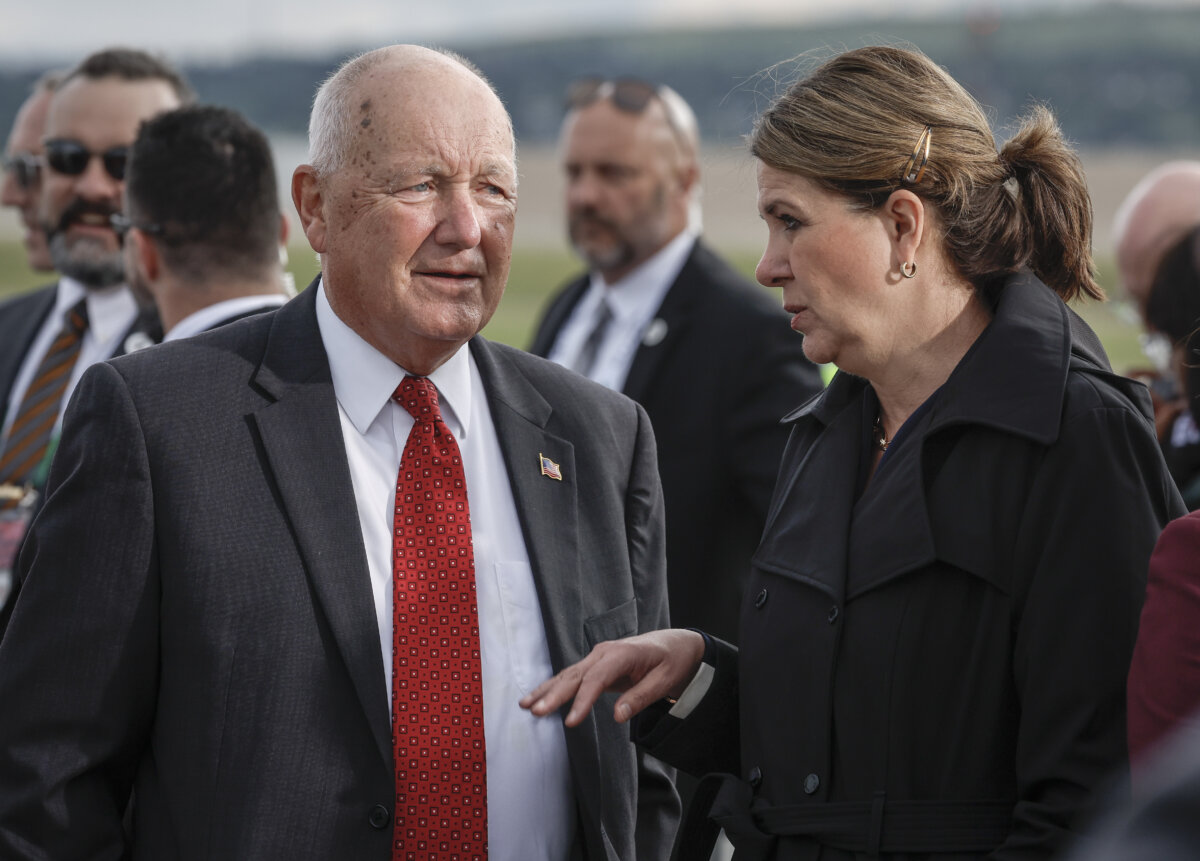

U.S. Ambassador to Canada Pete Hoekstra has commended Alberta Premier Danielle Smith’s approach to trade with the United States, saying she is standing up for her constituents and bringing more prosperity to her province.
Hoekstra made the comments during an interview with Rebel News reporter Ezra Levant released March 29. He said the United States has had a “phenomenal” relationship with Alberta and Smith “recognizes it.”
“She’s putting out the narrative, ‘America’s been a very reliable and positive partner for Alberta, and we think that’s a great relationship, and we should continue that relationship and grow it,’” Hoekstra said.
“It’s a very interesting approach to the Trump administration: ‘here’s why we’re really, really good and why you should consider us moving forward.’”
Hoekstra said from the perspective of the United States, Smith has a “pretty good” approach to the U.S. trade team and to U.S. President Donald Trump. He said this is how Ottawa should approach negotiations with the Trump administration as well.
Levant said Smith has been called a “traitor” for having a “constructive rapport” with the United States, instead of a more retaliatory approach to the U.S. president.
“My view on this is Danielle Smith is standing up for her constituents,” Hoekstra said. “She’s going to bring more wealth, more jobs, and more prosperity to Alberta.”
While Smith supported the Trudeau government’s counter-measures to Trump’s first wave of tariffs, she later supported Carney’s decision to lift counter-tariffs last September, saying she believes in “strong, consistent diplomacy” to solve trade issues.
She noted Alberta’s “diplomatic strategy has directly contributed to the vast majority of Alberta exports remaining tariff-free,” and has urged the federal government to continue negotiating with the United States to resolve remaining tariff issues and restore free trade between the two countries.
When it comes to oil, Hoekstra said Smith—and Alberta premiers before her—have positioned the province to be a “preferred supplier” to the United States.
He said that while the United States has alternative sources of oil, such as Venezuela, the United States “loves doing business with Alberta” and is eager for Canada to deliver more oil to the United States.
Alberta Pipeline Through US
Hoekstra also noted that the United States would be “very open” to discussions with Alberta on a potential pipeline travelling through the United States to the West Coast to bring oil to Asia, if the B.C. government will not allow the pipeline to go through its province.
“If Alberta wanted us to build a pipeline to the West Coast… I would think that we’d be very open to having that discussion,” Hoekstra said.
Alberta signed a memorandum of understanding (MOU) with Ottawa last November, establishing a framework to explore the development of one or more privately financed oil pipelines to Canada’s West Coast, potentially capable of transporting roughly one million barrels of Alberta bitumen per day to Asian markets.
The potential pipeline has faced pushback from B.C. Premier David Eby, who said it is “not a real project” since it has not yet secured a private proponent. He has also maintained that he is opposed to any partial or full lifting of the oil tanker ban on B.C.’s northwest coast. A potential lifting of the ban is part of the MOU, which would allow oil to be shipped to Asia via tankers off the West Coast.
The project has also been criticized by some B.C. First Nations, who have said a pipeline to B.C.’s northern coast would “never happen” and have criticized Ottawa for negotiating with Alberta without involving First Nations. B.C. First Nations have also cited concerns about a lack of technology to clean up oil spills on B.C.’s northwest coast.
Prime Minister Mark Carney and Smith had said in late January they were open to exploring alternate pipeline routes other than to B.C.’s northwest coast, but did not mention a potential route through the United States.
Hoekstra said the United States wants more oil, and building a pipeline to the West Coast would be an “economic decision” for the United States. He noted the return on shipping high volumes of oil to Asia every day would bring billions of dollars back to Canada. “We like a rich Canada. We like a wealthy neighbour,” he said.
His comments come after U.S. Treasury Secretary Scott Bessent said in January that the Canadian government has not permitted Alberta to build an oil pipeline to the Pacific coast, and suggested that “we should let them come down into the U.S.,” describing Alberta as a “natural partner.”
Canada-US Trade Relations
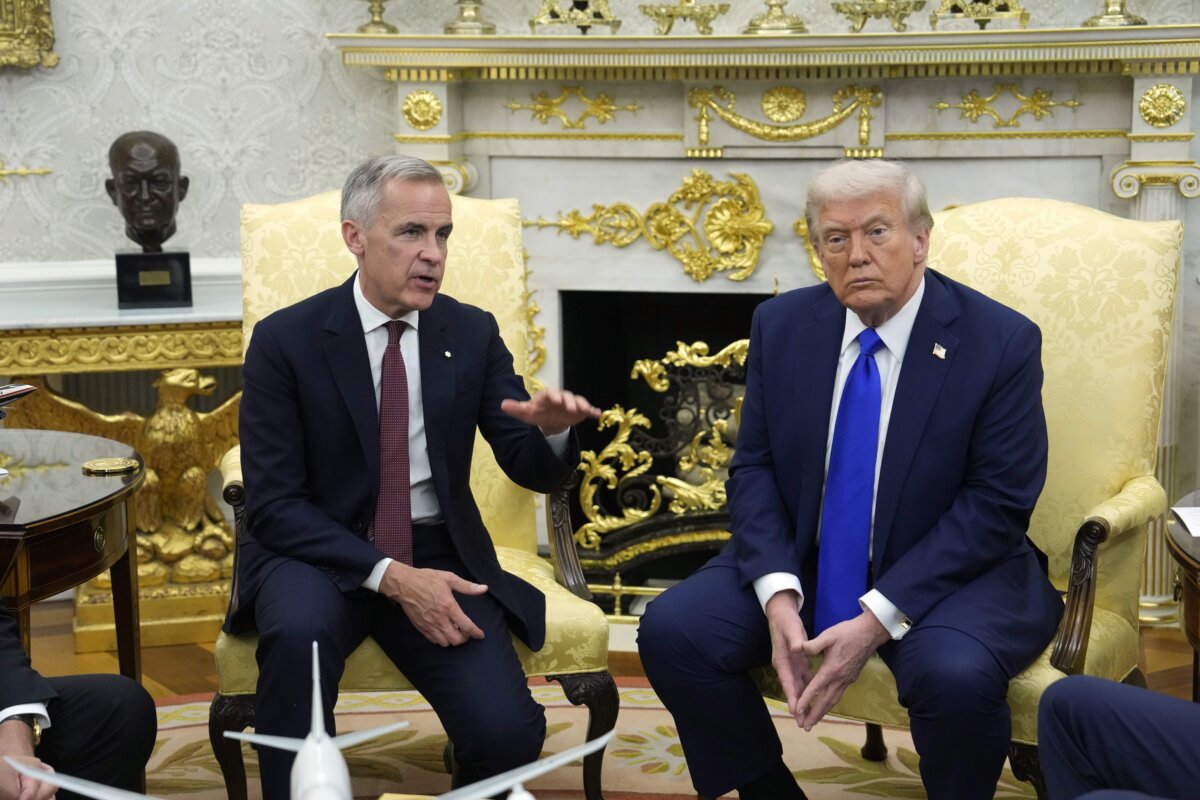
Hoekstra said that although Canada has framed its relationship with the United States as “ruptured,” referencing remarks by Carney at the World Economic Forum in Davos, the United States does not share that view. He said the United States just had “issues” it needed to take care of.
“We said we’ve got to change our approach to trade, and we changed that approach to trade for every single country in the world,” Hoekstra said. Canada has responded U.S. tariffs by diversifying its trade with other countries, including Europe and China, and aiming to double its non-U.S. exports within the next decade.
“In reality, even if they do that, they’re still going to be doing a lot of business with the U.S.,” he added. “A strong Canada is good for the United States, so if you double your exports to other countries, that’s okay, but I don’t know why you can’t do both.”
Hoekstra noted that Ottawa can make “compelling” cases from industry to industry as to why Canada is the best partner for the United States to do business with, adding that the two countries are integrated, have personal relationships between suppliers, and have a shared customer base.
Amid trade disputes with the United States, Carney’s government has sought closer ties with China and others, pledging to double Canada’s non-U.S. exports within the next decade to reduce economic reliance on the United States.
Ottawa signed several agreements with Beijing during Carney’s visit to China in January, including a deal aiming to drive new Chinese investment in Canada’s auto industry. The deal slashed tariffs from 100 percent to 6.1 percent on up to 49,000 Chinese electric vehicles for a year, then the number increases to as many as 70,000 EVs after five years.
Hoekstra said Chinese EVs will not cross the border into the United States, citing security concerns with the Chinese-made technology built into the vehicles, something China experts have also voiced concern about. “We’re not going to open the floodgates to have Chinese cars coming into the U.S. from Canada,” he said.
The U.S. administration has criticized Canada’s move to get closer to China, with Trump saying China “will eat Canada alive,” and U.S. Commerce Secretary Howard Lutnick saying it could jeopardize the upcoming review of the United States-Mexico-Canada Agreement (USMCA), which is set to begin in July.
Despite tense relations between the two countries in recent months, Hoekstra said Canada and the United States cooperate closely on defence and business, which he called the “two pillars” of Canada-U.S. relations. Defence Minister David McGuinty has also said Canada and the United States continue to cooperate on defence, security, and intelligence, and are “in lockstep on so many fronts.”
Noé Chartier contributed to this report.
 Friends Read Free
Copy
Facebook
Tweet
Friends Read Free
Copy
Facebook
Tweet