
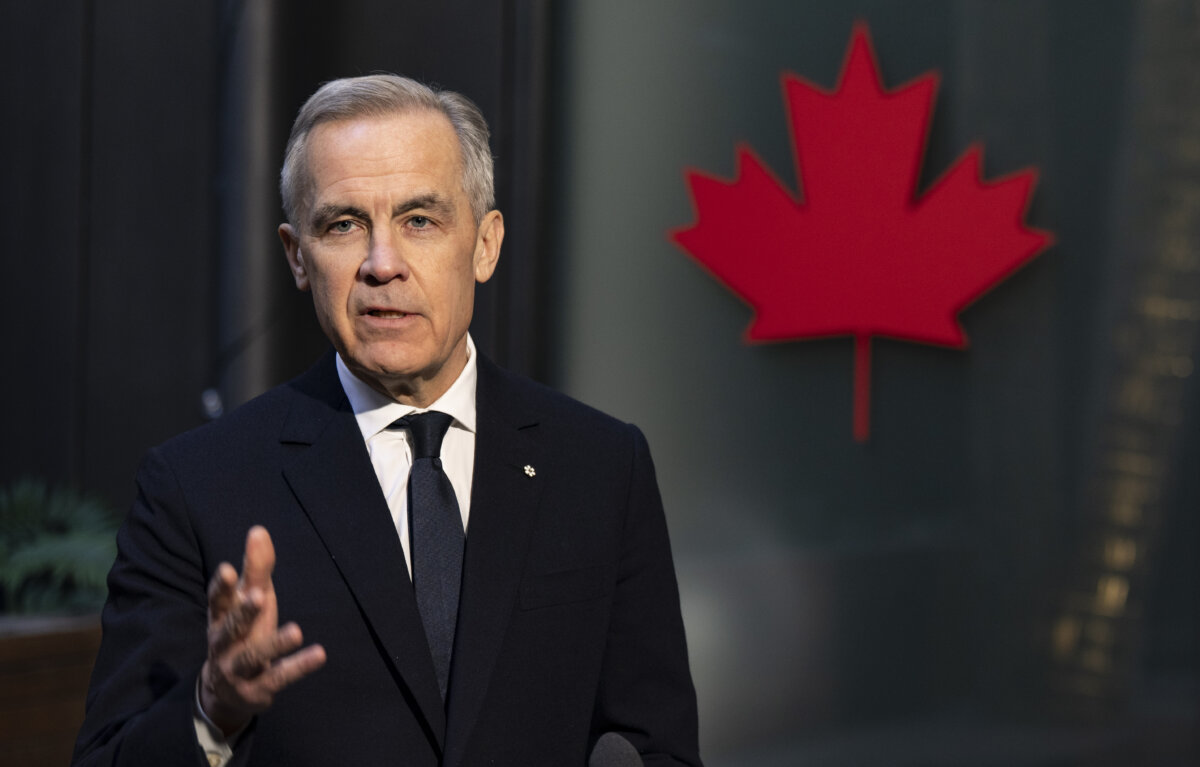
Prime Minister Mark Carney says Canadian oil will remain competitive on the U.S. and world markets in the wake of the ouster of Venezuelan leader Nicolás Maduro.
Carney told reporters the federal government is taking “measures” to ensure the continued growth of Canada’s oil exports such as signing the recent memorandum of understanding (MOU) with Alberta, which proposes building one or more pipelines from Alberta to the B.C. coast.
“We welcome the prospect of greater prosperity in Venezuela, but we also see the competitiveness of Canadian oil, and we’re investing or we’re putting in place measures so that that’s going to happen,” Carney said at a Jan. 6 press conference in Paris on the sidelines of a meeting of the “Coalition of the Willing” to discuss a Ukraine peace deal.
“We’ve been diversifying our markets, and that’s one of the reasons why we signed the comprehensive MOU with Alberta. So we’ll be working towards that,” Carney added.
Maduro was captured by U.S. forces in a Jan. 3 operation in Caracas and taken to New York, where he made his first court appearance Jan. 5 on various charges including narco-terrorism. Venezuela’s Vice-President Delcy Rodríguez, who belongs to the same socialist party as Maduro, was sworn in on Jan. 5.
U.S. President Donald Trump has said that Washington would temporarily run the country while U.S. oil companies move in to rebuild its failing energy infrastructure. He said the U.S. would help facilitate the transfer of power, including the holding of an election, after the country is back on track.
Trump said Jan. 5 that he expects American oil companies to begin operating in Venezuela in about 18 months or possibly “less time.”
Conservative Leader Pierre Poilievre said time is of the essence in expanding Canada’s crude oil export capacity in the wake of Maduro’s removal and that Ottawa should quickly approve a pipeline to the West Coast after receiving a proposal, rather than waiting for the MOU to play out.
“Your Memorandum of Understanding with the Premier of Alberta commits only to referring a potential pipeline to a new federal office for further consideration, meaning years of additional process, delay, and uncertainty,” Poilievre wrote in a Jan. 6 letter to Carney.
“The Official Opposition is calling on your government to approve a new Pacific pipeline within sixty days of receiving Alberta’s proposal.”
The federal government and Alberta signed a MOU on Nov. 27 proposing the construction of one or more pipelines from Alberta to the B.C. coast, in addition to lifting and revisiting the enforcement of various energy regulations. The MOU specifies that a pipeline proposal is to be presented to Ottawa’s Major Projects Office (MPO) by July 1 at the latest for potential fast-track approval within two years.
‘Time Is Running Out’
Trump began floating a plan for American oil companies to help reconstruct Venezuela’s once-thriving oil industry after the Jan. 3 seizure of Maduro. The country’s vast oil reserves are estimated at 303 billion barrels.
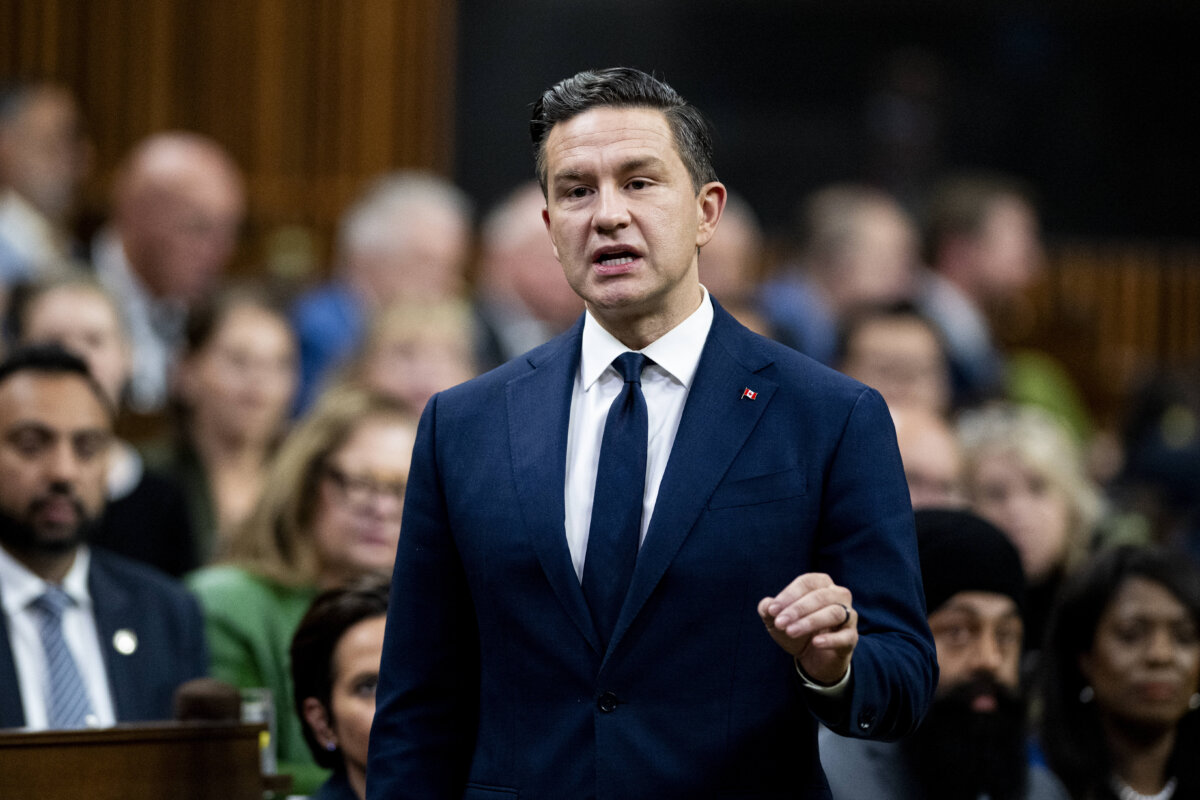
Poilievre said that means Canada needs to act now, and called on Carney move forward by approving a pipeline.
“Venezuela’s re-entry to American markets means time is running out,” Poilievre wrote. “Our sovereignty depends on your government getting out of the way of Canada’s workers, builders, and investors, so we can move again. It’s time for action.”
Poilievre added that the potential removal of U.S. sanctions on Venezuelan oil means the country’s heavy crude oil may be “directly competing” with similar Canadian crude oil.
“Every barrel the United States sources from Venezuela could mean one less barrel these refineries would buy from Canada,” he wrote.
Meanwhile, experts such as executive fellow at the University of Calgary School of Public Policy Richard Masson and Heather Exner-Pirot, director of energy, natural resources, and environment at the Macdonald-Laurier Institute say that Venezuela’s oil is not likely to displace Canadian oil exports anytime soon.
“There’ll be a little bit more Venezuelan crude going to the Gulf Coast. But that doesn’t mean any big deal for Canada, as long as we can find other places to sell our oil, like through Trans Mountain, we can sell more to Asia,” Masson said in a Jan. 5 interview with The Epoch Times. “It’s going to take billions of dollars of investment—tens of billions or hundreds of billions of dollars—and years to see Venezuelan production increase.”
Exner-Pirot said it will likely be a considerable amount of time until Venezuela’s oil industry receives the needed capital investment to become fully operational.
“I don’t think Venezuela will be a particularly attractive destination for a while,” she posted Jan. 3 on X, but added that a potential longer-term return of more Venezuelan oil to the U.S. market is “another reason why we should build a NW BC pipeline to Asian markets in the medium term.”
The political will to build a pipeline from Alberta to the B.C. coast remains uncertain. Liberal MPs, along with the Bloc Québécois, NDP, and Green Party voted against a recent Tory motion asking MPs to state if they support an oil pipeline from Alberta to the B.C. coast in line with the proposal in the MOU. The motion was defeated in the House of Commons on Dec. 9 with 139 in favour and 196 opposed.
 Friends Read Free
Copy
Facebook
Tweet
Friends Read Free
Copy
Facebook
Tweet