
News Analysis
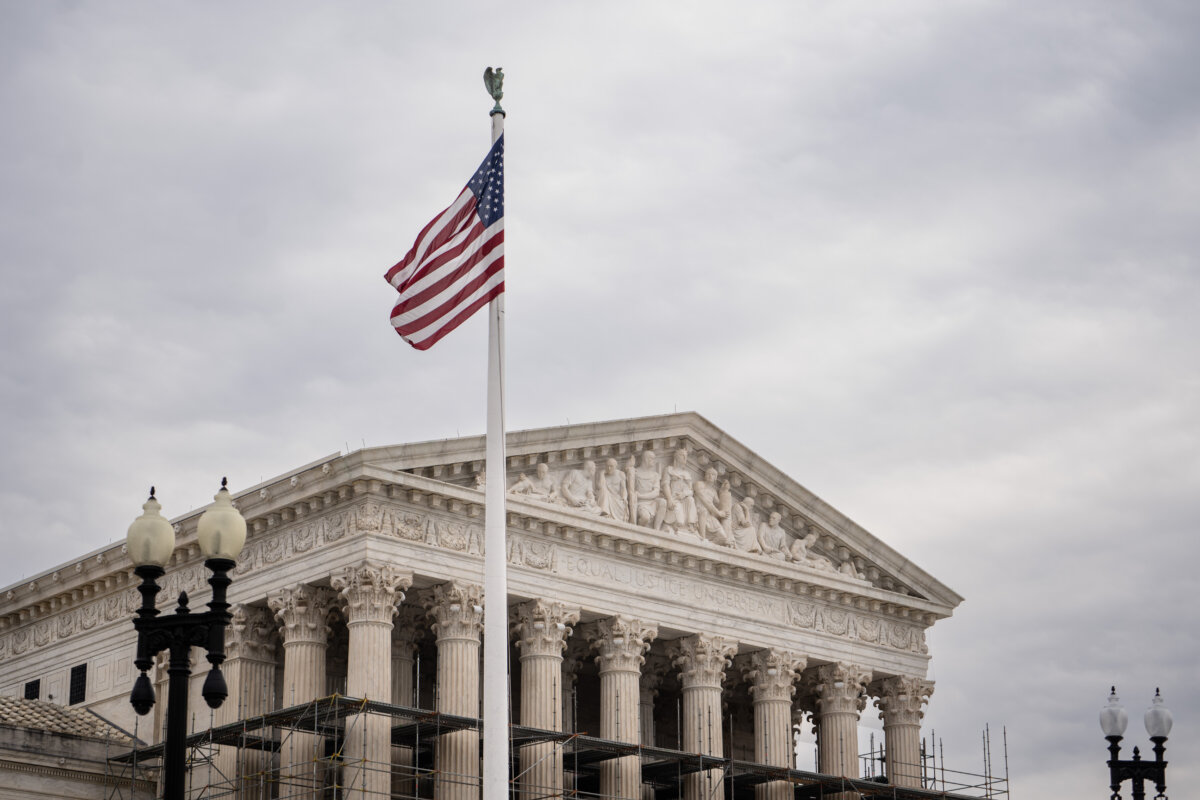
Ottawa, Washington, and the world are eagerly awaiting the U.S. Supreme Court’s ruling on some of U.S. President Donald Trump’s tariffs.
Tariffs have been among the key measures Trump has used to reshape U.S. international relations since his second election, often wielding them, or the threat of them, for trade leverage or broader geopolitical aims.
Lower U.S. courts have ruled that some of Trump’s tariffs have been imposed outside the scope of his authority, but they have remained in place as the Supreme Court studies the case.
Given the importance and ramifications of the case, the top court has been reviewing the matter on an expedited basis and a ruling could be coming as soon as Jan. 9.
The Supreme Court has set Friday as a day on which opinions may be rendered, although the judicial body never announces beforehand on which cases it will rule.
“The Court will convene for a public non-argument session in the Courtroom at 10 a.m.,” says a notice on the Supreme Court website. “The Court may announce opinions.”
The Supreme Court heard arguments from each side in November. The businesses and states that have launched the legal challenge argue that the president can’t impose the tariffs without congressional approval. The Justice Department has argued that Trump has used tariffs as a tool of foreign affairs, which fall within his remit.
At issue are tariffs imposed under the International Emergency Economic Powers Act (IEEPA) of 1977. This act allows the president to regulate international trade in the context of an emergency.
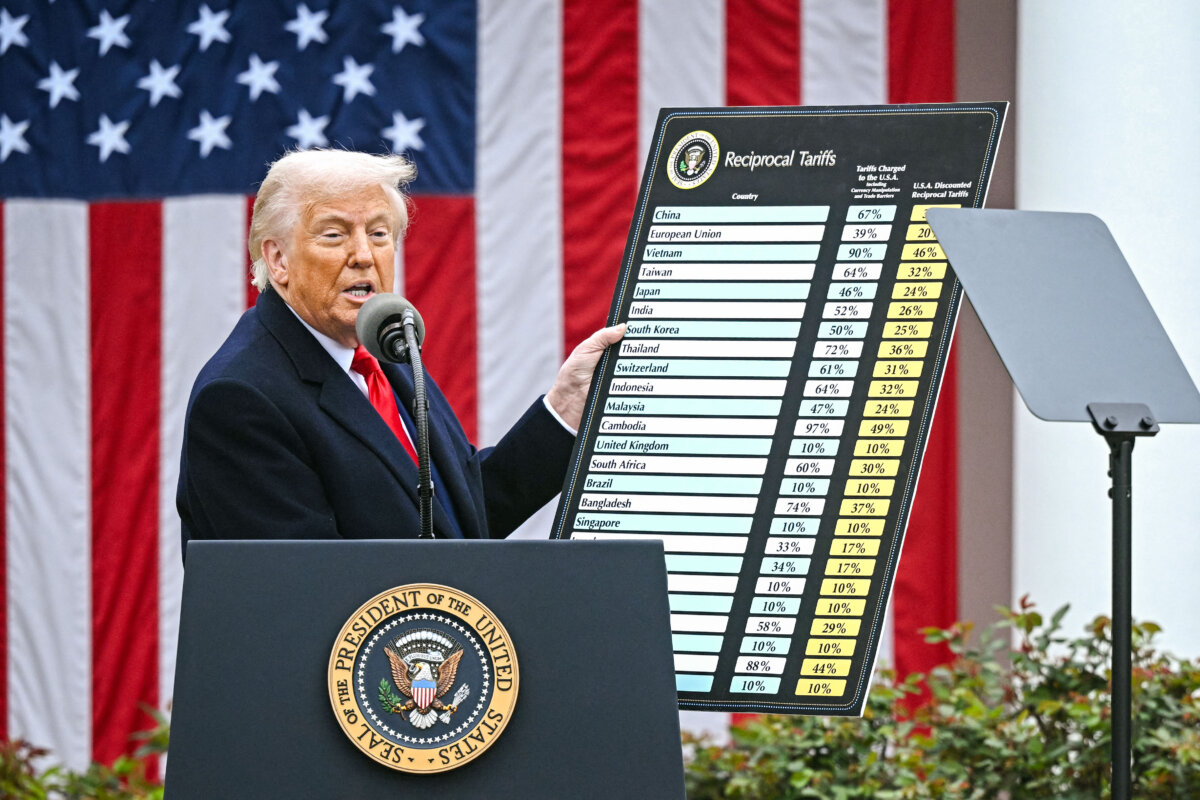
To impose “reciprocal” tariffs on many countries in April 2025 on what he called “Liberation Day,” Trump declared a national emergency under IEEPA.
Trump called the lack of reciprocity in bilateral trade arrangements, “disparate tariff rates” and non-tariff barriers, and domestic policies by trading partners that “suppress domestic wages and consumption” an “unusual and extraordinary threat.”
Canada was spared at the time from the “reciprocal” tariffs order, but it already fell under a separate presidential order also imposed under IEEPA.
Trump’s order imposing the first set of tariffs on Canada, released in February 2025, described the flow of drugs from Canada as a national emergency. Trump’s order said that while the amount of drugs seized coming from Canada was much less than from Mexico, “fentanyl is so potent that even a very small parcel of the drug can cause many deaths and destruction to America families.”
Those tariffs came with a rate of 25 percent on goods, and were subsequently increased to 35 percent on Aug. 1, after Trump and Prime Minister Mark Carney failed to reach an agreement.
The impact of these tariffs on Canada is tempered, however, because goods compliant with the United States–Mexico–Canada Agreement (USMCA) are exempt.
Carney has mentioned this exemption, after failing to reach a trade deal with Trump, to say that Canada already has the “best deal” compared to other countries, with 85 percent of goods being traded across the border duty-free. But some of Canada’s industrial sectors that are subject to sectoral tariffs, such as steel, copper, and aluminum, have faced further challenges and seen job losses.
Impact
If the Supreme Court rules against the Trump administration in the tariff dispute, it would only affect a tranche of businesses impacted by the tariffs.
Some of those sectors could include electronics, scientific instruments, and machinery and parts. Exports to the United States can contain components made outside North America and thus fall outside the USMCA “rules of origin.” These require that an adequate percentage of a product be made or assembled in North America.
An analysis by Fitch Ratings calculated these sectors saw a marked increase in the amount of U.S. duties paid in 2025 compared to 2024.
For example, the electronics sector paid no U.S. duties in 2024, whereas Fitch calculated the sector paid $400 million in 2025 based on data for the month of July being annualized.
Regarding other U.S. tariffs affecting Canada more significantly, such as those on steel, aluminum, and automobiles, they were imposed under a separate authority called Section 232. With this power contained in the Trade Expansion Act of 1962, the U.S. president can impose tariffs on national security grounds.
The Section 232 tariffs are not being reviewed by the U.S. Supreme Court.
Carney says his government and Trump were closing in on a deal on those tariffs impacting steel and aluminum in late October before Ontario Premier Doug Ford ran an anti-tariff TV ad campaign in the United States.
Trump said the ad sought to interfere with the Supreme Court’s review of his tariffs and he cancelled trade negotiations with Canada over the matter. The talks have not restarted as the focus has shifted to preparing for the USMCA renegotiations starting later this year.
Trump has been vocal about the Supreme Court case, saying the loss of ability to use tariffs as he has would deal a “terrible blow” to his country.
“Tariffs are an overwhelming benefit to our Nation, as they have been incredible for our National Security and Prosperity (like nobody has ever seen before!),” he wrote on Truth Social Jan. 2.
More recently, he accused the “Fake News Media” of seeking to interfere with the Supreme Court’s decision, “one of the most important ever,” by not reporting the United States will collect “600 Billion Dollars” in tariffs. Trump said on Truth Social on Jan. 5 his country’s national security and finances have been made stronger with tariffs.
U.S. Customs and Border Protection reported in mid-December having collected more than US$200 billion in tariffs since Trump took office.
California Gov. Gavin Newsom says the tariffs are adversely impacting the economy. “It is beyond illegal, and we urge the Supreme Court to stand up for the rule of law and the constitutional separation of powers they are sworn to uphold,” Newsom said in October.
If the Supreme Court rules against Trump, the United States could be liable to repay a large portion of that amount, although it’s yet unclear whether the top court will issue that order or leave it to lower courts.
Trump and Treasury Secretary Scott Bessent have said the administration could use other authorities to maintain tariffs if the use of IEEPA is struck down.
Jack Phillips contributed to this report.
 Friends Read Free
Copy
Facebook
Tweet
Friends Read Free
Copy
Facebook
Tweet