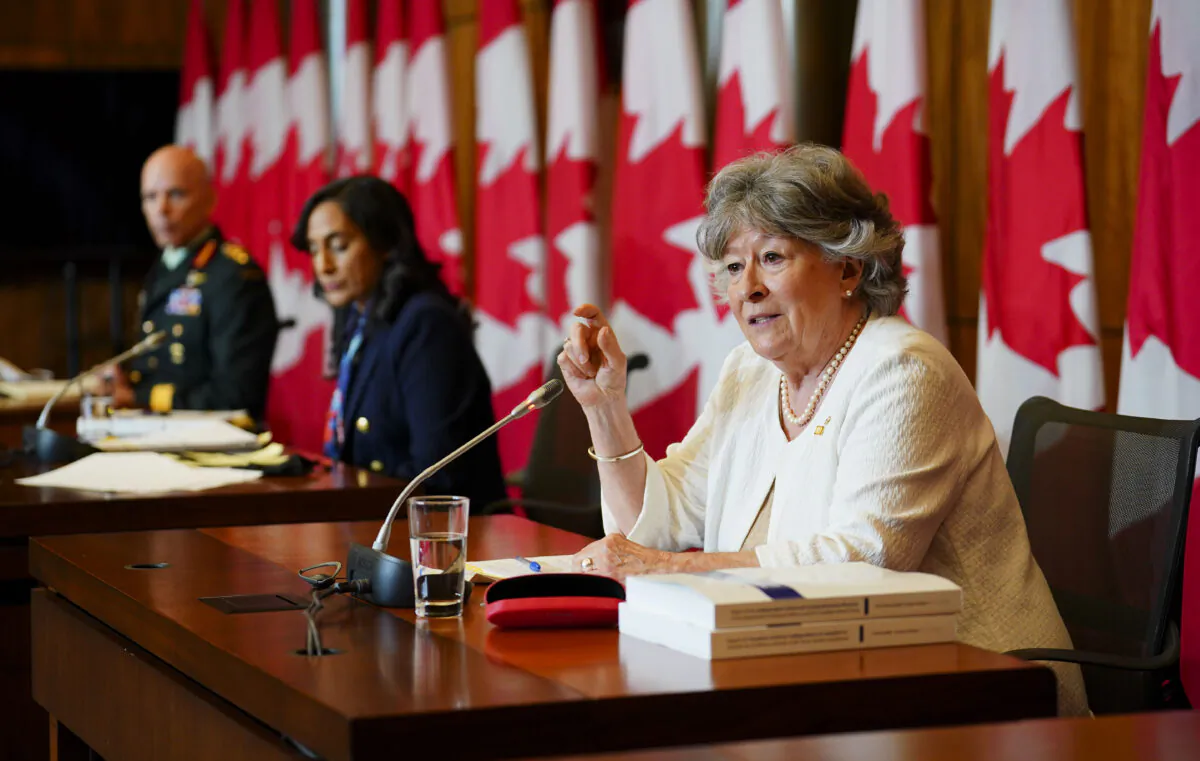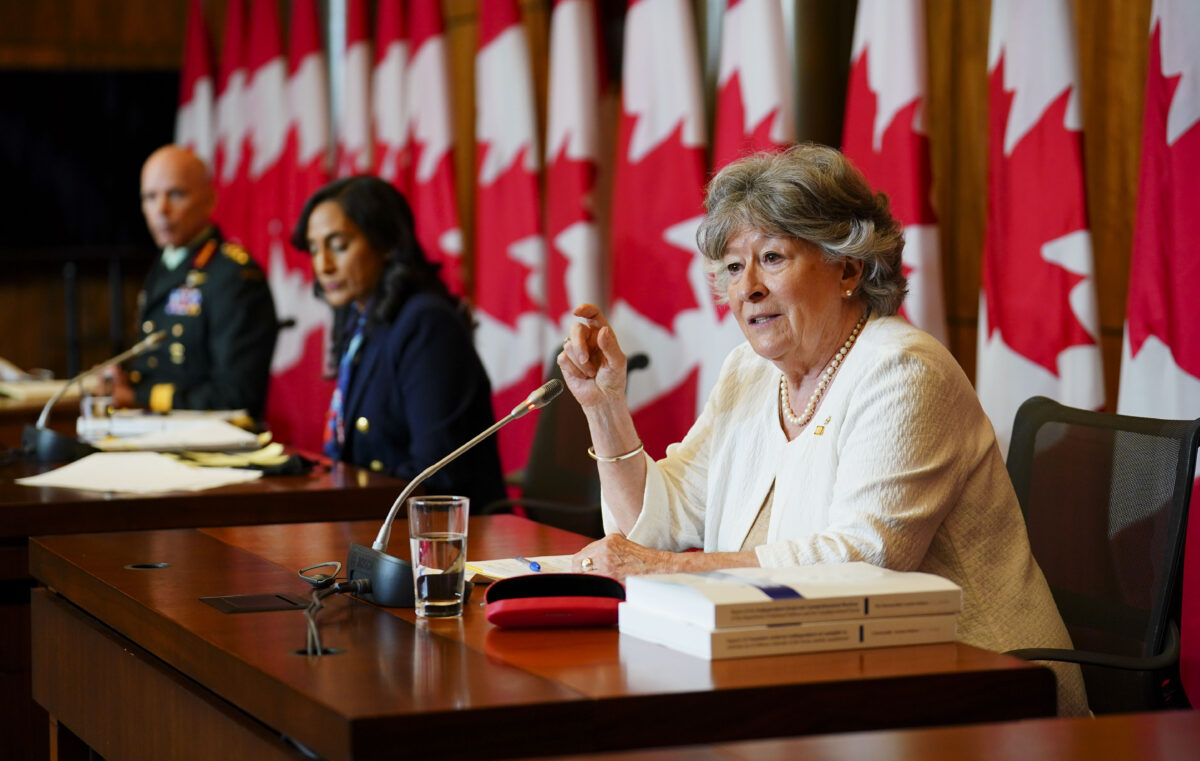

As Mary Simon approaches the end of her five-year term as governor general, Prime Minister Mark Carney has announced that former Supreme Court justice Louise Arbour will take on the role.
Arbour is a past Supreme Court of Ontario and Supreme Court of Canada justice, and also previously served as a United Nations High Commissioner for Human Rights.
Arbour’s Accomplishments
The Prime Minister’s Office described Arbour, who was born in Montreal in 1947, as a “world-renowned legal scholar, judge, and leader in human rights and justice,” who has “held nearly every office a Canadian jurist can hold, and several that no Canadian had held before.”
Arbour served as the vice-president of the Canadian Civil Liberties Association from 1985 until she was appointed to the Supreme Court of Ontario in 1987. She was appointed to the Court of Appeal for Ontario in 1990.
Arbour presided over an inquiry into allegations by prisoners of abuse at the Prison for Women in Kingston, Ont. The 1996 Arbour Report found there was an “ongoing infringement of prisoners’ legal rights,” and many women faced “cruel, inhumane, and degrading” treatment.
In 1996, Arbour was appointed by the United Nations Security Council as the chief prosecutor of the International Criminal tribunals for the former Yugoslavia and for Rwanda. While in that role, she prosecuted former Yugoslav leader Slobodan Milosevic for crimes against humanity after his involvement in the ethnic cleansing of Kosovo, and led the tribunal that prosecuted perpetrators of the Rwandan genocide.
In 1999, then-Prime Minister Jean Chrétien appointed Arbour to the Supreme Court of Canada. During her five-year term, Arbour was part of the majority justice vote in the Sauvé vs. Canada decision, which instituted voting rights for federal prisoners.
While she was a Supreme Court justice, Arbour was part of a decision that blocked a school in British Columbia from banning books featuring same-sex parented families on religious grounds.
In 2004, Arbour became the U.N. High Commissioner for Human Rights, serving in that role until 2008, after which she worked for various NGOs and private firms. In 2017, U.N. Secretary-General António Guterres appointed Arbour as his special representative for international migration.
In April 2021, Arbour was appointed by then-National Defence Minister Harjit Sajjan to lead an independent review of the military’s handling of sexual assault and harassment cases.
She delivered her report in May 2022, which said the military had failed to deal with sexual misconduct and should move the prosecution of criminal code sexual offences to the civilian system. It also described a “toxic” culture of misogyny and the “glorification” of masculinity in the armed forces.
Arbour’s Advocacy
Over the last decade, Arbour has promoted a number of progressive causes, and has advocated for the rights of migrants.
During a 2017 Munk debate on immigration alongside UK politician Nigel Farage, Arbour spoke in favour of immigration and asylum seekers. She said while she was aware of the “fear that an influx of foreigners” would change the “social fabric in an undesirable way,” she proposed that the fabric was changing anyway.
“We have a choice. We can look to the past and stagnate in isolation, or we can embrace a future in which our children will develop their own culture, fully open to that of others, inspired by the choices that we are making today,” she said.
During an interview with Maclean’s in July 2022, after releasing her report on the Canadian Armed Forces, Arbour proposed that the military use experts from civil society to deal with its internal culture, or “send cadets to civilian universities, where diversity is years ahead of what we’ll ever see in military colleges.”
“If you just recruit white boys who like guns but don’t like women or anybody who doesn’t look like them, you’ll perpetuate that culture,” she said.
Arbour’s daughter Emilie Taman, a lawyer, was an NDP candidate for Ottawa-Vanier in the 2015 election and 2017 byelection, and in Ottawa Centre in the 2019 federal election, where she placed second.
A “Louise Arbour” was an NDP donor in the 2010s. Data from Elections Canada shows someone with the same name donated $1,000 to the Ottawa-Vanier Federal NDP Riding Association in 2016, $1,500 to the association in 2017, and $3,600 to the New Democratic Party in 2019.
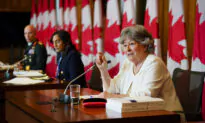
When speaking to reporters on May 5 after Carney announced she would become governor general, Arbour said Canada is “shaped by its diversity of people, of perspectives and experiences,” but also shaped by “a common respect for strong public institutions and for the rule of law.”
When a reporter asked Arbour about how some may characterize her as a “judicial activist” and how she would address conservatives upset by her appointment, she responded that there is “great free space for expression of contrary views” in Canada.
“I will reach out, not only to those who agree with me … I will reach out to anybody who wishes to engage with me, to debate, to discuss,” Arbour said, adding that she hoped she would be able to persuade Canadians who may not be in agreement with her.
“I’m not sure I could do much more to try to persuade them otherwise on the basis of what I’ve done before, but going forward, I will engage,” Arbour said.
 Friends Read Free
Copy
Facebook
Tweet
Friends Read Free
Copy
Facebook
Tweet