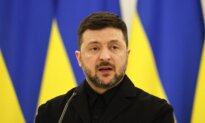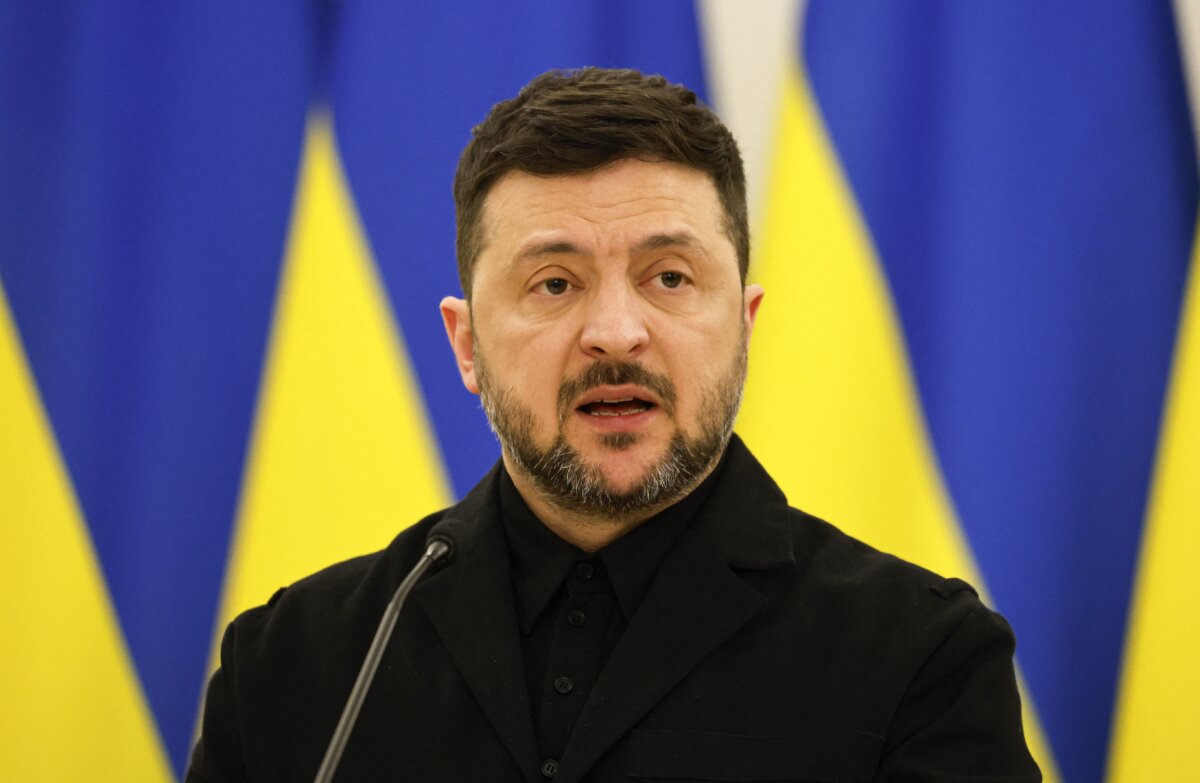

Ukrainian President Volodymyr Zelenskyy said Ukrainian forces have been involved in shooting down Iranian-designed Shahed drones in the Middle East during the recent Iran war, revealing a previously undisclosed overseas defensive role.
According to Zelenskyy, Ukrainian personnel participated in active defense operations abroad using domestically produced interceptor drones. The Shahed drones, originally designed by Iran and widely used by Russia in its war against Ukraine, have become a shared threat across multiple regions.
“This was not about a training mission or exercises,” Zelenskyy said. “It was about helping build a modern air defense system that can actually function in real conditions.”
Zelenskyy made these remarks to reporters on April 8, but they were embargoed until April 10.
He did not specify which Middle-Eastern countries hosted Ukrainian forces, but noted that the deployments were part of broader security arrangements.
In return, Ukraine received support for protecting its energy infrastructure, along with oil, diesel, and financial assistance. Zelenskyy previously indicated that 228 Ukrainian specialists had been sent to the region.
“We are strengthening their security in exchange for strengthening our own resilience,” he said. “This goes far beyond simple financial transactions.”
The revelation comes amid growing concern that escalating tensions in the Middle East could divert Western military aid away from Ukraine—especially critical air defense systems. However, Zelenskyy emphasized that international partners continue to supply missiles for Patriot systems, adding that a new shipment had arrived in recent days.
Looking ahead, he warned that Ukraine faces a difficult spring and summer, with increasing pressure both on the battlefield and in the political arena, particularly as the United States becomes more focused on domestic elections.
Zelenskyy also said he has invited U.S. envoys Steve Witkoff and Jared Kushner to visit Kyiv and proposed a trilateral negotiation format involving Moscow. It remains uncertain whether such talks will take place in Ukraine or in a neutral third country.
So far, U.S.-led diplomatic efforts have stalled, with little progress on key issues. Meanwhile, fighting continues along the roughly 1,250-kilometer (800-mile) front line between Russian and Ukrainian forces.
Separately, Zelenskyy urged Western allies to fully reinstate sanctions on Russian oil, warning that any easing could help Moscow sustain its war effort. Russia has benefited from rising global energy prices, driven in part by damage to oil and gas infrastructure in the Gulf and disruptions linked to Iran’s closure of the Strait of Hormuz.
Ukraine has intensified strikes on Russian energy facilities in an effort to cut off oil revenues. However, Zelenskyy acknowledged that some international partners have privately urged Kyiv to scale back such attacks amid market instability.
“I won’t say who made these requests,” he said. “But they did—at multiple levels, from political leadership to military officials.”
The Associated Press contributed to this report.
 Friends Read Free
Copy
Facebook
Tweet
Friends Read Free
Copy
Facebook
Tweet