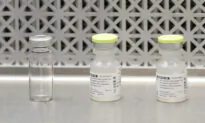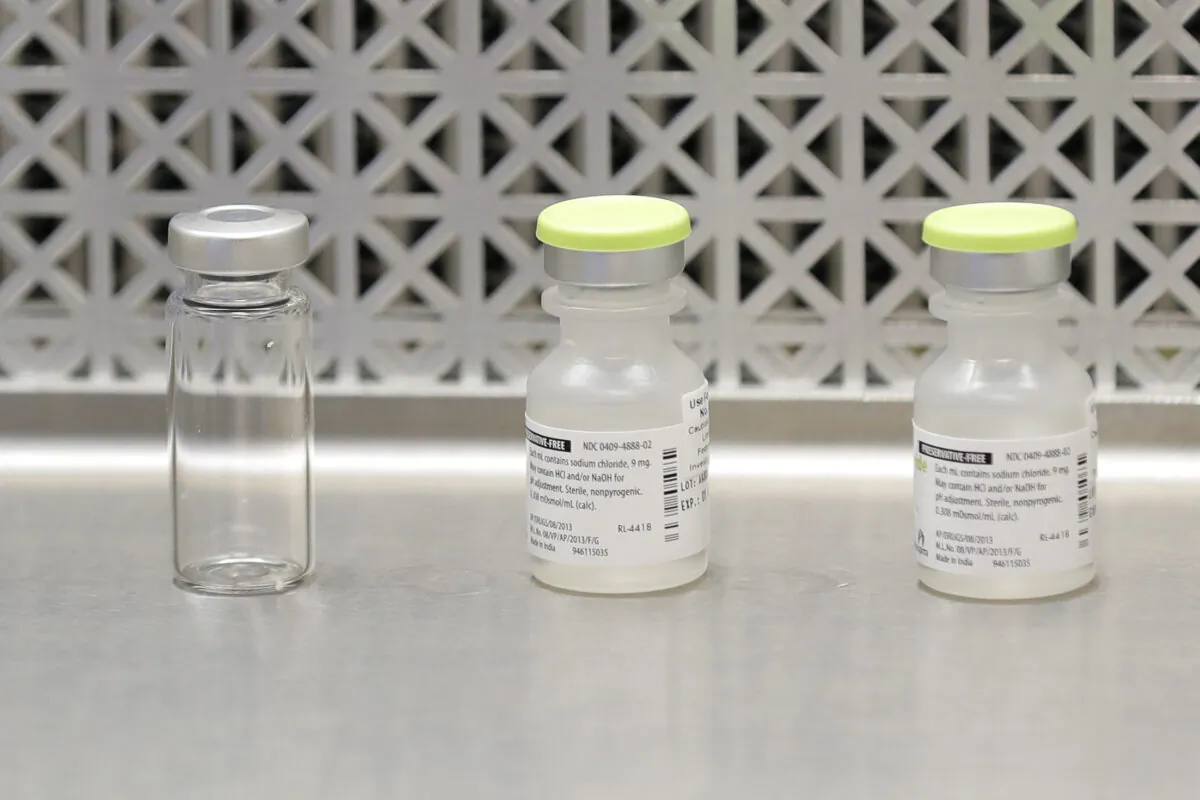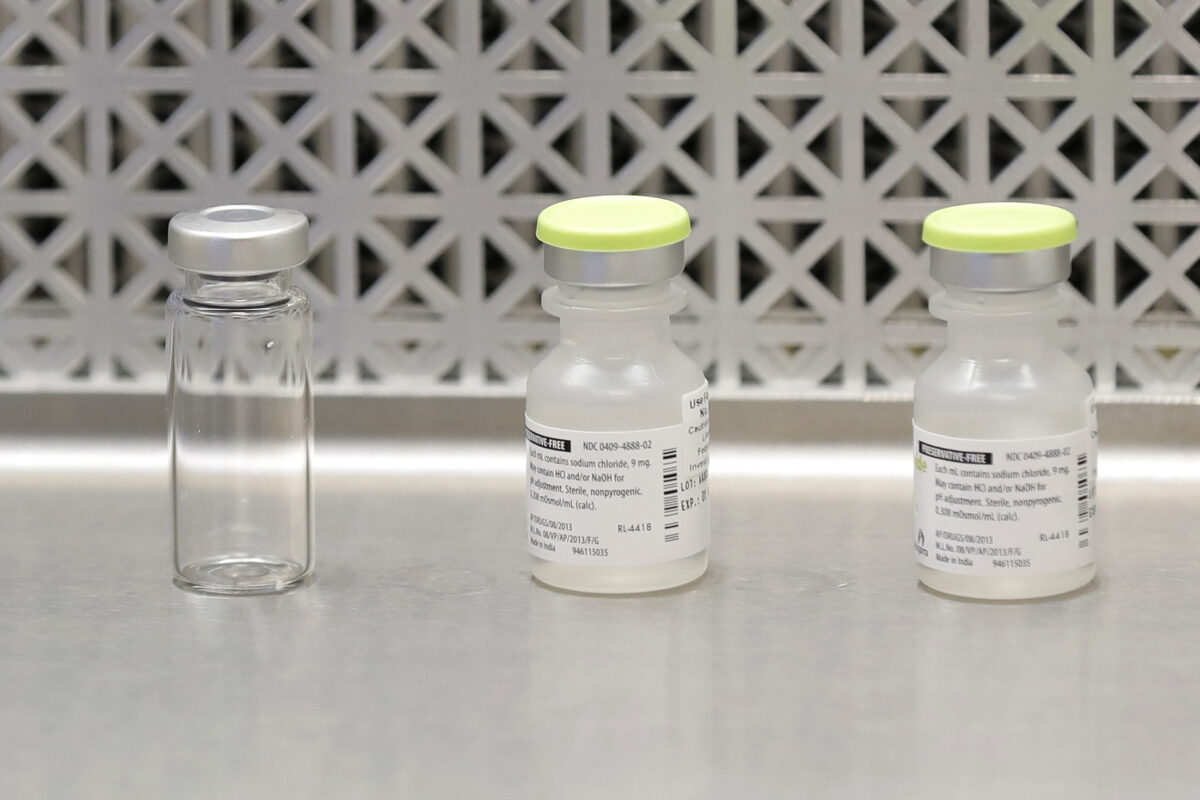

The National Institute of Allergy and Infectious Diseases (NIAID) has come up with an investigational vaccine for the CCP (Chinese Communist Party) virus and it protects mice from the infection.
“New data shows mRNA-1273, an investigational vaccine developed by #NIAID and @moderna_tx, protects mice from infection with #SARSCoV2,” NIAID said in a message on Twitter on June 12.
The vaccine is currently in phase 2 clinical trial and the findings are not yet peer-reviewed and are available on bioRxiv, a preprint research server.
“Here, we show that mRNA-1273 induces both potent neutralizing antibody and CD8 T cell responses and protects against SARS-CoV-2 infection in the lungs and noses of mice without evidence of immunopathology,” said the researchers on bioRxiv. CD8 T cells are mediators of adaptive immunity, according to Nature.
NEWS: New data shows mRNA-1273, an investigational vaccine developed by #NIAID and @moderna_tx, protects mice from infection with #SARSCoV2. The findings are available on the preprint server bioRxiv and are not yet peer-reviewed. https://t.co/BATSl9HiIN pic.twitter.com/3kKOeS6daY
— NIAID News (@NIAIDNews) June 12, 2020
Drugmaker Moderna earlier obtained clearance from the Food and Drug Administration to run a larger trial of its CCP virus vaccine candidate in early May.
The state of the phase two trial is “imminent,” Moderna CEO Stéphane Bancel said in a statement then.
The Biomedical Advanced Research and Development Authority (BARDA), part of the Department of Health and Human Services, is helping speed up the development of the candidate. BARDA in April awarded Moderna up to $483 million to support later clinical trials and scaling up manufacturing. Moderna has in the past received funding from the Bill & Melinda Gates Foundation.
Moderna, based in Massachusetts, said it was hiring up to 150 new employees this year to support the project. It also partnered with Lonza, a Swiss drugmaker, to boost production of the experimental vaccine, with a goal of making up to 1 billion doses.
Manufacturing could start as early as July and approval could come as early as next year.
Zack Stieber contributed to this report.
 Friends Read Free
Copy
Facebook
Tweet
Friends Read Free
Copy
Facebook
Tweet