
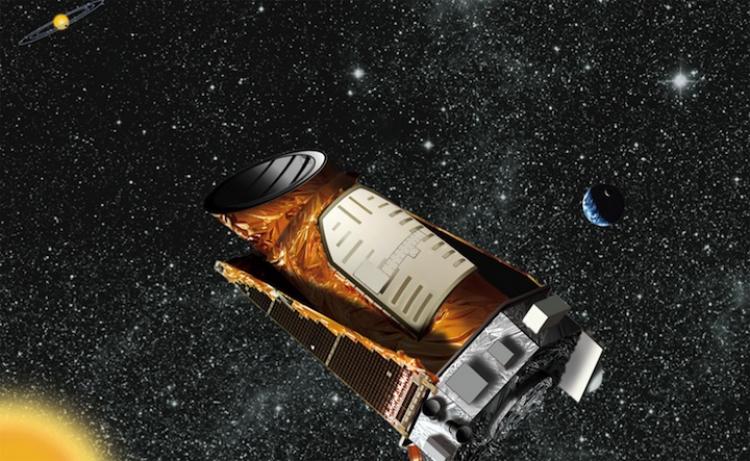
The agency said that its Kepler spacecraft has gathered six weeks of data on more than 156,000 stars, in searching for signs of planets orbiting them.
According to CTV, the data revealed five new solar systems within the Milky Way as well as 700 bodies that could be new planets, among which 140 are considered to be similar to our planet. This finding means that their composition could support the development of simple life forms.
The Kepler space probe was launched in March 2009. Two months later, in May, it reached its position for monitoring space outside the solar system. The spacecraft is on a four-year mission to examine the structure and diversity of planetary systems in the Milky Way, using a telescope including a 95-megapixel camera.
“While an exhaustive study remains to be done, the implication is that many planetary systems have multiple planets,” William Borucki, the mission’s principal investigator, told Mail Online.
 Friends Read Free
Copy
Facebook
Tweet
Friends Read Free
Copy
Facebook
Tweet