
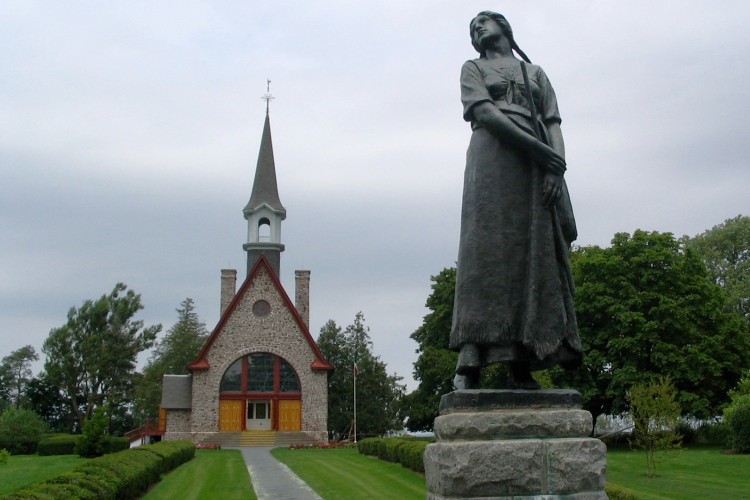
An important Acadian landmark in Nova Scotia has been named a World Heritage Site.
On June 30, the Landscape of Grand Pré was inscribed on the United Nations Educational, Scientific and Cultural Organization’s (UNESCO) World Heritage List for its outstanding universal value.
UNESCO said the area “encompasses cultural characteristics that are so exceptional they are of importance to present and future generations of all humanity.”
“The recognition of the Landscape of Grand Pré as a UNESCO World Heritage Site is a significant community achievement and follows many years of hard work,” Bernard Valcourt, Minister of State for the Atlantic Canada Opportunities Agency, said in a statement.
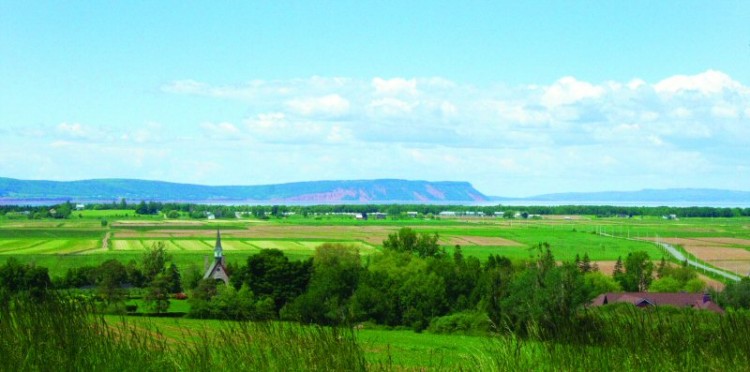
Situated in Nova Scotia’s Annapolis Valley and inhabited for thousands of years by the Mi’kmaq, Grand-Pré (great meadow) was settled in the 1700s by French colonists, known as Acadians.
As the settlement grew, the Acadians turned great expanses of tidal marsh into productive farmland through the development of a complex system of dykes.
During the French and Indian War, the Acadians were expelled from Grand Pré. Today, the area holds a strong attachment and symbolism for Acadians, reflecting their 17th and 18th century history and their deportation.
The Landscape of Grand Pré is a National Historic Site owned by Parks Canada. The newly designated area encompasses more than 1,300 hectares of land and properties, and includes the communities of Grand Pré and Hortonville.
Jean-Pierre Blackburn, ambassador and permanent delegate of Canada to UNESCO, attended the World Heritage Committee meeting in Russia where the designation was announced. He noted in a statement that this is Canada’s 16th World Heritage Site.
“Since 1976, when Canada ratified the World Heritage Convention, this country has had the privilege of being the steward for humanity as a whole for 15 other sites, including Canada’s first World Heritage Sites, L’Anse aux Meadows and Nahanni, as well as the Historic District of Old-Quebec, and Sgang Gwaay in British Columbia,” Blackburn said.
There are another eight sites on Canada’s Tentative List of World Heritage Sites. The Landscape of Grand Pré is the third World Heritage Site in Nova Scotia, after the Old Town Lunenburg and the Joggins Fossil Cliffs.
Grand Pré and the expulsion of the Acadians was immortalized by American poet Henry Wadsworth Longfellow in his epic poem “Evangeline,” published in 1847.

The Epoch Times publishes in 35 countries and in 19 languages. Subscribe to our e-newsletter.
 Friends Read Free
Copy
Facebook
Tweet
Friends Read Free
Copy
Facebook
Tweet