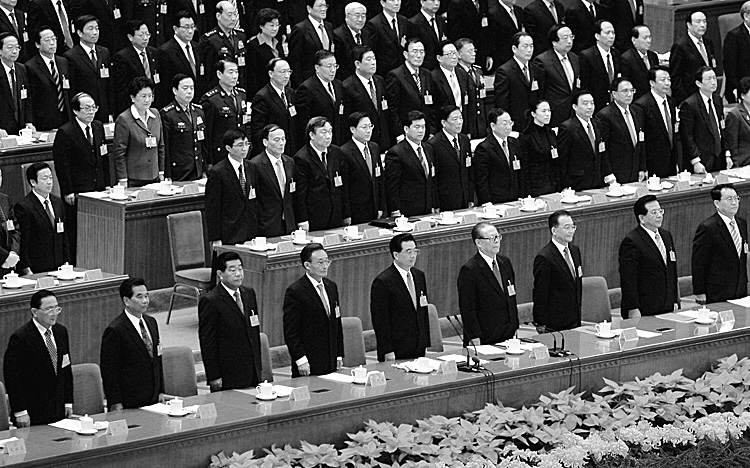
Since Chongqing’s former deputy mayor Wang Lijun fled to the U.S. Consulate in Chengdu on Feb. 6, there has been an uneven double movement within the Chinese Communist Party as long-standing power arrangements are dismantled and steps toward a new direction for the Chinese regime are taken. The two movements are linked—a new direction for China is possible only if elements of the old guard are removed.
On the one hand, the Party’s top leadership has been rolling up the bloody-hands faction formed by former CCP head Jiang Zemin for the purpose of persecuting Falun Gong. The Party leaders have followed a trail that began with Wang Lijun and has led to Party heavyweights Bo Xilai and Zhou Yongkang.
Bo has been purged and is undergoing shuanggui—the abusive form of interrogation served up as discipline and investigation of errant Party members. Cronies of Bo have been removed from their posts.
Zhou has been stripped of authority and is under investigation.
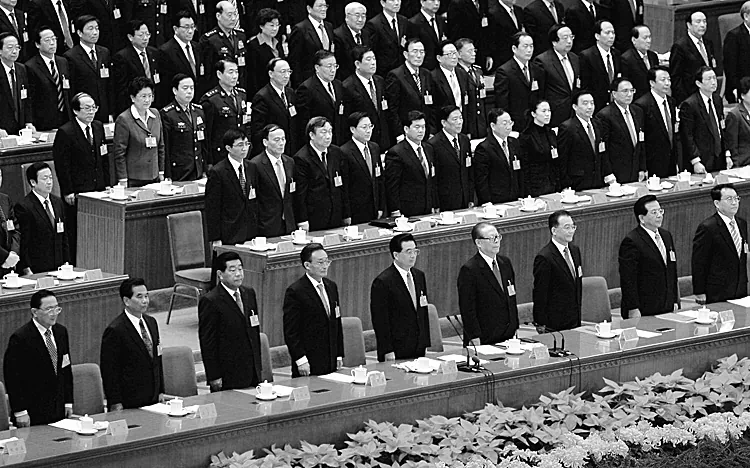
Meanwhile, some Party members associated with the bloody-hands faction, such as Politburo Standing Committee member Jia Qinglin, are now seeking to realign themselves so that they are seen as loyal to CCP head Hu Jintao and Premier Wen Jiabao.
The logical conclusion of this movement will be the targeting of Jiang Zemin himself.
Ideological Line
On the other hand, since Wang Lijun fled to Chengdu, there have been leaks from Party councils of plans for political reform, proposals for redressing the victims of the Tiananmen Square massacre and suppression, and signs that the leadership is laying the groundwork for ending the persecution of the spiritual practice Falun Gong.
At Wen Jiabao’s press conference at the conclusion of the National People’s Congress on March 14, Wen made the case for reform.
“Reform has reached a critical stage,” Wen said. “Without the success of political reform, economic reforms cannot be carried out. The results that we have achieved may be lost. A historical tragedy like the Cultural Revolution may occur again. Each party member and cadre should feel a sense of urgency.”
Epoch Times columnist Heng He has argued that at this press conference, Wen reintroduced into the Party something that had not been seen since the time of Mao—a competition between two ideological lines.
Bo Xilai was the standard bearer for a Maoist revival of the Communist Party. He was publicly criticized by Wen at this press conference and would be relieved of his position as head of the Party in Chongqing the next day. Purging Bo removed the left-wing leader of the opposition to reform.
Immediately after Bo was taken down, Maoist websites were shut down, and two pro-Maoist commentators were dismissed.
Reform Program
Following the removal of Bo, there were various reports suggesting reform was on the leadership’s agenda. Then, at the beginning of May, an individual familiar with high-level Party deliberations told The Epoch Times that key leaders in the Politburo had reached four points of consensus, which would be announced around the time of the 18th Party Congress:
1. People from all walks of life, political parties, and social organizations should send representatives to form a preparatory committee for a new constitution. They will draft a new constitution that protects the rights of citizens to freely form associations and political parties.
2. It will be announced that the Chinese Communist Party has finished its historical mission as the ruling party. Party membership will need to be re-registered, with the free choice to re-enter the Party or leave it.
3. “June 4,” Falun Gong, and all groups who have been wrongly persecuted in the process of devoting themselves to China’s realization of democracy will be redressed and receive compensation.
4. The military will be nationalized.
Since the behind-the-scenes adoption of this political program, several events that are consistent with the direction it sets forth have taken place.
Next … Minister Li Liguo announced a new policy governing the registration of organizations independent of the Communist Party.
Views expressed in this article are the opinions of the author and do not necessarily reflect the views of The Epoch Times.
 Friends Read Free
Copy
Facebook
Tweet
Friends Read Free
Copy
Facebook
Tweet