
On the eve of Independence Day, Pastor Ezra Jin Mingri landed in Los Angeles, free after roughly nine months in Chinese prison.
During his detainment, Jin had wondered if he would ever see freedom again. His release came only after President Donald Trump raised the case directly with Chinese leader Xi Jinping in May. At least eight members of Jin’s church remain behind bars.
Although Jin is a Christian pastor, he wasn’t accused of a crime of a religious nature. Instead, the Chinese regime charged him with illegally using information networks and running an illegal business—internet and commercial offenses.
What he had actually done was refuse to install a camera. In 2018, authorities told him to place surveillance equipment in the sanctuary of Beijing’s Zion Church, which he had built into a congregation with a membership of more than 1,500. He said no. Officials shut the church and took its property.
The congregation moved online and continued holding services for another seven years. Then, on Oct. 10, 2025, police took Jin from his home in the southern city of Beihai and detained him, along with nearly 30 other church leaders around the country. It was the largest coordinated takedown of an urban house church in China in more than four decades, according to human rights groups.
None of that required a spy hunt or a dramatic raid. A church was treated as a security problem, prosecuted under business and internet law, and handled by ordinary police in a provincial city far from the capital.
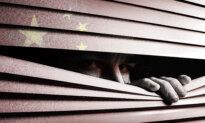
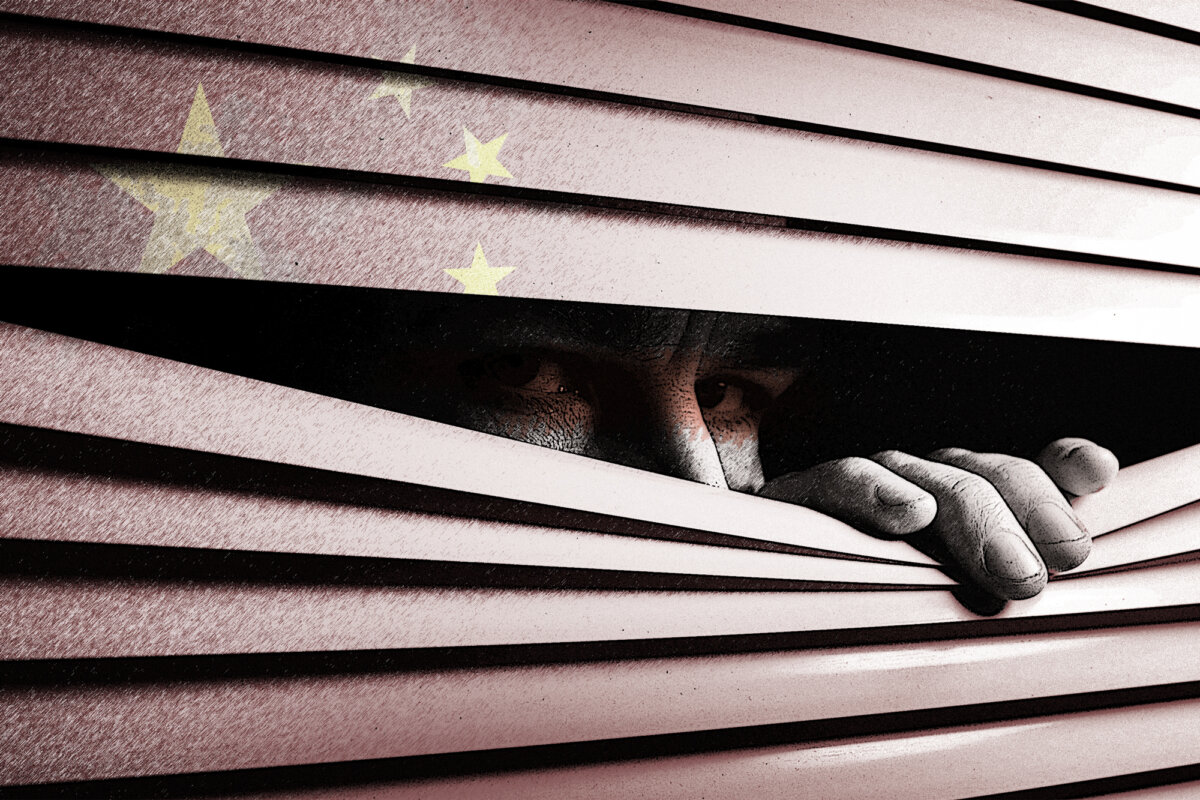
Jin’s case shows how the Chinese Communist Party (CCP) reaches deep into the private life of China’s 1.4 billion people.
An upcoming exclusive report by The Epoch Times, “The Structure of the CCP’s Security Organs: From Central Rosters to Front-Line Operational Units,” maps the CCP’s security apparatus from its central ministries down to its front-line units.
The central finding of the report, which draws on Western and Chinese scholarship, leaked budget figures, court records, and the Party’s own documents, is that the Party does not rely on one feared agency to do its watching. It assigns the job to everyone else—local police, neighborhood monitors, employers, universities, landlords, and 10 million to 15 million ordinary citizens recruited to report what they notice.
That vast surveillance network, sitting below a police force of nearly 2 million, allows the Party to reach places where no police force can go.
Not China’s CIA
When Americans hear about China’s Ministry of State Security (MSS), they may think of the CIA. But while the CIA is barred by law from policing Americans at home, the MSS began as a domestic security service and grew outward.
“In its early years, the MSS was mostly focused on internal security while [the People’s Liberation Army’s] intelligence was the stronger organ abroad,” said Matthew Brazil, a former U.S. Army officer, diplomat, and corporate security investigator who co-wrote “Chinese Communist Espionage: An Intelligence Primer.”
Only recently did that change. “Since 2017 or so, foreign intelligence has greatly expanded and MSS seems in charge of political and technological intelligence,” he said.
But catching the party’s “enemies” at home never stopped being the ministry’s work.
The MSS works alongside the Ministry of Public Security (MPS), which runs traffic stops, household registrations, and the neighborhood beat. It also runs the camera network, the police databases, and the real-name systems that tie a phone number or a bank card to an individual.
The branch of the MPS that handles dissidents, petitioners, and religious groups—known by the shorthand Chinese term “guobao”—draws on all of that surveillance.
Political policing rarely announces itself and is instead couched under the headings of public order, anti-fraud, cybersecurity, and household registration.
Division of Labor
Feng Chongyi experienced firsthand how the Chinese authorities divide this labor.
An associate professor of China studies at the University of Technology Sydney, Feng flew to China in early 2017 to study what had happened to the country’s human rights lawyers after mass detentions in 2015.
Security officers questioned him for days in Kunming. Then, without arresting him or filing a charge, they stopped him at the airport in Guangzhou and told him he would not be leaving the country.
The operation had been prepared long before he arrived, he told The Epoch Times. “When they set out to arrest someone, it isn’t a spur-of-the-moment decision,” he said. “They do a great deal of research first, and only then draw up the list and set the operation in motion.”
What surprised him was who showed up. Beijing had opened the case, but the officers who questioned him in Kunming came from Yunnan’s provincial state security bureau, as did the ones waiting at the airport in Guangzhou, which is in a different province altogether.
“In my case, it was the Ministry of State Security—the MSS was the one that opened the case,” Feng said. “But the ministry itself has very few personnel; the actual work is parceled out to the state security bureaus of the various provinces and cities, which carry it out collectively.”
That division of labor is how it works. The ministry in Beijing decides who is a problem; the provinces and counties do the work, using systems that are already in place—the police station, the neighborhood committee, the university, the employer.
Brazil said Feng’s account matches outside research. “It is evident that much, possibly most, Chinese state security operations abroad are run at these lower levels,” he said.
Who’s Watching?
What is already in place, in most cases, is people, and the CCP recruits them openly.
The best estimates of scale come from Minxin Pei, a political scientist and professor of government at California’s Claremont McKenna College. Pei reconstructed China’s system from leaked budgets, official police histories, and local yearbooks in his 2024 book “The Sentinel State.”
By Pei’s estimate, the officers who handle political cases number 60,000 to 100,000 nationwide, representing 3 to 5 percent of China’s police. That amounts to one officer for every 14,000 to 23,000 people. By way of contrast, East Germany’s Stasi had one full-time employee for every 165 people.
It’s not that the Chinese regime watches its citizens less closely than East Germany did, Pei said. It’s that the Party has found a cheaper way to keep tabs on far more people.
The state security ministry runs a public program it calls “the people’s line of defense,” built around national security education in schools and workplaces and a hotline for reporting suspected “spies.” Some cities advertise cash rewards.
Pei’s estimates put the number of part-time information collectors at 10 million to 15 million, with well over 100,000 new political informants recruited every year.
Working alongside them are the grid workers, municipal employees assigned a few hundred households apiece. Their duties look clerical, and that is what makes them effective; they record who moves in and out, note which families are in conflict, flag the resident who has stopped leaving the apartment or started holding meetings in it, and pass along anything unusual to the sub-district office or the police.
Only about a quarter of the collected information is ever passed up the chain, according to Pei. But accuracy was never the goal; rather, it’s about cultivating a sense of constant surveillance in the fabric of everyday life. In every classroom, temple, and apartment block, someone may be keeping notes, and no one can tell who.
Brazil, whose doctoral research examined the early history of the CCP’s intelligence organs, sees one purpose running its length.
“The CCP’s intelligence and security forces are focused on the survival of the party in power,” he said. “From the desperate days of the 1920s and 30s to the paranoia of today, where every bud must be nipped before it grows, that is job number one.”
No Charges Necessary
Chen Pokong, a political commentator and author now based in New York, encountered that approach as a young economics lecturer at Sun Yat-sen University in Guangzhou. Weeks before the 1989 demonstrations that ended at Tiananmen Square, the security services had already written his name down.
“In March 1989—before the movement had erupted in full—they already had a document targeting me, saying I was going to launch a student movement in Guangzhou, singling [me] out by name,” he told The Epoch Times.
After the crackdown, he was arrested and spent three years in a detention house and labor camps—a punishment police could impose without a trial. About a year after his release, they sent him back to detention.
Inside, the watching was done by other prisoners—model inmates who “would pretend to befriend me while actually taking my measure, probing what I was thinking, watching for any movement,” he said.
It grew heavier once he set out to expose China’s export of prison-labor goods. “So they stationed a great many people around me,” he said. He got the evidence out anyway in 1994, using the informants around him as cover—feeding them a mix of true and false information until the real thing slipped past.
Release changed the routine without ending it. A work group operating in the name of public security called him in for a talk every month and followed him the rest of the time, watching him more closely as sensitive anniversaries approached. The watching reached everyone around him.
“Inside the country, there are relatives, kin, all kinds of social connections—they surveil them all, even classmates,” he said. In 1996, he was exiled to the United States.
None of it required a formal charge. And the upcoming Epoch Times report identifies that as the system’s defining feature: Measures are applied to anyone the state decides to watch, whether or not a case is ever opened.
Anything Can Be Called a Threat
Whether that attention falls on a person is largely a matter of classification, and the categories have grown under Xi.
In 2014, the Chinese leader introduced the comprehensive national security concept, stretching the word security across more than a dozen fields, from the economic to the environmental. Almost any problem can now be designated as a security matter, giving the security services a mandate to act.
A law passed in 2017 reinforced that reach by requiring Chinese citizens and organizations to assist state intelligence work and keep silent about what they learn of it.
Religion is where the relabeling is easiest to trace.
Beijing has worked through its targets in sequence, said Nina Shea, a senior fellow at the Hudson Institute. Shea has served seven terms on the U.S. Commission on International Religious Freedom.
“They first went after Falun Gong, then the Uyghur Muslims, and now we’re seeing evidence that they’re going after the Christians—the underground Christians,” she told The Epoch Times, adding that Tibetan Buddhists came just before the Uyghurs.
The persecution intensified after 2018, she said, when authorities began enforcing rules requiring the “Sinicization” of religion. The method is to go after the leadership.
“Their strategy, or their tactics, is to put pressure on the leadership of the Christian groups—and to start imprisoning them, as we saw with the Zion Church people last year,” she said.
Once an activity has been classified as a security concern, the Epoch Times report notes, prosecutors reach for whichever statute fits. That is how a pastor who declined to install a camera ended up charged with internet and business offenses.
Tested on the Frontier, Scaled by Technology
Many of the methods now used across China were tried first where the CCP trusted the population least.
“The surveillance and grid-management techniques in Xinjiang and Tibet were envisioned as experiments that could be refined and generalized to China at large,” said June Teufel Dreyer, a professor of political science at the University of Miami. Dreyer has studied Chinese politics for more than five decades.
Only part of that approach carried over to the rest of the country, she noted, because the problems differ. “Concern with Islamic terrorism is not a factor in Han China, and Han Chinese aren’t self-immolating.”
What spread, the report finds, was the method: divide a city into small units, make a named official responsible for each, and fold the collection of information about daily life into that official’s routine workload.
“I see this as a reversal and intensification of Mao-era control policies, which seemed to be softening under Jiang and then more so under Hu,” Dreyer said, referring to Xi’s two predecessors.
The intensification, she added, “has been abetted by the development of new technologies like big data and facial recognition into something undreamed of in the Mao era.”
Better equipment has not changed who does the essential work, the report argues.
A camera can establish that a person was somewhere but not why; software can flag a gathering but cannot tell the organizer from the bystander. Someone still has to read the alert, and someone still has to knock on the door—a neighborhood officer, a grid worker, or a school administrator.
Secure or Brittle?
The system was never built to fill prisons, the Epoch Times report finds, and mostly it does not. Punishment is the exception.
What it produces is a particular kind of fear—a population that has learned to assume a remark, a prayer meeting, a foreign friendship, or a night in an unfamiliar city may be written down by whoever was standing close enough to overhear it or learn about it.
Asked whether the repression is working, Shea drew a distinction.
With the Catholic Church, it plainly is. “They’re coming under the complete control of the CCP. Most of the new bishops are CCP-approved,” she said.
The Protestant churches are harder to judge, she said, because they have been driven so far underground that counting them would put them at risk. “It’s dangerous for their leadership to start handing out numbers and names of who’s coming to church; it’s dangerous for the believers, for the followers,” she said. “We just don’t know.”
Pei has flagged one limit. If a weaker economy fuels more protest and a sharp rise in the number of people the CCP wants to watch, he wrote, the small size of the guobao force “could be cause for concern” for Beijing, which would then need more officers, not fewer.
It has not come to that. Asked whether all of that machinery ultimately leaves the regime more secure or more brittle, Dreyer expressed little doubt.
“Currently, the regime looks extremely secure,” she said. “For it to break would imply a capacity for mass organized resistance to the party-state that I see no evidence of.”
The discontent that exists is unlikely to become more than that, she said, citing “a lot of inertia in the system.” Despite viewing the current system as corrupt, many people “fear the chaos that attempts to dismantle it would lead to.”
“As we’ve seen in Iran and Cuba, authoritarian governments are more resilient than our media gives them credit for,” she said.
The Epoch Times’ full report on the structure of the CCP’s security organs will be released later this year.
Gu Xiaohua contributed to this report.
 Friends Read Free
Copy
Facebook
Tweet
Friends Read Free
Copy
Facebook
Tweet