
Cut, hold, or hike? That is the question at the Federal Reserve.
The Fed will have six weeks until officials convene their next two-day policy meeting and decide the course of action for interest rates.
Officials voted overwhelmingly to keep the benchmark federal funds rates unchanged in its existing range of 3.5 percent to 3.75 percent.
The central bank, according to the Summary of Economic Projections, is still penciling in a single quarter-point rate cut sometime this year.
Investors largely agreed that the Fed would follow through with further monetary policy loosening.
However, futures market data suggest traders are increasingly betting on a rate hike, the first since the current easing cycle began almost two years ago.
Markets are beginning to price in a quarter-point increase later this year.
It would not be entirely surprising, as the central bank had signaled the possibility of tightening even before the war in Iran upended global financial markets.
Minutes from the January Federal Open Market Committee meeting suggested that participants discussed conveying that a hike could be the Fed’s next policy action.
“The possibility that our next move might be an increase did come up at the meeting, as it did at the last meeting,” Powell told reporters at the post-meeting press conference on March 18.
“The vast majority of participants don’t see that as their base case. And of course, we don’t take things off the table.”
Based on the dot-plot—a visual representation of the Summary of Economic Projections—seven officials anticipate one 25-basis-point cut, and five anticipate more than one reduction.
Monitoring Jobs and Inflation
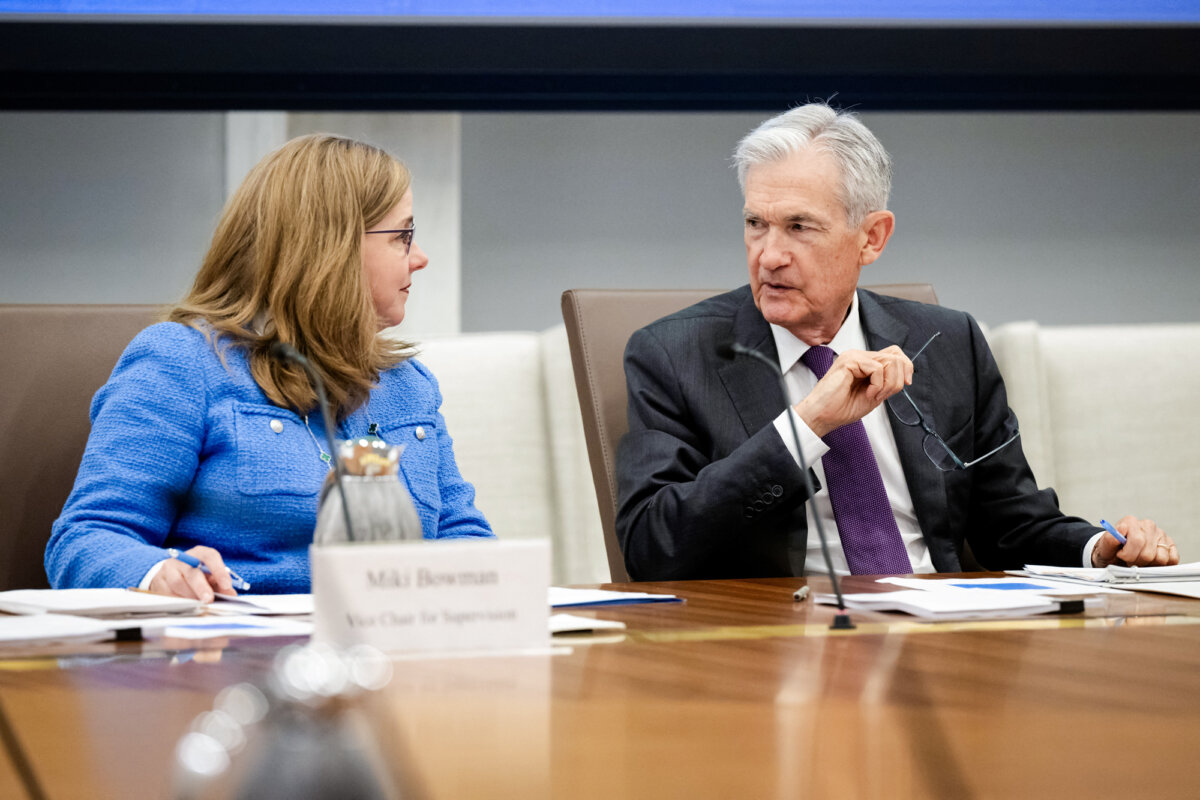
In a March 20 interview with Fox Business, Fed Vice Chair for Supervision Michelle Bowman said that she expects two to three rate cuts later this year.
While it is too early to determine the economic fallout of the Iranian conflict, Bowman believes the institution will make the same number of cuts as last year to support the labor market.
“It’s too soon to tell what the impacts of Iran and the conflict may be, but I do expect that we’ll start to see some of the supply-side policies working their way through the economy,” Bowman said, adding that she expects strong growth in the year ahead.
Bowman was one of the 11 officials who supported keeping the policy rate steady—Fed Governor Stephen Miran was the lone dissenter.
Her colleague, Fed Governor Christopher Waller, thinks the Fed will likely move ahead with rate cuts this year.
For now, however, Waller believes the central bank needs to approach policy with caution.
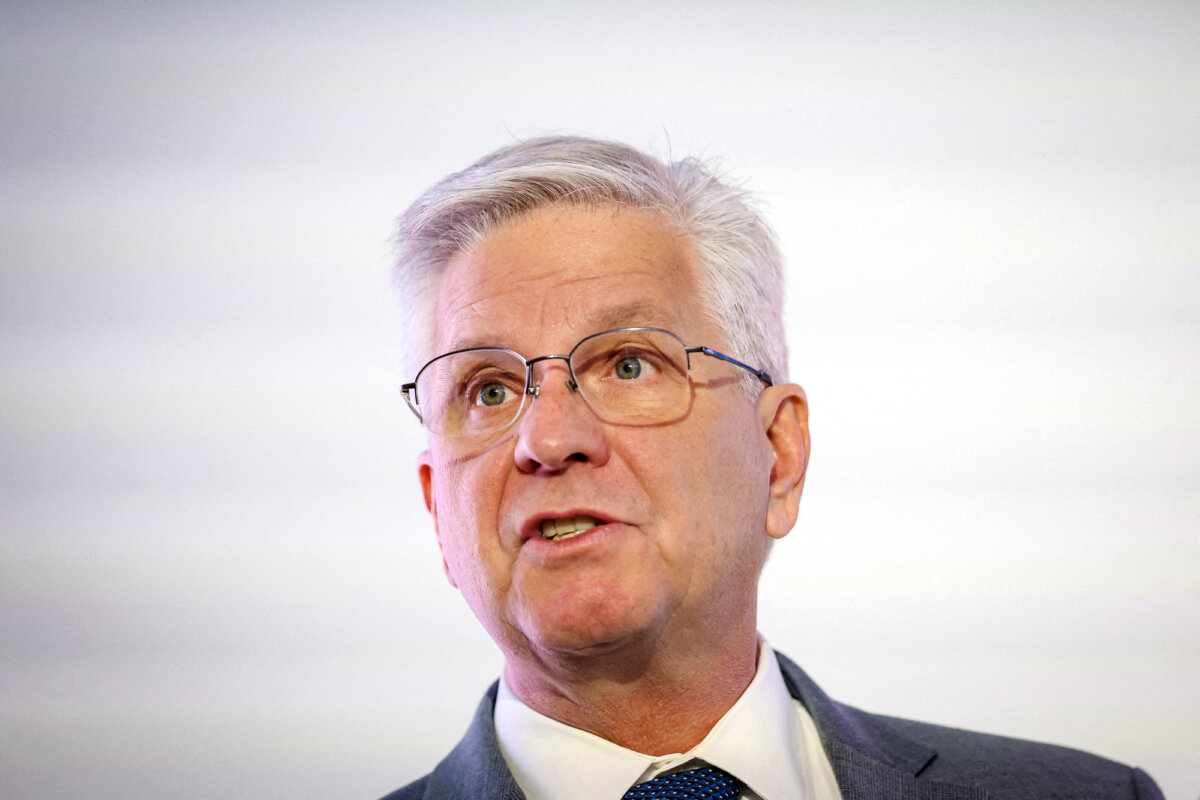
Waller, speaking with CNBC’s “Squawk Box” on March 20, said he is worried about current economic conditions but still prefers to “wait and see” how developments unfold.
“It doesn’t mean that I’m going to stay put for the rest of the year,” Waller said.
He said that structural inflation is likely close to the Fed’s 2 percent target.
However, many variables have contributed to one-off effects of elevated inflation, including the current administration’s tariffs and the war-driven spike in energy prices.
The latest annual consumer inflation rate was unchanged at 2.4 percent. At the same time, the Fed’s preferred Personal Consumption Expenditures (PCE) Price Index remained at 2.8 percent.
Wholesale inflation surged 0.7 percent last month—the fastest pace since July 2025—after climbing 0.5 percent in January.
“If those tariff effects don’t roll off by the second half of the year, and then inflation starts rising, then you’re in this tricky business of like, do we worry about inflation? Take a chance on recession or not?” Waller stated.
The Atlanta Fed’s GDPNow Model estimates 2.3 percent growth in the first quarter, a rebound from the 0.7 percent registered in the final three months of 2025.
That said, like Bowman, Waller thinks the U.S. labor market’s health is the top concern, while the effects of tariffs on inflation will continue to pass through.
“If we get another 90,000 jobs decline in the next jobs report, that’ll be like four negative reports out of five. To me, that’s not zero. So, at that point, you need to start thinking … this labor market isn’t good,” Waller said.
“I don’t think this war is going to help in any way going forward, but we’ll have to see what happens with inflation.”
After the January jobs report showed more than 100,000 new jobs, economic observers thought this could signal a stagnant labor market turning around.
But this was likely an “anomaly,” Bowman noted.
In February, the economy unexpectedly lost 92,000 jobs, and the unemployment rate ticked up to 4.4 percent.
Additionally, the three-month average net job creation sat at 6,000, and the six-month average was negative for the fourth time in five months.
Early estimates suggest the economy added 50,000 jobs in March and the jobless rate edged higher to 4.5 percent, according to Trading Economics.
A lot can happen by the time the Fed holds its April 28–April 29 meeting.
Officials will have two payroll reports, a batch of inflation data, and the latest news about the state of the Iranian conflict.
For now, markets overwhelmingly expect the Fed to remain on hold for the third straight meeting.
 Friends Read Free
Copy
Facebook
Tweet
Friends Read Free
Copy
Facebook
Tweet