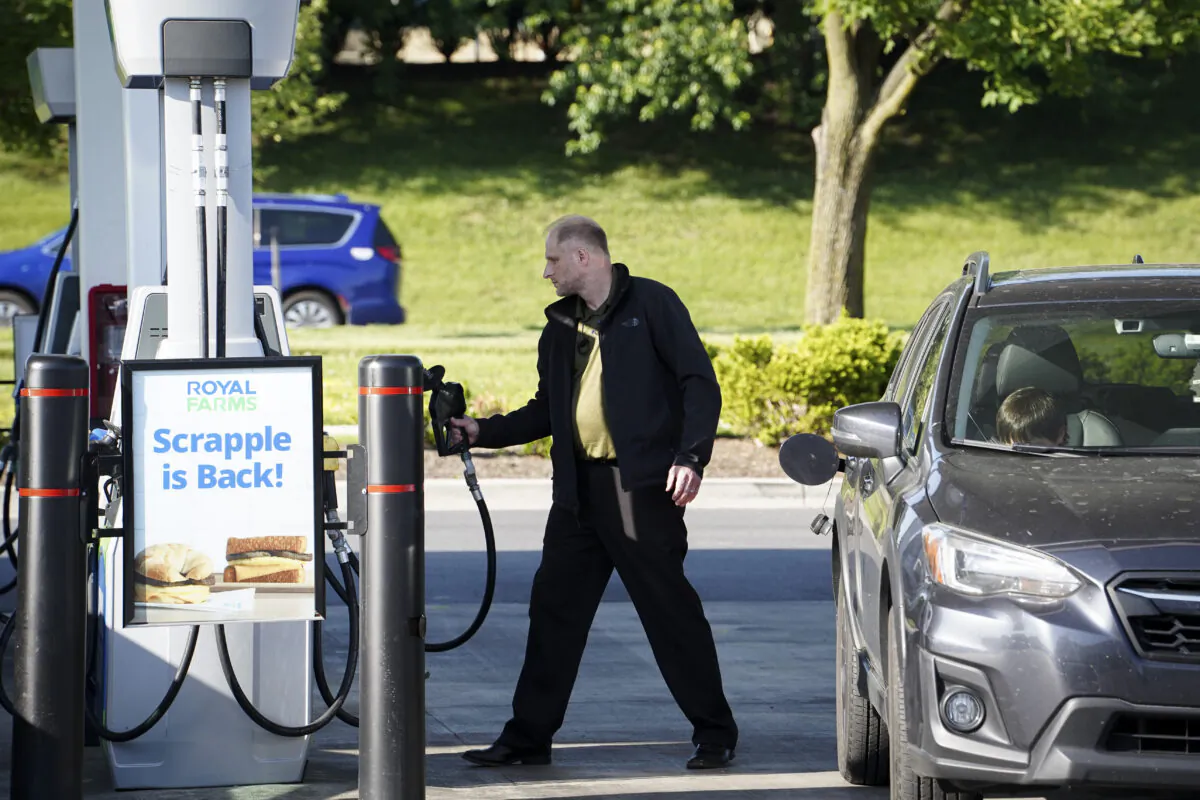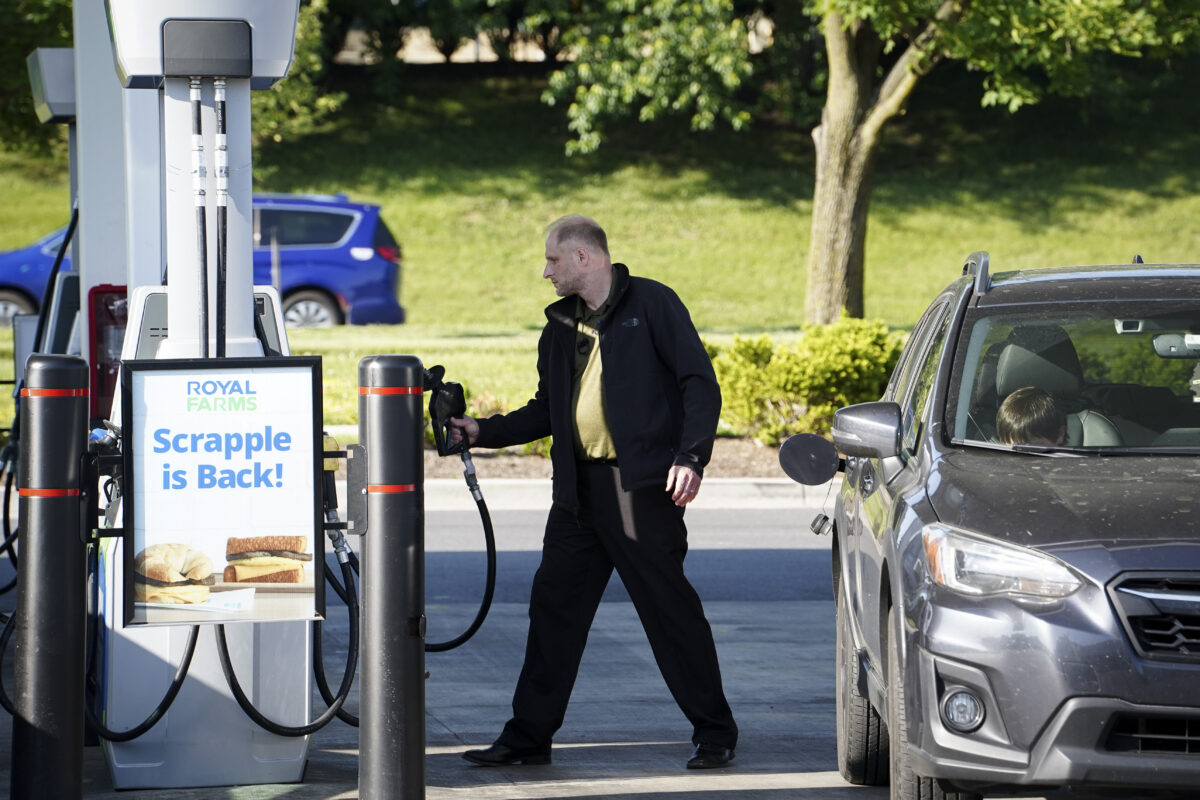

Consumers felt another month of inflation’s squeeze in April, new U.S. government data released on May 28 show.
The personal consumption expenditures (PCE) price index—the Federal Reserve’s preferred inflation measurement—shot up to 3.8 percent last month, according to the Bureau of Economic Analysis.
This was the highest level since May 2023 and was up from the 3.5 percent recorded in March but in line with economists’ expectations.
Excluding the volatile energy and food categories, the 12-month core PCE inflation rate edged up to 3.3 percent, from 3.2 percent, also matching the consensus forecast. This was the highest level since November 2023.
On a monthly basis, PCE and core PCE inflation rose by 0.4 percent and 0.2 percent, respectively.
Supercore PCE—services excluding housing—rose by 0.4 percent from March to April.
“Against a backdrop of rising inflationary data as seen in the recent CPI [consumer price index] and PPI [producer price index] numbers, this week’s PCE report may be the most consequential data point of the month,” Jay Woods, chief strategist at Freedom Capital Markets, said in an emailed note to The Epoch Times.
One reason is that the Fed places more weight on the PCE price index because it accounts for updated consumer behavior and covers all consumer spending, including expenses paid on their behalf by third parties.
The CPI is updated less frequently and only measures out-of-pocket costs.
Last month’s consumer annual inflation rate reached 3.8 percent, the highest level in almost three years. The Cleveland Fed’s early nowcast suggests that it will top 4 percent in the May report.
Fed Policy Implications
The latest batch of pricing data is likely to prevent the Fed from easing monetary policy.
“This has already reversed any thoughts of a rate cut to now visions of a rate hike by year end,” Woods said.
Investors widely expect the central bank to leave the benchmark federal funds rate—a key policy rate that influences borrowing costs for consumers and businesses—in the current target range of between 3.5 percent and 3.7 percent until the inflation outlook becomes clearer. But the debate has evolved into whether the Fed will pull the trigger on a rate hike later this year.
It might depend on how inflation is measured.
With Kevin Warsh taking over from Jerome Powell as chairman of the Federal Reserve, reforms are expected. One of these changes could be how the Fed tracks inflation.
In recent years, the institution has used different inflation targets to craft policy, including core PCE and supercore.
 Federal Reserve Chairman Kevin Warsh at the White House on May 22, 2026. (Madalina Kilroy/The Epoch Times)
Warsh has suggested that relying on trimmed PCE mean inflation. This statistic omits goods and services that have wild month-to-month swings, such as last year’s eggflation crisis or the recent war-driven spike in energy prices.
“I think the data that’s being used to judge inflation is quite imperfect data,” Warsh said during his Senate confirmation hearing on April 21. “The measures I prefer are looking at things that are called trimmed averages, where we take out all of the tail risks, all of the one-off items, and we ask ourselves whether the generalized change in prices is having second-order effects on the economy.”
According to calculations from the Dallas Fed, the 12-month PCE inflation rate would be 2.4 percent.
This would be one component used to look past the oil price shock caused by the three-month-old war in Iran and determine whether structural inflation pressures are building.
For now, even if the central bank changes its focus, a chorus of Fed officials agrees that fighting inflation should be the primary focus. By concentrating on the price stability side of its dual mandate, the Fed would either keep interest rates elevated or follow through on a rate hike.
Financial markets have been pricing in a quarter-point rate increase as their baseline scenario sometime later this year.
Snapshot of the Economy
In addition to new inflation figures, the government also released updates to the gross domestic product (GDP) and fresh insights into how consumers are doing.
The first-quarter GDP growth rate was revised lower to 1.6 percent amid downward changes to consumer spending and business investment. The bureau initially reported a 2 percent expansion.
Despite the rise in inflation numbers, the softer growth rate for the January-to-March period was “very disappointing,” said Chris Zaccarelli, CIO at Northlight Asset Management.
“We are far from stagflation, but rising inflation coupled with slowing growth is the opposite of what we want in both dimensions,” Zaccarelli said in a note emailed to The Epoch Times.
Last month, personal income rose by zero percent, below the market estimate of 0.4 percent. Personal spending jumped by 0.5 percent, aligning with economists’ expectations.
Employment conditions remained steady as the number of people claiming unemployment benefits hovered around historically low levels.
 Friends Read Free
Copy
Facebook
Tweet
Friends Read Free
Copy
Facebook
Tweet