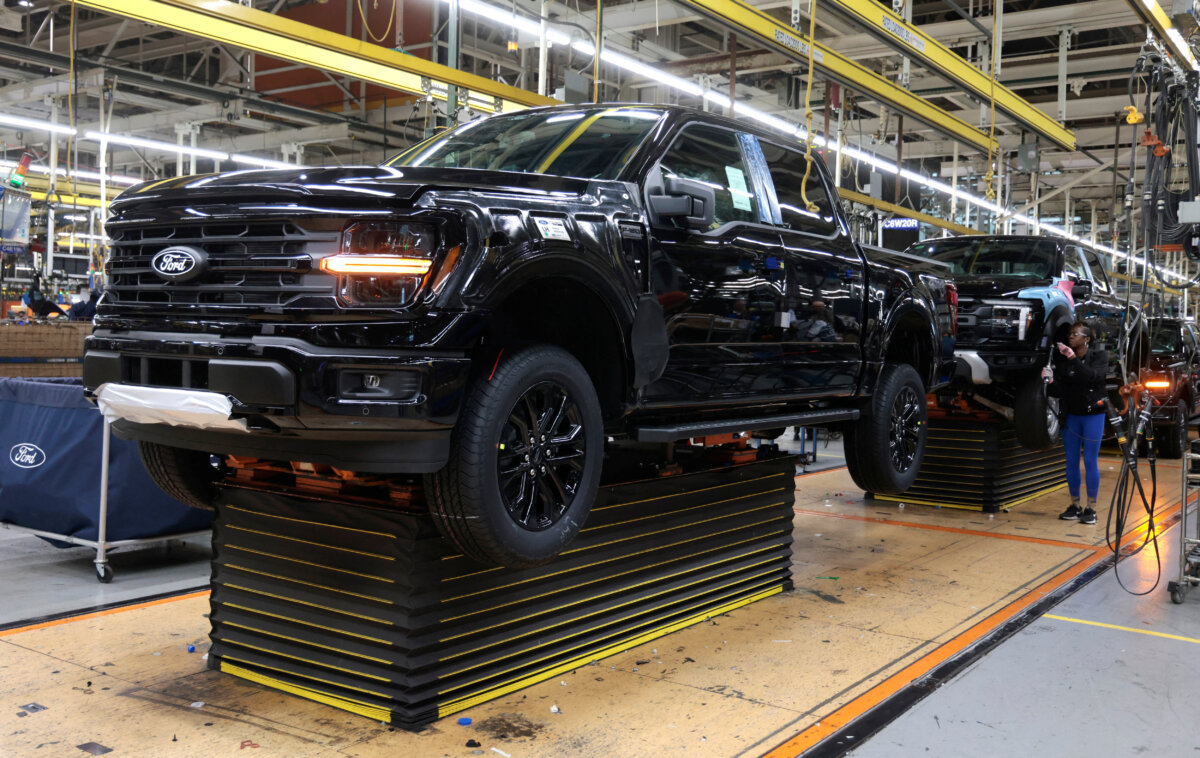

Major American automakers Ford and GM are changing their plans for electric vehicles as they face stubbornly weak sales and a sweeping reversal in federal policies.
In 2025, President Donald Trump and his administration fulfilled a campaign promise to roll back what he characterized as an electric vehicle mandate imposed by his predecessor, President Joe Biden. Most significantly, Trump signed the One Big Beautiful Bill Act in July, which will end a significant tax credit program designed to get Americans into electric vehicles.
The revocation of the program is motivating would-be electric vehicle buyers to head to dealerships and make a purchase while the tax credit is still in effect, but the Big Three automakers are likely to see a precipitous drop in sales in the final quarter of the year.
The sudden change in incentives is likely to push Detroit to scale back production plans that were years in the making.
“All the automakers that are selling … electric vehicles in this country are now having to reassess what they thought were their very aggressive and undeniably appropriate electric vehicle plans,” Karl Brauer, an executive analyst at car search engine and price aggregation service iSeeCars.com, told The Epoch Times. “None of them are getting more aggressive.”
Ending the EV Mandate
At least three key policy changes are slowing the charge toward electric vehicles.
Most importantly, a Republican-controlled Congress passed and Trump signed the One Big Beautiful Bill Act, which reversed a Biden-era tax credit program that provided an up to $7,500 incentive to buyers who bought a qualifying new electric vehicle and up to $4,000 for a qualifying used electric vehicle.
The tax credit program, made possible by the Inflation Reduction Act of 2022, will officially end on Sept. 30.
Furthermore, the Environmental Protection Agency (EPA), under the leadership of Administrator Lee Zeldin, is rolling back an emissions rule that would have been used to establish strict emissions standards for most non-electric cars and trucks sold in the United States starting in model year 2027.
In July, the EPA formally proposed action that would negate the so-called endangerment finding that serves as the linchpin for most federal emissions regulations. That finding, made in 2009, determined that greenhouse gases threatened the public health and welfare of Americans.
In an announcement, the EPA said the finding was used to “justify over $1 trillion in regulations, including the Biden-Harris administration’s electric vehicle (EV) mandate.”
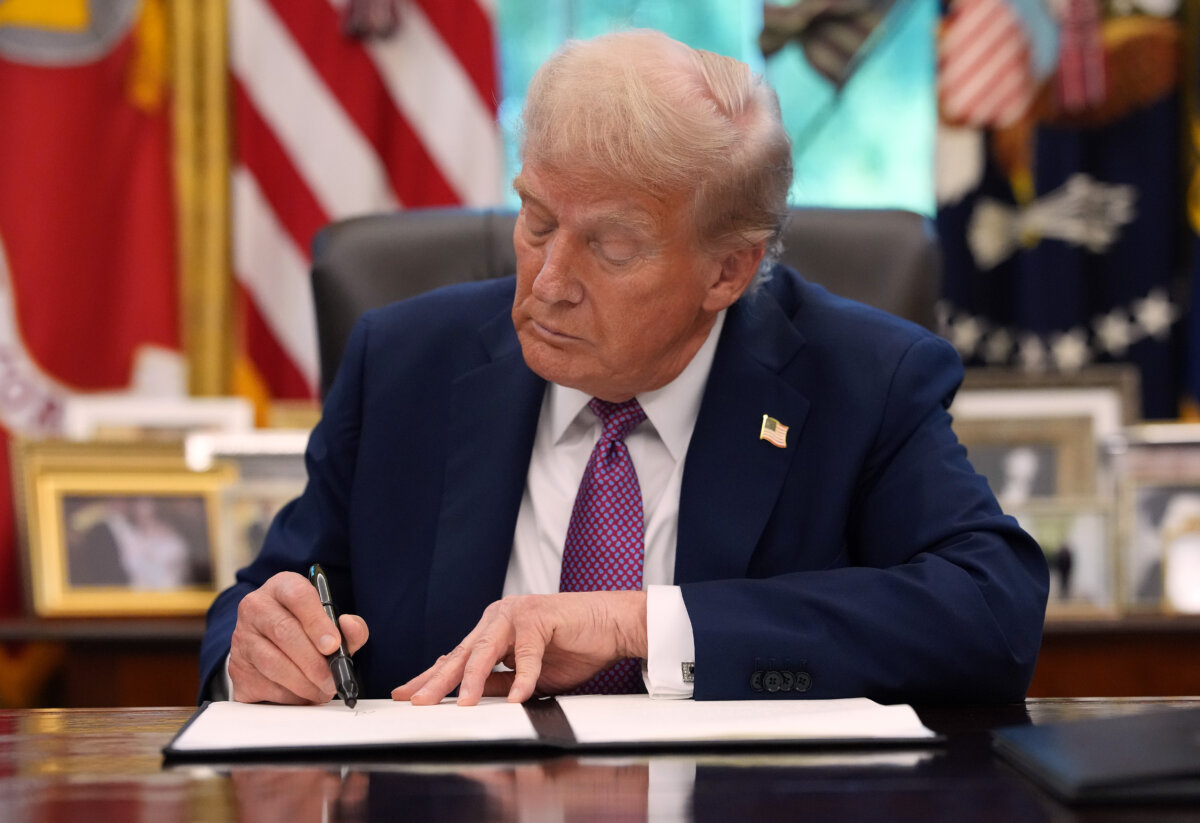
Finally, Congress passed and Trump signed three resolutions targeting California’s effort to establish its own strict emissions standards. In June, Trump signed the trio of resolutions, which nullify the Golden State’s plans to phase out the sale of new gasoline-only vehicles by 2035, roll back its low-nitrogen oxide regulations for heavy-duty trucks, and rescind an EPA waiver granted in December 2023 allowing the state to enforce stricter vehicle emissions standards.
Meanwhile, the majority of the American public continues to balk at buying electric vehicles. According to a May report from the Energy Information Administration, in the first quarter of 2025, only 22 percent of light-duty vehicles sold in the United States were hybrid, battery-electric, or plug-in hybrid. Battery-electric vehicles, which do not include any internal combustion engine elements, made up only 8 percent of overall vehicle sales.
The Energy Information Administration report cited the high cost of purchase as a consistent issue for American consumers. In March, the average purchase price of a new battery-electric vehicle, according to the administration, was at least $11,700 higher than the average cost of all new vehicles.
The political change is not entirely unexpected, but it is putting pressure on the so-called Big Three automakers—Ford, General Motors, and Stellantis—to reconsider their plans.
GM
At the end of the summer, General Motors cheered the high rate of electric vehicle sales. In a Sept. 2 article, Duncan Aldred, senior vice president and president for North America, said total electric vehicle sales probably set an all-time record in August. He credited that to the expiration of the tax credits and forecast another strong sales month in September.
In his article, Aldred predicted that “we’ll see lower EV sales next quarter after tax credits end Sept. 30, and it may take several months for the market to normalize.”
“We will almost certainly see a smaller EV market for a while, and we won’t overproduce. Still, we believe GM can continue to grow EV market share,” Aldred said. “We are seeing marginal competitors dramatically scale back their products and plans, which should end much of the overproduction and irrational discounts we’ve seen in the marketplace.”
Those comments echoed GM CEO Mary Barra’s July letter to shareholders, which said GM believes “the long-term future is profitable electric vehicle production.”
“This continues to be our north star,” Barra said.
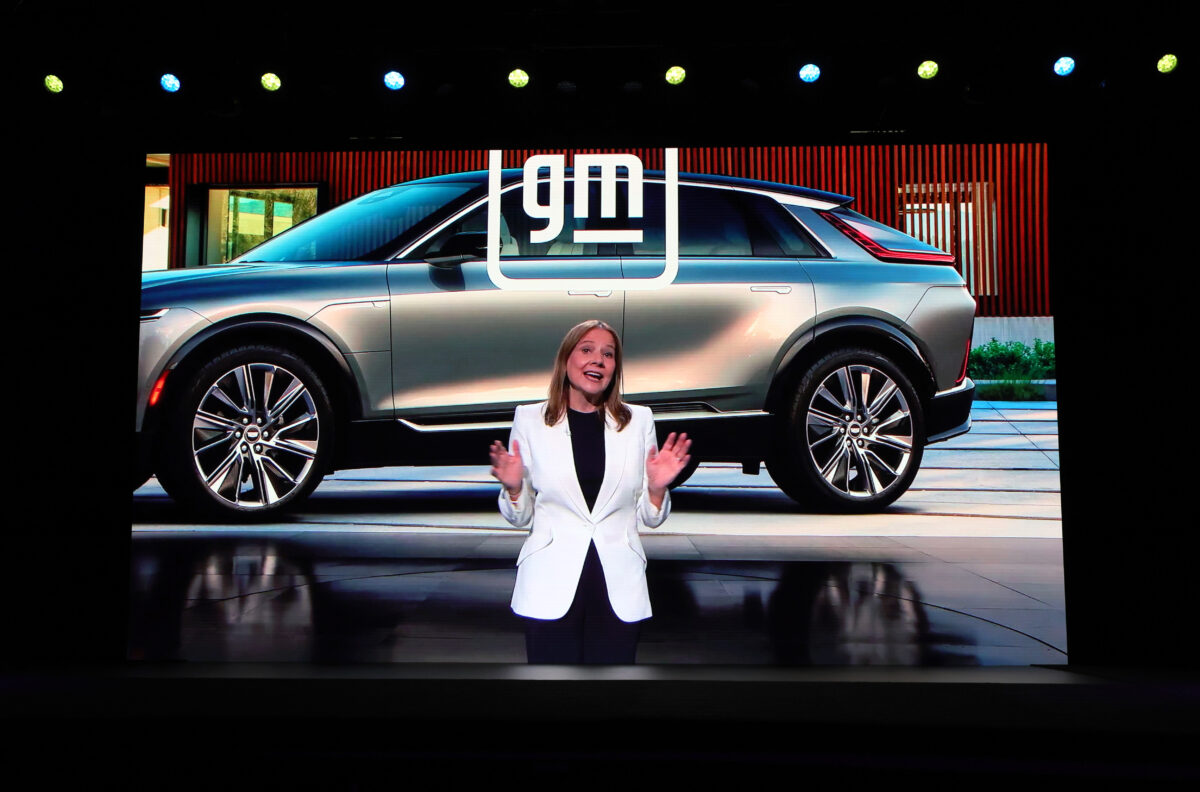
Despite those comments, GM recently announced a significant pivot toward making more conventional internal combustion engine vehicles. In May and June, the company announced it will spend about $5 billion to expand its domestic production of such vehicles. In September, reports emerged that GM will cut production of multiple electric vehicles at a plant in Spring Hill, Tennessee.
Representatives of GM did not respond to a request for comment from The Epoch Times.
Brauer said GM is the “most extreme example” of overcommitting to the electric vehicle push, then pulling back to match the market. GM was a pioneer with the relatively successful plug-in hybrid Chevy Volt but has since lost ground as it moved away from hybrid vehicles toward battery-electric vehicles.
While GM does not publicly disclose the sector-specific performance of its electric vehicle operations, Stephanie Valdez Streaty, director of industry insights at Cox Automotive, told The Epoch Times that she interpreted GM’s most recent moves as a reaction to a series of setbacks darkening the outlook for battery-electric vehicles in the United States.
Valdez Streaty said that GM has a diverse product portfolio and recognizes that the regulatory shift will significantly drive down demand for electric vehicles. With this clear change, the company is making a shift back toward profitable, gas-powered trucks and sport utility vehicles.
Over the long term, Valdez Streaty said, the U.S. auto industry is still committed to producing electric vehicles.
Ford
While GM, which says it is the second-largest electric vehicle maker in the United States behind only Tesla, does not issue monthly sales totals, Ford does.
In August, Ford sold 10,671 battery-electric vehicles, which was a 19.3 percent year-over-year increase from August 2024, according to its monthly report. However, that comprised just 5.6 percent of the company’s total vehicle sales in August. Moreover, Ford’s battery-electric vehicle sales are down by 5.7 percent through the first eight months of 2025 compared with the same period last year.
At an Aug. 13 investor conference, Paul Jacobson, Ford’s executive vice president and CFO, said he viewed the previous regulations—pushing an American market that’s struggling to surpass 10 percent battery-electric vehicle adoption to 50 percent by 2030—as “irrational.”
Furthermore, Jacobson said that he “wouldn’t be surprised” if there are fewer electric vehicle retailers and sellers by the end of the decade due to the direct effect of the regulatory changes in the United States.
At the same time, he acknowledged that Ford needs to get to profitability on electric vehicles. That starts with cutting its losses. Reaching that goal “might take a little bit longer in the face of lower demand,” Jacobson said.
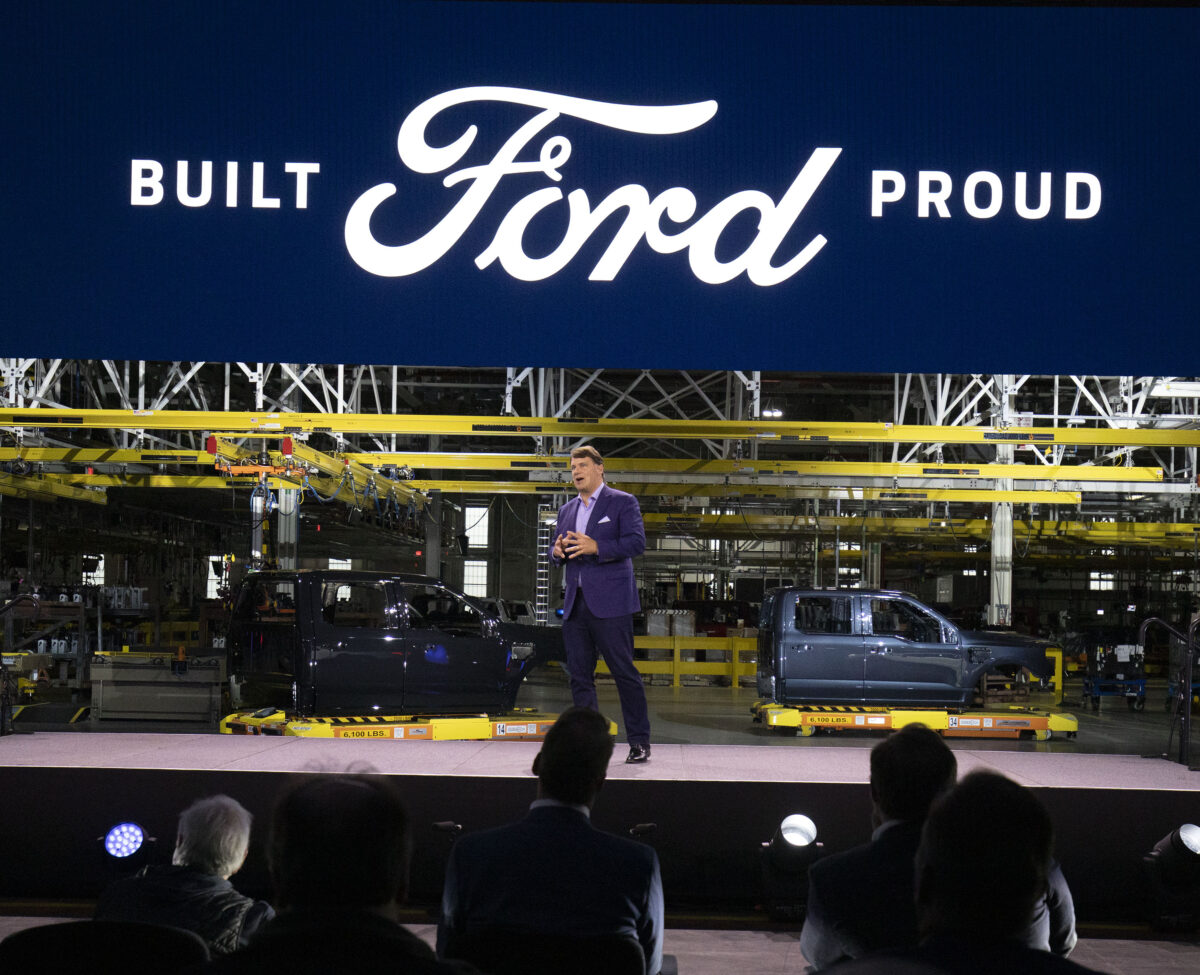
In August, Ford announced it will spend about $5 billion on electric vehicle-focused projects in Kentucky and Michigan. CEO Jim Farley called it the beginning of a “reinvention” of the company.
The company is pinning its hopes on what it calls the “universal EV production system,” a reconfigured assembly line process that will use common components and design features to produce a range of battery electric vehicles.
In the same Aug. 11 announcement, Ford said its “breakthrough product” will be a midsized, four-door electric pickup with a targeted starting price of $30,000. That truck is scheduled to debut in 2027.
Brauer said the announcement followed up on much less optimistic actions taken by Ford over the past year.
In August 2024, Ford shelved a planned three-row electric vehicle and pushed the midsized electric pickup project back to 2027. That followed a July 2024 announcement that it would be spending $3 billion to convert a plant in Canada that was originally intended to make electric vehicles into a hub for producing gas-powered trucks. In August, the company said it will be delaying the launch of an electric pickup and electric commercial van as it shifts its electric vehicle manufacturing plans to focus on smaller vehicles.
Brauer said the past year’s worth of moves is a sign that Ford is “realigning their electric vehicle investment to match reality.”
According to its latest earnings report, published in June 2025, Ford has lost about $2.2 billion on its electric division Ford Model e through the first half of 2025. In a February conference call, Farley projected that the division would lose about $5.5 billion.
In spite of this short-term pullback, Valdez Streaty said she saw positive signs from Ford’s electric vehicle effort.
First, the company is offering free home installation of chargers, which eliminates a key expense in buying a new battery-electric vehicle. Second, she said, it is making real strides toward bringing down the purchase price of an electric vehicle with its new manufacturing scheme.
Ford’s ability to meet its goal of delivering an electric vehicle that retails for nearly half the average price of a new electric vehicle sold in early 2025 is “critical” to the success of both Ford’s electric vehicle investment and the future of electric vehicle adoption in the United States, she said.
 Friends Read Free
Copy
Facebook
Tweet
Friends Read Free
Copy
Facebook
Tweet