
News Analysis
Gold is the shining star of Wall Street these days, beating stocks amid geopolitical uncertainty, inflation, and a falling dollar.
The yellow metal has gained 31.56 percent year to date, and 41.34 percent over the past 12 months, compared with 6.76 percent and 18.44 percent gains of the S&P 500 Index over the same periods.
It has also performed strongly over the past five years, up by 67.94 percent, although it lagged the S&P 500, which has gained 91.44 percent over the same period.
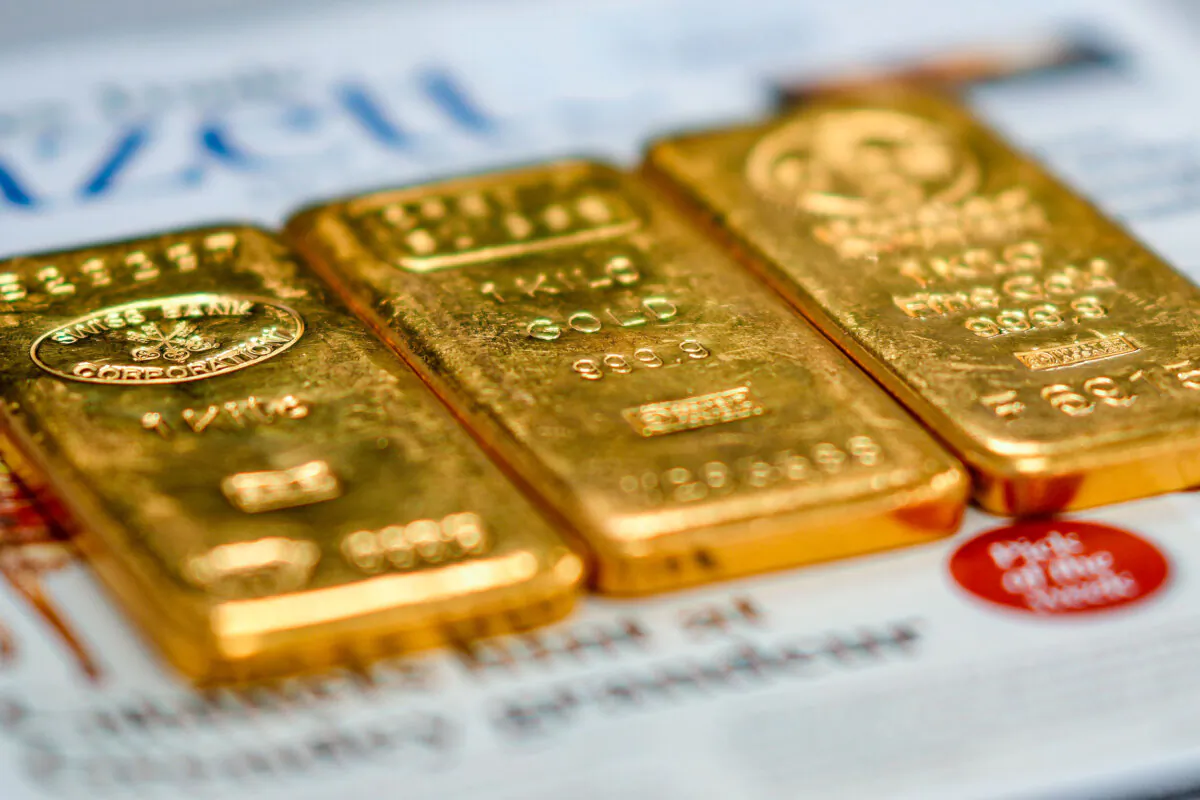
Gold has also been a shining star of Main Street, with investors rushing to buy it in conventional retail stores such as Costco, which began selling gold bars in 2023.
According to some estimates, the wholesale club sells more than $100 million worth of gold bars every month.
In May, the demand for gold bars was so strong that Costco set a limit of one transaction per day per membership, with a maximum of two units.
Since ancient times, gold has been a popular metal because of its value as a raw material in making jewelry and religious artifacts, and as a status symbol for the wealthy and powerful.
It has also been popular because of its exchange value, which stems from its intrinsic properties, including scarcity, durability, uniformity, divisibility, and portability.
These properties make gold an ideal form of money, adopted by empires, states, and nations.
In the classical and medieval eras, gold became the currency of the land. Gold coins became the cornerstone of commerce in the Greek, Roman, and Byzantine empires.
In the modern period of global expansion, mercantilism, and industrialization, nations feverishly sought gold around the globe to use as a commodity money, and eventually to back national currencies, establishing what is known as the gold standard.
For instance, the UK adopted the gold standard in 1816, while the United States followed much later in 1944 under the Bretton Woods system, which pegged currencies to the U.S. dollar, which in turn was convertible to gold at $35 per ounce.
In 1971, this convertibility was terminated. Gold thus became a conventional asset, with its prices set by market forces—demand and supply.
Despite the end of the gold standard, the precious metal has retained some of its popularity for its value as a raw material in jewelry making, technology, and aerospace applications.
It has also gained a new status as a strategic asset, serving as a safe-haven asset during times of uncertainty, a reserve asset for central banks, and a component of gold exchange traded funds (ETFs).
Central Bank Demand Keeps Surging
According to data from the World Gold Council, a surge in demand for gold by central banks has been one of the critical drivers behind the rise in the price of gold in recent years. Another factor is the demand for gold ETFs.
For instance, global central banks bought a net 20 tons of gold in May, close to but still below the 12-month average of 27 tons.
“Fresh tensions in the Middle East may have reinforced the strategic appeal of gold for central banks looking to safeguard reserves against geopolitical shocks,” the World Gold Council stated.
“Gold remains a focus for central banks worldwide, with 95 percent of respondents believing that official gold reserves will continue to increase, up from 81 percent last year. A record 43 percent of central bankers also indicated that their gold reserves would rise over the next 12 months.”
Thomas Winmill, portfolio manager at Midas Funds, said there is another factor driving the demand for gold by central banks: the use of the U.S. dollar as a policy tool through sanctions, suspension of Society for Worldwide Interbank Financial Telecommunication (SWIFT) privileges, tariffs, and other such measures.
“It has caused the central banks of certain ‘outlaw’ nations to use other forms of value, such as gold, as a store of wealth in place of U.S. dollar-denominated assets, such as U.S. Treasury securities,” he told The Epoch Times.
Vince Stanzione, CEO and founder of First Information, said he agrees.
“The main reason for gold rallying is that more central banks around the globe are buying and holding gold on their balance sheets rather than the U.S. dollar,” he told The Epoch Times.
“The trend was accelerated in 2022 when the U.S. started freezing Russian U.S. dollar assets, which caused many around the globe to rethink their currency holdings.”
Academic research by Yao Qian, Dan A. Ralescu, and Bo Zhang, published in Resources Policy, summarizes various factors that influence the global gold price: the U.S. Dollar Index, federal funds rate, exchange rate, oil price, and the S&P 500—all of which tend to move inversely to gold prices—as well as the consumer price index (CPI), which generally moves in tandem with gold.
Gold experts highlight the impact of both the exchange rate and the rise in CPI on the recent surge in the price of gold.
“What we’re witnessing is the compounding effect of rising fiscal pressure, accelerating central bank accumulation and a quiet but deliberate global repositioning away from sovereign debt,” Jason Laurie, business development manager at Texas-based Dillon Gage Metals, told The Epoch Times.
“Gold isn’t responding to a single event; it’s adjusting to this set of macros. Layer in softening real yields, sticky inflation, and a weakening U.S. dollar (DXY is down over 10 percent year‑to‑date), and the runway is clear.”
Sunil Kansal, head of consulting at Shasat, said he sees gold rising further if current global uncertainties continue or worsen.
“Ongoing geopolitical tensions, persistent weakness in global currencies, and investor concerns about economic stability have all contributed to gold’s strong performance so far. If these conditions persist, gold is likely to remain in demand as a safe haven,” he said.
However, Kansal said he sees investors switching back to stocks if these factors ease, putting downward pressure on gold prices.
“The future path of gold will depend on how these opposing forces unfold, making it sensitive to both market sentiment and macroeconomic shifts,” he said.
 Friends Read Free
Copy
Facebook
Tweet
Friends Read Free
Copy
Facebook
Tweet