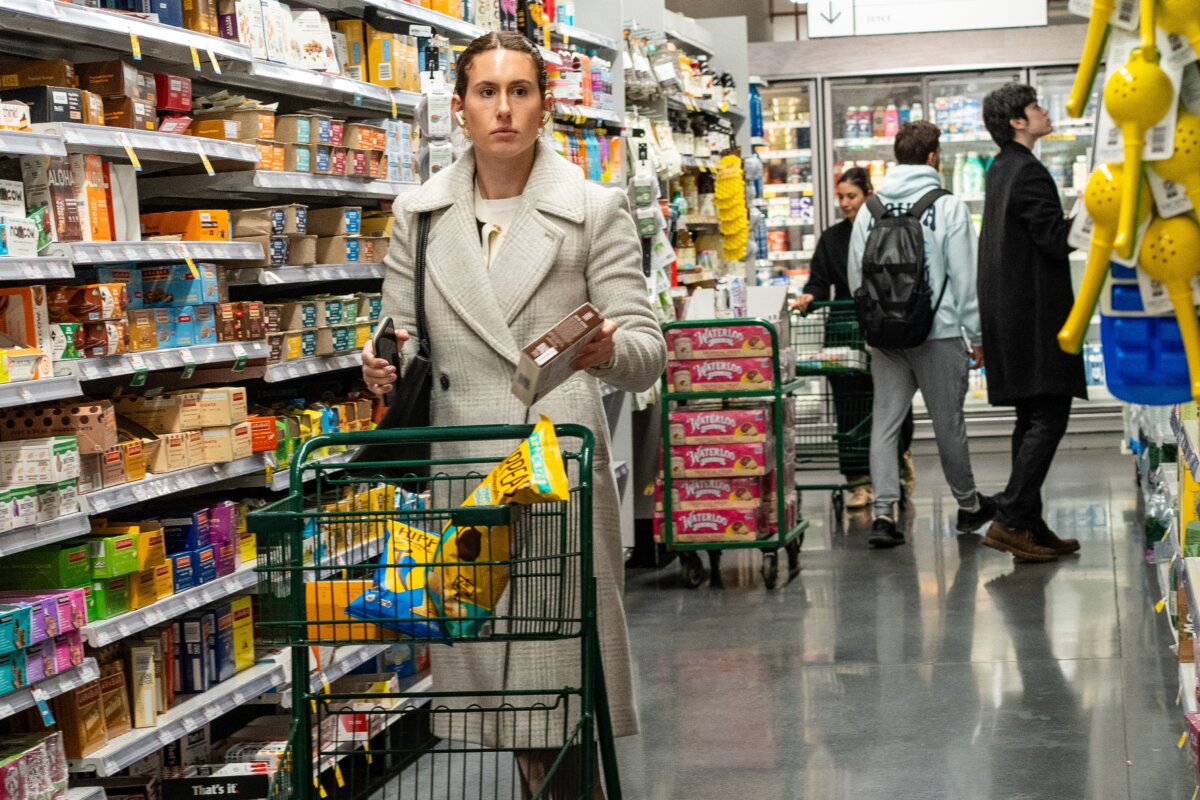

U.S. retailers are doing what they can to keep tariffs from affecting consumers, but they acknowledge that eventually something has got to give.
Since April, the United States has introduced a new, wide-ranging tariff schedule affecting imports from nearly every country in the world, as well as certain raw materials used in manufacturing and packaging. In the past four months, publicly traded retailers in the United States have told their investors that they are taking measures to avoid raising prices in the short term.
Most often, retailers said they either front-loaded their ordering for the year to avoid raising prices or they shifted their supply chain to reduce their reliance on foreign suppliers based in China and elsewhere.
Walmart
In its latest earnings call, held on Aug. 21, Walmart CEO Doug McMillon said the low-cost retailer based in Bentonville, Arkansas, has not seen a significant decline in consumer confidence, nor has it raised prices notably because of tariff pressure.
However, McMillon said Walmart has dodged price increases so far by front-loading its ordering schedule. As time goes on, the price it pays will continue to rise.
“As we replenish inventory at post-tariff price levels, we’ve continued to see our cost increase each week,” McMillon said.
Amazon
On July 31, Amazon CEO Andy Jassy said on the company’s quarterly earnings call that the Seattle technology giant, like Walmart, had not seen prices go up or demand go down during the first half of 2025. Nevertheless, he said it remains to be seen how the ever-evolving tariff situation will affect Amazon’s retail business.
“We just don’t know what’s going to happen moving forward,” Jassy said. “It’s hard to know where the tariffs are going to settle, particularly in China.”
Jassy said that because the Amazon ecosystem is composed of millions of individual sellers using the service, it is hard to summarize the total impact of tariffs. Each seller, he said, has different economic factors in play.
Costco
Membership-based mixed merchandise retailer Costco, based in Issaquah, Washington, decided to rework its supply chain to avoid tariff-related price increases.
In May, Costco executives said during the company’s quarterly earnings call that it was rerouting goods to avoid countries with large potential tariff exposure and that it had front-loaded its ordering to minimize the impact of tariffs on consumers.
“We remain committed to providing quality items at the lowest possible prices, and raising prices is always seen as a last resort,” Costco CEO Ron Vachris said during the company’s latest earnings call.
Target
On Aug. 20, leaders of the already struggling mixed merchandise retailer told investors that tariffs are weighing heavily on the company and driving down demand for discretionary purchases.
Target CEO Brian Cornell told investors that he expects that tariffs will put pressure on the Minneapolis-based company’s profitability. However, the company will avoid raising prices for as long as it can. For now, it will avoid sourcing products from China and make other logistics moves to minimize the impact of tariffs.
“We were facing some major financial and operational hurdles as we entered the year,” Cornell said. “This was further complicated by the multiple changes in tariff policy.”
Home Depot
Leadership at Home Depot forecasted modest price hikes on a number of imported goods and said it could potentially remove some items from its shelves as the tariff situation comes into focus.
“There will be modest price movement in some categories, but it won’t be broad-based,” Richard McPhail, the company’s chief financial officer, said on the Aug. 19 earnings call.
The Atlanta-based chain of hardware and garden stores sources more than half of its merchandise domestically.
Lowe’s
Home Depot’s chief competitor in its sector, Lowe’s, is weighing the possibility of raising prices, too.
In an Aug. 20 conference call, CEO Marvin Ellison said the company is “not donating share to any competitor by sitting back and not being price competitive.”
Because of the company’s practice of selling out older stock first, price hikes should not materialize until the second half of 2025, Lowe’s chief financial officer Brandon Sink said on the same call. Like other retailers, the Mooresville, North Carolina, company is diversifying its supply chain to reduce tariff impacts.
Kroger
Bucking a trend among its peers, grocery store operator Kroger will be lowering its prices to keep consumers coming into its stores.
In June, interim CEO Ronald Sargent said tariffs would have only a small impact on its business. Raising prices at the Cincinnati-based chain, he said, will be a “last resort.”
Best Buy
Leaders of electronics retailer Best Buy predicted that Americans will halt their spending on big-ticket and discretionary purchases while tariff uncertainty hangs over the U.S. economy.
“We believe the consumer has remained resilient while dealing with persistent inflation, making them value-focused and thoughtful about big-ticket purchases,” CEO Corie Barry said in a May earnings call.
Because of the anticipated pressure on its suite of gadgets and durable goods, the company based in Richfield, Minnesota, dropped its sales and earnings forecasts in May.
 Friends Read Free
Copy
Facebook
Tweet
Friends Read Free
Copy
Facebook
Tweet