

Bitcoin prices reached an all-time high of $120,000 as the United States kicked off “crypto week.”
Washington will be voting on a trio of bills that could implement legislative changes for the cryptocurrency industry, potentially fulfilling President Donald Trump’s campaign promise of instating digital asset-friendly regulatory frameworks.
“We are taking historic steps to ensure the United States remains the world’s leader in innovation, and I look forward to ‘Crypto Week’ in the House,” House Financial Services Committee Chair French Hill (R-Ark.) said in a recent statement.
Here are the three bills that lawmakers will vote on during Crypto Week—July 14 to July 18—affecting how consumers invest in digital assets and further legitimizing the cryptocurrency industry.
Feeling Smart About ‘Genius Act’
In June, the Senate passed the Guiding and Establishing National Innovation for U.S. Stablecoins Act, commonly known as the Genius Act, in a 68–30 vote.
After clearing the upper chamber, the bill heads to the House for a straight-up vote.
If approved, it will travel to the president’s desk for his signature.
Trump says he will sign the legislation after urging lawmakers in both chambers to approve the Genius Act without amendments.
The legislation is pivotal for the $200 billion stablecoin market as it puts together rules and regulations for who can issue the crypto assets and how they manage them.
Stablecoins are haven assets in a volatile sector, designed to be pegged to the U.S. dollar and Treasury securities.
Investors rely on these instruments during times of turmoil in the crypto market, and many financial market participants use stablecoins instead of cash for quicker settlements at a lower expense.
Proponents, including Treasury Secretary Scott Bessent, also say it will bolster demand for U.S. Treasury bonds.
“This newfound demand could lower government borrowing costs and help rein in the national debt. It could also onramp millions of new users—across the globe—to the dollar-based digital asset economy,” Bessent said on social media platform X before the Senate vote.
However, critics argue that the Genius Act would not establish a reliable framework that curbs industry abuse.
“The current version of the Genius Act leaves consumers exposed to scams, fraud, and abuse. We can plug these holes and make sure that consumers are protected when making electronic payments, regardless of the technology underpinning the transaction,” Sen. Elizabeth Warren (D-Mass.) said.
The Genius Act does not feature necessary safeguards to prevent stablecoins from blowing up the economy, according to Warren.
Still, advancing stablecoins domestically would be a boon for the U.S. economy, market watchers say.
“Just as a majority of global trade is settled in U.S. dollars, if the stablecoin market operated in a comparable method, it would advance the United States’ position in the asset class,” LPL Financial economists said in a report shared with The Epoch Times.
Seeking Clarity From ‘Clarity Act’
The Digital Asset Market Structure and Investor Clarity Act—also known as the Clarity Act of 2025—is a bill that establishes a comprehensive market structure framework for the crypto industry.
Last month, the House Financial Services Committee and the House Agriculture Committee advanced the bill to a House floor vote.
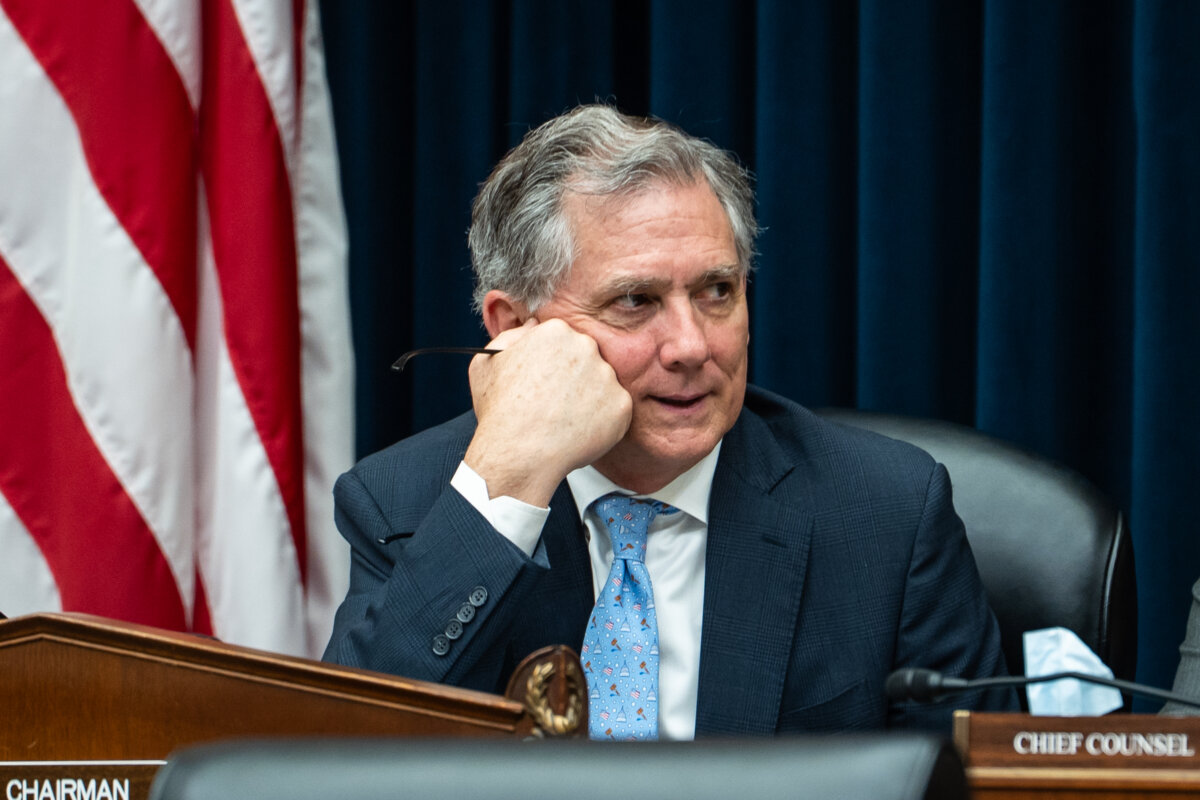
It would outline “rules of the road” for industry participants, from consumers to platforms, that make rules and regulations more predictable, according to Hill.
“We have none of that today. What we’ve had is a mismatch of rules by enforcement in the Biden administration,” Hill said in an interview with CBS’s “Face the Nation” on July 13.
First, the legislation would offer clear distinctions between digital commodities, such as bitcoin and ether, and digital securities, such as tokens tied to raising capital. Lawmakers would also assign oversight to the Securities and Exchange Commission for securities and the Commodity Futures and Trade Commission for commodities.
The Clarity Act would also mandate crypto players—brokers, dealers, and exchanges—to register at the federal level with the Commodity Futures Trading Commission.
A key component of the bill is restricting exchanges from commingling client funds with their own.
This is what occurred at FTX leading up to its collapse. The exchange mixed nearly $9 billion in customer deposits with corporate funds, exploiting the pooled resources for various activities, such as speculative trading, purchasing luxury real estate, and making political donations.
Platforms will be required to submit financial disclosures and introduce anti-fraud protections.
Members of the Congressional Progressive Caucus say the bill implements inadequate consumer protections, “enables corruption through pay-for-play schemes,” and weakens regulatory enforcement.
“With loopholes for decentralized finance, unclear treatment of memecoins, and weakened SEC authority, the bill poses serious risks to investors, national security, and the integrity of the financial system,” the caucus said last month.
Anti-CBDC Surveillance State Act
For the past few years, the concept of a central bank digital currency (CBDC) has been a contentious issue.
The Anti-CBDC Surveillance State Act, which the House Financial Services Committee approved in April, is aimed at prohibiting the creation of a retail CBDC, containing several key provisions.
A core component of the legislation is that the Federal Reserve would be banned from issuing a digital dollar to the public or issuing a CBDC through banks or intermediaries.
The U.S. central bank would further be restricted from using a digital currency to implement monetary policy—influencing interest rates, for example—and studying or piloting CBDCs.
The bill also reiterates that “the Federal Reserve does not have the authority to issue a CBDC or any substantially similar digital asset, unless Congress provides explicit authorization.”
In March 2022, then-President Joe Biden signed an executive order supporting the research and development of a CBDC.
“My administration places the highest urgency on research and development efforts into the potential design and deployment options of a United States CBDC,” the executive order reads.
While the Federal Reserve has not committed to creating a CBDC, the monetary authorities have engaged in ongoing research to explore how a digital dollar could bolster payment efficiency and enhance user safety.
Federal Reserve Chair Jerome Powell, appearing before Congress in February, told lawmakers that the institution will never have a CBDC while he is at the helm.
During the 2024 election campaign, Trump promised to block all efforts to create a CBDC.
“As your president, I will never allow the creation of a central bank digital currency,” Trump said in January 2024, calling it a “dangerous threat to freedom.”
“Such a currency would give a federal government absolute control over your money. They could take your money, and you wouldn’t even know it was gone.”
 Friends Read Free
Copy
Facebook
Tweet
Friends Read Free
Copy
Facebook
Tweet