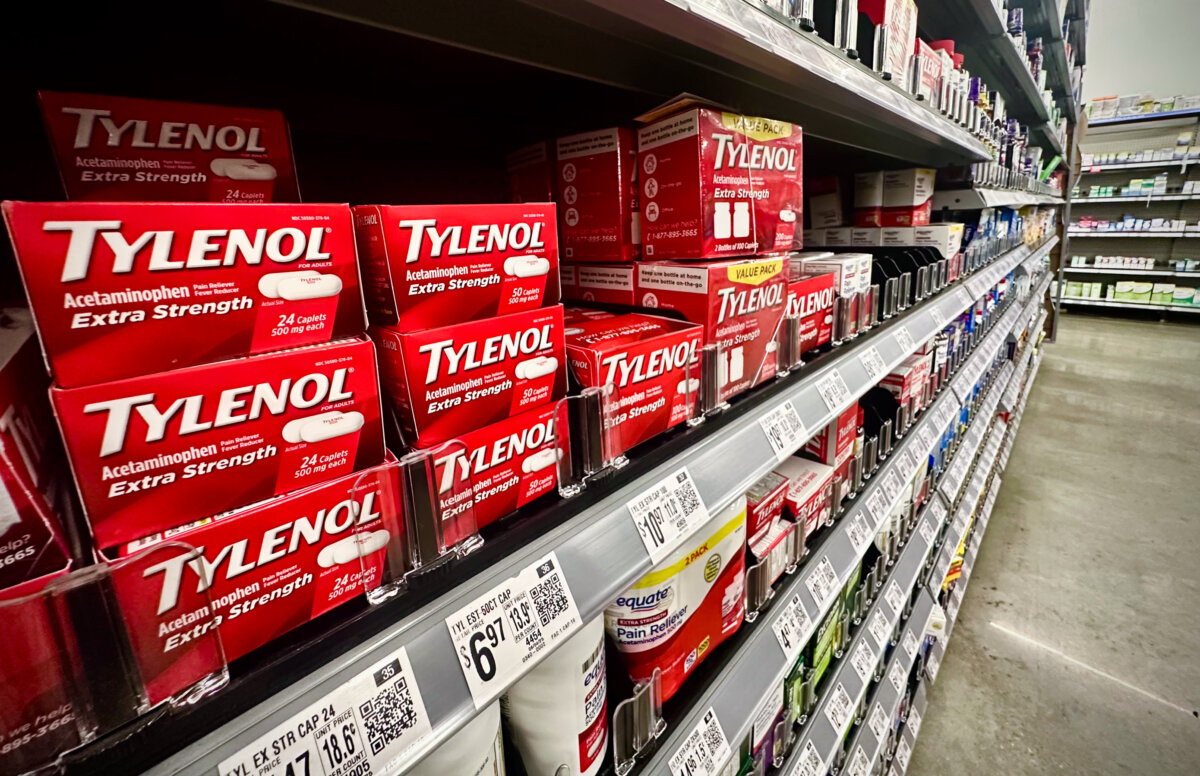

Kimberly-Clark said on Nov. 3 that it will purchase Tylenol and Band-Aid parent company Kenvue in a $48.7 billion deal, forming an enormous consumer staples conglomerate.
The cash-and-stock deal includes Huggies-maker Kimberly-Clark paying $21.01 for each Kenvue share—a 41 percent premium from its Oct. 31 closing price. The acquisition, one of the largest on Wall Street this year, is expected to close in the second half of 2026.
The merger would bring 10 well-known, billion-dollar brands under the same umbrella, “that touch nearly half the global population through every stage of life,” according to the companies—from Kimberly-Clark’s Kleenex and Cottonelle to Kenvue’s Benadryl and Visine.
The combined company is projected to generate approximately $32 billion in annual net revenue and around $7 billion in adjusted EBITDA (earnings before interest, taxes, depreciation, and amortization) in 2025, the companies said in a news release.
In addition, Kimberly-Clark and Kenvue anticipate realizing roughly $1.9 billion in cost synergies within three years of closing the deal.
It will also bolster investments in research and development, and quality and innovation capabilities.
Kenvue Chair Larry Merlo stated that the board, following a strategic review, believes the corporate combination will represent “the best path forward for our shareholders and all other stakeholders.”
Both businesses share a “commitment to developing science and technology to provide extraordinary care,” says Kimberly-Clark CEO Mike Hsu.
“Over the last several years, Kimberly-Clark has undertaken a significant transformation to pivot our portfolio to higher-growth, higher-margin businesses while rewiring our organization to work smarter and faster,” Hsu said in a statement. “We have built the foundation and this transaction is a powerful next step in our journey.”
Hsu will remain as the CEO, while three Kenvue board members will join the Kimberly-Clark board.
Kimberly-Clark shareholders will own approximately 54 percent of the newly formed company, with Kenvue shareholders owning the remaining shares.
Shares of Kimberly-Clark fell about 15 percent in premarket trading. Kenvue’s stock surged more than 17 percent.
The announcement comes as Kenvue released its third-quarter earnings report.
For the third quarter ending Sept. 28, Kenvue reported a net sales decrease of 3.5 percent and revenues totaling $3.76 billion—slightly below analysts’ estimates. The company also expects a low-single-digit drop in net and organic sales in the year ahead.
Last year, Johnson & Johnson separated itself from its consumer health unit, spinning off Kenvue.
“Now they have been able to focus on pharma innovation and medical devices, which tend to command higher growth and margins, and have avoided the cloud that the Tylenol controversy has caused KVUE,” Jay Woods, chief global strategist at Fredom Capital Markets, said in a recent note emailed to The Epoch Times.
Caution Ahead
The merger could present some risks for Kimberly-Clark.
In September, for example, President Donald Trump and senior administration officials said there is evidence to suggest that acetaminophen use in pregnant women, particularly late in pregnancy, may cause long-term neurological effects in their children.
Weeks after the White House’s announcement, Texas Attorney General Ken Paxton submitted a lawsuit against Johnson & Johnson and Kenvue. In the court filings, Paxton argued that the company “deceptively” marketed Tylenol to pregnant women and that the medication is linked to a higher risk of autism.
“Big Pharma betrayed America by profiting off of pain and pushing pills regardless of the risks. These corporations lied for decades, knowingly endangering millions to line their pockets,” Paxton said in a statement. “By holding Big Pharma accountable for poisoning our people, we will help Make America Healthy Again.”
The Informed Consent Action Network, a pro-medical freedom nonprofit organization, also confirmed that it had filed a citizen petition with the Food and Drug Administration (FDA). The petition requests that the federal agency provide additional details on warning labels for over-the-counter drug products that contain acetaminophen.
Kenvue has pushed back, arguing that acetaminophen is one of the safest and most widely studied pain relievers and fever reducers.
“Without it, women face dangerous choices: suffer through conditions like fever that are potentially harmful to both mom and baby or use riskier alternatives. High fevers and pain are widely recognized as potential risks to a pregnancy if left untreated,” the Tylenol maker said in a statement last month.
FDA Commissioner Marty Makary launched a process for label changes regarding Tylenol and similar products and issued a letter alerting physicians nationwide about potential risks.
“The FDA is taking action to make parents and doctors aware of a considerable body of evidence about potential risks associated with acetaminophen,” Makary said.
 Friends Read Free
Copy
Facebook
Tweet
Friends Read Free
Copy
Facebook
Tweet