

Energy costs are continuing to revive inflationary pressures as U.S. import and export prices climbed to their highest levels in four years.
Import prices rose by 1.9 percent in April, the most since March 2022, the Bureau of Labor Statistics said on May 14. This is up firmly from the 0.9 percent jump in March and the 1 percent increase in February.
Economists had expected a reading of 1 percent.
The jump was fueled mainly by a 19 percent spike in petroleum and petroleum product prices, as well as a more than 16 percent jump in fuel and lubricant prices.
Prices for nonfuel imports rose by 0.8 percent, from the 0.2 percent increase in the previous month, the bureau said.
On a year-over-year basis, import prices are up by 4.2 percent.
The cost of Chinese products entering the United States rose by 0.8 percent, the largest increase since July 2008. Prices of imported goods from Canada also climbed by nearly 6 percent, the biggest increase in four years. Import prices from the European Union, Japan, and Mexico also edged higher.
The 11-week-old conflict in Iran has snarled traffic in the Strait of Hormuz. Although the global choke point handles 20 percent of the world’s oil supply, the narrow waterway sees a broad array of consumer and capital goods. This has fueled a rise in global commodity prices.
The Bloomberg commodity index—a basket of major commodity futures for agriculture, energy, livestock, and metals—has risen by almost 30 percent this year.
A barrel of crude oil is still trading at about $100 in the United States and global markets.
In addition to war-driven energy prices, the global economy is still absorbing tariffs.
“Following this week’s stronger-than-expected [consumer price index] figures, producer price data also surprised to the upside, reinforcing the view that inflationary pressures remain entrenched,” Daniel Takieddine, cofounder and CEO of Sky Links Capital Group, said in a note emailed to The Epoch Times.
April’s annual consumer inflation rate picked up steam, coming in at 3.8 percent—the highest since May 2023.
Additionally, producer inflation vaulted 1.4 percent in April, above expectations. Core wholesale inflation, which strips out the volatile energy and food categories, also advanced by 1 percent.
American Goods
Costs for shipments of U.S. goods also accelerated at the fastest pace since March 2022.
Export prices climbed by 3.3 percent, from the downwardly adjusted 1.5 percent in March. They were also higher than the consensus estimate of 1.1 percent.
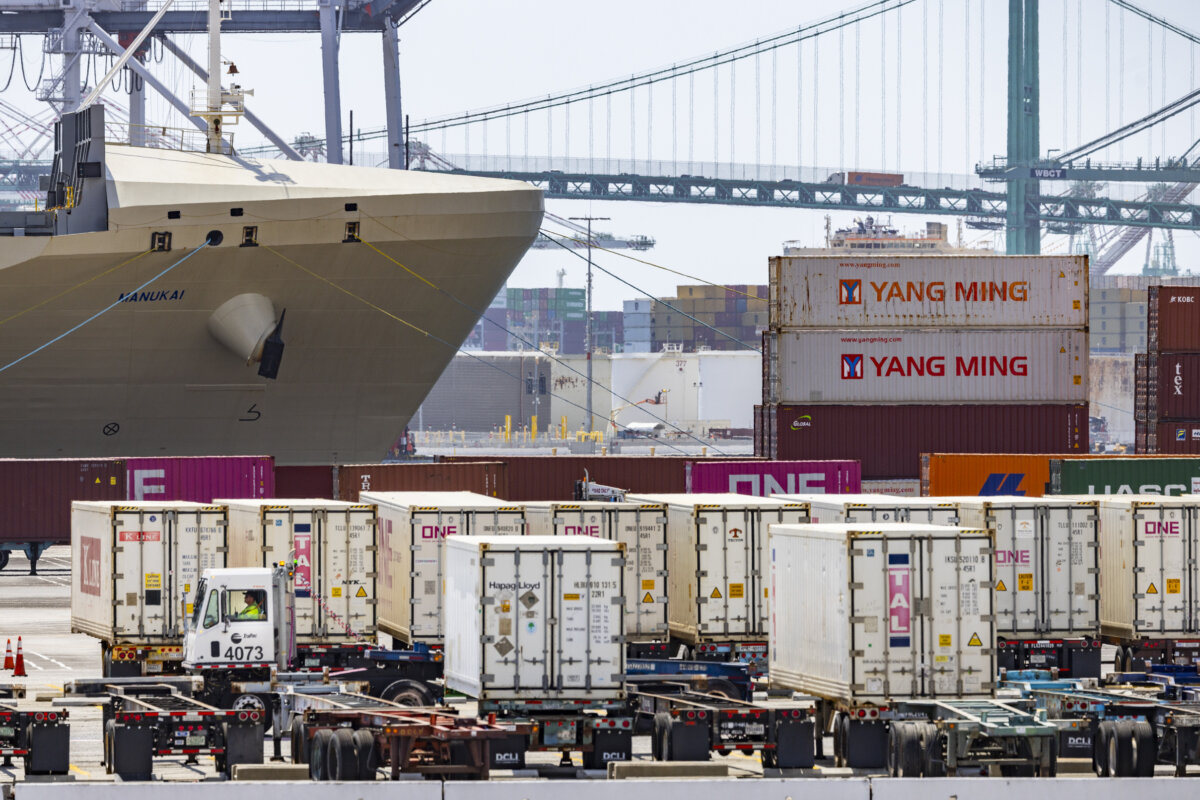
Nonagricultural export prices represented a large share of the increase. The bureau reported higher prices for industrial supplies and materials, capital goods, and consumer goods. Conversely, prices for shipments of automotive vehicles, parts, and engines declined.
The price index for agricultural exports rose by 1.6 percent, driven by fruit, meat, and soybeans.
Over the 12-month period ending in April, export prices soared by 8.8 percent, the highest since September 2022.
Inflation Expectations
Price pressures could continue building.
The Cleveland Federal Reserve’s Inflation Nowcasting model suggests that the 12-month inflation rate could reach 4.2 percent in the May consumer price index report.
Structural inflation trends could be tamer, with the core inflation rate remaining at 2.8 percent.
The current climate could prove challenging for incoming Federal Reserve Chairman Kevin Warsh.
Warsh, who was confirmed by the Senate as Fed chair on May 13, has expressed support for loosening monetary policy. However, with inflation poised to stay elevated, monetary policymakers will need to look through both the war-driven oil price shock and the administration’s tariffs.
A concern for Chicago Fed President Austan Goolsbee is that inflation is becoming embedded in the U.S. economy.
“The numbers today were mostly what was expected, but the unexpectedly disappointing part in my mind was on the services side,” Goolsbee said at a May 12 Greater Rockford Chamber of Commerce event. “You continue to see the services going up.”
For Fed officials, services inflation can provide a broader and more accurate view of price trends, since services prices can be stickier than goods prices.
Wall Street ostensibly agrees that inflation could be entrenched, with traders pricing in higher interest rates in the coming year.
New CME FedWatch data suggest that investors assume at least one rate hike sometime in 2027.
The two-year Treasury yield, which tracks expectations for Fed policy, is hovering close to 4 percent.
 Friends Read Free
Copy
Facebook
Tweet
Friends Read Free
Copy
Facebook
Tweet