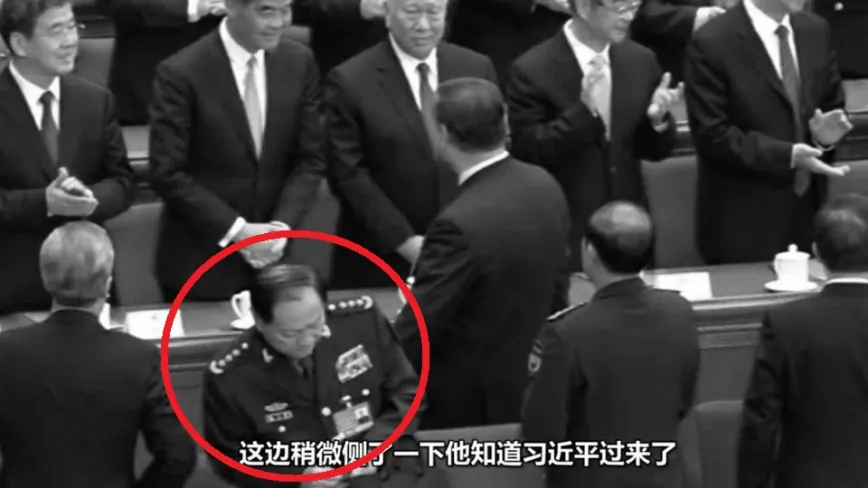
A high-profile investigation into one of China’s most senior military figures is entering its final phase after more than three months, with the regime expected to announce the outcome as early as July.
Multiple sources from within the CCP who spoke to The Epoch Times on condition of anonymity out of fear of reprisal revealed that the internal probe into Zhang Youxia, a vice chairman of the powerful CCP’s Central Military Commission, has largely concluded its fact-finding stage and is now focused on finalizing details. If no new developments emerge, the case could be completed within two months, they said.
The case offers a rare glimpse into how sensitive investigations involving top-ranking CCP officials in the Chinese military are handled behind closed doors and how the regime seeks to control both legal framing and political fallout.
Closed-Door Process Expected
According to one source within the regime, the investigators are expected to follow a well-established disciplinary process. The CCP’s internal disciplinary authorities will first formally expel Zhang and another senior officer, Liu Zhenli, from the party and strip them of their military positions. The case will then be transferred to military prosecutors for formal charges.
Even at that stage, however, any trial is unlikely to be public.
“These types of cases are rarely heard in open court,” the source said. “Past cases involving military leaders were handled behind closed doors. The public typically sees only the final outcome, not the details of the court-martial.”
A second source close to the Chinese military said the regime has already settled on the broad direction of the charges, which are expected to center on corruption-related offenses.
These include accepting bribes, trading influence in personnel appointments, and using official power to benefit family members or close associates, the source said. However, the challenge for the regime lies not in determining the allegations, but in how to present them.
China’s criminal code does not include a charge equivalent to “anti-Party activity,” meaning politically sensitive cases must ultimately be framed in legal terms such as bribery or abuse of power.
“The key issue now is how to describe the case externally,” the source said. “The amount of money involved is not the main point—what matters is controlling the narrative so it is not interpreted as a political struggle.”
Signals of Uncertainty
Despite official announcements that Zhang has been under investigation since January, his name still appears on some official Chinese regime websites as of April 30. Similarly, information about Ma Xingrui, a senior CCP official previously reported to be under investigation, also remains visible on certain official websites.
A China-based political scholar told The Epoch Times that the CCP typically limits the level of detail disclosed in cases involving officials of such senior rank.
In past cases, publicly released figures related to alleged bribery have often been carefully calibrated rather than comprehensive, he said.
“[The regime] tends to provide a number within a relatively fixed range—large enough to demonstrate wrongdoing, but not so large as to trigger broader speculation,” the scholar said. “The full picture is known internally, but external messaging is more restrained.”
A brief statement issued on April 30 via the state-run People’s Daily announced the removal of several delegates from the CCP’s rubber-stamp congress but did not mention Zhang or Liu, nor provide additional context.
The scholar said the omission may point to deeper complexities behind the case.
“It suggests the situation may be more complicated than it appears from the outside,” he said, adding that disagreements within senior CCP leadership could be affecting the pace and handling of the investigation.
Several of the regime insiders who spoke to The Epoch Times revealed that while top CCP leaders are eager to conclude the series of military-related cases, there is no full consensus on timing or approach across different levels of the regime.
With information tightly controlled and proceedings expected to remain opaque, the case is likely to unfold largely through carefully managed disclosures, making each signal closely watched.
Sun Chen contributed to this report.
 Friends Read Free
Copy
Facebook
Tweet
Friends Read Free
Copy
Facebook
Tweet