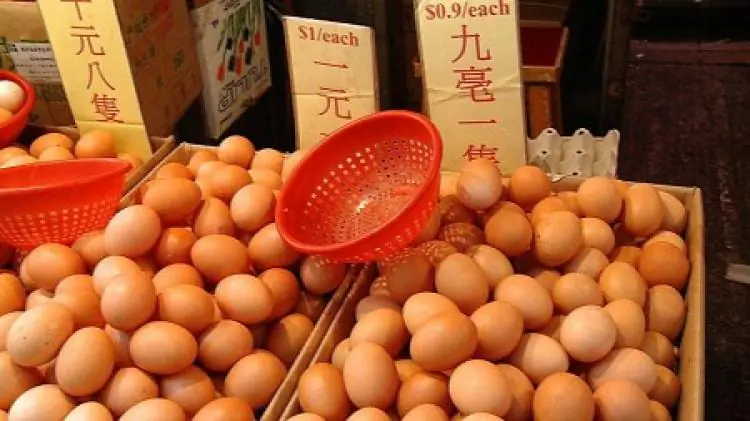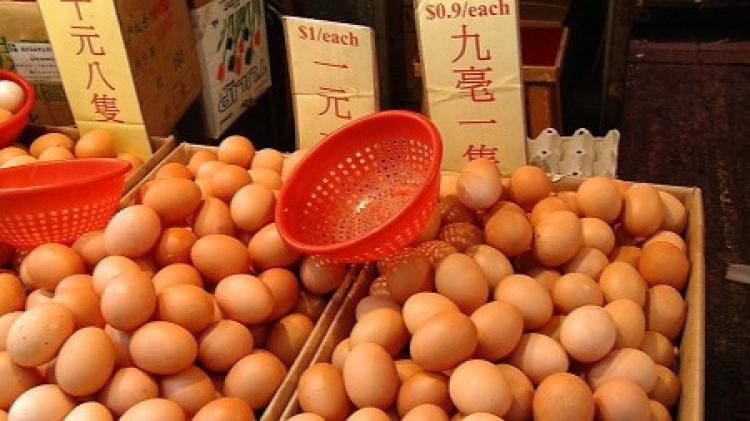

A local market watchdog in China’s eastern Shandong Province reported in late May a serious food safety issue involving a state-owned enterprise selling eggs containing veterinary drug residues far above the national threshold.
According to China Food Safety Network, a state-owned mouthpiece on food security in China, egg samples from Yantai Phoenix Digital Industry Development Group Company were found to have sulfonamide residues 69 times above the national food safety threshold.
Sulfonamides are synthetic broad-spectrum antibiotics. Prolonged intake of excessive sulfonamides may result in kidney and liver toxicity, disrupt blood cell production, trigger severe allergic reactions, and contribute to the development of antibiotic-resistant bacteria.
Food safety scandals have become a recurring problem in China.
In mid-May, market supervisory authorities in China’s northern Heilongjiang Province announced that pork products from a subsidiary of Shuanghui International Holdings Limited (now WH Group Limited) contained the antibiotic lincomycin at nearly 38 times the permitted level, according to state-run Xinhua News Agency.
In March, state media outlet Beijing News reported that a batch of freeze-dried strawberries from Zhangzhou, Fujian Province, contained cadmium levels as high as 0.728 mg/kg, along with more than 20 types of pesticide residues exceeding safe limits. The cadmium level is 14.56 times higher than the national safety limit of 0.05 mg/kg for fresh fruits and fruit products.
Long-term excessive intake of cadmium can cause chronic poisoning, severely damaging the liver, kidneys, and bones. The National Toxicology Program, housed within the U.S. Department of Health and Human Services, classified cadmium as a human carcinogen in 1980.
Excessive Pesticide Use in Chinese Agricultural Products
A former organic farmer and livestock breeder in mainland China, who spoke to The Epoch Times on condition of revealing only his surname out of fear of reprisal, told the publication in a recent interview that poultry and pig farms in China operate with extremely high stocking densities. To prevent mass illness and financial losses, companies routinely add large amounts of additives and antibiotics to animal feed, the former farmer, Zhang, said. Over time, these drugs accumulate in the animals’ bodies and eventually appear in products such as eggs.
Zhang also said that many Chinese agricultural products are heavily treated with pesticides and chemical fertilizers to improve appearance.
“The better-looking the produce—uniform in size, bright green color—the more likely it has been treated with heavy pesticides and fertilizers,” he said.
“Especially fruits—they may look perfect but have almost no natural flavor.”
As early as 2015, The Epoch Times reported that garlic, mushrooms, soybeans, taro, and corn from China should be avoided because farmers often applied excessive pesticides, fertilizers, and preservatives to make them look deceptively fresh and healthy.
Zhang advised consumers to be cautious with packaged foods sold in Chinese supermarkets, which often contain excessive additives and preservatives.
“Agricultural products are something we eat every day, so the health impact is very real,” Zhang said.
CCP Economic Policy Prioritizes High Yield and Low Price
Zhang believes China’s food safety problems are systemic and difficult to resolve. Beyond weak government oversight, the Chinese Communist Party’s (CCP’s) economic policies actively encourage companies to maximize production volume while driving down costs.
According to Zhang, this approach serves two purposes: feeding China’s massive population and boosting exports. Since exports are a cornerstone of the Chinese economy, authorities push for higher output to enable lower prices.
“What many Western countries fear most is Chinese product ‘dumping’ at low prices,” Zhang said.
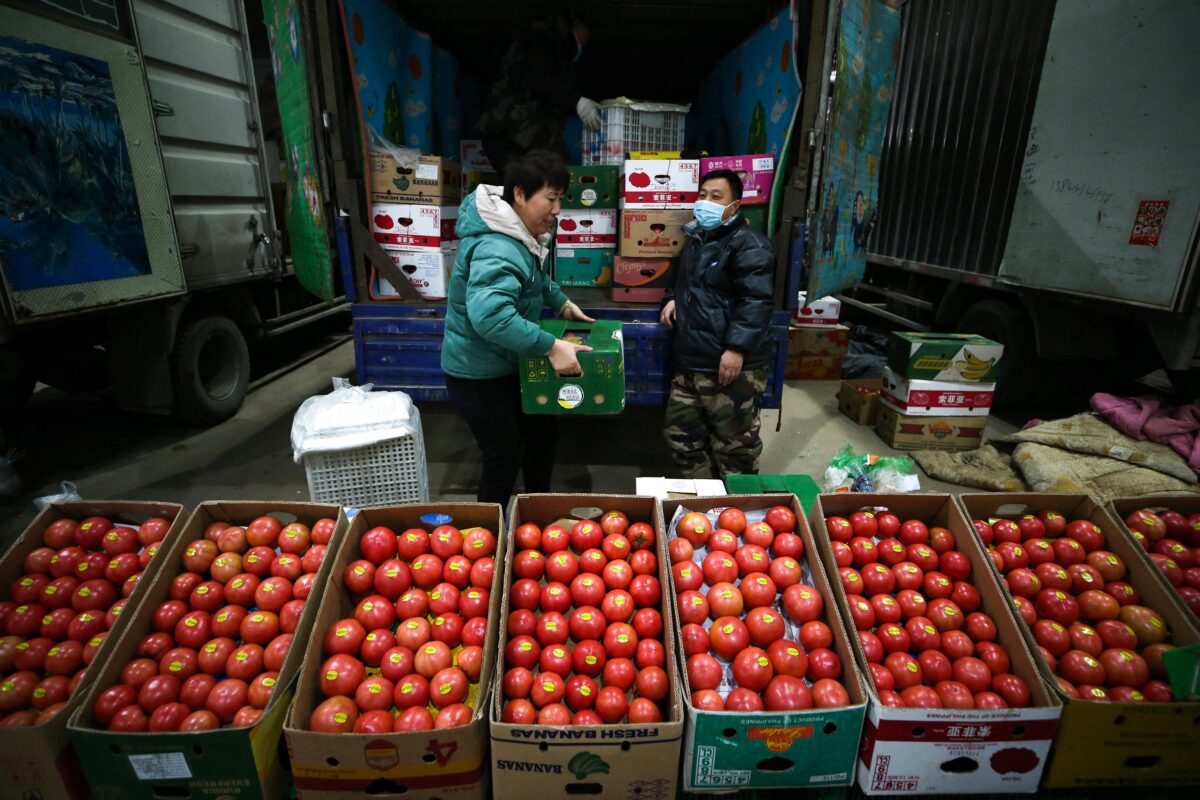
On May 27, French public broadcaster Franceinfo reported that since 2021, Chinese tomatoes and tomato paste have flooded the European market due to massive production capacity and rock-bottom prices.
The report raised concerns that such low prices may involve labor exploitation. It also revealed that four out of five tomato pastes labeled as “Made in Italy” actually contained tomatoes most likely originating from China, while European consumers are often “kept in the dark.”
3 Main Reasons for China’s Food Safety Problems
U.S.-based Chinese human rights lawyer Wu Shaoping said in a recent interview with The Epoch Times that China’s food safety crisis stems from three fundamental institutional issues: ineffective government regulation, suppression of independent oversight, and the existence of a special food supply system for CCP officials.
Although multiple agencies—including the State Administration for Market Regulation, the Ministry of Agriculture and Rural Affairs, and the National Health Commission—are responsible for food safety, Wu described the system as “lazy governance.”
With so many departments involved, responsibility becomes diluted, resulting in a situation where “everyone is in charge, so no one is truly responsible,” Wu said.
Wu also pointed to deep-rooted corruption and local protectionism. He said that local governments often shield problematic companies because they are major taxpayers and employers. Even when serious violations are discovered, penalties are usually too light to have any meaningful impact.
In the contaminated egg case, according to China Food Safety Network, Yantai Phoenix Digital Industry Development Group Company is a fully state-owned enterprise under the Laishan District, Yantai, and is wholly controlled by the Laishan District Finance Bureau.
However, the Laishan District Party Committee Propaganda Department denied that the company produced the contaminated eggs, stating that the batch had not been sold to the public prior to inspection and had caused no societal impact.
Wu also said that the CCP maintains a privileged “special supply” food system for high-ranking officials and their families and that they have little incentive to address the root causes of the problem.
“Only if this special supply system is abolished and officials have to buy food from the same market as everyone else will they truly feel motivated to solve the issue,” Wu said.
Food safety is no longer an exclusive Chinese issue. In a related development, in January, global dairy giants Nestlé, Lactalis, and Danone issued worldwide recalls after their products were found to be contaminated with cereulide, a toxin produced by Bacillus cereus.
The source was traced to arachidonic acid (ARA) oil supplied by Cabio Biotech, a major biotechnology company based in Wuhan, China. Cabio supplies not only China’s major dairy companies, including Yili, Mengniu, and Shengyuan, but also these international brands, triggering concerns among global consumers.
Cheng Wen, Yi Ru, and Cindy Li contributed to this report.
 Friends Read Free
Copy
Facebook
Tweet
Friends Read Free
Copy
Facebook
Tweet