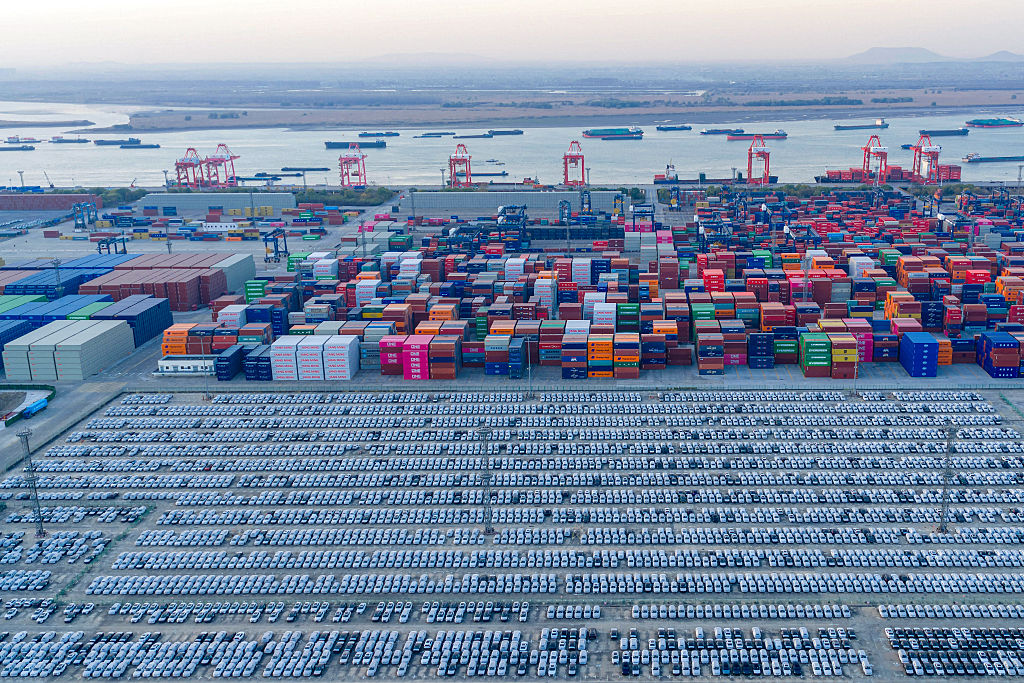

The European Union is preparing to broaden import quotas and tariffs on Chinese goods as Brussels warns that subsidized exports are pressuring parts of Europe’s industrial base.
European Industry Commissioner Stéphane Séjourné told the Financial Times that the bloc would “use safeguard clauses in a more general manner on sectors,” arguing ahead of a commission meeting on China that lengthy trade investigations often fail to protect industries quickly enough.
The proposed approach would allow the EU to respond to surges in imports by imposing tariff-rate quotas or additional duties on products entering the bloc.
Under World Trade Organization (WTO) rules, safeguard measures can be used when a sudden rise in imports causes or threatens serious harm to domestic producers.
The European Commission already operates safeguard measures on steel imports and has expanded trade investigations involving Chinese products over the past two years.
“Our objective is not to break with China,” Séjourné said, “but to have a real rebalancing.”
The comments reflect a broader EU policy shift since the COVID-19 pandemic and after Russia’s invasion of Ukraine exposed Europe’s dependence on foreign supply chains in sectors such as energy, batteries, and critical minerals.
In 2023, the European Commission adopted its Economic Security Strategy, which called for reducing what it described as “strategic dependencies” while avoiding a full economic split from China.
EU officials have since adopted the term “de-risking” rather than “decoupling” to describe the policy.
According to Eurostat, China remained the EU’s largest source of imported goods in 2025, while the bloc recorded a trade deficit with Beijing of 360 billion euros (about $420 billion).
European officials say Chinese state support for manufacturing has increased pressure on industries including chemicals, machine tools, solar equipment, and electric vehicles.
China rejects accusations that its exports benefit from unfair subsidies and has criticized recent EU tariffs on Chinese electric vehicles (EVs).
Last year, Brussels imposed additional duties on Chinese-made EVs after an anti-subsidy investigation found that Chinese manufacturers had received state-backed support that distorted competition in the European market.
Beijing later challenged the measures at the WTO, arguing the tariffs were protectionist and violated global trade rules.
Unlike anti-dumping duties, safeguards can apply to imports from multiple countries at once.
Trade lawyers and industry groups have previously warned that safeguard measures are a blunt instrument because they can affect allies as well as competitors.
The EU’s steel safeguards have already drawn criticism from several trading partners, including countries that argued the restrictions unfairly limited access to the European market.
Séjourné also warned that failure to act could deepen divisions inside the bloc.
“In three or four years countries will say ‘you’ve not been able to protect us’,” he said in remarks ahead of Friday’s Commission meeting on China.
France has pushed for stronger trade protections in recent years, while Germany and Spain have generally taken a more cautious position because of their economic ties with China.
The debate has intensified as Brussels rolls out a wider industrial strategy aimed at boosting domestic production of strategic goods.
The EU’s Critical Raw Materials Act, adopted in 2024, set targets to reduce reliance on single-country suppliers for key minerals used in strategic technologies.
The Net-Zero Industry Act, also adopted in 2024, introduced similar measures designed to expand European manufacturing capacity for net-zero products.
At the same time, the WTO’s dispute settlement system has struggled to resolve trade conflicts quickly after years of institutional deadlock.
EU officials increasingly argue that existing global trade rules move too slowly to respond to rapid shifts in Chinese industrial output and state support.
The commission is expected to continue discussions on new trade defense measures in the coming months as member states debate how far Europe should go in reducing economic dependence on China.
Reuters contributed to this report.
 Friends Read Free
Copy
Facebook
Tweet
Friends Read Free
Copy
Facebook
Tweet