
Five European Union governments are pressing the European Commission (EC) to consider faster and broader trade-defense tools as Chinese overcapacity, trade deficits, manufacturing job losses, and supply-chain concentration move higher on the bloc’s economic-security agenda.
Spain, France, Italy, the Netherlands, and Lithuania circulated a joint paper ahead of an EC discussion on China policy on May 29, according to reports by the Financial Times and Euractiv, both of which said they had seen the document. The paper has not been publicly released. The countries argued in their joint paper that the EU’s current trade defense system is too slow, too narrow in scope, and too easily circumvented, according to the two outlets.
The paper says the rules-based trading system is being undermined by a variety of actors and the rise of unfair trade practices, according to Euractiv. It calls on Brussels to explore a broader, cross-sector trade defense tool that could be used when national security concerns arise, including when Europe depends heavily on a foreign supplier for critical inputs such as rare earths.
Proposals Target Circumvention and Supply Dependence
The proposals reported by the two outlets include faster use of higher tariffs, stronger anti-circumvention rules, tighter local-content requirements, and additional EC staff to process industry complaints. The paper also asks the EC to consider duties aimed at specific companies rather than only at products or countries, according to the Financial Times.
Euractiv reported that the paper calls for a tool that could allow for additional duties or tariff-rate quotas when supply dependence raises security concerns. Tariff-rate quotas allow a specified volume of imports to enter at a lower tariff rate, with higher duties applied to any imports exceeding that quota. The paper also refers to a possible use of such tools when a foreign supplier controls a choke point, according to Euractiv.
A March 2026 European Parliament study requested by the Parliament’s Committee on International Trade said traditional EU trade-defense instruments are only partly suited to overcapacity concerns because they involve lengthy procedures and high evidentiary thresholds and generally apply only once injury to EU industry has occurred or is imminent. The study also called for expanded monitoring and trade-intelligence capacity, including more detailed knowledge of value chains, ownership of intermediary companies, component suppliers, and sub-tier manufacturing processes.
Trade Deficit Adds Pressure
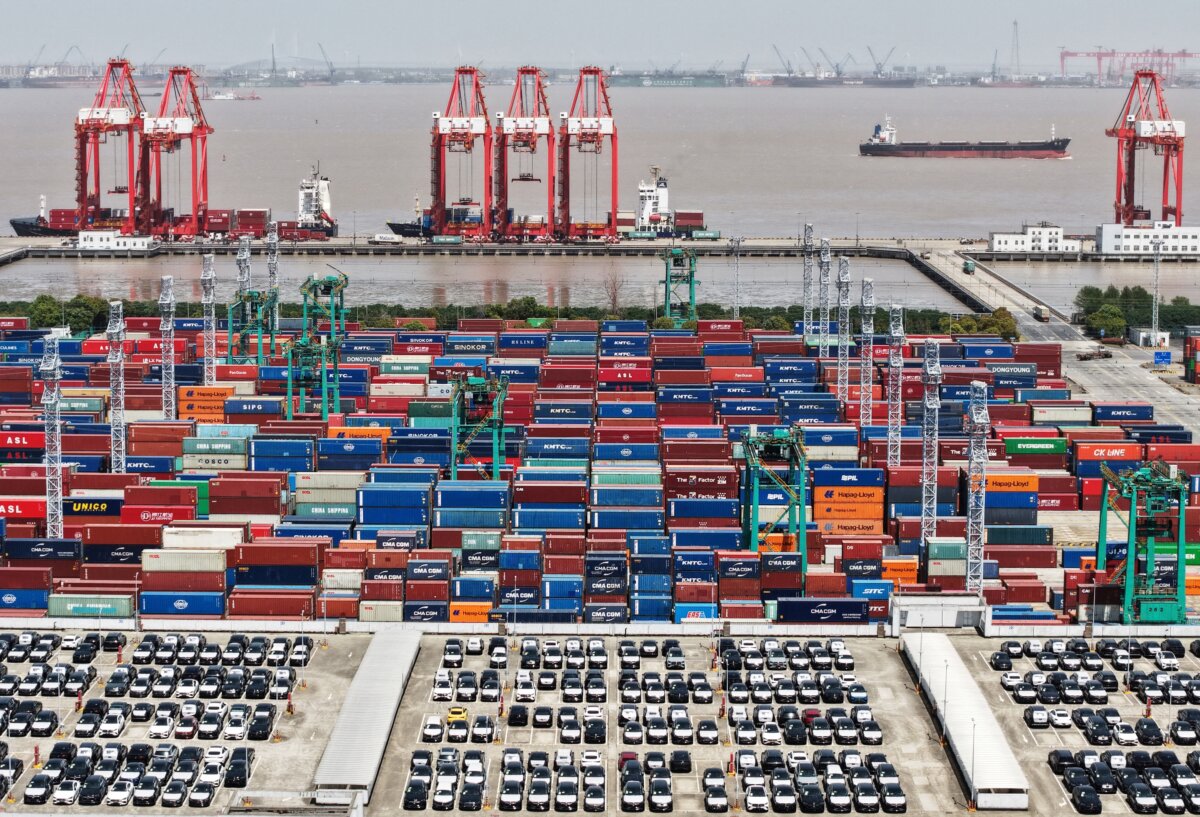
Eurostat data show that the EU exported 199.6 billion euros (about $231 billion) in goods to China in 2025 and imported 559.4 billion euros (about $649 billion) of goods, leaving a goods trade deficit of 359.8 billion euros (about $417 billion).
The imbalance in 2025 widened as EU exports to China fell by 6.5 percent from 2024 while imports from China rose by 6.4 percent, according to Eurostat.
According to Eurostat, the top product group in EU–China trade in 2025 was electrical machinery and equipment, and the second largest product group was machinery and mechanical appliances. Large EU trade deficits in machinery and vehicles, as well as in other manufactured goods, have been a persistent feature of trade with China.
Job Losses Add Pressure
The joint paper reportedly cites the loss of about 1 million industrial jobs in Europe between 2019 and 2025. Labor-union research gives a similar warning over a shorter period.
The European Trade Union Confederation (ETUC) said an analysis of Eurostat data by the European Trade Union Institute found that EU manufacturing employment fell by 853,500 from the third quarter of 2019 to 2023, a 2.6 percent decline. The largest losses were in Poland, down 278,200; Czechia, down 161,400; Romania, down 144,000; and Germany, down 129,300, according to the ETUC material.
An ETUC statement said the EU lost almost a million manufacturing jobs, including in the chemicals sector, between 2019 and 2023. It said manufacturing was among the sectors hit by a threefold increase in restructuring-related job losses in the first five months of 2025 compared with the same period in 2022. The statement said the chemicals industry faced pressure from U.S. and Chinese competition, high energy costs, weak management decisions, and the automotive crisis.
Commission Reviewing Trade Defenses
The member-state paper comes as the EC has already placed trade-defense reform on its economic security agenda. In a December 2025 Joint Communication on strengthening EU economic security, the commission stated that it would assess, by the third quarter of 2026, options to strengthen protection for European industry from unfair trade policies and negative global market developments, including overcapacity. The document said the EC would evaluate the effectiveness and adequacy of existing tools and consider whether new measures are needed.
The European Parliament overcapacity study stated that overcapacities, particularly from China, are viewed as a threat to European manufacturers, distorting competition and straining bilateral trade. It said the risks to EU manufacturing are sector-specific and partly mitigated by value-chain dynamics and technological leadership. The study also identified six sectors with rising export-to-revenue ratios accounting for much of the increase in Chinese exports to the EU: automobiles, electrical machinery, general machinery, rubber and plastics, special machinery, and pharmaceuticals.
The same study cautioned that a broad horizontal measure targeting overcapacity across sectors could lead to large-scale retaliation. It said a sector-specific approach, such as the proposed steel measure, may be more promising where overcapacity poses a serious threat to EU industries.
Steel Measures Show Existing Approach
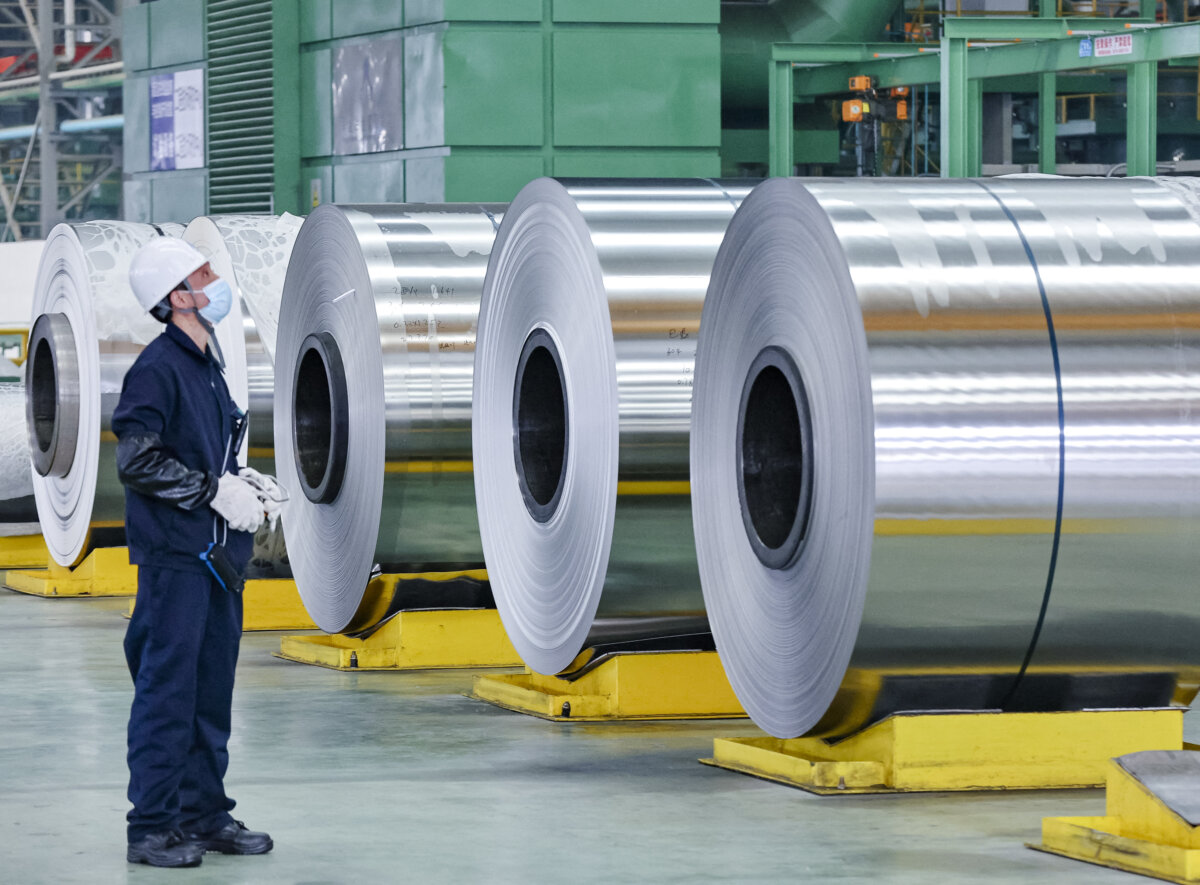
Steel is one sector in which the EU has already moved to tighten import protections. On May 19, the European Parliament approved a new measure limiting tariff-free steel import volumes to 18.3 million metric tons annually, a 47 percent cut compared with 2024 steel quotas. The measure would apply a 50 percent customs duty to steel imports above the quota and to steel goods not covered by it.
The regulation introduces a “melt and pour” rule, under which the origin of steel is determined by where it is first melted and cast, strengthening traceability and limiting circumvention through minimal processing in third countries.
Beijing Warns Against New Restrictions
China has also challenged existing EU enforcement actions. On May 15, China’s Ministry of Justice said EU cross-border investigative practices under the bloc’s Foreign Subsidies Regulation, in a probe involving Chinese security-screening equipment maker Nuctech, constituted improper extraterritorial jurisdiction. The notice said organizations and individuals must not implement or assist with the EU measure.
U.S. Trade Concerns Overlap With EU Debate
The EU discussion overlaps with U.S. concerns over overcapacity, third-country routing, and supply-chain dependence. On March 11, U.S. Trade Representative Jamieson Greer opened Section 301 investigations into the acts, policies, and practices of several economies related to structural excess capacity and production in manufacturing sectors.
A fact sheet from the Office of the U.S. Trade Representative stated that the investigations focus on economies showing structural excess capacity and production, which can appear through large or persistent trade surpluses or underused capacity. The listed targets include China, the European Union, Japan, South Korea, Taiwan, Mexico, Vietnam, and India.
The U.S. and EU processes differ. Section 301 process gives the Office of the U.S. Trade Representative authority to investigate and respond to foreign practices found to burden or restrict U.S. commerce.
 Friends Read Free
Copy
Facebook
Tweet
Friends Read Free
Copy
Facebook
Tweet