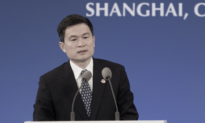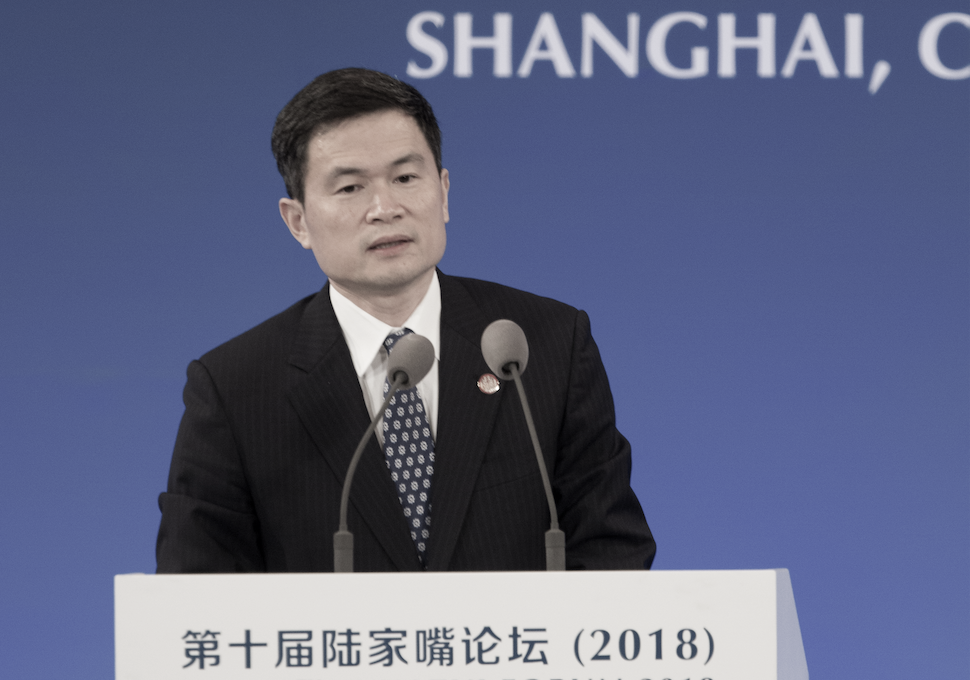
The investigation of former China Securities Regulatory Commission vice chairman Fang Xinghai is fueling speculation that Beijing’s latest anti-corruption campaign is increasingly targeting technocrats whose market-oriented views diverge from Chinese leader Xi Jinping’s political priorities.
Fang, a U.S.-educated economist, was once regarded as a leading advocate of opening China’s financial system to the world.
Analysts say corruption allegations are common in China’s opaque political system, but Fang’s downfall may reflect a broader shift in which political loyalty has become more important than professional expertise. They warn that more overseas-educated officials, once encouraged to return to China to modernize its economy, could face similar scrutiny as Xi further consolidates control over economic policymaking.
Fang, 62, a former China Securities Regulatory Commission vice chairman and Communist Party committee member, was placed under investigation on July 24, about two years after retiring from the securities regulator.
Fang was long regarded as one of China’s most internationally connected financial officials. After earning a PhD in economics from Stanford University under Joseph Stiglitz, who later won the Nobel Prize in economics, Fang worked at the World Bank before returning to China in 1998.
He later held senior positions at China Construction Bank, China Galaxy Securities, the Shanghai Stock Exchange, and the Shanghai municipal government.
His international background and fluent English made him one of Beijing’s best-known financial officials among global investors, and at the China Securities Regulatory Commission, he became a prominent advocate of capital market reforms and represented China at major international forums.
Despite his reputation as a market-oriented technocrat, Fang also benefited from Xi’s early rise to power.
He worked as a senior financial official in Shanghai during Xi’s brief tenure as the city’s Party secretary in 2007, making him one of several Shanghai officials later promoted under Xi’s administration.
Reformist Roots
Yet, one analyst said Fang’s educational background and economic philosophy ultimately distinguished him from Xi’s increasingly ideological governing approach.
Chen Pokong, a U.S.-based political commentator and author who spent years in Chinese prisons for his role in the 1989 democracy movement, told The Epoch Times that although Fang once served under Xi and was trusted with important financial responsibilities, the two ultimately represented different schools of thought.
Chen said Fang’s background distinguished him from many current Chinese officials. As a Western-educated economist influenced by former Premier Zhu Rongji, he belonged to the Chinese Communist Party’s (CCP) reform-oriented camp that favored greater market liberalization.
Fang previously said he decided to return to China after Zhu lamented during a 1997 meeting with foreign visitors that many of his former students had remained overseas.
According to Chen, Xi initially relied on Fang because experienced financial officials were in short supply after the 2015 market turmoil. But over time, ideological differences became increasingly significant.
“Fundamentally, Fang remains a reform-minded official,” Chen said.
A video of Fang speaking at the 2019 World Economic Forum in Davos has recently circulated widely online. In the clip, Fang said Western democracies faced serious problems and required “political reform,” drawing laughter from the audience.
Chen said such public remarks should be viewed in the context of Chinese officialdom, where even reform-minded officials are expected to make politically orthodox statements while in office.
Political Loyalty
Chen said corruption is pervasive within the CCP, and Fang was unlikely to be entirely untouched by questionable practices. However, he believes politics—not financial misconduct—is the primary reason for the investigation.
“In the end, the charges may well include political labels such as political disloyalty and dishonesty,” Chen said.
He believes Fang’s downfall signals broader political changes.
“Xi now views overseas-educated officials with suspicion,” Chen said. “They’re no longer being promoted. Instead, they’re increasingly being removed.”
He suggested that as Beijing declares the reform era over and embraces what Xi calls the “new era,” more Western-educated officials may become targets of future political purges.
David Tsai, also known as Cai Shenkun, a U.S.-based independent Chinese writer and current-affairs commentator, expressed a similar view on X, saying Fang’s investigation demonstrates how overseas returnees have become vulnerable in an increasingly politicized system.
He said Fang’s case illustrates how overseas education and international experience, once viewed as valuable assets for Chinese officials, have increasingly become political liabilities under Xi’s leadership.
“Whether they’re longtime overseas returnees or newly returned talent, they have become objects of political suspicion,” Tsai wrote.
Dongfang Hao, Gu Xiaohua, and Tang Bing contributed to this report.
 Friends Read Free
Copy
Facebook
Tweet
Friends Read Free
Copy
Facebook
Tweet