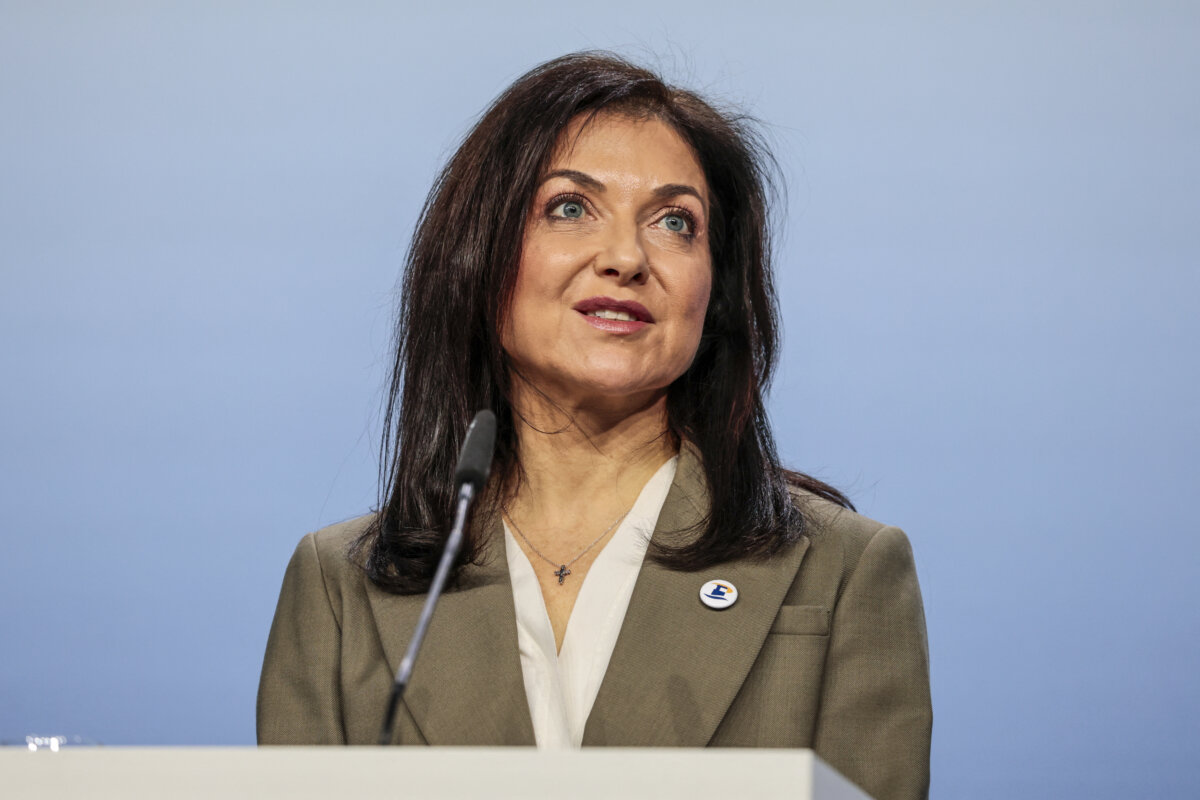

Germany’s Minister for Economic Affairs and Energy, Katherina Reiche, called for a dual approach of “cooperation and competition” in Berlin’s economic relationship with China this week during her first official visit to Beijing.
Reiche arrived in the Chinese capital on Wednesday for a three-day trip focused on addressing unfair competition, protecting German business interests, and ensuring continued access for rare earths. Her visit comes at a critical time as Germany’s economy faces mounting pressure from heavily subsidized Chinese rivals.
“Competition makes us stronger, cooperation creates stability, and innovation drives shared progress,” Reiche said at a press briefing after her meeting with Chinese Commerce Minister Wang Wentao, putting emphasis on fair competition a number of times during the briefing.
While China remains Germany’s largest trading partner, their economic ties have become heavily imbalanced. According to the German Federal Statistical Office (Destatis), total trade volume between the two countries reached 251.8 billion euros ($285.2 billion) in 2025. However, Germany imported 171.1 billion euros ($193.5 billion) worth of goods from China while exporting only around 81 billion euros ($91.7 billion), resulting in a substantial trade deficit.
This imbalance has been described by the London-based think tank Center for European Reform (CER) as Germany’s “Chinese phantom pain.” In its May 2026 report, CER noted that German exports to China as a share of GDP have fallen by more than 40 percent since 2021. This decline is estimated to have already cost around 400,000 jobs in Germany, with further losses expected if current trends continue.
German manufacturers are feeling the “squeeze” in multiple sectors. Industries that once dominated global markets—including automobiles, machinery, chemicals, and aircraft—are increasingly being pushed out of the Chinese market and facing aggressive competition even in third countries. China has emerged as the world’s largest car exporter and maintains enormous production capacity, equivalent to roughly 65 percent of global demand, according to CER’s report.
In an effort to promote balanced trade relations, Reiche pointed out that around 5,000 German companies have investments in China, with German direct investment in the country rising by 50 percent last year. While she welcomed greater Chinese investment in Germany, she strongly stressed the importance of reciprocity.
“What German companies are permitted, able, or required to do here in China should equally apply in Germany,” Reiche told reporters.
However, analysts remain skeptical about whether true reciprocity is possible. China expert James Gorrie, author of the 2013 book “The China Crisis,” has pointed to issues of intellectual property theft.
In an opinion article for The Epoch Times titled “The China Effect: Is China where Western companies go to die?” he cited Volkswagen’s long-standing experience, claiming that Chinese companies have used joint ventures, licensing deals, talent recruitment, and cyber espionage—often allegedly supported by the state—to acquire German technology over the past two decades.
Following the meeting with Reiche, China’s Ministry of Commerce said Minister Wang Wentao expressed Beijing’s “willingness to strengthen dialogue and consultation” with Germany. At the same time, Wang criticized the European Union for introducing what he called “protectionist trade measures” that have disrupted business cooperation between Chinese and European firms.
Reuters contributed to this report.
 Friends Read Free
Copy
Facebook
Tweet
Friends Read Free
Copy
Facebook
Tweet