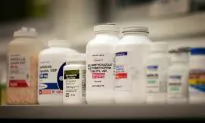

Swiss generic drugmaker Sandoz has filed a draft anti-dumping complaint with the European Commission over imports from China of amoxicillin active pharmaceutical ingredients, the company said on May 28.
Amoxicillin, a widely used antibiotic in the penicillin family, is commonly prescribed for respiratory, ear, and other bacterial infections. Sandoz says it operates the only major remaining vertically integrated penicillin production network in Europe, with key manufacturing steps at its site in Kundl, Austria.
The company alleges that Chinese imports benefit from market-distorting practices, including below-cost pricing, state subsidies, and concentrated production capacity. The European Commission has not yet opened a formal investigation or made any findings regarding the claims.
Chief Executive Richard Saynor warned that Europe runs the risk of becoming increasingly dependent on overseas suppliers for critical antibiotics and their ingredients. He said much of the world’s antibiotic active pharmaceutical ingredient production now takes place outside Europe.
“Safeguarding antibiotic supply is not only a health policy issue, but a question of economic security and strategic trade policy,” Saynor said. “Europe must act now to safeguard independent supply in years to come.”
Sandoz has argued for months that low-cost competition and pricing pressure are making European antibiotic manufacturing operations economically difficult to sustain.
In a November 2025 white paper prepared with consultancy Newmarket Strategy, the company highlighted Europe’s reliance on imported antibiotic ingredients and crucial precursors, with many sourced predominantly from China.
The company also backed the Alpbach Communiqué in September 2025, which called for stronger and more robust protection of EU-based antibiotic manufacturing capacity and reforms to public procurement systems.
Europe has experienced significant amoxicillin shortages during the winters of 2022 and 2023, when respiratory infections surged. The European Medicines Agency monitored supply disruptions at the time, while national health authorities issued shortage alerts.
The European Commission now has up to 45 days to decide whether to open a formal anti-dumping investigation. Any eventual duties would require evidence that imported products were sold below fair value and caused material harm to European producers. Trade defense investigations can take several months.
Sandoz, which was spun out from Novartis and is headquartered in Switzerland, is among the world’s largest generic drugmakers. The company says maintaining European antibiotic production capacity has become progressively more challenging under current market conditions.
If the European Commission proceeds with an investigation, Chinese exporters, importers, and other interested parties would have opportunities to respond before any measures are imposed.
 Friends Read Free
Copy
Facebook
Tweet
Friends Read Free
Copy
Facebook
Tweet