China’s removal of two senior military leaders ahead of Chinese leader Xi Jinping’s U.S. visit, analysts say, underscores a major dilemma for Xi: the regime could remove military leaders swiftly, but replacing them with trusted, capable commanders could take years.
The Chinese Communist Party (CCP) announced on Sept. 21 that Zhang Youxia, former vice chairman of the Central Military Commission (CMC), and Liu Zhenli, former chief of the CMC Joint Staff Department, had been expelled from the CCP and the military over allegations of disloyalty to the Party and corruption.
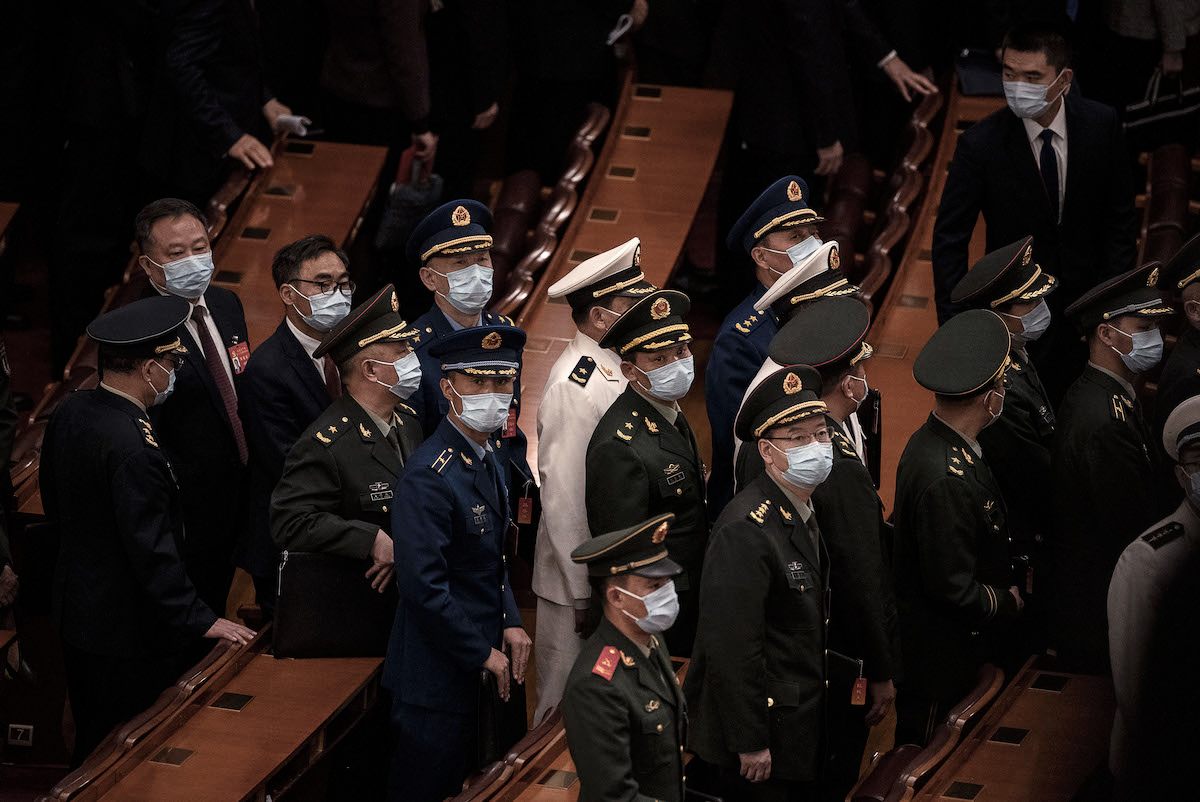
The move marked the latest step in an expanding purge of senior military officials under Xi.
The individuals interviewed by The Epoch Times spoke on condition of anonymity or provided only their surnames for fear of reprisal.
A political scholar within the CCP surnamed Jiang noted that the anti-corruption campaign reflects Xi’s military transformation—one driven less by graft and more by a push for absolute political loyalty.
“Over the past two years or more, military corruption investigations have become increasingly frequent, and it has now reached a level unprecedented in nearly 40 years,” he told the publication.
“The top leadership says it is about eliminating corruption and strengthening the Party’s leadership over the military; in reality, it is about eliminating disloyal generals.”
Zhang’s Removal Linked to ‘Factionalism’
Zhang’s downfall is particularly significant due to his long military career and his position at the top of China’s military hierarchy. He was widely regarded as having deep connections within the armed forces and had served as one of the most senior officials in the CMC, second only to Xi.
Liu, meanwhile, had served as chief of the Joint Staff Department, placing him at the center of the military’s operational command structure.
In its Sept. 21 announcement, the CCP authorities accused Zhang and Liu of seriously violating political discipline and political rules, as well as allegedly committing serious crimes. The announcement also accused the two of factionalism.
Their removal potentially disrupts networks of relationships built over decades within the military.
A well-placed CCP military official told The Epoch Times that Xi’s latest military purge was largely completed before his state visit to the United States.
If Xi returns from the United States having achieved stabilization of U.S.–China relations, he could then turn his attention to rebuilding the military leadership, he said.
Based on the military official’s assessment, a period of relative stability with Washington could give Xi additional political room to address domestic economic problems and reorganize the CMC.
However, removing senior commanders and replacing them are two different problems.
“Although the purge can quickly replace generals, finding people who are both trusted by Xi and capable of commanding the military will take a longer time,” he said.
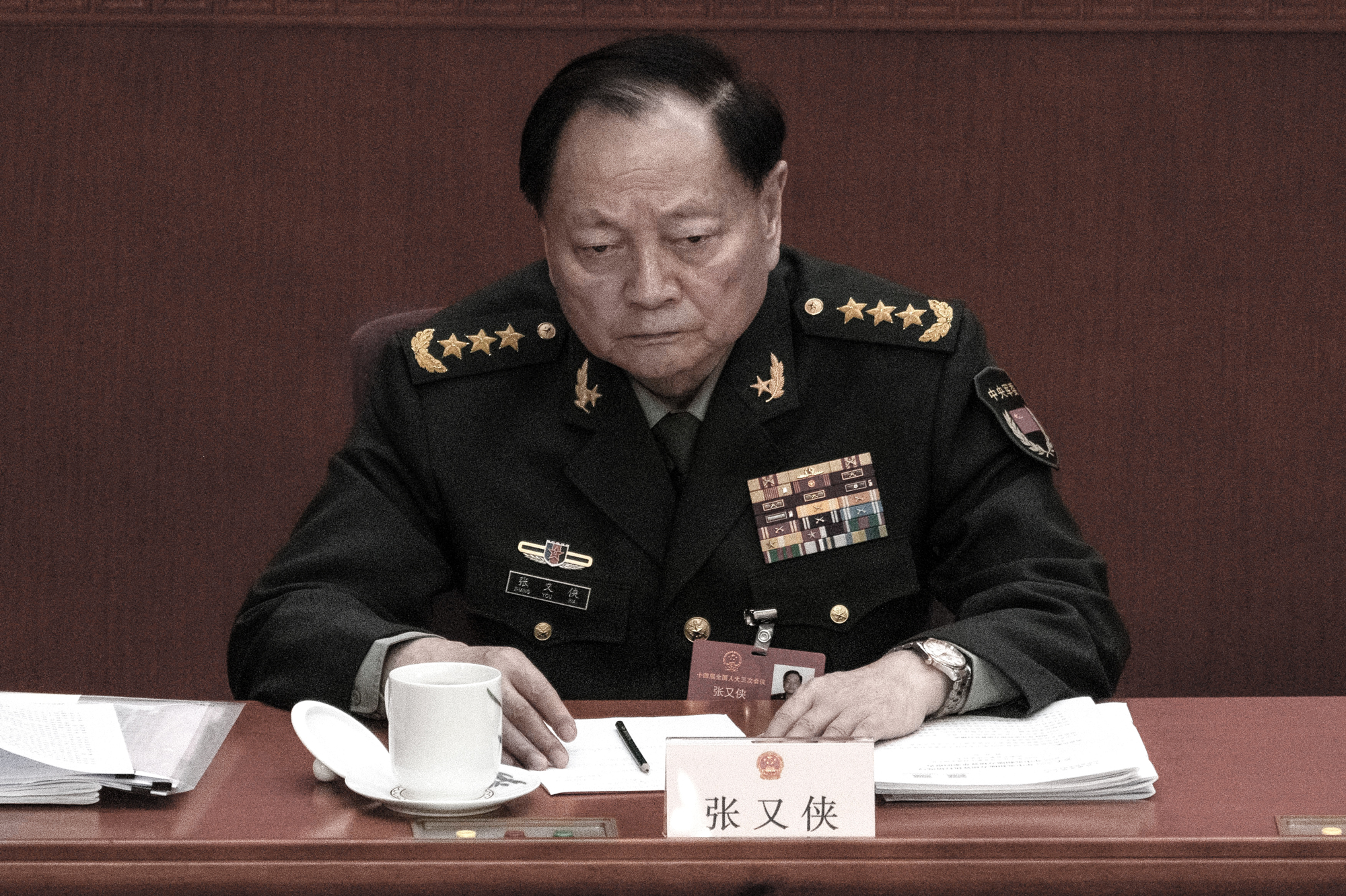 China’s top general Zhang Youxia in a meeting before he was removed by CCP leader Xi Jinping, in January 2026. (Getty Images)
Military Modernization Continues
The uncertainty surrounding the military leadership does not necessarily mean that China’s broader military modernization programs will stop, according to a China military affairs scholar surnamed Mou.
Among the areas likely to continue receiving attention is artificial intelligence (AI), according to the CCP military official. The United States has recently proposed establishing a mechanism for the two countries to notify each other of significant AI-related safety incidents, possibly a topic for discussion between Xi and President Donald Trump during their recent summit.
The military official said the U.S. focus on AI safety reflects concerns about China’s development of AI-enabled military systems. He also suggested that China’s progress in AI is closely linked to copying technology developed in the United States.
Mou also said that any discussion between Xi and Trump would not necessarily translate into a reduction in China’s military use of AI.
“Even if Xi Jinping agrees to [U.S. proposal on AI safety mechanisms], the CCP will never give up the military application of AI,” Mou told The Epoch Times. “This is a powerful plan to ensure the stability of the CCP regime.”
The leadership changes could therefore have implications not only for the composition of the CMC but also for how China’s military modernization programs are carried out, including its development of AI-enabled military capabilities, according to Mou.
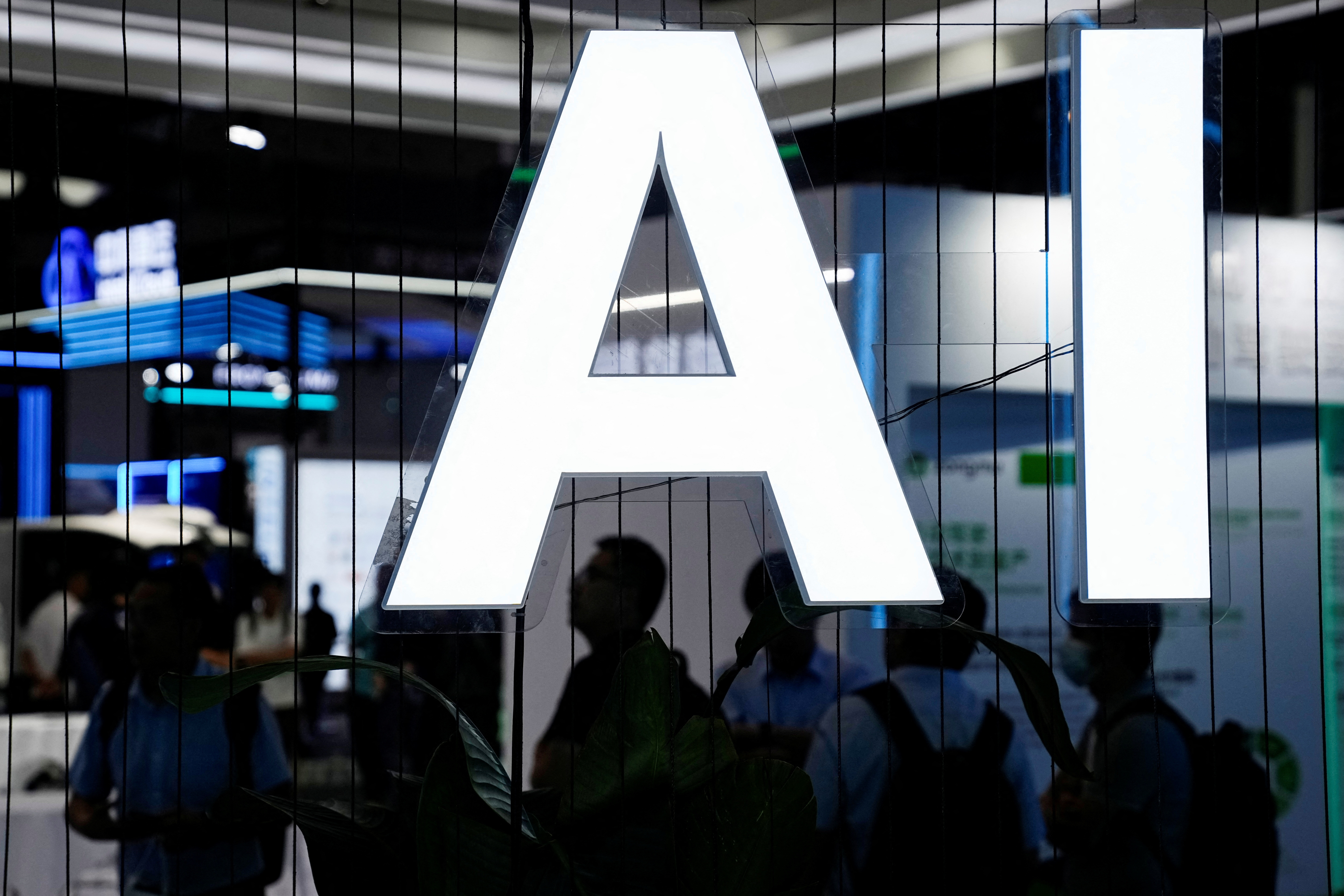 The World Artificial Intelligence Conference (WAIC) in Shanghai, China, on July 6, 2023. (Aly Song/Reuters)
Rebuilding Trust
The central challenge facing Xi, according to a retired military officer surnamed Tang, is not simply filling vacant positions but reconstructing the networks of trust and command that have been disrupted by years of purges.
Tang told The Epoch Times that the developments indicate Xi is attempting to build a CMC leadership structure composed of people he can “absolutely trust,” while strengthening a system in which the CMC directly commands the military.
Such a restructuring, he said, could take several years.
“There is no way to get it done without three to five years,” Tang said. “This time, Zhang Youxia, Liu Zhenli, and previously Li Shangfu and others have had their military networks and cliques and factions uprooted.
Li is a former defense minister who was accused of corruption and sentenced to a suspended death sentence in May.
The difficulty is partly institutional. Senior commanders capable of leading large military organizations generally spend decades building operational experience, professional relationships, and authority within the armed forces, according to Tang.
He said that the CCP has historically been cautious about simultaneously disrupting large portions of the military’s senior leadership, partly because the Party ultimately depends on the armed forces to maintain its political power.
The latest series of purges could, therefore, indicate a particularly deep level of distrust between the top leadership and parts of the existing military command structure, he said.
The vacancies created by the removal of Zhang and Liu will ultimately have to be filled. However, people with all the qualities Beijing seeks—political loyalty, extensive military experience, and actual command ability—are difficult to quickly find, according to Tang.
Jiang Fei contributed to this report.
 Friends Read Free
Copy
Facebook
Tweet
Friends Read Free
Copy
Facebook
Tweet