


Your heart beats more than 100,000 times a day and about 40 million times a year, working tirelessly to keep your body freshly supplied with oxygen and nutrients while removing harmful waste.
If the vital capabilities of your heart drop, everything you do can suffer—from work and play to general cognitive and physiological function.
One of my patients with cardiac disease expressed it this way: “Every day I wake up, it feels like someone just poured a 55-gallon drum of liquid fatigue on me.”
“Many people underestimate how bad inactivity is for your heart and how beneficial even simple physical activity can be for maximizing your overall health and well-being,” Patty Shelley, a certified nutritional endocrinology practitioner in Lynchburg, Virginia, told The Epoch Times.
Mrs. Shelley happens to be my wife. She has a long history of helping patients work through metabolic difficulties that can raise the risks for heart disease.
Your heart needs exercise to stay healthy, but finding the time and knowing where to begin can be challenging.
“First, get in the habit of activity and exercising, and then pursue a regimen that works best for you,” Mrs. Shelley said.
The following simple exercises provide a great way to start an exercise regimen that will strengthen your heart function over time.
Simple Exercises to Boost Heart Function
Brisk Walking
“It’s easy to underestimate the efficacy of walking, but it’s real exercise, and well supported by research,” Mrs. Shelley said.
Step 1: Start by walking slowly for five minutes. This allows the muscles, joints, tendons, and ligaments in your body to warm up.
Step 2: Accelerate to a brisk walk and maintain this pace for 10 minutes.
Step 3: After 10 minutes, slow your rate back to your starting pace to allow your body to cool down.
Don’t think of this walk as a stroll. It’s important to push yourself into a brisk walk. As you advance, you will be walking as fast as you can without running. Brisk walking is effective on flat surfaces, but combining it with hills and inclines will magnify results.
Dead Bug
Although this exercise works on virtually every muscle in the trunk, it’s primarily focused on core muscles. It is a short, intense exercise that both strengthens muscles and increases heart rate. The dead bug exercise is more challenging to perform than it may appear.

- (Samira Bouaou/The Epoch Times)
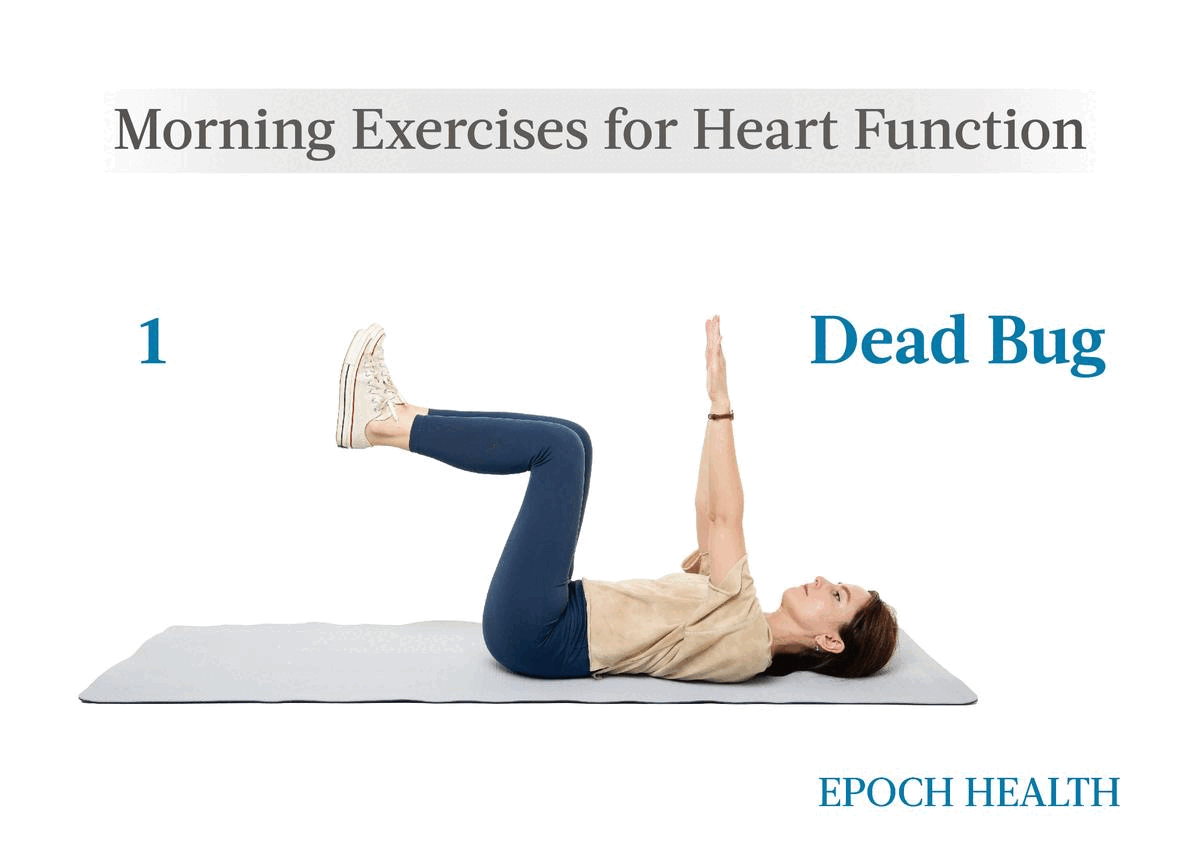
Step 1: Lie on your back. You can choose a hard surface such as the floor or a soft surface such as your bed as long as you have enough room to extend your arms over your head horizontally. Reach your arms straight up toward the ceiling, keeping your elbows straight. Bend your hips and knees so that your thighs are oriented straight up toward the ceiling, keeping your knees bent at 90 degrees and your lower legs horizontal.
Step 2: Move one of your arms backward toward the surface you are lying on while extending the opposite leg down. Move both until they almost touch the surface. Move slowly, taking a second to move into position.
Step 3: From there, bring both your arm and leg back up to their original positions then alternate the same movements using your opposite arm and leg. Take one second to fully move into position.
With each movement counting as one repetition, try to complete three sets of 20 repetitions, allowing one minute of rest between sets.
Avoid holding your breath. You may feel particularly challenged at first, but don’t be daunted, and try to stay with it. As your strength increases, the exercise will become much easier.
Mountain Climbers
Also known as the running plank exercise, the mountain climber exercise focuses heavily on core muscles and the cardiovascular system. This intense exercise can provide an excellent workout in a very short time and can be modified as your skills advance.
- (Samira Bouaou/The Epoch Times)
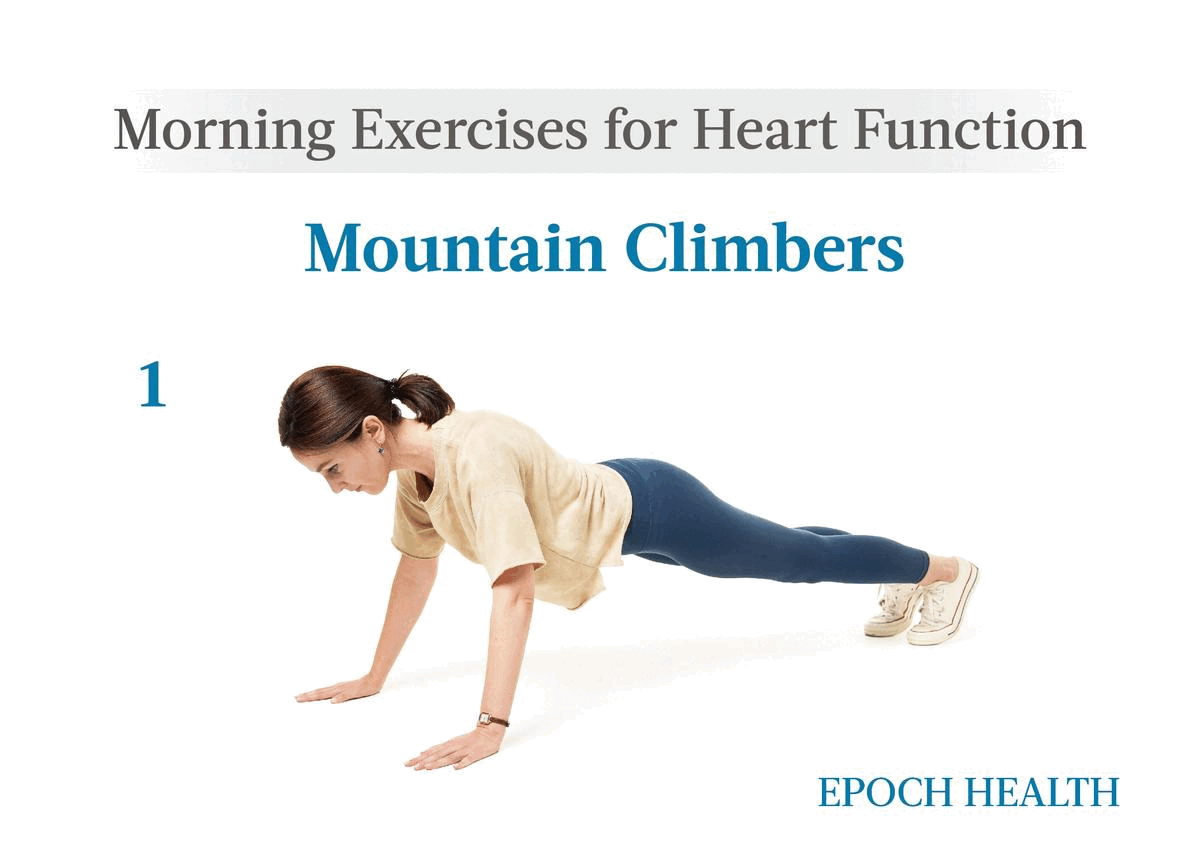
Step 1: Lie face down on the floor. You can use a mat or pad if you want. From there, move into a standard pushup position with your feet shoulder-width apart, your hands on the floor, and your elbows fully extended. Your back should be straight, neither sagging nor arched.
Step 2: From there, lift one foot off the ground, slowly bend one knee, and bring it up toward your chest while holding the rest of your body still. Then slowly lower the leg back to its original position and repeat the movement with your other leg. You can either move one leg at a time or both legs at the same time; moving both legs at the same time requires fast, reciprocal movements and can be highly challenging.
Bringing each leg up, one at a time, counts as one repetition. Perform three sets of 15 repetitions, resting one minute between sets. If you need more of a challenge, add five repetitions per set until you reach a sufficient level. You can also explore increasing the movement pace.
Unless you are already well-trained physically, the mountain climber exercise will likely be very challenging at first. You can modify this exercise by holding onto a counter (easiest) or a stable seating surface (intermediate).
Sit-Stands
Although this exercise may seem very simple, the sit-stand exercise can produce a considerable cardiovascular challenge in a short period of time, while providing substantial strengthening for your gluteal and anterior leg muscles.
- (Samira Bouaou/The Epoch Times)
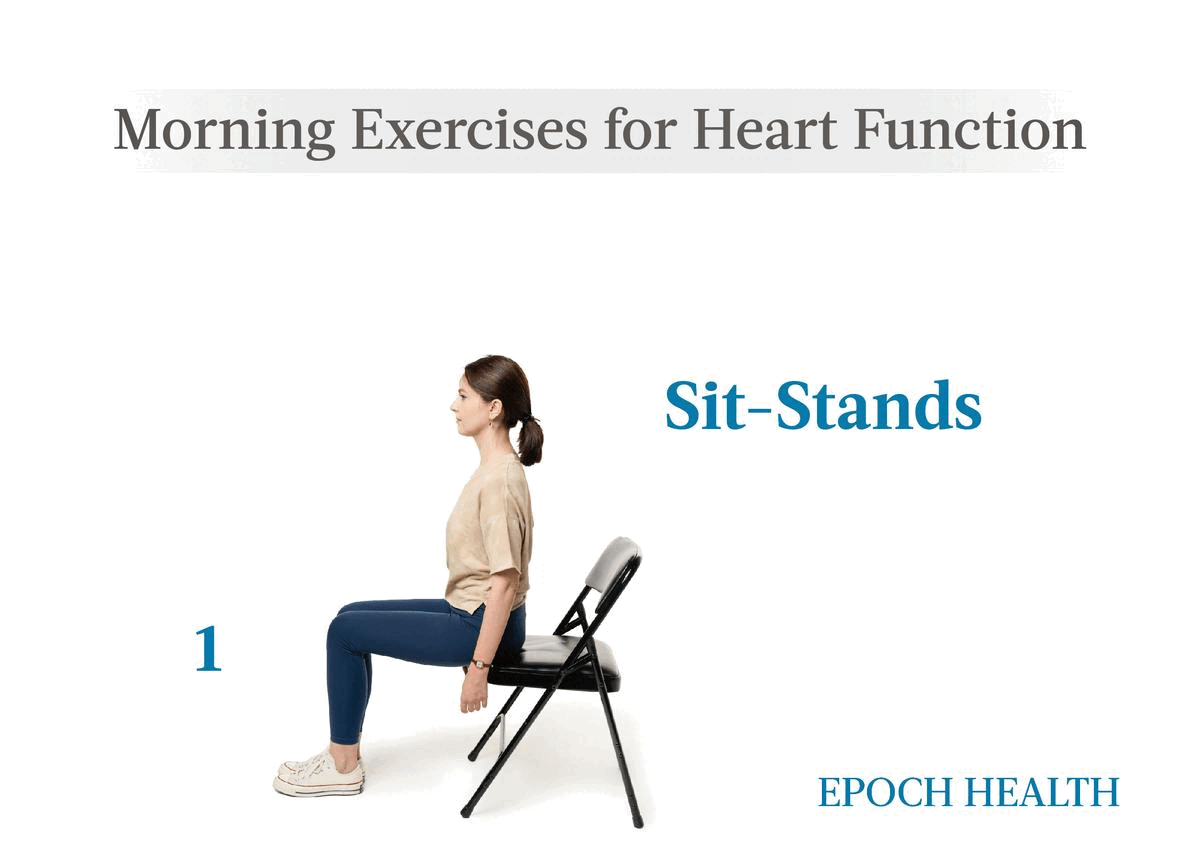
Step 1: Sit upright near the edge of a chair.
Step 2: Slowly stand up, taking one full second to rise. Once up, immediately move slowly back down into a seated position, taking a full second in between positions.
Standing up and then sitting back down is counted as one repetition. Perform three sets of 15 with a 30-second rest between sets. Feel free to perform more repetitions and sets, but always listen to your body so you don’t overdo it.
“The sit-stand exercise starts easy but can become challenging fast. Watch those knees and just do what you can at first,” Mrs. Shelley said. Increase sets and counts to intensify. You can also decrease the amount of rest between sets.
Fast Feet/Quick Feet
This exercise is fast-paced and can strengthen your legs and core while enhancing your balance. Its real benefit, however, is that it can quickly increase your heart rate and allow you to keep it there. It’s also easy to perform in small spaces.
- (Samira Bouaou/The Epoch Times)
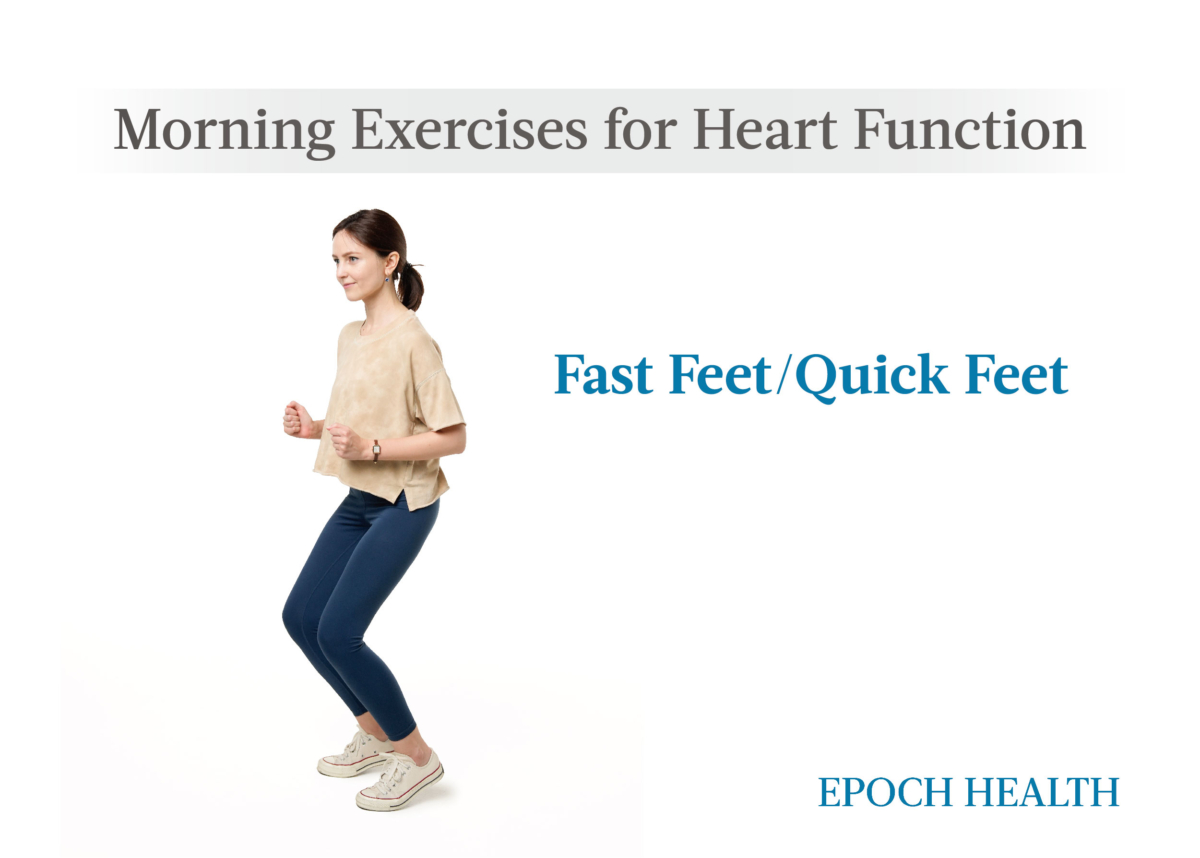
Step 1: While standing, crouch slightly with your feet shoulder-width apart, your arms by your side, and your elbows bent.
Step 2: The fast feet exercise is like running in place, but instead of lifting your feet high, you lift them just enough to get them off of the ground. You can start this exercise by performing a static march or jog, then gradually increase speed to increase intensity. The best speed is the fastest you can muster while maintaining your balance and avoiding pain.
Perform this exercise for one minute per set and do three sets. You can add time to each set or increase the total number of sets to enhance intensity.
Once you work up to a fast run, this exercise comes into its own. It can provide a surprising amount of cardiovascular challenge in a brief amount of time with benefits that can last all day.
These exercises are a great start to establishing an exercise regimen that can boost heart function by strengthening the heart muscle. The trick to getting the greatest benefit is to perform these exercises vigorously so that you feel that you are working hard. Although leisurely exercises can still be beneficial, they are far less effective in boosting heart function.
If you have health or mobility issues that may present problems, consult your physician before commencing any exercise regimen.