Live chat
December 7, 2024
American Thought Leaders
Live chat
 Expand
Expand
 Expand
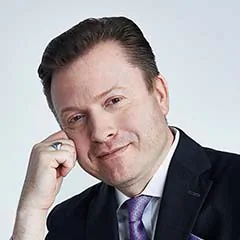
[FULL TRANSCRIPT BELOW] Drew Pinsky, popularly known as Dr. Drew, is an addiction medicine specialist and host of the TV series “Ask Dr. Drew.” For decades, he has been studying public health and drug addiction in America, exposing its ongoing challenges in nationally syndicated television and radio programs. He saw early on during the COVID-19 pandemic that the response from the authorities would cause unnecessary harm and suffering.
“A member of the school board came in and said, ‘We’re going to lock the schools down.’ And I said, ‘Why? Why are you doing that? Who did you consult with? Did an infectious disease doctor come in and say you’ve got to do this?’ ‘No, it’s just the right thing to do.’ … I knew then that was big, big, big trouble,” says Pinsky.
He says that how authorities reacted to the pandemic followed a similar playbook to how they responded to the opioid crisis. And in both cases, he argues, the physician-patient relationship has degraded.
“The physician-patient unit is so badly encumbered and so badly adulterated right now that it’s hard for it to function,” says Pinsky. “There are some of us that can’t get over COVID—not the virus—the way our country dealt with the COVID, just mind-boggling.”
Pinsky is particularly concerned about the centralization and algorithmizing of medicine.
“The young folks are being taught to look at the computer and just fill out forms, do an algorithm, look things up if you don’t know—I mean, I don’t know how you develop judgment. I don’t know how you think about a risk-reward if all you’re doing is following an algorithm on your electronic medical record. It’s really disturbing,” he says.
Views expressed in this video are opinions of the host and the guest, and do not necessarily reflect the views of The Epoch Times.
*Big thanks to our sponsor for this episode Patriot Gold Group. Check them out here: https://ept.ms/3sr5LhH
FULL TRANSCRIPT
Jan Jekielek:
Dr. Drew Pinsky, such a pleasure to have you on American Thought Leaders.
Dr. Drew Pinsky:
It’s a pleasure to be here.
Mr. Jekielek:
You will be giving the keynote at this Brownstone Institute conference. Please tell us what you are expecting and what you hope to get out of it.
Dr. Pinsky:
It has already exceeded my expectations. Jeffrey Tucker, the head of Brownstone Institute, is such a genius. We live in a weird time of having salons and these gatherings. I had the privilege of being in several of David Rubin’s salons where I met interesting people and learned a lot. This is the same phenomenon. Fortunately, I’ve also interviewed many of the people here and it’s always been at a distance via Zoom.
A lot of it started during COVID where you weren’t allowed to travel or come see anybody. But it was great to meet everybody in person, to hear them, and to have them sharing thoughts amongst themselves. I just took notes all day long. I just found it to be a thrilling experience.
Mr. Jekielek:
I’ve only been on camera talking to people, for maybe five, pushing on six years. You’ve been doing it for quite a bit longer.
Dr. Pinsky:
I’ve only been doing it for 35 years, to be precise. That’s a long time.
Mr. Jekielek:
You have had quite an evolution in your thinking.
Dr. Pinsky:
Fundamentally, I got involved in the media to try to do good, to use this juggernaut, this leviathan that is media, to try to help people be healthier, make good choices, and be happy. If there’s anything I can use the media for to try to climb into, even in environments where I don’t belong, if I can reach people that need what I’ve got, I’m happy to go there. This all started my digital stuff. I do another thing called Ask Dr. Drew Now, on Tuesday, Wednesday, Thursday at 3:00 pm PST in Los Angeles.
We started that during the darker hours of the lockdowns during COVID, particularly in California, which were draconian. I just started answering questions live on this stream. Actually I think we even started on Facebook live. We just started it. I wanted to interact with people and try to reduce their anxiety and answer their questions. About a month into it I started feeling like I was in the French underground. It felt illicit. They were so aggressive with not allowing for any discourse or opinions. It just felt weird to me. So I just answered questions as I saw it, and then it evolved into other things.
Mr. Jekielek:
Even before this, you were focused on opioid addiction.
Dr. Pinsky:
A lot of my life was about running a large addiction program.
Mr. Jekielek:
Right, and that hasn’t gone away.
Dr. Pinsky:
No, it hasn’t gone away, but there’s movement at least. The playbook by which the opioid pandemic was delivered, at least the pharmaceutical opioid pandemic, was the exact same playbook that was used in COVID. That’s something I’m going to talk about in my presentation tomorrow night.
Mr. Jekielek:
Please tell us more, because we’re going to publish this interview after the conference.
Dr. Pinsky:
The first opioid crisis in this country was towards the end of the 19th century. The hypodermic needle, morphine sulfate, methadone, all these things were developed in the latter part of the 19th century. The physicians were the delivery system for the opioid pandemic in that area and it was massive. The Harrison Narcotics Act that came in in the early part of the 20th century is alleged to have jailed as many as 20,000 physicians for their excessive opioid prescribing, and that stopped immediately.
That intervention was so draconian that physicians turned away from opiates for at least 60 years. We were cautious about them, afraid to use them, and were not using them. In the 60s and 70s, we started seeing the advent of more effective treatments of cancer. We had a lot of people living with cancer and developing more advanced stages of cancer before they died with pain. A group of people emerged who said, “This is ridiculous. We should be treating this,” which was absolutely great.
For sure, that was true, and opioids were the answer. For acute cancer and surgical pain, opioids are the solution. They were never, ever shown to be useful in chronic pain. In other words, after about two weeks, opioids generally don’t work. They cause headache, back pain, and something called hyperalgesia, which is the intensification of pain. Everyone was getting strung out on oral opiates and said, “My back hurts.” That was the opioid withdrawal. The pain was overwhelming and disabling because of hyperalgesia, and it’s all opioid-induced.
That’s the background. That group that came in that started managing pain in the cancer and surgical setting, and got very good at acute pain and cancer pain management, looked around and said, “There shouldn’t be any pain. We are the saviors of the American public. We’re going to prevent them from ever experiencing any pain.” I have all these quotes from the pain specialist of the day saying, “We considered ourselves to be a white hat profession. We were going to rescue the world from pain.”
Then the evangelists from that discipline of pain management, which became a highly ensconced specialty of medicine, psychiatry, and anesthesia, became a structured, board-certified discipline. The leaders in that group went out and got control of the regulators. These evangelists went out and enlisted the medical societies, the U. S. Dept of Veterans Affairs [VA], and the local departments of health. The first to adopt this was the VA system, who adopted what these pain management guys were suggesting, which is that pain is more important than any other vital sign. Forget your pulse, what’s the pain scale? Pain became the fifth vital sign.
They created the slogan—pain is the fifth vital sign. That was a mandated measurement. You get the pulse, the blood pressure, the temperature, the respiration, and the pain scale. It was in every physical, every time a doctor interacted with a patient, mandated by the medical societies and the insurance agencies. Everybody mandated it. Doctors were trained to give as many opiates as the patient wanted. If they left with less than 60 pills of Vicodin, you were potentially abusing patients.
When these regulatory standards kicked in, the lawyers caught wind of this. The legal system stepped in and started suing doctors and criminally prosecuting doctors for undertreatment of pain. In North Carolina, Florida, and California, doctors were going to jail again for not using enough opiates. When that happened, doctors froze immediately and stopped prescribing and sent everything to the pain management teams. Pain management said, “Pain is what the patient says it is. Pain controls what the patient says it is.”
If that’s true, you don’t really even need a doctor. In some parts of Florida that’s exactly what happened. For instance, you could walk into a pain management clinic and say, “I’m in pain. I’m a nine out of ten. I need that Demerol. I need that fentanyl.” Then you walk out with your bag. My patients were killed by the hundreds by those practitioners. Of course, the opiate addicts loved it. These clinics were causing opiate addiction on one side, and they were killing opiate addicts on the other.
I got so tired of taking patients off opiates. But when their pain went away, it was the same thing with every single patient. They would come in and I would ask, “What’s your pain on a scale of 10?” They would always answer, “15 or greater.” Then three days in, they detox and we get them off it. Three to five days later, they would not talk about pain anymore, but before, that’s all they could talk about. You would ask them, “What’s your pain on a scale of one to ten?” They would say, “Five.” This was with no treatment. It was just getting them off the opiates.
This was happening to me all the time. I was getting these patients off opiates. Their pain was being managed. They were not troubled by pain anymore. But they’re drug addicts, so they would go back to their doctor. The doctor would say, “Why do you listen to those people? I told you you need to stay on this medication the rest of your life.” So many of my patients were killed that way.
Mr. Jekielek:
I was not aware of this at all.
Dr. Pinsky:
Think about COVID. You have these bureaucrats who are evangelically possessed. They think they are in the right. Guys like Scott Atlas and Robert Redfield provide data and try to reason with them. They say to them, “You’re outliers, get out of here. We know what’s right for the American public.” Dr. Birx evangelizes in every state and gets control of the governor’s and the regulators. Now, you have lockdowns. The exact same playbook again perpetrated by my profession
Mr. Jekielek:
How early did you see that something was off with COVID?
Dr. Pinsky:
With COVID, I knew something wasn’t right as soon as I heard, “Two weeks to flatten the curve,” which to me sounded like a marketing ploy. But okay, I’m going to see what’s going on. Then two things happened to me. One, the governor of California came on and said, “We’re going to do this. We’re going to lock down. I thought, “I can’t believe you’re doing that.”
It just seemed like such a terrible idea.
He brought the Navy’s hospital ship into Los Angeles Harbor. I thought, ”What is he expecting? I don’t see it. But okay, he’s preparing for the worst. I’m a good citizen. I’m going to support him, even though I think it’s a terrible idea and he doesn’t need to do it.” That was when I thought something wasn’t right.
Then I was doing a nightly news broadcast in Los Angeles trying to help people understand what was going on. We were probably a week into that broadcast and a member of the school board came in and said, “We’re going to lock the schools down.” I said, “Why are you doing that? Who did you consult with? Did an infectious disease doctor come in and say that you’ve got to do this?” She replied, “No, it’s just the right thing to do.” I knew then that this was big, big trouble.
That was in March of 2020. I thought the people, the press, were taking advantage of us to get our attention, make us panic, and enhance their business. The mistake I made was saying, “Listen to the CDC and listen to Dr. Fauci. I worked with them for years. They will get us through this.” That was the only thing I really got wrong. I didn’t realize how adulterated they would be.
I was also saying, “Look, 12 years ago, we went through another pandemic. Did you know that? The H1N1 pandemic was nasty. It was a terrible illness. I had it and I had patients that had it. It was an awful illness that killed 300,000 people, but you don’t even know it happened. We’re going to go from that to destroying the world on behalf of this one? Isn’t there somewhere in the middle we could be?”
That went down as Dr. Drew says, “This is just the flu.” There was hysteria. At the time, I said that if I had a very seriously ill patient and I stood at the end of the bed saying, ‘Oh my god, oh my god,’ is that going to help? Shouldn’t we do the best we can? This is a serious situation and we should sit tight.” That’s how you manage people. You don’t scream hysterically.
You also don’t undo all your ethical standards and throw away the Constitution and the Bill of Rights. That’s what I can’t get over. There are some of us that can’t get over COVID—not the virus, but the way our country dealt with the COVID. It was just mind-boggling. I felt like my world changed in March of 2020. I just can’t believe what happened.
Mr. Jekielek:
What are the biggest lessons you’ve learned watching society respond to these new medical scenarios?
Dr. Pinsky:
Most of our learning has been in the last four years, because I had a lot of assumptions about how things work before that. Something I was fighting against for many years was the insurance companies and the regulators interfering with my ability to take care of patients. That is constant. The COVID experience has re-entrenched my sense of the importance of autonomy and the sanctity of the physician-patient relationship.
I feel that we have lost that battle, so much so that I’m working now with companies to try to deliver products and services directly to patients and put the autonomy now with the patient, maybe with some telehealth support. The physician-patient unit is so badly encumbered and so badly adulterated right now that it’s hard for it to function. The idea that medicine can be centralized and algorithmatized is disgusting to me. It’s the exact opposite of how we’re going to get good health care in this country.
Mr. Jekielek:
I’ve spoken with a number of people at this conference who say the Hippocratic Oath means a lot less these days. Some people would even say it is being thrown out the window.
Dr. Pinsky:
It is certainly not being properly understood. Do no harm and risk-reward is gone. What happened? I feel that do no harm is my mandate, and risk-reward is what I must consider in every moment of my evaluation with a patient, even with advising them to cross the threshold of my office. There’s a risk-reward just in doing that.
Francis Collins said it out loud. When you’re in his position, you just focus on one thing, the virus, and nothing else matters. When I was training residents, if they couldn’t come up with their risk-reward analysis on every decision they made, I would crucify them. If I had asked them why they made that decision, the thing that was the most intolerable was the answer, “I just had to do something.” No way. I’m not going to accept that, because that’s how you harm patients. It’s the opposite of do no harm, and it’s the opposite of risk-reward consideration.
Mr. Jekielek:
What about disclosure of risk? How does that fit in?
Dr. Pinsky:
No, that is informed consent. That is your basic job when you offer treatment to somebody. You have to make sure that it’s done with the patient. It may have been before my time that doctors would just do things and the patient would trust it. I was trained that it’s a co-decision and every single decision is made with the patient and the treatment is agreed upon with the patient based on my ability to communicate the risk-reward analysis to them.
Mr. Jekielek:
I’ve recently become aware of this. Actually, today we talked about the increased commodification of the human being and the rise of utilitarian bioethics. I’m curious if you have followed any of this.
Dr. Pinsky:
I haven’t. But Brett Weinstein said something very prescient today when he talked about public health being the opposite of healthcare. A masters degree in public health means somebody trained in a system of transference of the well-being of one person to somebody else or the whole. That is anathema to healthcare. I can’t even imagine that we allow that, let alone train people to do that.
Mr. Jekielek:
Except there is a place for public health and looking at things from a broader perspective.
Dr. Pinsky:
Yes, and provide that information to the doctors and to the local community so they can make the decision where they can weigh these things and make a good decision.
Mr. Jekielek:
It’s the subsidiarity principle, right?
Dr. Pinsky:
Yes, it’s the mandating. It’s the decisions from on high. Look, Alexis de Tocqueville, the French aristocrat, ran around this country to evaluate our penitentiary system, as it was called at the time, because it was so effective. He actually wanted to figure out why democracy, which he thought was the new movement worldwide that was inevitable in all countries, was working in America, so he wrote a two-volume book called Democracy in America.
He concluded that the reason democracy worked here was because of the mindset that was practiced all the time. But most importantly, it was a local practice of democracy, local and decentralized. It’s why this country works. Centralization with a federal government was never supposed to be. It’s only supposed to deal with interstate commerce, make sure the states get along, and provide common defense. That’s it. Maybe protect some rights. Okay, done.
Mr. Jekielek:
In the medical context, have you thought about how to challenge that?
Dr. Pinsky:
That’s why we’re here, trying to figure this out. Again, I’ve been working with companies that are trying to get services and medications directly to patients in a cost-effective way. That’s been my latest thing, because I don’t know what to do with the practice of medicine generally. The young folks are being taught to look at the computer, fill out forms, do an algorithm, and look things up if they don’t know. I don’t know how you develop judgment doing that. I don’t know how you think about a risk-reward if all you’re doing is following an algorithm on your electronic medical record. It is really disturbing.
Mr. Jekielek:
In the last panel, we talked about parallel structures, something that came out of communism in Central and Eastern Europe.
Dr. Pinsky:
I do think there are going to be parallel systems. In and of itself, the insurance situation is so egregious. I don’t know if you understand how they muscle us. If you’re a Medicare provider, meaning you want to take care of the elderly, you are required to charge exactly what Medicare tells you to charge. If you make that charge, you have to justify it in the record that you meet the Medicare criteria for that charge. That charge is on average about $38 every 15 minutes. Mind you, it costs over $100 an hour to run a practice, but it’s about $38 every 15 minutes. Okay, so you’re making $20 now. That’s Medicare.
On the regular insurance side, everything has to be pre-approved and everything has to meet their criteria. They set their criteria arbitrarily. They evaluate the criteria at a distance based on what I tell them. Forget the fact that it’s my opinion that this patient needs this care, and here’s my justification. Let me show you how it works in an addiction unit. This would happen all the time. They would say, “Dr. Pinsky, I need this patient out in three days.”
Now, these are people that need weeks of treatment, if not months of treatment, so I’m trying to figure out ways to extend their care and provide services in order to keep these people okay. Of course, the patient is mortified. They can’t believe that they will have to leave. They’re not well, and they’re in withdrawal. Why are they supposed to leave in three days? They feel like they need more help and more treatment.
Their insurance company says, “Of course you can stay if Dr. Pinsky would just tell us what your criteria are.” But they don’t tell the patient that they set the criteria and that he’s already done that, and that they don’t feel like his criteria and our criteria quite meet eye to eye. Then I have to tell the patient, “If you’re still here tomorrow, I can’t rescue you from the cost of further hospitalization. It’s going to be out of pocket.” If you are a drug addict, this is going to be challenging. Then I got to figure out a place to put them and what to do.
Let’s say that the patient goes out and overdoses or kills themselves. The insurance company takes the position, “We didn’t discharge the patient. We don’t practice medicine. There is Dr. Pinsky’s name right there on the discharge order. He wrote the discharge.” I got very upset with that nonsense several times.
First of all, you make lots of appeals. The appeals go nowhere. I finally called the California Department of Insurance. My hospital gets a report from the insurance company. “It says, “We understand that Dr. Pinsky is not approving of our business practices. We’re going to no longer provide services for him. We will not certify him or the hospital. We’re going to decertify the entire hospital because of his complaint to the insurance commissioner.” That’s the game they play.
Mr. Jekielek:
We are four years beyond COVID. There are still a lot of questions about what the future holds in terms of pandemics and for health care in general. What needs to happen now?
Dr. Pinsky:
You’ve heard in the room today that there needs to be a reckoning, and there needs to be apologies. There needs to be acknowledgement where there were errors and then corrective action put in place. But I’m fearful that there will not be enough of that to make a difference when another pandemic comes around. There will need to be lots of lawsuits, so that people understand the liability attached to making outrageous demands, outrageous mandates, and outrageous decisions, while not considering the impact of those decisions.
Mr. Jekielek:
People don’t necessarily realize that there were issues with the approaches that were used. They say that people just did their best.
Dr. Pinsky:
How did I know? How did I know that there was something wrong with what they were doing? We actually knew early and quickly. The part that I take issue with more than anything is that they did not change direction. They did not adjust course when there was evidence that what they were doing was harmful. They kept going and doubling down even to this day, right up to this moment. Why?
If you’re going to have a vaccine mandate, why only two vaccines? Why are you only mandating Moderna and Pfizer? What’s wrong with Novavax? What’s wrong with Covexin? Let’s use a whole virus alternative. Why only the spike protein, the one pathogenic piece of this virus? You’re going to require people to re-expose themselves to that. But we know that’s what causes the damage.
Whole virus is a much better idea, or at least with Novavax, you know how much protein you’re getting exposed to. With mRNA, you might get extended production, which seems to be the problem with some of these long vaxxers. Why are you mandating that one? Why are we not allowing these other two? What’s going on?
Just listen to what Scott Atlas and Robert Redfeld experienced when the non-physicians were making the decisions. If I learned one other thing above all else, people with lots of clinical experience should be making decisions about clinical treatments and syndromes, not bureaucrats, and by the way, not most public health officials. Most state public health officials are pediatricians. They should not be making decisions about adult medicine. I wouldn’t make any decisions about pediatrics. This is why if you give it back to the doctor patient, healthcare provider patient, you protect against a lot of these excesses.
Mr. Jekielek:
I see. You also talked about decentralization.
Dr. Pinsky:
I could see the decentralization immediately. By the way, in terms of stakeholders, the editorial board of the New York Times should not have a vote on a medical intervention. They can have their own opinions. They should not be mandating or demanding anything. The fact that government officials caved in to that was disgusting.
Mr. Jekielek:
There were also people who were out of school for up to three years. In the LA area, the number of people that actually came back to school afterwards was a lot less than expected.
Dr. Pinsky:
It was predictable, and I kept saying it. I said, “You are sacrificing the eight to 15-year-olds. They are being sacrificed. They’re either not going to return to school or they’re going to be so damaged developmentally they will never recover. If they do recover, and I certainly trust and hope they will, they should be furious. They need their peers. They need their cognitive development. They need the activity. They need nutrition. They need to be surveyed in case there was any abuse or medical issues. This was a complete sacrifice of that population.
Obviously, it was clear to me that when that school board member was sitting in my control room and we were broadcasting about them closing the schools that day, I knew right then it would be terribly damaging. I never imagined it would last two or three years. Delusional thinking has taken hold. I don’t know if it’s Trump derangement syndrome. I don’t know if it’s COVID panic. I don’t know if it’s the press that was doing it. People are delusional.
Delusions are thoughts that are not reflective of reality, and that can’t be changed to reason. Historically, these things happen. They do. I started studying both the Jacobins in France and 20th century Russia. I see the same nonsense happening again, and it always ends badly. With the Jacobins, right on their heels, came the Committee for Public Health. That was Robespierre’s committee that brought terror to France. We have been here before, so we have to be careful. Yes, this is dangerous and we have to fight back.
Mr. Jekielek:
Let’s go back to the opioid situation, because you’ve obviously thought a lot about it.
Dr. Pinsky:
I actually lived it. I was fighting it the whole way and I threw down early. I said, “This is crazy. You’re killing my patients.” I was sanctioned. I was brought in by my hospital administration. The Department of Mental Health came after me. My own medical society came after me. Why?
They said, “He’s dangerous because he is interested in the patient’s suffering.” They said that I wanted patients to suffer. Why? Because I wouldn’t give opiates to an opiate addict in withdrawal. Because three days into his heroin withdrawal, that heroin addict had a somewhat unhappy face on his pain scale. Opiate addiction is a progressive disorder that ends in death. That’s it.
Mr. Jekielek:
You either get people off it or they’re done.
Dr. Pinsky:
Or they progress with their addiction and they will never see age 50. Heroin addicts almost never make it to age 50.
Mr. Jekielek:
What is the right way to deal with opiates, because they have flooded into our society?
Dr. Pinsky:
I’m dealing with this in California. The reason there is a problem in California is because we have a law that allows addicts to steal up to $900 a day to support their habit, and then essentially, they get a speeding ticket. Of course, they move along and don’t pay it. First, you have to tell people whose brains aren’t working right they can’t just lie down on the sidewalk. You have to say, “Come with me. I’m going to give you a place to live.”
You have to be able to do that or they will die. They have a brain disease that causes something called anosognosia. Anosognosia is a biological block to personal insight, a mild psychological form of it. As the diseases progress, you actually can’t see what is happening to you. They will die if you privilege their anosognosia.
In California, we privilege anosognosia in the law. We make it legal to use drugs, legal to traffic drugs, and legal to steal to support your habit. You’re allowed to lie down on the street and shoot wherever you want. We’ll give you the needles and the heroin. I just talked to a kid who was about three years off the street. He said every single helper that he met on the street was giving him his needles and his heroin. They would pat him on the back and say, “You’re just a victim of capitalism. If we get communism in here, this will all go away. Don’t worry.”
Literally, these are the caretakers of the medically ill in the streets, the dying opiate addicts. That’s what the caretakers tell them, “Take the heroin. Don’t worry about it. We’ll get you out of this when we get communism in place.” This kid just laughs about it now. He couldn’t believe it.
But back then, he just didn’t care. He said, “As long as you give me the drugs, I’m fine.” Actually, even if you have a nurse administering the heroin, it’s a progressive illness that ends in death. You’re just waiting for somebody to die when you’re maintaining them like that.
Mr. Jekielek:
Nobody has ever described this to me.
Dr. Pinsky:
You have to be able to say, “Come with me, I have something for you.” By the way, I know how to design the programs. They are a lot less expensive than what they are actually doing on the street today. It’s not that expensive. It’s not that hard. People still have this movie in their mind, “One Flew Over the Cuckoo’s Nest.” First of all, imagine if that was a documentary. That was not. That was a fictionalized version of a state hospital.
State hospitals do not exist anymore. Nowadays, it’s like a hotel and it’s lovely. People can arrive, get care, be well taken care of, and be well fed. I want to remind people that Ken Kesey’s, “One Flew Over the Cuckoo’s Nest,” was 75 years ago. You’re going to allow that to determine how we approach modern brain services today? It’s so ridiculous. It’s disgusting to me.
Mr. Jekielek:
But there’s a pretty simple approach to help these people.
Dr. Pinsky:
But it has become political and you’re not allowed to do it. If I were to take that attitude, “Come with me now. Let’s go,” I would be guilty of kidnapping right then. Boom. Now, we walk around Skid Row and say, “Hey man, do you want some help?” They reply, “No, I’m fine.” When they are really desperate, they will say, “Yes, I’ll take some help.” They clean up a little bit and then say, “OK, I’m done. I’m going back out.”
Mr. Jekielek:
People that have made it off the streets said that someone came in and did an intervention on them, and that’s what saved their life.
Dr. Pinsky:
It’s usually loss that causes addicts to get through their denial or anosognosia. It could be loss of your children or loss of your freedom. A court can help us mandate care for people for a little while. If they have a near-death experience, that’s when they say, “I think I’m ready to do this.”
Mr. Jekielek:
A final thought as we finish?
Dr. Pinsky:
I can’t believe I live in the world I live in, much like Jeffrey Tucker said in his opening remarks today. But I’m so grateful that we’re here and we’re having these meetings. All these people interrupted their lives, came to Pittsburgh, and are sharing ideas. They are interested in making a difference. Even if we’re radical outsiders, at least we can try to move things in a healthy direction. I’m a little bit optimistic. We’ll see.
I’m tired on the drug addiction front. I’ve been screaming about that for years. It is the same thing with other serious mental illnesses. We treat brain diseases differently than other diseases for no good reason. If somebody’s on the street with a heart attack, we treat them. If somebody’s on the street with a seizure, we treat them.
But if somebody’s on the street with schizophrenia, we leave them alone.
It’s stigmatizing. It’s draconian. It is medieval. Unfortunately, we had echoes of this in the COVID epidemic. I have shared similar frustrations about what happened there. We have to find ways to restore sanity and decentralize, much as Alexis de Tocqueville suggested in 1829. He said that it’s local practice and the local relationships that make things work in America.
Mr. Jekielek:
Dr. Drew Pinsky, it’s such a pleasure to have you on the show.
Dr. Pinsky:
Thank you, I appreciate it.