Live chat
December 5, 2024
American Thought Leaders
Live chat
 Expand
Expand
 Expand
[RUSH TRANSCRIPT BELOW] “You can literally make all the components of all these drugs in China, you can ship them in a barrel to some plant in New Jersey, mix it, compound it, package and label it, and say ‘made in the USA,’ and then sell it to the Department of Defense. Now, that’s the number one thing I would ask a Congress and the president—to fix that loophole through legislation immediately. They can fix that in the NDAA a week from now, if they were really serious about it.”
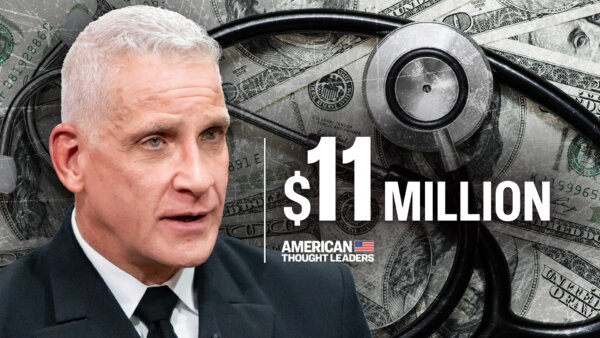
As part of our special series on the U.S. presidential transition period, I’m sitting down with Victor Suarez, a retired U.S. Army colonel who served for 27 years and saw, firsthand, serious problems with America’s medical supply chains.
In this episode, he breaks down key steps America can take to secure its vital medicines.
Views expressed in this video are opinions of the host and the guest, and do not necessarily reflect the views of The Epoch Times.
RUSH TRANSCRIPT
Jan Jekielek:
Victor Suarez, such a pleasure to have you on American Thought Leaders.
Victor Suarez:
Thank you for having me.
Mr. Jekielek:
Let’s talk about supply chains, specifically supply chains that are coming from overseas. More specifically, supply chains that have a national security implication. What is the state of play here?
Mr. Suarez:
When you look at the state of play from a national security standpoint, I would say over the last 20 to 30 years, we’ve shifted with globalization a lot of our critical supply chains to make very important products in the United States. Whether it’s automobiles, whether it’s electronics, whether it’s our pharmaceuticals, have shifted primarily to Asia over the last 30 years, primarily because it was much cheaper.
They had access to free or cheap labor. Environmental regulations weren’t as strong over there where they were becoming very difficult here in the United States. The American public wanted cheaper products, and they didn’t see that over a 20 or 30 year period that that would put us in a perilous situation.
Mr. Jekielek:
Where would you say are the biggest vulnerabilities right now from a national security perspective?
Mr. Suarez:
I think one area that’s a very strong vulnerability that a lot of people don’t talk about, but I think an area of critical chemicals, accelerants, propellants, things that are made in chemistry that actually propel some of our most exquisite defense systems. And as those supply chains moved further to the east, specifically places like China, when you look at that from a
national security standpoint, whatever we have in our own stocks right now may only last a certain period of time.
And so if you studied the history of warfare throughout the decades or the centuries, you really will understand that the nation that culminates the first usually loses the war. And so that’s one area that is a strong vulnerability is propellants and accelerants. Another area that’s really particular to the field that I come from, and that is US healthcare and life sciences and biotechnology, and that’s really the chemicals and the precursors that go into our everyday medicines for U.S. healthcare.
And as those shifted overseas to places like China, we see an overwhelming majority of those precursor materials coming from our number one adversary. And as a result, what most Americans don’t realize is that the entire U.S. healthcare system is really highly dependent on those chemicals to make the finished product of their medicines or even medical devices for that.
Mr. Jekielek:
As I understand it, some of those precursors actually overlap on the propellant side and on the medical precursor side. So would you say these are doubly important?
Mr. Suarez:
There’s certainly a doubly important reason. There’s actually programs getting after that now. There’s a recognition of that right now to solve that problem. It’s not an easy problem to have because it’s something you can’t undo. If it’s something that’s gone on for over three decades, you can’t undo it overnight. So you have to really prioritize and you have to understand where our most vulnerable areas are and really come with a priority list of those things that are most essential to protecting some of our critical infrastructure or our critical industries in the United States.
Mr. Jekielek:
What is your background? Your specialty is supply chains in the medical field and healthcare. Please tell us about that.
Mr. Suarez:
Last year in 2023, towards the end, I retired from a career in the military. I retired as a U.S. Army colonel after 27-and-a-half years on active
duty. I was a medical service corps officer as well as an acquisition officer. And I had two specialty areas. One was healthcare supply chain, and the other was advanced product development as an acquisition officer, mostly of biotechnologies.
Those two areas, a deep understanding of healthcare supply chain, as well as creating biopharmaceuticals, added to a national security background of three decades, allows me to see a lot of the problems that we see today in the marketplace and gives me a unique perspective to analyze problems with a different lens and can see it from both a scientific side, a supply chain side, a business side, and certainly a national security side for those vulnerabilities.
What were you doing in the military all these years? I was really fortunate. I started off in the first nine years of my military career in highly deployable combat units. I was in units like the 82nd Airborne Division as a paratrooper, 7th Special Forces Group in their surgeon’s office, and really supplying all of our exquisite 18 Delta Special Forces medics with the latest equipment and gear. And I did that in the 90s.
I transitioned to being a mechanized medical company commander and took a medical company to the northern part of the Sunni Triangle in Iraq in 2004 in support of a 5,000-person brigade combat team in combat in Operation Iraqi Freedom II. But after I did that for about nine years, I transitioned. I came back to the United States with my family. We were stationed in Europe and multiple deployments during that time. And I came back to really establish a career in medical acquisition, mostly started off with fielding and helping develop and getting new technologies out to the battlefield, life-saving medical devices and trauma equipment to our forces as that industry really modernized during the war.
In 2006, I met a mentor who is a giant in the biotechnology industry, and he took me under his wing and taught me a little bit about the industry. And I started to see some opportunities for additional training and opportunities with the military to start developing certain biotechnologies, specifically in the U.S. biodefense industry. Really for about 27 years, I was going back and forth between healthcare supply chain, healthcare operations in deployed settings, and then also in the last 10 or so years, product development and leadership positions at places like the Walter Reed Army Institute of Research, where I was the chief of staff, where we did biomedical research in not only infectious diseases, but also brain health.
We did a lot of different things with labs that were subordinate to us all over the world. I got to see a pretty broad perspective of things like global health programs that we had initiated all over the world to everyday biotechnology development of the latest biodefense vaccine or therapeutic that would be out there to protect our service members as they deployed into vulnerable areas.
Mr. Jekielek:
You were actually involved in Operation Warp Speed. Briefly tell us about your involvement in that.
Mr. Suarez:
I had a background, as I mentioned, in advanced development of biodefense vaccines. And so with that, I was involved in some of the acceleration of the Ebola vaccine and the currently used Mpox vaccine. Because I had that background in working with industry and working with other elements of the federal government, I was pulled in 2020 to be the program manager of a vaccine at Operation Warp Speed and to work with the team there to lead them and get an emergency use authorization. Yes, I was one of those hundred people that worked for General Perna under Operation Warp Speed.
Mr. Jekielek:
During the pandemic, many people didn’t fully grasp the threat of this medical precursor supply chain issue until the Chinese regime threatened to withhold some of those precursors. Please tell us about that scenario.
Mr. Suarez:
Yes, COVID and the pandemic was really an eye-opener to the public and to the federal government and everybody that was just in the healthcare industry where people were scrambling for basic things, whether it was PPE or whether it was just everyday common medicines, that we are super vulnerable when it comes down to a critical commodity like our medicines. It opened our eyes to looking at what we call supply chain risk management and looking at things like an essential medicine for life-saving of a 70-year-old person that has a heart condition. Let’s start digging into what we call the bill of materials and look at all the components of what goes into that and then ask the other question of where does it come from?
Is there a geopolitical risk from where it comes from? What are the companies that are making those? And where are they predominantly coming from? And are those countries adversarial to the United States? Are they allies to the United States? I think the pandemic really opened our eyes to that. And as we moved out of the pandemic, what we saw about two and a half years ago was a bipartisan Congress that started to inquire more about what we are going to do about it. maybe, you know, reshoring a lot of the critical medicines and the precursors and the APIs out of places like China or even India to either here in the United States or with our allied partners across the world.
Mr. Jekielek:
What percentage of these medical precursors are actually vulnerable this way? Let’s specifically talk about Communist China.
Mr. Suarez:
There’s a lot of numbers out there in this area. I’ll give you a couple examples to kind of chew on. There was a group that partnered with the U.S. Pharmacopeia and the API Innovation Center out of St. Louis who came up with this list of what they call vital medicines, like 100 vital medicines in the United States. These are medicines that are so essential to U.S. health care that if we didn’t have them, we would have major, major problems with people that are dependent on these medicines.
These aren’t just everyday hay fever allergy medicines. These are sometimes necessary for people so they don’t die. Out of those hundred or so, their analysis came up with over 80% of those vital medicines having some kind of precursor, key starting material that originates from China. People say that maybe we can just pivot to buying some of our medicines cheaper from India. But when you look at India, a super majority of their precursors API comes from China.
I tell people that all roads lead to China when you look at the upstream supply chain of the pharmaceutical industry. Some companies have done a good job of figuring out and understanding this risk. And so they’ve de-risked that.ut they’re mostly the bigger pharmaceutical companies that have a brand name drug that they want to protect. And so they’ve worked very hard over the last five years or even longer to bifurcate their supply chains and make sure if they make a medicine potentially in China or for the Chinese market, they do it separately from the supply chain that they make for medicines that they sell to the United States or in Europe. But not all companies can do that.
And so the super majority of the companies that are out there are not the big biopharmas that you’ve heard of. They’re much, much smaller. And when people look at the problem, just to give you some perspective,
91% of the prescriptions in the United States are for generic medicines. These are the low-cost generic medicines. Only about 9% are the brand-name blockbuster drugs and medicines that you’ve heard from all these companies.
But the value as far as the drugs spend is about 80% on just the 9% of the brand name drugs and only about 19 or 20% of the low cost generic drugs. But the majority of Americans are taking generic medicines. That’s where the majority of the risks are because of some of the challenges we have with regulatory oversight and some of the other problems we have in manufacturing quality when we get over into places like China and India.
Mr. Jekielek:
Are you saying that 80% of vital medicines could be thwarted at this moment?
Mr. Suarez:
Yes. Some further analysis in a publication I did earlier this year with my think tank showed that about 20% of what we call APIs are solely sourced from China. So that means there’s not even a secondary source in the world. And if you were to try to create a secondary source, you’re now looking at, at best, six months or maybe years of lead time to build that secondary source. A lot of people say that this problem is too big to solve. We can’t really decouple from them.
I tell them, look, you can’t boil the whole ocean. You have to break this down and map that supply chain of where our essential medicines are coming from and what are their components, and then trace them to the most important things we need for U.S. healthcare. Then you can clearly start to see priorities of where we can make a difference. But the area that I’d say we need to really pay attention to is the solely sourced precursors or APIs, the active pharmaceutical ingredients that come from China. If they stopped supplying them to the U.S. market or to our allies in Europe, that means we don’t have any other alternative. That is a huge risk that we cannot bear.
Mr. Jekielek:
Even when there are things that are available in other places, they might not be at the scale that’s needed at the moment.
Mr. Suarez:
That is true. You can make certain things at a bench scale or maybe at a compounding pharmacy or maybe at a compounding pharmacy or maybe at a small chemical plant, but you’re right not the scale that we need for U.S. healthcare, and that is another challenge.
Mr. Jekielek:
We should work together on building one of our famous Epoch Times infographics that traces all these different key precursors and which ones are vulnerable. It could be very useful.
Mr. Suarez:
There are efforts right now, academic and governmental, that are looking at those specific things right now. So I think those will be available and probably published sometime in 2025. And I’m looking forward to seeing some of those. I do have some collaborations on those efforts. That’s a great first start of what our country is doing.
Mr. Jekielek:
Just visualizing these things can spur people to action a little quicker. You were alluding to the fact that just some of these precursors that are coming are just simply not the quality that they need to be to make the product. So that’s the other part of the vulnerability. The product is being delivered, but it’s substandard, or there’s some very prominent examples of being even damaging.
Mr. Suarez:
Yes, I believe that one of the things that you’re going to see as some of these studies come out that I have alluded to is that in some of these cases, organizations have alternatives, right? And one of the problems we face with some of these precursor chemicals, especially when we’re starting to look like it, elements. If you need something like potassium chloride, that’s a mineral. That’s something that you’re going to be able to mine.
So if you want to save money and your goal is to lower the cost of goods sold as much as you can because the market’s going to reward you for having the cheapest product, you may not invest in all the different steps to basically purify that product in its form where you’re going to sell it to a customer. And if you just save a little bit of money by not taking additional purification steps, you save additional money by not doing chemical analytical testing that sometimes costs a lot of money.
You don’t have quality audit agreements with your trading partners. You don’t allow for your quality team within your company to actually have a robust capability because that’s very expensive as well. You can start to take market share over companies that are doing all those things because their costs of goods sold are going to be a lot higher. To purify some of these things down, to clear out those impurities costs money.
But those are the kind of activities that we expect to put in humans to provide health care. And what most Americans don’t realize is that there’s probably about 10 or 15 percent of the medicines that they take in everyday U.S. health care that are of low quality. And there are efforts right now to get a better understanding of that. And I would just say that organizations like the Defense Department are taking a lead role in that right now.
Mr. Jekielek:
Because there are potential risks to the military?
Mr. Suarez:
It’s not just potential risks to the military. A senior leader that just recently retired basically said that he not only sees this as something that is important for the U.S. military soldiers, their families, and beneficiaries.
There’s almost 10 million beneficiaries in the military health system. But who else is going to step up to do this? He says, we’re doing this for the nation. This is the kind of leadership that we need, bold leadership that’s going to be curious about things that have been problematic for multiple decades.
And everybody else is just looking around, hoping somebody else is going to do it. But I would just tell you as a military retiree, I’m very proud to be part of an organization that said, we’re going to actually look at the bottom of this, we’re going to study it, and we’re going to provide some data and results, and we’re going to make good decisions based on this, provide better healthcare for our patients, and then if this can benefit the country, so be it.
Mr. Jekielek:
I recently visited a nutritional supplement manufacturer, quite an interesting company. We’ll probably do something on American Thought Leaders about them in the not too distant future. And one of the things, they have a very, let’s say, rigid quality control component, right, to what they do. And both that quality control functions, and this is relevant to what we’re talking about, both on the acquisition of the precursors side and also on this, of course, the post-manufacturing side.
But one of the gentlemen who does the quality control explained to me that as he’s sourcing material and he says, let’s say it needs to be 96% pure, that’s the standard. Very quickly, he’ll see that batches will start coming with lower percentages of purity. And if he doesn’t actually take the very inconvenient step of sending them back, that quality number is going to keep going down, right? So he has to do that. And then when there’s awareness that the quality is being checked, that quality stays high, right?
Even in the context of, you know, American suppliers, which is, you know, I find incredibly disturbing because you’re basically talking about a situation where people are not, haven’t actually been looking, right? And we’re talking about communist China. Like, I don’t get this. Explain to me how that’s even possible.
Mr. Suarez:
Okay, if you walked into a hardware store 40 years ago, you were to buy a tool or a piece of lawn equipment for your house, you would expect to pay a fair price for that tool or lawn care equipment, and you would expect that tool or equipment to last 20, maybe 30 years. Today, you might be able to buy something that looks like that tool or lawn care equipment in a big, giant store like a Home Depot or Lowe’s, where that supply chain is obviously coming from. A lot of it’s from China. But you’ll pay maybe a fifth the cost or maybe 50% less than what you would have done before, but it won’t last 20 or 30 years.
So the industry has really capitalized on the American culture that likes cheap stuff and is willing to trade off with really the lifespan of that product not lasting. Now, that’s one thing if you’re going to buy a rake. It’s another thing when you’re buying an exquisite medicine for a 75-year-old grandmother who’s got congestive heart failure and high blood pressure and other chronic diseases.
How did we get here? We got here because we had a situation where it just became commonplace, especially in the 80s, especially in the pharmaceutical industry after 1984, where our seminal legislation was passed, where the industry started to shift over to the East, and that really changed everything. That’s the Hatch-Waxman Act of 1984. It was great legislation at the time, because the concern in the late 70s and the early 80s was that health care costs were becoming too expensive, and a big portion of that was the drug spend.
Because the alternative back in those days were the big pharmaceutical companies that made the brand name drugs. Generics were very nascent. It was like very limited numbers of generic medicines. The entry into the marketplace was very difficult. So that law created the Abbreviated New Drug Application [ANDA], an abbreviated method for a new company to come in and after an innovative brand name drug went off patent, they can make a copycat drug.
For the first couple years, the companies that entered the field made, for the most part, decent quality medicines. But as they figured out, in order to lower the cost of those goods, it was cheaper for them to ship the manufacturing further to the east. As China was trying to rise in their economy and gain power through manufacturing, they took advantage of that, just like they did for all the other sectors. As a country we played right into that playbook of theirs. That’s really how it all started.
Mr. Jekielek:
But what about this lack of quality control that you’re alluding to?
Mr. Suarez:
Yes. That’s part of a couple of things, and this is my assessment of it. Over time, what became the gold standard was, as long as you got an FDA approval, you got an Abbreviated New Drug Application approved for a small molecule pharmaceutical. All that really mattered was this ticket to sell and market that drug in the United States. It was just, do you have a licensed product, and how much does it cost? And those were the only two criteria.
And what happened in the 80s was some of the brand name big pharma companies were actually initially saying, hey, we did some internal testing and that chemical entity, that generic doesn’t look anything like ours and it’s not behaving like ours. But they got slapped down for anti-competitive, antitrust activity because they were just simply trying to call it out. And I will tell you, I’m not on the payroll of big pharma. I’m just simply pointing out that in the 80s, they were pointing these things out.
And in the 90s, every time they called that out, they were basically shamed into saying, oh, you’re trying to be anti-competitive with these new entrants in the field. And there were some high quality companies and there still are some high quality generic pharmaceutical companies. The problem is the U.S. and the European ones are getting killed right now because they’ve been targeted by China. And what they do is they target certain molecules that those companies are making. And then for about three years, the country basically subsidizes their own companies to artificially deflate the prices of those drugs.
By doing that, they get market share because it’s FDA approved and it meets the minimum requirement and it’s the cheapest cost. The market starts buying more of those products from China and India, then these Western companies can’t make sales on them. They decide to find another molecule to make that they can make money off of, or some of them have gone out of business, or even worse, some of them have shrunk down in size, where they can only do 50% or less capacity in their manufacturing. And then another foreign entity through an intermediary will go in and try to acquire them and buy them out.
And that’s another risk. Now, you have foreign influence buying U.S. manufacturing assets or European assets because they basically starved them out and they got them to the point where they were desperate. And so that’s been happening now for over 20 years. And most Americans are clueless on what’s happening behind the scenes. Shouldn’t there be people inspecting the quality of these materials? Simply yes, and we are.
The United States Congress actually in April of this year, as a matter of fact, there were about six of us that testified on this in the Senate Armed Services Committee about a landmark study that the Defense Department took on in late 2023 to look at this exact thing. The regulatory agency, in this case the FDA, has been challenged in this area since 2009, the year after the Heparin scandal where a bunch of Americans unfortunately died.
Mr. Jekielek:
Could you summarize that for us?
Mr. Suarez:
Yes, that was the big seminal moment. In 2008, there was a big scandal with Heparin. It’s a blood thinner that is commonly used for people who are actually harvested from pig intestines from pig farms in China. There was a series of bad batches, and they unfortunately got into the U.S. supply chain through a very reputable pharmaceutical company that didn’t have the ability to detect this problem. It led to the deaths and serious injuries of hundreds of Americans in 2008. In 2009, there was a big wake-up call and the government accountability office looked into this as well. And since 2009, the GAO has rated the FDA’s ability to regulate overseas manufacturers in China and India as high risk.
Now, to give the FDA some credit, in the last year or so, as they’ve come out of the pandemic, they have this huge backlog of inspections. They are trying to reorganize to address this big, big problem. But they are so far behind in properly regulating these Chinese and Indian manufacturers that even in 2008, when this scandal hit, they didn’t have anybody on the ground in mainland China to inspect these plants, especially no notice, which is the standard that they do here in the United States or in European manufacturing plants. So there was an uneven level playing field.
If you’re a U.S. or Western manufacturer of exquisite drugs, you are not treated the same way. You are treated a lot more harder, if you will, in regulatory oversight than your competitor in China who’s doing everything they can to artificially deflate the inability to do what I call sentinel screening of the quality of the medicines. A lot of people don’t know, up until about 1962, the FDA used to routinely examine or test about 4,800 to 5,000 medicines.
But what they found was that at that time, in 1962, most of those companies were making high quality medicines. So they weren’t really seeing much problems. There were the big brand name companies. So they decided in some legislation in 1962 that they would introduce a new methodology called good manufacturing practice. That changed everything in that timeframe as it got implemented over the next decade or so.
And GMP, although as a functional framework, sounds great and actually for the most part works great, it does, it was a fundamental shift in regulatory policy where it basically put the onus on the company to self-regulate the quality of their manufacturing by following a framework and then reporting when they had problems and then the FDA would only come in every two to five years to inspect their records but it was really a shift now the companies because they had done so well in the 40s, 50s, and 60s, they were trusted to basically regulate their own manufacturing quality based on GMP.
Again, that doesn’t hold up for every company that’s unethical, willing to falsify records, willing to cheat, and willing to do things that high quality companies in the West weren’t willing to do. But they paid the price because some of them went out of business trying to maintain quality.
To bring this up to speed right now, one of the things on the table to really consider for the American public is if the FDA has a backlog of almost 2000 plants all over the world, that have been backlogged because of not only the pandemic and just overwhelming lack of resources for them as well.
One way you can kind of mitigate that risk is by doing surveillance screening of the medicines based on risk.
Again, you can’t boil the whole ocean. You look back at, okay, which ones are the highest risk for regulatory? What were the longest periods of time that the FDA or a regulatory body hasn’t inspected that plant? And you come up with a priority list, and you take samples, and you test them for quality. You look at purity. You look at dissolution rates. You look at contamination content and carcinogen content.
And when you can look at those things in a small molecule pharmaceutical, You can really see very quickly whether or not that drug is anywhere near what the brand name drug, what I call the pacing item, the innovative reference drug looks like from a chemical profile. And those are the kind of things that I think we’re seeing right now in the Defense Department study.
But even before that, a large healthcare system about three and a half years ago started doing this, and that’s Kaiser Permanente. So this wasn’t originally a government initiative. This was actually an industry with a leading health institution. Again, I’m not paid by Kaiser to say any of this stuff, but they took the initiative in their business model, knowing that there was risk with the medicines they were buying.
Their model is basically, if you want to continue to sell drugs to Kaiser Permanente on of these 20 medicines, you have to show that you have a certificate of analysis from an independent ISO rated lab showing that your drug is is safe it’s low-risk it’s a green rated drug and as long as you maintain that certificate of analysis we will continue to have this long-term contract to buy from you and what that does over time is it creates a supply chain and a manufacturing process of goodness because it rewards the companies for doing the right thing and if they have to adjust their prices, what we’re seeing is only a 1 to 3 percent price adjustment to compensate for that quality.
What health institutions are seeing right now is I’m willing to pay that extra 2 or 3 percent for a resilient supply chain that’s high quality and I get better patient outcomes. It’s a winning combination. So it’s one of those things that when the Department of Defense study comes out with some results next year, I think it’s going to be an eye-opening thing for the rest of the public to see.
Mr. Jekielek:
You’re basically telling me that since the 60s, the incentive structures have been messed up. You want there to be a natural incentive for people to be doing the right thing, whereas here, you’re going to get taken over and priced out of the market if you’re actually following all the rules. You say, well, I guess we have to cut some corners, otherwise we’re going out of business, right?
Mr. Suarez:
Most things in the world are based on a three-legged stool. Even our government is formed like that. We have three branches of the government. If you take away one, the other two occlude and will probably mess up the rest of American citizens. But that’s why you have a third branch of government, whether it’s the supreme court, the legislative branch, or the executive branch. If you take out one of them our quality of life is going to go down.
Now, I’ll take you to that three-legged stool for the drug industry. You have the manufacturers and you have the regulatory agency. That’s two legs. What you’re missing that we have in other industries, almost every other industry, is independent review, independent evaluation. In the car industry, for example, they brilliantly introduced this over four decades ago.
Because back in the 50s and 60s, what was the problem in the car industry was you had the manufacturers that want to make really cool, fast cars that look great and then you had a fledgling federal regulatory body the
National Highway Traffic and Safety Administration NHTSA and they had a limited budget, they had a limited ability to regulate a car manufacturing industry that was a billion dollar industry and what was happening was that people were getting in automobile accidents and dying of accidents that they should have survived.
If you remember in the 70s we had the Pinto scandal. In 1976, we had four to six years of Pintos. We know now that Ford made a conscious decision. They had done internal testing and knew that when that car was struck from the rear, that it would explode, but they wanted to save money by not moving the gas tank. They knew that engineering wise, it was a risk, but they were willing to take that risk. Why?
Their excuse, if you look this up, was that it wasn’t required by the regulatory agency. They basically hid behind the regulatory rules
at the time that said, we don’t have to move it. They saved thousands of dollars per unit of sale because they didn’t have to re-engineer the design of that car. And it resulted in the deaths of hundreds of people unnecessarily.
If you take that same parallel mentality to the drug industry, there
might be a bunch of things that might not prescribe a drug company to do, right? They’re given this latitude based on a series of trust or years of trust that they built up in the 40s and 50s and early 60s. And now it’s on them to do regulation of GMP and then self-report when they’re having a problem and do corrective actions when they have a problem and report that to the regulatory agency all the time.
Again, the majority of the industry is doing that, but it only takes 10 or 15% of the industry to cut corners to gain an advantage here and there, especially on the lower end market. And when that happens, it just proliferates and it just becomes a feeding frenzy because everybody says, well, the only thing we have to follow is what the GMP says and what our license allows us to do.
By the way, if we’re 10 or 12,000 miles away and we get an eight-week heads up before an FDA investigator can come in and inspect our plant, we can easily prepare for that inspection. We can doctor reports. We can do a lot of other shady things. So you see where there’s an advantage there.
And if that happens over time, over several decades, we get a marketplace like today where we have 300 plus all-time drug shortages, we have on average three drug recalls a day. In the United States, every year, it’s about a thousand recalls in the FDA. Okay. So when you’re in this world and you get those alerts, you’ll start to see all these things, but this is not something that most Americans ever see, right? This happens way below the radar screen, but a thousand drug recalls a year worldwide, people have no idea.
So that’s why, you know, I’m a proponent of saying, let’s make that third leg of the stool like we do in other industries. What happened in the car industry is that another independent body came in, the Insurance Institute for Highway Safety, formed by a former lead of NHTSA who said there was a gap. He got backing from the largest car insurance companies to fund an independent research institute in Virginia to crash test and do science and research on every vehicle being sold in the United States. They published their results and that changed the marketplace. Now, manufacturers knew they were being called out by an independent research and development body so now they had to compete on quality, safety, and crash survivability.
And just to give you some stats, in a 40-year period from the 70s to around 2018 in the early 70s we as Americans were driving around 1 trillion road miles every year okay with the population we had at that time you fast forward it to 2018 2019 we were driving with our population over 3 trillion road miles so 3x the amount of road miles traveled however when you look at fatality rates per 100,000, it dropped 39% because technology was introduced through this three-way system of the manufacturers being now checked by not only the regulatory body, but independent review of IIHS, J.D. Power & Associates, Consumer Reports, and Car & Driver Magazine.
Everybody was looking at that stuff.
Now the companies had to compete based on not only how the car drove and the reliability, but quality and safety. When people are looking at the latest minivan for their spouse and their three kids, that is now going to be a decisive factor. Does this thing roll over if it goes around a curve? Is it going to survive a head-on collision because of airbag technology? Does it have radial tires and analog brakes? All those things were introduced by having a third-party system evaluate the industry.
Mr. Jekielek:
During the pandemic it’s almost like there were independent parties that were coming up and talking about all sorts of things along the way and some of them are very highly qualified, but they were attacked across the board.
Mr. Suarez:
That typically happens. Initially, when you have independent reviews they’re usually attacked or maligned by whoever’s the incumbent right whoever has the overwhelming power to lose or to have to be exposed for their transparency. We’ve certainly seen that even with independent review of medicines. I mean, a particular company that’s actually doing a lot of the primary testing for the Defense Department, they were attacked for many, many years. But six weeks ago, they settled a lawsuit because they
were a whistleblower for $70 million. And there are cases that basically their lab uncovered resulted in a $2.2 billion settlement on behalf of 80,000 people that got cancer with this particular drug.
Yes, you’re right. The people that raise up their voices over concern about this, they’re credible, they have the scientific background to it, initially are going to get attacked. And unfortunately, if they don’t have a strong system behind them, a lot of them get destroyed or canceled. That’s just something we have to historically understand. This is just what happens in society with people that call out as an independent voice. An independent review is a really important thing.
Mr. Jekielek:
What can we expect in the future? You have 27 years of military experience. What is the potential for the military weaponization of this supply chain?
Mr. Suarez:
There’s always a risk. We know that fentanyl precursors all come from China for the most part, and they come through Mexico. And I’ve talked about this with a study team that I’m on, where there could be low levels of intentional low levels of contaminants that are put into a drug supply chain, that if you’re not doing independent testing, if you’re not looking at it under you know liquid chromatography mass spec device or you’re not looking at it you know with other analytical methods you may not detect that right because it’s so low level and it might just be just above whatever the US pharmacopeia or the FDA threshold is.
But the problem is if you get micro doses of that over years and years it could be very harmful to you whether it’s lead arsenic or any other contaminant or even worse or carogen. Those are the kinds of things that a lot of people may not understand. The Defense Department study is looking at those things as well, things that have never been looked at at scale for 800 to 900 medicines or national drug codes. This is the largest study that’s ever been done in the United States for an independent review.
We’re going to learn a lot about not only the quality of those medicines, the variability in them, but from a healthcare standpoint, how are we spending our dollars? Are we spending our dollars in an appropriate way? Are there medicines that we’re paying too much for that are low quality? But if we had the data, there could have been an alternative that was cheaper and actually high quality. Those are the things that I think we’re going to start to see in 2025 with this study. And I think you’re also going to be able to learn a little bit more about where things are coming from, because that’s being looked at as well.
Mr. Jekielek:
What about strike capability, for example? I’ve had someone on the show talking about vulnerabilities in our electrical grid. And so there’s these giant high-voltage transformers, which are necessary to run the grid. There’s only one place where they’re manufactured. That’s in communist China. I I understand there’s potentially problematic components in these giant structures. So you can imagine a situation where all of these things just happen to fail at the same time.
What I’m thinking about is, could you inject something nefarious into the supply chain? Of course, once it’s discovered, it would be obvious, right? But how damaging could something like that be, potentially, given your experience of injecting something into the supply chain that isn’t being screened for right now? Because as you told me, right, so many things are not being screened very well.
Mr. Suarez:
Right, I think it could be crippling. There’s some really nefarious things we really can’t talk about here in this type of environment. But fortunately, you know, we have a defense department that is concerned about those things and are actually implementing programs, some of them classified to get after those things. But I do think it’s a big risk. And anything that’s a critical infrastructure risk, healthcare obviously is a big critical infrastructure when you talk about, you know, electrical grid technology.
One method, at least near term, to kind of strengthen, at least for a period of time, provide some level of resiliency on that, so there’s continuity of, let’s say, operations, is by stockpiling. So that’s one way. So if you had a grid, and you can take this across any other industries, we do it in medicine as well. We have a strategic national stockpile for a reason, right? We have a strategic petroleum reserve that was born out of what happened in the 1970s with an embargo over oil, right?
Now we are sitting on sometimes up to two years worth of crude oil that we could use. Now, sometimes politicians will dip into it when they want to adjust the price of gas. But when you talk about something like the critical materials for or equipment for a power grid station, one way is you can buy that material, hold your nose for a bit, and stockpile a couple spare of those parts that you need until you can ramp up a manufacturing of your own capability here in the United States or with an allied partner that’s willing to make that product. But you can buy time by placing orders for spares. But if you don’t have any spares and you’re completely reliant on your adversary during a time of a crisis, then that’s a big problem.
But simultaneously, you’re creating a marketplace somehow by incentivizing U.S. manufacturers or allied partners to basically change or make a new replacement product. Maybe the grid needs to be modernized so you take advantage of the fact that, hey, it’s time that’s met its life cycle. Maybe we need to upgrade to the next generation. You use that opportunity to convert the marketplace to the new technology.
And we’re also proposing to do that with our pharmaceutical supply chain as well, is use this time frame to take small molecule pharmaceuticals that are made in dirty chemical synthesis and using biocatalytic methods that are cleaner, you can make things at scale and use advanced manufacturing technologies, something of which the Chinese and India are not ready to do for the lower end generics, and convert the marketplace to an area where we can make products here in the United States with partnership with the public sector.
It is not much different than the CHIPS and Science Act where they made an investment and then industry came in with 3 times the investment to make the most exquisite semiconductors here in the United States. There are ways to get after this, but we have to look at it from a prioritization standpoint. If your biggest vulnerability is no spares, then buy a couple spares and put them in a warehouse in a secured place and crack them open when you need them.
Mr. Jekielek:
There are these dumping practices that you were describing, right, to price out, like there’s this, it’s a common practice to try to price out American
companies. I mean, the obvious thing here is some kind of, you know, heavy tariff regime to prevent that from happening. That’s just what jumps to my mind. What would you say are the kind of top priority areas right now in this, in your realm?
Mr. Suarez:
The number one thing, and I testified about this at the SASC in April, is we need to have the Congress and the president close the Acetris loophole. The Acetris loophole was a court case that was settled in early 2020, right before the pandemic. Essentially, what happened was the year prior to that, the VA was actually trying to say that a certain medicine did not meet the Trade Agreement Act requirements, which said that if you make a product and you sell it to the federal government, we are going to look at the country of origin. If you’re not a TAA compliant nation, we can’t sell you a final product to the VA, the Defense Department, one of the federal agencies. Now, it doesn’t apply to just normal commercial sales to civilian hospitals for a medicine, but it does apply to federal sales.
The VA was saying, hey, there’s a particular medicine that gets after one of the hepatitis strains, and we are deeming that as not being TAA compliant, so we’re not going to buy it from this supplier. This particular company took this to federal court and they basically convinced after precedent of saying, hey, from a medicine, if it wasn’t manufactured in the United States, what was considered a drug made in the United States was the API. Was the core essential element of the drug itself, the active pharmaceutical ingredient, deemed to be made in a TAA compliant country or the U.S. to be sold to the U.S. government?
They convinced a court to say that even though the active ingredient was made in a foreign country, it could be shipped here to a manufacturing finishing plant in New Jersey and mixed in with excipients, non-active ingredients, pressed into a pill, packaged around and labeled, and then sold as an American-made drug. Even though the core element of the drug was not really substantially transformed. And there’s two qualifications. They’re manufactured or substantially transformed.
Again, to be argued in court is whether or not the substantial transformation of just compressing it into a pill with the coatings, colorings, and fillings was really substantial transformation because what people would argue, what precedent was, was the active pharmaceutical ingredient is the actual drug. Everything else is just delivering it to the person, keeping it in place so it doesn’t degrade and break down, right?
And so that’s a really important case because what it does is it creates this huge loophole that allows this whole thing we’ve been talking about to actually continue in perpetuity, which is you can literally make all the components of all these drugs in China. to some plant in New Jersey, mix it, compound it, package and label it, and say, make it in the USA, and then sell it to the Department of Defense.
Now, that’s the number one thing. I would ask Congress and the President to fix that loophole through legislation, like, immediately. They could fix that in the NDAA, like, a week from now if they were really serious about it. That’s number one, okay? Number two is we need to do something about the Strategic API Reserve. I call this out in my white paper that I published back in March of 2024. The Strategic API Reserve is a facility that we spent hundreds of millions of dollars building that’s got, it’s tornado rated, it’s a secure building, and it was designed to have the nation’s stockpile of active pharmaceutical ingredients, key starting materials, and other chemicals that were pertinent to stabilize essential medicines for the United States in time of crisis.
To be paralleled with the Strategic Petroleum Reserve, that facility is only 1% full. I argue that for a couple tens of millions of dollars, you could pretty much go on a shopping spree and fill that up and basically take off all the leverage from our adversaries on essential medicine production. It’s not as simple as that, but you could do a big dent into reducing waste.
Mr. Jekielek:
In the process, you could probably test pretty quickly which suppliers are better than others.
Mr. Suarez:
Correct. And I’ve actually talked to some of the organizers about that, and they weren’t opposed to that because they know that part of the quality screening of things that we would buy could be screened for quality, whether would incentivize through other programs, other domestic manufacturers to actually bid to sell into the Strategic Active Pharmaceutical Reserve facility to basically jumpstart a conversion process.
Using the SAPR facility as a means to convert the marketplace over time, it might take five or ten years, but as things in the SAPR facility start to reach expiry, let’s say it’s one or two years out, because they would all be on stability programs, you could then sell those back to industry for a equal or cheaper price than they would buy from China, and then you could basically integrate that into the marketplace.
Mr. Jekielek:
As you replace them on the other end.
Mr. Suarez:
You sell that back, you use those monies, and you buy other precursor materials. And the good news is that most of the APIs and the key starting materials last three, four times longer than a finished product. If a finished product on average might last three years on the shelf, many of them will last much more. But on stability, these key starting materials and APIs could last maybe over a decade.
That’s another dynamic process that we need to pursue, if we were really serious about converting the marketplace and providing a sense of resiliency in our supply chain. And we would know that, hey, the criteria of putting materials in there are all traced in the most essential medicines for U.S. health care. They’re the most vital for a 73-year-old grandma or your uncle who’s got a cardiovascular disease. If worse comes to worse and we have an embargo due to a geopolitical event, we have a stockpile to draw from to create that medicine, at least for the first year or two years.
Mr. Jekielek:
What’s preventing us from being serious right now?
Mr. Suarez:
Part of it is that there’s a lot of forces out there that like the status quo, right? And you can say that about a lot of interests, right? A lot of times incumbents that have market share, they like this relationship that they have right now. And they usually have resources to buy influencers to keep the status quo, the status quo. And I think what you’re going to see probably with a new government is probably a lot of that probably being dismantled to some degree, or at least uncovered, exposed, something being transparent so people can actually look under the covers and say, hey, is that really how we want to do things?
Just because it’s always been done like this because you were the incumbent? Or are we just going to have a serious conversation about how we really solve the problem? And I think that’s going to be an interesting thing to observe over the next couple months is really what things are going to be uncovered. What kind of things are we going to accept no longer?
Mr. Jekielek:
What is the value of transparency in this industry? You’ve spoken about this, but I want you to talk about it directly.
Mr. Suarez:
The biggest thing with transparency is that it will restore trust in the U.S. health system. That’s where we’ve had some major challenges in our country in the past couple decades, is that the American public, and especially in the last four or five years in the healthcare industry. Transparency is the best thing to restore trust, right? If I can look you in the eye and you can trust me, because if I’m doing business with you and I’m saying, hey, we’re going to sign a contract, and you can go and look at my manufacturing plant.
I’m going to show you all my records of where I buy my materials. This is how I do my quality system to check that those ingredients are actually pure, that they’re safe. It’s going to instill trust in you because I’m an open book. And the problem is when we do the antithesis to that, we erode trust. And I think that’s the biggest thing is restoring trust in the American public, in our institutions, in our companies, and just our processes again.
Mr. Jekielek:
You have a list of things that could be done, and you’ve given a few very pointed ones, but let’s expand. One is to stop this loophole. What was number two?
Mr. Suarez:
Filling up the strategic API reserve, the SAPR facility. Number three, realize that just because a generic medicine says it’s FDA approved, we have to look at at least three things. Where was it manufactured? Country of origin matters. And not only just where was it created, where were all the components created? So we can understand a little bit of risk.
We need to also understand what is the quality of that product and then what is the quality of the manufacturing. So right now there’s a lot of emphasis on quality of the manufacturing. That’s just one component of it. What about the product itself? We need to look at the quality of the product itself. Is it designed as it’s intended to do? If it was designed to mimic what the brand name or the original drug was supposed to be, if that’s the reference, how close is it to the reference?
And I think if we understand that and we start to be curious about that and we start to not fight over turf battles of, oh, this is a regulatory realm, I would just say this is a due diligence thing. Like I said, I go back to the three-legged stool. You don’t have a functioning, resilient system unless you have checks and balances.
And when you only have two legs of the stool, it’s not very stable. And it’s not very trustworthy. It’s really kind of off balance. You need to have that third leg of the stool to create the balance. And that independent body or review is really critical in any type of market sector that we’re talking about.
In pharmaceuticals, it’s a matter of life or death.
Mr. Jekielek:
It would also help in the instances where the drug from the high-end company itself is kind of, let’s say, maybe hyped too highly or the harms are underplayed. We’ve seen various examples of this, at least over the last five years.
Mr. Suarez:
Nobody is off the table. As a matter of fact, I alluded to the court case where one of my clients won a $70 million whistleblower lawsuit, and the particular company basically had to settle for a $2.2 billion lawsuit. That was one of the big, giant brand name companies. And unfortunately, what that company did was something very, very bad. They had actually done something very similar when a chemist did this analysis in 1982 and found that this particular drug that’s been recalled now since 2020 was just not safe for human use because it was an unstable molecule. It was producing a very, very well-known carcinogen that could lead to cancer.
a matter of fact, an entity that we inject into mice to do oncology research. And this particular drug was turning into that. And this is from a big brand name company. This could happen to anybody. But what that company decided to do was they buried that study in 1982, and they never even told the FDA about it. And the only reason we all know about this was because the Department of Justice actually, at the request of one of our labs that saw a big problem went in there and basically got all the records and this company omitted that information in their regulatory filing when they got it approved the following year.
So my message to them is if you’re in the business of providing life-saving or quality of life medical products then you should be in it for the right reasons and that means being completely ethical about the development of a medicine or a drug. And if you aren’t willing to do that, then maybe you should consider finding another profession or another sector of the marketplace to do business.
Mr. Jekielek:
How does this third leg stay independent? It’s one of the things, again, that we’ve discovered through all sorts of fascinating FOIA requests that have been broadly publicized, this transparency. We see chummy behavior between industry and regulatory structures.
Mr. Suarez:
The cool thing is that they’ve been doing this for over a decade and a half in Europe through these official medicine control labs. These are all independent chemical analysis lab-rated under ISO/17025, from the International Organization for Standardization. It’s a certain type of international accredited body standard for being an independent lab. That means nobody from the regulatory body oversees them. In the United States, they’re not necessarily subject to the FDA looking into their stuff. They maintain their impartiality. The fourth pillar of ISO is impartiality.
I’ll give you a distinct example to illustrate what I mean. If an FDA investigator finds some bad manufacturing practices in a plant in India or China or even in the United States. They say, we see all these risks. You’re not following your SOPs. You’ve gotten all these records that are out of whack. Give us a sample of the medicine and we’re going to take it to one of our analytical labs in the United States and we’re going to test it.
We already know from a New York Times best-selling book by Katherine Eban in 2019 called Bottle of Lies that a company with the biggest scandals in the world in the mid-2000s, a company that no longer exists called Ranbaxy, one of the tricks that they used to do was when the FDA would ask them to send a sample was they would take an actual pill from the brand name drug and repackage it in their packaging and then send it off to the lab. That’s not an impartial test. That’s basically giving them the floor model of another company that they know is going to pass.
But I happen to know the guy that actually did the testing and he was able to figure that out. He’s actually a study collaborator of ours. But how you do it is that the independent lab doesn’t take samples from the company. If you understand how Consumer Reports works, they do blind market sweeps. When Consumer Reports buys a bunch of toasters to rate the toasters, they don’t tell the different toaster companies to send them an example of their toaster. They buy it off the market just like a normal person would do.
So an independent lab would actually use prime vendor pharmacy contracts and buy it just like a health system would do it. So they’re replicating what the health system would procure the medicine to include the supply chain that delivers the medicine to the lab, just like it would deliver it to the hospital. And sometimes that’s when you can even find where the problem might be. It might not even be a manufacturing process. It could be the logistics of going from the plant to the end user.
It could be that maybe that medicine was shipped to somebody’s home in a mail order pharmacy system, and your home happens to be in Scottsdale, Arizona, and it’s July, and it’s sitting in your mailbox for three hours before you come home. Now that drug’s being cooked there. Now you’re taking it, and it’s been degraded, and it no longer works as it’s intended. Part of it is being completely impartial, and by doing that, you’re not taking it directly
from the manufacturer per se.
And oftentimes, there’s different ways to structure it so the financial incentives aren’t going to be influenced by the company that is making the medicine. Usually in this case, it’s health systems that are demanding this. Instead of the regulatory agency or the drug company, it’s the XYZ health system. I’ve made a commitment to say I want to screen or I want a third party to evaluate all the drugs that I’m buying on this list of drugs.
In order to sell to me, I’m going to have to have a certificate of analysis saying your drug is clean. It’s good. Then we’re going to continue to have a long-term purchasing contract with those companies that can consistently provide clean products, ones that are designed to work. There are ways to structure the impartiality and the independence of this type of review.
Mr. Jekielek:
There are potentially billions of dollars at stake. How do they set those interest incentive structures just right in order to mitigate that?
Mr. Suarez:
They figured this out in the car industry because the automobile insurance companies, as crazy as this sounds, fund the independent research lab to do all the testing. Their incentive is that they don’t want to pay off catastrophic death rates for our insured clients that are dying in car accidents that they should have survived. They actually have a monetary as well as humanitarian incentive to keep their insured patients alive.
They’re saying, we’ll fund this research and development aspect to shine a light on the quality of these cars and how they can help prevent crashes from happening in the first place. The most recent technology in the last 5 or 10 years has been crash avoidance technologies. They have data that show that a lot of those technologies have actually prevented a lot of near misses and a lot of catastrophic events, so the industry is willing to invest in that.
The insurance companies are willing to invest in keeping their insured patients alive and not hurt. That’s a perfectly in line incentive. We’re already talking to clinical researchers that are now able to say, okay, I have now thousands of patients that I’m observing in these critical areas. Now we can look at their patient records and ask, what drugs were they on? Were they on a green rated drug or were they on a poor quality red rated drug? Were they on a green drug and got moved to a red drug?
Let’s look at their patient record. Did they have complications? Once you start tying that data at scale, that’s when now the calculus changes with CMS, with changes with insurance companies, to say, like, hey, maybe there’s something here to the quality of the medicine and the patient outcomes. That’s where we want to get to eventually. It’s not going to be an easy thing overnight, but I see that as a parallel of what they’ve done in the car industry.
Mr. Jekielek:
Victor, any final thoughts as we finish up?
Mr. Suarez:
Jan, I really appreciate having this time to speak with you and just really sharing this information about how fragile our pharmaceutical supply chain is, but really in general, how fragile all our supply chains are in the United States. I would just leave you with this. I think we have a great opportunity at this point to be really curious about things that we haven’t been curious about.
You’re concerned about the food you eat, the medicine you take, the health care services you get. I would just encourage your viewers to just continue to be curious about that and to really, really do your own research and really stay up to date as much as you can about those things that affect your life. I’m really honored to be here and thank you for having me.
Mr. Jekielek:
Victor Suarez, it’s such a pleasure to have you on the show.
Mr. Suarez:
Thank you.