
August 4, 2023
Performance
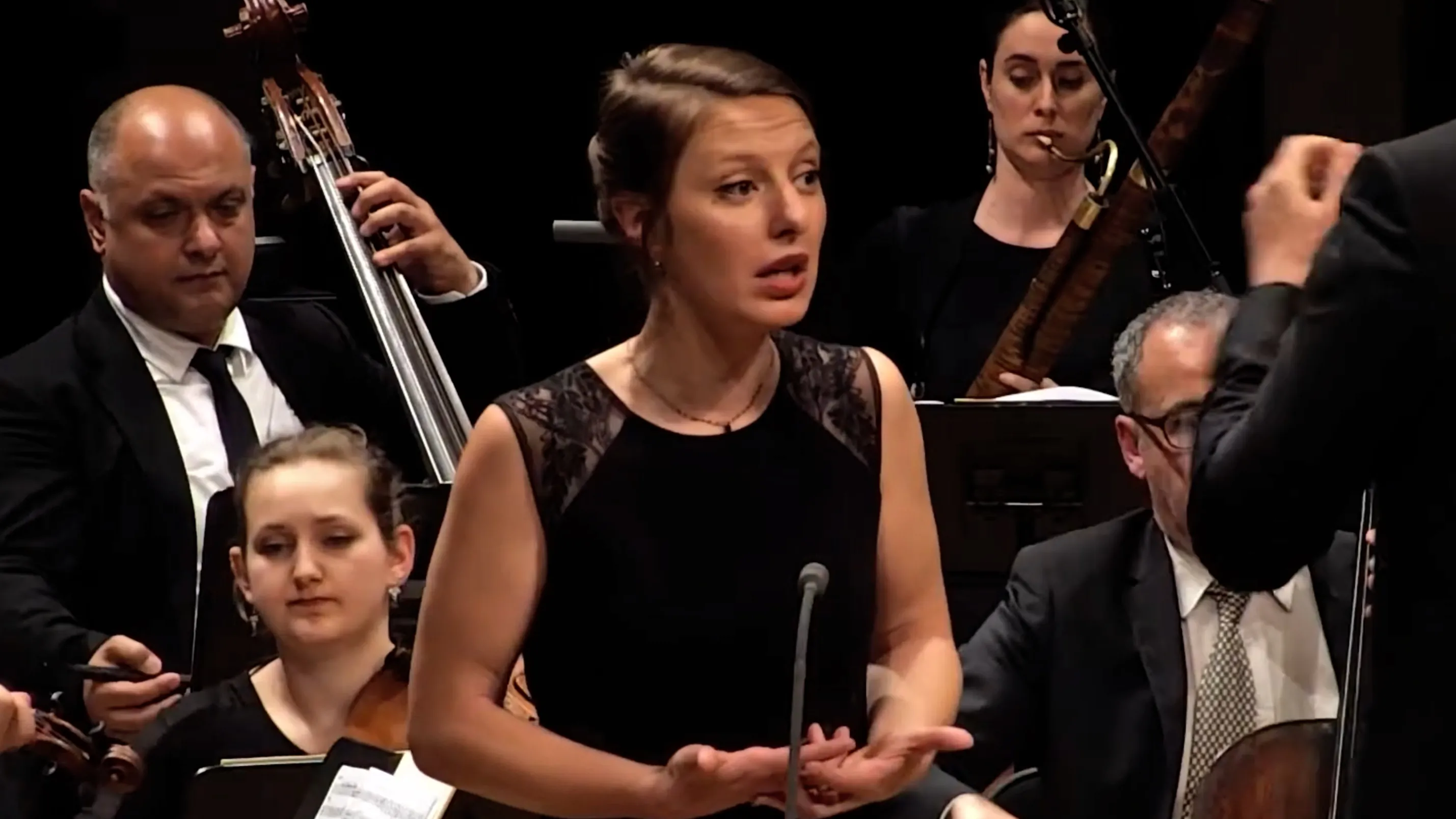
Mozart: Parto, Parto | Coline Dutilleul, Vlad Weverbergh, and Terra Nova Collective

A basset clarinet is a clarinet with a lower extension, meaning that its lower range is two whole tones deeper than that of a normal clarinet. This greater range gives the composer room to create a completely different type of musical line for the solo instrument, enabling a natural-sounding dialogue between a higher and a lower line. The basset clarinet can imitate a passage sung by a female and a male voice on its own, as it were.
The operatic style is never far from Mozart’s final works: his melodic lines, even in instrumental works, are drenched with lyricism. It is because of this that we decided to include several arias by Mozart in this programme, although there are also valid historical reasons. The above-mentioned concert poster from 1794 mentioned the inclusion of an aria with obbligato clarinet from Mozart’s La clemenza di Tito, KV 621; this would have been either Sesto’s aria “Parto, parto” or Vitellia’s aria “Non più di fiori,” as both arias have an obbligato solo part, the first for basset horn and the second for basset clarinet. There are clear links between these arias and the concerto for basset clarinet KV 622; both arias were composed with Mozart’s clarinettist Anton Stadler in mind, who travelled with Mozart to Prague for the premiere of La clemenza di Tito. The process by which “Non più di fiori” came to be composed was described in detail by Robbins Landon, who also was able to show, thanks to Tyson’s analysis of the paper on which it was composed, that the second section of the aria was composed long before La clemenza di Tito had been begun and was only later inserted into the opera.
This unusual aria, whose second theme greatly resembles the second theme from the clarinet concerto, has an obbligato solo line for basset horn. The basset horn, a deeper clarinet in F that originated in Bohemia, was also developed further by Theodor Lotz. Mozart composed a great deal of music for this unusual instrument, although it was always to remain on the further reaches of classical music. Various early 19th-century sources such as the Zeitung für die elegante Welt and Das Dramaturgisches Wochen- blatt confirm that the aria was also at times performed with an obbligato bassoon instead of a basset horn.
Credit:
Terra Nova Collective – https://www.youtube.com/@TerraNovaCollective
Read More
Videos (1)
×
Popular
Related Videos

Performance

Performance
Performance