Live chat
February 27, 2024
American Thought Leaders
Live chat
 Expand
Expand
 Expand
[FULL TRANSCRIPT BELOW] Over three years since January 6, there are still arrests every week. Over 1,000 individuals have been charged and over half have been incarcerated. Dozens of detainees are still languishing in jail awaiting trial.
How has Jan. 6 transformed American life?
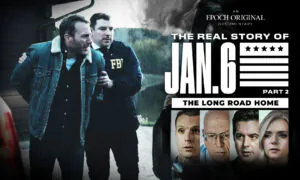
At the CPAC conference, I hosted a panel discussion with William Shipley, a 21-year DOJ prosecutor turned defense attorney who is representing a number of Jan. 6 defendants; Sarah McAbee, the wife of Jan. 6 defendant and law enforcement officer Ronald Colton McAbee; Garret O’Boyle, an FBI whistleblower; Kash Patel, national security advisor to President Trump; Geri Perna, the aunt of Jan. 6 prisoner Matthew Perna, who took his own life in March of 2022, and Epoch Times senior investigative reporter Joe Hanneman, host and writer of the documentary, “The Real Story of January 6 Part 2: The Long Road Home.”
Views expressed in this video are opinions of the host and the panelists, and do not necessarily reflect the views of The Epoch Times.
FULL TRANSCRIPT
Jan Jekielek:
Hello, everyone. Welcome to our panel discussion on, “The Real Story of January 6th: The Long Road Home.” You’ve just watched the trailer and it is available on EpochTV. Here’s a few things about The Epoch Times. Because of films like this, we have experienced rapid growth. Today, we are the 4th largest news media in America following the New York Times, the Wall Street Journal, and the Washington Post, although they don’t like to admit it.
A friend of mine, Jason Jones, once said, “The Epoch Times stands up for vulnerable people. I wasn’t totally sure about you until you decided to tackle January 6th.” We started on this issue back in 2021, and we’ve published more than 500 articles on January 6th. We have produced two feature-length documentaries. We’ve had exclusive access to the January 6th video footage.
After this discussion panel, we will have the first screening of a new documentary that’s coming out next week called, “Hollywood Takeover.” It is the story of how the Chinese Communist Party took over Hollywood to indoctrinate Americans.
We are just past the third anniversary of January 6th. Part one of this film came out in 2022 and about 16 million people have watched it to date. On the third anniversary of Jan 6th we launched part two. This film focuses on the untold stories of January 6th defendants. Our investigative reporter for a lot of this work that I just discussed is Joe Hanneman, seated here to my left.
When Joe got this job, he was a January 6th “skeptic.” He mostly accepted the mainstream narrative until he decided to dig into this. Being the truth seeking journalist that he is, he found a lot that didn’t make sense. I’m going to hand it over to Joe now to introduce our panelists.
Joe Hanneman:
Thank you, Jan. I’m a senior investigative reporter, the emphasis is on the senior. I’ll be 60 in June, so I just like to point that out. This fine group of people helped us in many ways with the documentary and our hundreds of articles on January 6th. Immediately to my left is Sarah McAbee. Her husband Colt is a January 6th defendant who is awaiting sentencing. She has become a leading advocate for January 6th families through the process of what her own family has been through. Next to her is Bill Shipley. He’s one of the preeminent defense attorneys representing defendants in January 6 cases.
Next to Bill is Geri Perna, the aunt of Matthew Perna. This coming Sunday is the second anniversary of his suicide. He was so beaten down by the system. Even though he pleaded guilty, which is what the DOJ wants people to do, he didn’t even take a plea deal. He wanted it over with. At the last minute, they came in with terrorism enhancers that would’ve put him in prison for four years for walking through the Capitol.
It’s a good thing to keep him and Geri in your prayers this weekend, because it’s a sad anniversary. She will be able to talk about the impacts and the whole issue of suicide among defendants, which we’ve also seen with some of the police officers, so it’s a timely topic.
Next to her is Garrett O’Boyle, an FBI special agent, who is indefinitely suspended. He’s one of the suspendables. Because of his suspension, he has been through a lot on his personal journey, with his credentials being taken away and with being homeless with his family because his property was seized by the FBI for a lengthy period of time.
Next to Garrett is Kash Patel, who was a senior aide to President Donald J. Trump. Kash has a very unique perspective on the whole issue of the National Guard. You have undoubtedly heard a lot of propaganda around that issue, especially from the Left. He can set the record straight, and that’s one of the things I am hoping that we can go over. Welcome everyone.
Mr. Jekielek:
That is actually my first question for Kash. What was the situation with the National Guard before, during, and after the time of January 6th?
Kash Patel:
Thanks everyone for being here, and thanks to the Epoch Times for continuing to put the truth first. That is really impressive for an organization that is a nonprofit. People forget that they are not the New York Times.
The funny thing about the truth is that it doesn’t change, only the fake news changes. On January 4th, 5th, and 6th we were in the Oval Office, and I was chief of staff of the Department of Defense. President Trump had the foresight to preemptively authorize the National Guard. He said, “If you need 10 to 20,000 guardsmen and women, go ahead and get them wherever you want in the U.S.”
We sent our Department of Defense chain of command into action. As Constitutional law and the Supreme Court and history require, and rightly so, you don’t want uniformed military to be deployed into America on a whim. There is a check on that. You just don’t need presidential authorization, but you also need a request from the governing authority, and usually that’s a state. But in this instance, it’s the mayor since it’s Washington, DC. It’s also the Capitol Police and the Speaker of the House.
We dispatched the Secretary of the Army who’s in charge of the National Guard days before January 6th. It was a little shocking that Mayor Bowser and then Speaker Pelosi both declined. What were we to do? We had half of the equation, but we didn’t have the leadership in the District of Columbia willing to secure the nation’s Capital and other areas. It was highly offensive.
But beyond that, it was improper security that day and it’s been lied about ever since. Whether it’s the Colorado case where I was the lead witness or any other pleading about January 6th, they essentially want to turn it into Russiagate all over again and say, “The only people that were at fault were Donald Trump and his administration.”
In reality, as we’ve been able to put out, thanks to the Epoch Times and this brilliant documentary, the president acted preemptively. The documents are out. Mayor Bowser’s letter shows her refusing the National Guard in writing. Nancy Pelosi’s Capitol Police timeline and her chief of police reported in black ink that she declined the authority of the National Guard. That’s the story.
Just think, would we even be sitting up here if I had the ability to put 10,000 National Guardsmen and women on January 6th for security as President Trump wanted, so that everyone could peacefully protest and we would not have the senseless loss of life and the tragic, unconstitutional prosecutions of so many as it relates to January 6th?
It’s a fight that we’re not going to stop. But now, everyone gets to go out there and tell the truth about the National Guard. It is just as critical now as it was three years ago.
Mr. Jekielek:
Kash, there was an interest after January 6th in the protection and mobilization of large numbers of people. Please tell us about that as well.
Mr. Patel:
Unfortunately, afterwards it became a political optics scenario. On January 6th when the security posture became too loose for the Capitol Police to contain, Pelosi and Bowser and everybody else started calling the Department of Defense and screaming at us, “Where is the National Guard?” It’s not as if we could just pop our fingers and have 10,000 men and women pulled in from around the country; trained, equipped, guided out, and deployed, but we did. This is a commendation of the Department of Defense’s career officials.
On January 6th, we led the fastest cold start of the National Guard since World War II and the largest occupation of Washington, DC since the American Civil War. That was done because we were ready. We had the reps and sets, we had the commander-in-chief ready to go.
They wanted to turn Washington into downtown Kandahar because in my opinion, they wanted the political optics. Then they wanted the no climb fences. They asked us for tanks, and we said, “No, we’re not rolling a tank down Pennsylvania Avenue.” They asked us for belt-fed machine guns on top of Hummer RVs.
We were not going to do that. But then you knew what they were thinking about—political optics. To this day, we’re still not talking about January 6th in the proper terms. We have to put the politicians in their place because they are the most responsible for the tragedies of January 6th.
Mr. Hanneman:
During all of the action on January 6th after violence broke out, the Capitol Police chief spent hours on the phone trying to get the wheels moving. The Capitol Police are a creation of Congress and they have a three member board. The police chief has to report up through the sergeants at arms. The then Senate sergeant at arms, the late Michael Stinger, asked his colleague in the House during the afternoon about the guard and he said, “Don’t bring it up. Pelosi will never go for it.”
Chief Sund kept at it and eventually about 10 minutes after 2:00 pm, he finally got all the authorizations he needed. By the time they got there, law enforcement had cleared the Capitol building and most of the property, so the law enforcement handled it that day. But they were up against some really steep odds and opposition that it would be very hard to argue wasn’t political.
Mr. Jekielek:
Thanks, Joe. I want to jump to Garrett O’Boyle. You’re described as an FBI whistleblower. Please give us a summary of what you revealed.
Garret O’Boyle:
There were a number of things, some of which are not public yet. They’re going to remain that way for now at the advice of my counsel. Considering the topic of the film, the main January 6th protected disclosure I made was in regards to a lead that I received where eventually I was told by FBI headquarters who had the facial recognition software that I had a match on an alleged subject.
The lead I got stemmed from an anonymous tip. Regarding anonymous tips, there is a Supreme Court case called Navarette v. California. If it’s an anonymous tip, it’s very clear that as a law enforcement officer, you have to substantiate some of the claims in the tip yourself before you can proceed with the case or with establishing your probable cause.
In this case, right off the bat, it was pretty clear to me that it was a vindictive anonymous tip, because there was limited information. There was no proof whatsoever from the anonymous person who made the tip. They claimed that someone in the area of operation that I worked in had traveled to the DC area with a gun and with other people who were collaborating with him. I thought, “But there’s no proof of this.”
As I’m trying to run this lead down things become increasingly clear. This was within the first couple of weeks after January 6th. It was becoming increasingly clear that the FBI was all in on this. Today, they put a feather in their cap and say that it’s the most extensive investigation they have ever done—bigger than 9/11, bigger than the mob, bigger than anything, and they have lauded themselves for that.
In my experience, almost all of those leads were very minimal and didn’t have a lot to substantiate them. In this particular case, as I’m trying to work the lead, I get this facial recognition match. One of the first things I had done when I got the lead was to run the person’s background, and that includes grabbing a driver’s license photo.
The most recent one was from 2018, so relatively current, considering the time. In the photo, the person didn’t have any hair and they had gained some weight over time. I’m comparing this to the photo they used to make the match, and the person in that photo had a full head of hair and was about 150 pounds lighter. I said, “What’s going on here?”
Then I dig and dig and dig. Eventually, I contacted the person who made the facial recognition match and said, “I just sent you the most recent driver’s license photo.” Immediately, that person said, “There’s not a match here.”
It turns out that somebody in my division, the Kansas City Field Office, grabbed this driver’s license photo that was about 25 years old and sent it off to the facial recognition people and said, “There was an allegation that this guy was part of the insurrection.” You can’t do that. That’s a Fourth Amendment violation.
Eventually, I find out who that person is. I called them and they are just vapor locked. He said, “They told you you had a match. It’s your case and you have to investigate it,” so I finished my investigation.
In the FBI, you just get a lead. It comes through the FBI’s guardian system. It’s not a full-blown investigation. Yet in this case, it was one of the longest reports I had ever written. I knew if I didn’t cross every T and dot every I, this suspect may get reassigned to some other FBI agent. At that point, for all I knew, they may have already done that.
Throughout that limited investigation, there was nothing indicating that this person was even in the Capital region. I ended up talking to the person and I asked him, “Were you there?” He said to me that it didn’t matter where he was, he knew he didn’t do anything illegal. Then I said, “Yes, this is clearly a vindictive report.” We’ve seen a lot of that type of reporting coming from all sorts of people, even people overseas.
You may have heard of the sedition hunters. A lot of them are not even in America and they’re reporting on American citizens. They’re going on the internet and staying up hours of the night to go after what the German Nazis called the untermensch (subhumans). That topic is really substantial for me because the FBI sends you to the Holocaust Memorial Museum here in DC. The whole purpose is so you don’t do this type of political persecution against your enemies.
Mr. Jekielek:
Garrett, what has happened to you since you started questioning these policies?
Mr. O’Boyle:
Initially, I thought, “I’m within the law. I’m going to Congress as I’m protected to do.” That was foolish. I was in the middle of a transfer from Wichita, Kansas to Quantico, Virginia. We had sold our house in Kansas. We had not yet closed on our house in Virginia. We had just welcomed our fourth daughter and she was two weeks old.
The FBI was aware of all of this. All of our belongings were in storage. I showed up on the first day of my new assignment and I was suspended. They told me, “We’re not suspending you for being a whistleblower. We’re suspending you based on an allegation that you were leaking information to the media.”
That’s what they do. They pull the rug out from under you and come up with some other reason to cancel you. In the interim, we were made homeless. We were living in my brother-in-law’s RV for a time because we didn’t have anywhere to go.
We found out just this November that another whistleblower came out. They were working on my internal case and they asked their supervisor why they were doing this to me, because the FBI had already determined that I had not leaked anything to the media. Then that person got suspended for asking that question.
The supervisor told this person that they were going to F that mother F-er, in regards to me and my family. That supervisor is now retired and getting their pension. It’s been quite the journey and we’re still fighting. Technically, I’m still an FBI employee.
William Shipley:
Let me add something to that for Garrett. I have had professional connections to the FBI for 31 years. It is an absolute established fact that FBI management will hang out case or squad agents who do things that criticize or make management look bad. It is a culture that has a complete division between the working squad agents like Garrett and the people who volunteer to go into management to become a squad supervisor or an ASAC [Assistant Special Agent in Charge] or a SAC [Special Agent in Charge].
I’ve heard about this and I have watched it. I’ve discussed it with agents when I was working as an AUSA [Assistant U.S. Attorney]. I’ve discussed it with retirees who are all the way up to SAC level. It is a reality that case agents like Garrett live with. Once you step out of line, you’re going to get hammered.
Mr. O’Boyle:
Absolutely. I testified in front of the Congressional Weaponization Committee in May of 2023. I said that if you try to shine a light on the wrongdoings of the FBI, they will crush you, and they’ve attempted to crush me and my family. I also want to add, Kash Patel and the Kash Foundation took care of my family in arguably the hardest time of my life.
That includes being harder than combat deployments to Iraq and Afghanistan. We were demonized for that. Kash was demonized for that, I was demonized for that. It’s evildoers in the FBI and the evildoers in your government that are doing these things.
Mr. Shipley:
Can we back up a little bit to what Kash was talking about? In the first trial that I had for a J6 defendant, David Mehaffie, in late August, early September of 2022, the first witness called by the government was Captain Ortega of the Capitol Police. He was a very impressive witness, coming in with his full uniform.
He’s there to lay all the predicate foundation for the government’s case about the security measures in place, the restrictive perimeter, the events of the day, how they kicked off, where he was, what he was doing, his responsibilities, and how he saw events unfold from a command perspective.
He’s the first witness and I don’t really have a lot to ask him. It’s a Joe Friday testimony and he doesn’t have any actual personal involvement with anything my client was charged with. But what the heck, this is what lawyers do, so I cross-examine him. I don’t even have a real plan because he didn’t say anything that I really was that interested in, but it’s a bench trial. Judge McFadden figured, “Might as well get in the game, run a few plays, and see what happens.”
I asked him off the top of my head, “Captain Ortega, has the Capitol Police done an after-action review of the events of the day to try to evaluate the command decisions; what went right, and what went wrong?” He was quiet. I could tell that he wasn’t expecting the question and he said, “No.” This is September of 2022, 18 months after the event.
I drilled down because I could not believe the answer. I asked, “Has there been any effort to examine the law enforcement response to the arrival of the crowd, what could have been done better, or what was done wrong?” He said,”No.” I said, “You’re a captain. You’re 10 people down from the chief. Is anything planned?” He replied, “Not that I’m aware of.”
It got to the point where Judge McFadden jumped in to ask questions. It was just so shocking. At that point, they had not even taken a step to evaluate their own shortcomings, which dovetails with Kash’s comment that this was all about optics. They really weren’t interested in what they had done wrong, because from the perspective of the politicians in control, it had turned out the way they had hoped. They got what they wanted.
The Capitol Police were not prepared. They didn’t have the numbers, they didn’t have the staffing, they didn’t have the equipment, and they were overwhelmed by what they found. They were warned about it, and it could have been prevented. But they got what they wanted.
Mr. Jekielek:
Let’s jump to Geri and Sarah. We’re getting a sense of the human cost of everything that has happened and we’re three years on right now. Geri, please tell us your story and your nephew’s story.
Geri Perna:
My nephew, Matthew Perna, went into the Capitol on January 6th. He didn’t hurt anyone, and he didn’t break anything. He was in there for 14 minutes and what followed was 12 months of mental torture. He eventually pleaded guilty at the advice of his attorney. I want to make note that the January 6’ers are pleading guilty because they’re not going to get a fair trial in DC. They’re not allowed to move their trials outside of DC, so they’re pleading guilty, which is just adding insult to injury.
My nephew pleaded guilty against my advice because he just needed it to be over. A week before his sentencing hearing, he found out that they postponed his hearing a month and the prosecution was looking to add a terrorism enhancement. The reason that they wanted to add a terrorism enhancement is because on a Facebook post for January 6th, he put a little American flag emoji and a bomb. He thought, “Going there is going to be a historical moment, it’s going to be the bomb.” The bomb is the reason for the enhancement.
He called me on the phone on a Monday sobbing and I couldn’t console him. I could barely understand him because he was crying so hard. That Friday night, my brother called me and told me that Matt hanged himself in his garage. He was 37-years-old. It was the worst thing that has ever happened to our family and to his father, and here we are two years later. This Sunday it will be two years since this incident happened.
My brother, Matt’s dad, is in the poorest of health. He has declined terribly. I had to decide whether or not to come to this because he’s in such bad condition right now. This has torn families apart. It doesn’t just affect the January 6’er, it affects everybody in their family and their friends.
What they did to him was just despicable. He basically should have had a slap on the wrist. My nephew had never been in trouble before January 6th. He was a kindhearted person and this world is less bright without him.
I have been fighting ever since. There is a bill in Congress right now, the Matthew Lawrence Perna Act of 2022. It was introduced by former Congressman Louie Gohmert and it was co-sponsored by Marjorie Taylor Greene. Marjorie is the only Congress person who would co-sponsor the bill. It infuriates me that our Congress people are sitting on their hands doing nothing.
January 6th is the elephant in the room and they don’t want to discuss it. But the longer they don’t discuss it, the more people are going to die. Because after Matthew killed himself, Mark Aungst killed himself. Then after Mark Aungst killed himself, Nejourde Meacham, a 22-year-old kid, killed himself last year. How many people need to kill themselves before people wake up and see what this DOJ has done to these people?
Mr. Jekielek:
Sarah, before we jump to you, I want Joe to weigh in here. Joe, there are a lot of extended pretrial detention periods for numbers of the defendants, and people are being put in solitary confinement. Can you please give us some details?
Mr. Hanneman:
Yes. Pretrial detention is supposed to be rare. You are presumed innocent until you’re proven guilty beyond a reasonable doubt. Large numbers of January 6th defendants were held in pretrial detention, including Colt McAbee, who had a federal magistrate judge in Tennessee chide the prosecution for not having the evidence to justify keeping him, and he released him on his recognizance until trial.
That very day, they ran back to DC and got Judge Emmet Sullivan to put a stay on that until he could hold a hearing. Then that judge called him a terrorist in one of his written rulings, and he was supposed to be a neutral arbiter.
Pretrial detention is supposed to be rare. We have gotten a lot of feedback from families about solitary confinement. They call it the hole in DC, and it has different names in different facilities. That is used to break people down or as retribution, as Stewart Rhodes, the founder of the Oath Keepers, found out. If you speak to the media, you’ll be punished for that and put into solitary confinement.
Now, they’ve got something called diesel therapy. That’s where they move you around within the Bureau of Prisons system to 7, 8, 9, 10, or sometimes a dozen or more facilities to shake you up. These types of practices are not what you think of as American justice. Again, those are more of the hidden stories that the families are trying to get out.
Mr. Jekielek:
Sarah, please talk about Colton and what you know at this point.
Sarah McAbee:
My husband is Ronald Colton McAbee. He was a law enforcement officer out of the middle district of Tennessee. He went to January 6th with a friend to hear President Trump speak. He was at the rally and then they went to the Capitol because there were supposed to be more speeches. He found himself at the Lower West Terrace Tunnel where there were waves of violence, and he happened to be there at that time.
Being a law enforcement officer, he saw that there was an officer on the ground and went to aid this officer. As he’s trying to help this officer on the ground, Rosanne Boyland is being beaten to death by metropolitan police officer Lila Morris. He’s yelling at the police, “Stop killing that girl.”
He’s trying to aid the officer on the ground, and another officer comes up and hits him with a baton. He pops back up and he puts his hands up and he says, “I’m helping. I know how to help. Let me help.” As he’s trying to do that, he slides down the stairs with the officer because other protestors had pulled these officers down.
He’s on top of the officer for about 20 seconds. He’s communicating with the officer. He’s actually telling the crowd around him, “No. Quit. Stop.” They were taking the officer’s gas mask. They were calling my husband a traitor.
The officer says, “Get off me, man.” He said, “I’m one of you. I’m helping you.” The officer says, “I know, I know. Help me up.” My husband rolls him to his side, walks him back up to the line of duty, then goes to find Rosanne Boyland, who they were giving chest compressions to.
They pick her body up and bring her back to the line of duty for assistance, because that’s what you do. You take people to the police when they need help. He starts to give her chest compressions and they drag her away like a dead animal.
The crowd disperses and he’s standing there. The police officers are really mad, seeing what just happened. He’s standing there one-on-one with a third police officer that watched the entire thing go down. This officer thanked him twice for his help that day, “Thank you, man. Thank you. I appreciate you.”
He’s standing there, his shoulder is broken, and he’s holding it. The crowd pushes up. This officer puts his arm around him and says, “I got you, man. I got you. Just calm down.”
That was seven minutes of his life, doing what he was trained to do as a law enforcement officer. He has been behind bars since August 17th of 2021, with no bond. He waited 26 months for trial, and went to trial solely to get justice for Rosanne Boyland, because he knew what he was facing. The government wouldn’t even negotiate a plea deal with him.
Seven to nine years was his plea deal. He goes to trial. Mind you, the prosecution tried a week prior to say, “No evidence about Rosanne will be admitted.” I’m sorry, my husband’s evidence is Rosanne’s evidence. Their stories are each other’s stories.
We finally got the evidence admitted. The audio was played, but it didn’t matter in front of a DC jury. He was convicted on all counts. He will be sentenced next Thursday in Washington, DC. The government is asking for 14 to 17 years of his life for doing the exact same thing that he was trained to do.
I know I could pick up one of his phone calls and ask, “Would you do it again?” He absolutely would because he is an American citizen. That’s what they are trained to do. But instead, the media are demonizing these people. Joe was the first one to write a good article about him.
It was a very scary time. We didn’t know what was going to happen to our family. Our family was being destroyed at the hands of the federal government and they don’t care. They continue to push this narrative.
I’m so appreciative to Joe and the Epoch Times for continuing to get these people’s stories out. There are almost 1300 January 6th defendants, and almost 200 individuals are locked up across America in different facilities, serving anywhere from 30 days all the way up to 22 years thus far.
We cannot continue to allow this to happen. We have to be a voice for these individuals. There were four people that lost their lives that day. My husband will come home at some point.
Those four families are never getting their people back. Geri is never getting Matthew back. We have to talk about this. It’s uncomfortable sometimes, but it is important to be here. It’s important to know these stories because each one is unique, and we have the power to tell these stories.
Ms. Perna:
I want to add something to that. I know that Sarah’s husband will be put away in jail for many years. So many January defendants have been sitting in jail now for over three years and they haven’t even had their trials. I know that if President Trump gets elected, we are going to have pardons. Pardons sound so wonderful, but pardons are never going to bring my Matt back.
Pardons are never going to erase the awful, most despicable reporting on Google for every one of these January 6th defendants. Google will live forever even if they’re pardoned. But at the same time, I want that pardon for Matthew and I want those pardons for the J6ers. I apologize if this sounds selfish, but there’s a very big part of me that is jealous, because people like Sarah and the other family members of all the J6ers have something that I don’t have.
I don’t have hope. I don’t have hope because my J6’er is never coming back to his family. I feel ashamed to say that I’m jealous of them in a way. But if anybody in this room thinks that this can’t happen to you or your family member or your neighbor or your friend, you are sadly mistaken.
There are a lot of keyboard warriors on Twitter who talk a good talk, but you need to start standing up for these people, these January 6’ers who need your support. By standing up, I mean contacting your representatives weekly until they’re sick and tired of your phone calls. You’ve got to do something. This is a large group of people, but they need your support.
They need it financially, they need it with your prayers, and they need it with your standing up in local meetings and places like CPAC and speaking out or else this could happen again. January 6th can definitely happen again. We’re losing our country, people. You need to wake up and do something or else we’re not going to have a country left.
Mr. Jekielek:
I’d like to jump to Bill Shipley. I’ve been hearing through different sources that there are still arrests that are planned. What do you know about this?
Mr. Shipley:
All I can say is that there are arrests taking place every week. This is a pace that probably extends back to September when I began to notice this. Obviously, my phone rings a lot, and then there is a pause. There was a pause for about six to eight months which started in early 2023. I know from conversations with people in the know that the pause was because the court was simply saturated.
It had more cases, but they didn’t appoint any new judges when all these hundreds of cases began to be filed. They didn’t hire new staff. They don’t have more probation officers. The District of Columbia court is working with the same amount of personnel that it had on January 5th, 2021.
At some point, a communication was sent to the Department of Justice saying, “You got a five-year statute of limitations. You don’t need to arrest everybody and prosecute them in the first 18 months,” so there was a pause. There was a clear period of time where there weren’t any significant number of arrests.
Based upon my own observations, that changed in September, 2023. I don’t know a specific date, but within the past two to three months you’re seeing 6, 8, or 10 a week. Every day you will see two or three more.
In my personal opinion, it’s a political operation. The Department of Justice and the Biden administration is committed to keeping this story front and center for purposes of the campaign. They want to have the argument that some portion of the political opposition is actually a criminal element.
They are essentially branding all these J6 defendants, saying, “See that sliver of the MAGA movement, they’re insurrectionists and they are the foes of democracy.” They’ll just keep it up, because as long as they keep arresting people, they will continue to have trials, and they will continue to have sentencings.
There’s an account on Twitter that each week puts out all of the sentencings or trials for the following week, so it’s all there on social media. It’s just a continual drumbeat that this process continues, the arrests continue, the convictions continue, and the sentencings continue. In my view, it’s a political exercise.
Mr. Jekielek:
Now we’ll be taking questions from the audience.
Speaker 8:
I was at January 6th. I went there because I go to a lot of Trump rallies. I went to see the president speak and I did walk casually across the mall and made it as far as the front of the Capitol building, but I never went into the building. But in the aftermath of that, the FBI has been to my house twice. Maybe I was foolish to talk to them because I wanted to express my point of view.
Then that summer, I got audited by the IRS for the first time in my life. I received a letter in 2021 that I just treasure. In the letter they told me that they determined in tax year 2016, I had underpaid my federal income tax by $10. The form letter went on to explain that if I didn’t make good on this in a matter of months, I could face criminal prosecution.
I never went into the Capitol building. People should also know I went down there to DC and paid for everything with cash. I wanted to stay under the radar, yet they still found me. I asked them how they found me, and the younger agent spit it out. He said, “You mentioned on Facebook that you were going down there.”
Zuckerberg now works for the FBI, but should I be afraid? I thought maybe my ordeal was over, but they’ve been to my house twice and I’ve been audited. Do you think they could round me up and arrest me? Do I have to lose sleep at night?
Mr. Shipley:
The government started the arrests with the low-hanging fruit. They have all this video evidence where the identity of the defendants was clear on the video. They would get tips from people who were familiar with the person reflected in the still image that they would post online. They had body-worn cameras, which showed the actual interactions between certain individuals and officers.
That’s all the easy stuff. That’s the easy gathering of the evidence. Once they have your identity, they have all that stuff. Then you have all of the CCTV cameras inside the Capitol. That’s easy. Once they identify you, once they have your green hat on camera, they can just follow you along your merry path inside the Capitol. Obviously, that’s not you, but that’s just an example.
It becomes more difficult for them to make their case when they don’t have the CCTV and the officers don’t have the body-worn camera. Now, they’re relying principally upon third-party video, people with their cellphones that then gets posted on Facebook or gets posted on YouTube. They’re using facial recognition software. Matthew Graves came out recently and said that they have an intention to continue, where appropriate, to indict people who were on the grounds even if they didn’t go into the Capitol.
They have been using two sets of misdemeanor charges. The one set essentially relates to being on restricted grounds, which is outside the Capitol building. The other is the famous parading count for being inside the Capitol building. There are separate misdemeanor charges for the two. If you didn’t go inside, you’re off the hook for the parading count. But potentially you are on the hook for being on the grounds if they can identify you with sufficient video evidence that places you on the grounds.
For a long period of time I always thought that was the dividing line, they were basically going to limit it to if you went into the building. That hooked you in and they were going to prosecute you on the misdemeanor for going in the building. But if Matthew Graves is to be believed, he’s now saying we’re going to transition and do people who were only outside. Get my number before we leave and if they give you a call, please give me a call.
Speaker 8:
Thank you.
Mr. Jekielek:
The lady in the purple here, please.
Speaker 9:
I was wondering if this can be traced all the way back to when we were holding people in Guantanamo Bay without charges. This is what they’re doing to these people. They’re holding them for so long. Did this government or this FBI or DOJ, did they start even earlier with getting us used to holding people forever?
Mr. Shipley:
There are inaccurate rumors that make their way around social media that I try to deal with as often as I can. Everybody that’s in custody has got charges filed. Everybody that’s in custody has been indicted. There is nobody held in custody without an indictment. There are rules about the timing, and these people all have lawyers that seek to enforce the rules and make the government comply.
I had a very famous case involving Luke Denny where he got lost in the system and was not in court or charged for four months when I came to be his lawyer. I said, “Why is there no indictment? He’s been in custody for four months. There are only 30 days to indict him.”
It’s not accurate to say that there’s people still in custody without charge. There are people in custody, and some have been in custody for two years. I don’t know if anybody’s actually been in custody for three years yet. But we’re coming up on some February and March 2021 arrests where they haven’t had trials yet, so you do have a few.
Let me go back to something that Jan had mentioned. My law practice has been exclusively in federal court for 32 years. I don’t do state court cases. I’ve never appeared in the state court anywhere in a criminal case. I was a federal prosecutor for 21 years, and I’ve been a criminal defense lawyer for almost 11 years.
That’s 32 years only in federal court in criminal cases. Concerning the conduct and the actions of individual defendants at the heart of these cases, anywhere else in the country, and on any day other than January 6th, they don’t get detained, with a few exceptions. They just don’t get detained.
You only detain somebody when there’s no combination of conditions of release that can mitigate the risk of flight when the person’s going to take off to avoid the case, or to mitigate the danger to the community if they’re released, but that danger has to be explicit. It has to be something that can be described. It can’t just be, “That person may be a bad guy that we’re afraid of.” It can’t be just that. It has to be more specific.
My opinion in this regard is based upon at least 2,000 cases in my career. It just wouldn’t have happened. I’m dumbfounded by some of the justifications that I’ve heard from judges and the government and probation and have been shocked by some of what I thought were egregious misrepresentations of the evidence to justify the detention at the outset.
The most obvious and outrageous to me was Colt McAbee. I represented him for a period of time. I worked hard to get him out of custody. I was shocked that we kept losing the battle to get him out of custody because he’s a law enforcement officer. What’s the danger of letting Colt McAbee out of custody pending trial? There is none that could ever be accurately described.
Mr. Jekielek:
Does someone have a question for Garrett? Let’s go to the lady over here.
Mary Sturgeon:
My name is Mary Sturgeon. This is my son Isaac. He just went to prison because of January 6th less than a month ago. These are the January 6th defendants who are in prison with him. We appreciate all of you. My son said, “Do not worry what they do to me, mom. Please speak out. Don’t cower anymore.”
As you can hear, I’m a little bit soft spoken, but I’m trying to get louder. I told him, “Don’t worry about what they might do to a 65-year-old woman for free speech.” I am curious if the appeals department is any good with the DOJ because we used a public defender. I’m wondering if I need to fear the FBI. But I don’t need to cower, so it doesn’t matter anyway.
Mr. O’Boyle:
None of us should cower. Allegedly, we are still the land of the free, but it’s up to us to keep it that way. As for if you need to fear the FBI, I think we all need to fear the FBI now. I think of my former colleagues and they’re afraid. If they’re not afraid, they’re in on it and they’ll gleefully come for you even though you’re 65 and just the mother of a January 6’er.
The ones who maybe somewhere deep down have a noble purpose, they ceded that noble purpose because they have bills to pay and they have mouths to feed just like I did. They’ve forsaken their oath. We all made an oath to this nation and this nation’s Constitution. They forsake it every day when they put that badge on. I hear from people that I used to work with and in other field offices and they know and see the same types of things.
I saw the same types of things, along with Steve Friend, Marcus Allen, and Kyle Serafin. Others see it every day, but they don’t come forward. That’s a violation of their oath. I’m not saying they’re all guilty of it. Yes, maybe there are some agents who don’t pay attention to current events, although they should. They’re in the FBI, they should be paying attention to what’s going on in this nation.
Maybe they’re assigned to some Hungarian mob somewhere and that’s all they focus on. Maybe they’re doing good work, but I think that’s pretty minimal. Most of them see the things that are going on and they stay quiet. That’s wrong and it’s wicked and it’s evil. It’s contrary to what it says in Romans:13 about the government not bearing the sword in vain and the government being a deacon for God and punishing the evildoer.
I’m not even saying that every January 6’er should just go free. There are some who did break the law that day. But this witch hunt that the FBI is going on and participating in is contrary to Romans:13. It is contrary to their oath to the Constitution. It is contrary to what law enforcement is supposed to do in this country. Like Sarah’s wonderful husband was doing what you are supposed to do as a law enforcement officer.
The oath breakers in law enforcement need to go, and it’s up to us to point them out. It’s up to us to call them out even if you become indefinitely suspended forever without pay. That’s okay. This is the path the Lord has me on now. I don’t know why it’s me, but when I testified, I said, “Here am I. Send me,” which comes from Isaiah 6:8. It’s all we can do. We must.
Mr. Jekielek:
Thank you for that. Let’s have a quick final word from Geri and Sarah, and then Joe will finish up.
Ms. Perna:
I just want to thank everybody for all of their support. I couldn’t have gotten through these past two years without the support of the American public. I wish my nephew had the support that I get now. He would probably still be here. I do want to specifically thank the Patriot Freedom Project who has been a huge source of support to me and my family.
I want you to know that organizations like them are there for the January 6’ers to support them, because they are people who are standing in the same shoes as the J6’ers. I wish my nephew had a support group back then. Maybe he would still be here and would be helping others, I’m sure of that. I ask you to keep an eye on the Matthew Lawrence Perna Bill. Let’s hope and pray that it becomes law so that these types of constitutional violations won’t happen to someone else in the future.
Ms. McAbee:
I want to remind everybody that faith and fear cannot coexist. If you have faith, then your faith must outweigh your fear. Is it scary? It absolutely is. When people ask us how we’re doing, we tell them one day at a time, because that’s how often things can change. But what we have is the Lord on our side and we know that we’re right and we will stand in the truth because the truth does not change.
My prayer for you all, as you all pray for us during this trying time, is that the Lord will give you the words and give you the strength to fight for these American patriots whose lives have been absolutely turned upside down. I do believe that they were chosen for such a time as this, but we also were chosen for such a time as this. This is a battle of good and evil right now. It’s a war and we are fighting in a battle right now.
While you all pray for us, know that we are praying for you. When you think about them, say something. Talk about it at your family table at dinnertime. Talk about it at events like this because it has to become the norm for us to get the truth out. Thank you to the Epoch Times, and a special thanks to Joe for not being afraid to cover this. We are up against the beast. We are in the belly of the beast right now, but this is not going to last forever.
Mr. Hanneman:
It’s the second to last sentence in our film where I mentioned that hope does not disappoint, which comes from the New Testament. There is hope and I am dealing with the research on some of it right now. Often people say, “What can we do?”
One thing you can do is contact Congressman Barry Loudermilk from Georgia, who chairs a committee that is investigating January 6th. They haven’t come out and said much about it. Congressman Thomas Massie is also investigating January 6th. They have investigators working, but it’s probably about 5 percent of the size of the former January 6th Select Committee. You can let the Speaker of the House, Mike Johnson, know that you support the investigations.
You want to see evidence put out there, including every second of video that they possess without redaction. The politicians need to know that this is not a losing issue, and that people care about this and they want to see the truth win out. Maybe that will bring courage to more of them. But please have hope because there are investigations going on. You will be hearing about more of them in the near future and that should bring hope to everybody here.
Mr. Jekielek:
Let’s give the panel a round of applause.
This interview has been edited for clarity and brevity.