Live chat
April 25, 2024
American Thought Leaders
Live chat
 Expand
Expand
 Expand
[FULL TRANSCRIPT BELOW] “The Irish government wants to put you in jail for up to five years for possession of a meme … not even for communicating, but having in your possession a meme, for which the bill doesn’t even define what hatred is … which would be wide open to judicial interpretation.”
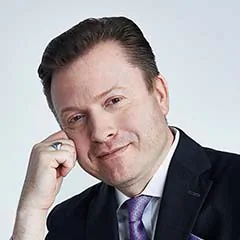
In this episode, I sit down with Irish politician Hermann Kelly. He is president of the Irish Freedom Party, which promotes preserving Irish culture and national identity.
“Ireland currently spends 8 percent of its complete national budget on the so-called NGOs, quangos, non-government organizations. That’s over $6 billion a year,” says Mr. Kelly.
We dive into alarming trends in Ireland, from unvetted mass immigration to a new bill that drastically curtails free speech.
“Ireland has now recently become an extreme, dystopian state, where the state is looking to impose what I call the anti-free speech bill, which will restrict hugely and penalize people for free speech,” says Mr. Kelly. “At the moment in Ireland, the constitution states that all citizens are equal before the law. This bill introduces what it calls ‘protected characteristics,’ where the state identifies certain groups and gives them privileges over other citizens.”
Mr. Kelly believes the only way for Ireland to control its budget and its borders is to exit the European Union.
“The vast majority of people coming into Ireland are completely legally through EU open borders and free movement,” says Mr. Kelly. “EU citizens can waltz into Ireland with no contribution to the state, no skills, perhaps with a criminal record, and there’s absolutely nothing that we can do about it.”
Views expressed in this video are opinions of the host and the guest, and do not necessarily reflect the views of The Epoch Times.
FULL TRANSCRIPT
Jan Jekielek:
Hermann Kelly, such a pleasure to have you on American Thought Leaders.
Hermann Kelly:
Thanks, Jan. It’s very kind of you. Glad to be here.
Mr. Jekielek:
We’ve been hearing a lot of disturbing and also interesting information coming out of Ireland. Notably, there is this free speech law, which has been described as one of the most draconian in the free world. For starters, what is happening in Europe right now? There are a lot of different protests and you’ve been involved in some of them. What is happening?
Mr. Kelly:
It often comes down to a single related topic, which is the European Union. You have a bureaucracy which is not directly accountable to the people. They are making rules and imposing laws on other people and other states, which clearly do not fit. The farmers are protesting because this climate alarmism agenda which has been taken up recently by the European Union is making farming and rural life very difficult. The farmers are up in arms and protesting.
At the same time, all across Europe, be it Italy, Germany, Sweden, or Ireland, a huge amount of unvetted immigration is coming into the country. It’s creating a massive expense and a culture of criminality and violence, which people do not like and they are reacting to it. All across Europe, there are various grievances. People who never protested before are now up in arms because they don’t like the direction in which the EU or their national countries are going.
Mr. Jekielek:
Can you tell us specifically what are the key issues across the European continent that people are concerned about?
Mr. Kelly:
One is the increase in violence caused by unvetted immigration. A large number of unvetted young males coming into your country almost directly causes an increase in violence. You can look at the crime stats in Germany where they did a study at Lower Saxony University.
This government-sponsored report showed that in 2015 to 2016, there was a 10 percent increase in crime, and 92 percent of that crime was carried out by new immigrants. In Sweden, non-Swedish nationals are 2.5 times more likely to have committed rape or sexual assault than a Swedish national. That’s a Swedish government report.
In Ireland, the issue of immigration is having a huge knock-on effect on the housing market. A large number of people have recently come into the country. Since 1995, the population of Ireland has gone up by 42 percent. It has increased by 1.5 million. We’re a small country in physical size. It’s not like the States or Canada, which to us is immense. Ireland is a small country.
A population increase of 42 percent over less than 30 years has massive ramifications. A lot of young people cannot buy a house or even find a house to rent. What are they doing? They are emigrating. Our best educated young people are emigrating to countries like Canada and America and Australia. Last year, 21,000 young people went to Australia.
At the same time, we’re taking in a large number of unvetted people from places like Algeria, Nigeria, Afghanistan, and Pakistan. They’re not the best educated and they’re coming in. They are a drain on our financial resources, on our housing, on our welfare, and on our medical services.
Mr. Jekielek:
You’re talking about people from Africa and other regions of the world. How much does race actually factor into this, in your view?
Mr. Kelly:
It’s not a factor which is spoken about very much in Ireland. We are basically talking about nationals and non-nationals. Our fight for national independence was against Britain, and the British people were pretty much the same color as us. There was no Irish self-identification as, “We’re white,” because we weren’t contrasted with anybody else who was non-white.
Our identity was more to do with religion. We’re Irish and we’re Catholic, rather than anything to do with color. When you hear people talking about race and color, that’s very much an imported American university talking point and ideology, such as this intersectional ideology. It doesn’t come from Ireland and it doesn’t play out in Ireland.
I know a guy, Kevin Sharkey. His father was from Nigeria and his mother was from Donegal. He’s a great visual artist now. He used to be a singer and a TV actor. He has the same humor as me and sounds like me. He’s black as your boot, but a Donegal man to his back teeth. The whole issue of race, being white, and white privilege doesn’t come up in Ireland at all. It’s a foreign ideology originating in America that is being imposed upon us.
What we have at the moment is uncontrolled and unvetted immigration. To give you an example, in 2022, there were 305,000 social security numbers given out and 69,000 of those were given out to Irish nationals. That’s less than 24 percent of social security numbers given out in one year. It’s almost 250,000 people coming in and looking for work. I’m not saying they’re all going to remain residents. But if you have four or five years of that into a population of five million, it becomes a huge factor.
And at the moment, in some counties in the northwest of Ireland and Donegal, there are virtually no houses for people to buy or rent because they are all stuffed full of people claiming to be asylum seekers and refugees. The vast majority of people that come into Ireland are completely legal through the EU open borders and free movement. Anyone of 450 million EU citizens can waltz into Ireland with no contribution to the state, no plan, no skills, and perhaps with a criminal record. There’s absolutely nothing that we can do about it. How can you have a country when you can’t have borders?
Mr. Jekielek:
What do you make of the situation at the U.S. border?
Mr. Kelly:
In many ways, it’s like what is going on in Ireland. In Ireland at the moment, 60 percent of the people claiming asylum haven’t come in through a port of entry. Many come into the north of Ireland and get a bus or taxi down to Dublin and they apply for asylum. Of the people who landed at Dublin Airport, 70 percent of those had a passport to get on the plane.
By the time they get off the plane in Ireland and arrive at customs, those 70 percent claim that they have lost their passport, or that they never had a passport. We know we’re being lied to. That’s a recipe for disaster when you don’t know who these people that are coming into your country, especially if they have a criminal record or they have terrorist-related problems.
I’ve seen videos as well about the fentanyl epidemic across America. It looks absolutely frightening. I look at that senile Joe Biden talking and I ask, “How can that guy run a country? Does he even remember how to zip up his pants?” That’s an old man who is well beyond his sell-by date. He seems to be intellectually incapable of functioning as an adult. I wonder who really is in charge of America. Some people say it’s Obama behind the scenes, but I really find it hard to believe that it’s actually Biden himself.
Mr. Jekielek:
Let’s jump to free speech. This is something that’s very much talked about in America. We have some of the strongest free speech protections in the world, and yet, there’s an assault on free speech. Ireland is in a very interesting position because a lot of these large multinational corporations have settled in Ireland for a variety of reasons. Perhaps Irish tax law benefits them. At the same time, this draconian anti-free speech law is being passed through. Please tell us about this law and the reality of the situation.
Mr. Kelly:
First, we agree with you in America that free speech and free expression is the foundation of a free society, along with the right to private property. It is the foundation of the marketplace of ideas. It’s important that there is free expression and that people are allowed to exchange ideas. Then the public decides what is true, and what is untrue, rather than the state coming in and deciding what you’re allowed to say and what is prohibited.
Recently, Ireland has become an extreme dystopian state where they want to impose what I call the anti-free speech bill. It will hugely restrict and penalize people for free speech. At the moment in Ireland, the Constitution states that all citizens are equal before the law. This bill introduces what it calls protected characteristics, where the state identifies certain groups and gives them privileges over other citizens. It lists 9 categories of people based on sexual orientation and religion and all that, those kinds of groups.
Basically, it will move from equality of all citizens before the law to certain groups chosen by the government having privileges over other groups, which is very, very dangerous. Not only that, the exchange of memes, or even having a meme in your possession regarded as hateful would criminalize you.
Ireland has a very low corporate tax rate, I’m very happy to say. Many of the tech companies are headquartered in Ireland, so the laws pertaining to the running of those companies would originate in Ireland. The one about the removal of free speech, because it would come from an Irish law, would pertain across the whole of the EU where these tech companies do business. That is also extremely dangerous.
Mr. Jekielek:
How does this create a situation where these companies would be required to follow this law?
Mr. Kelly:
This is what they call the hate speech bill. It actually originates from a European Council framework decision of 2008. The origins of this anti-free speech bill actually come from the European Union. Recently, the European Union passed what is called the DSA [Digital Services Act] which puts large restrictions on the large tech companies. Basically, there was a requirement for thought crime organizations to be set up in each state to police social media.
These groups chosen by the state have large censorship roles for social media. These groups are put in at the behest of the European Union through the Digital Services Act. They will be in every country of the European Union as well, policing social media under the same framework. The European Union, from this Council framework of 2008, and now the Digital Services Act, really means business and wants to restrict free speech. It wants to prohibit free speech, and it will penalize people for speech that they don’t like.
The other troubling aspect of this anti-free speech bill, which the government wants to introduce in Ireland, is that there’s no clear definition of what hatred is. In Irish law, there is already defamation law, and there is already an incitement to hatred law. Yet they’re bringing in the term hatred, but they’re refusing to define what it is. Why? Because it gives more leeway to the judiciary to decide what it is.
But that’s a problem because the judiciary is appointed by the Irish government, so that is extremely dangerous. It is an attack on the fundamentals of a free society. The Irish Freedom Party, of which I’m president, have campaigned against it very strongly since this government bill was first introduced, and we had a very large rally against it. People are starting to wake up.
We’ve asked citizens to contact their political representatives and voice their anger and unease about the imposition of this law. Because what we want is free people and a free country. We can’t have that when the state is dictating to you what you can and cannot say. This is even more extreme than the DSA, because it’s not only transmitting ideas or words or memes, but simply having it in your possession you can be jailed for up to five years. The penalties are very large.
Mr. Jekielek:
Hold the presses. You’re telling me you can get five years in jail for possession of a meme?
Mr. Kelly:
Yes, the Irish government wants to put you in jail for up to five years for possession of a meme, not even for communicating it, but just having in your possession a meme designated as hate speech that is not even legally defined. It is based on a very subjective understanding, which would be wide open to judicial interpretation. You can be slammed in jail for five years. It’s extremely dangerous.
Mr. Jekielek:
According to critical social justice or woke ideology, saying something against this ideology can be considered hate. In fact, the activists of this ideology consider it to be hate.
Mr. Kelly:
In Ireland, we know what hate is. Hate speech is speech that the government hates. It is anything that would call into question the dominant political force. At the moment, Ireland has become this extremely woke society. It’s like Canada to the power of five.
We have different political parties, Fianna Fáil, Fine Gael, the Labour Party, and Sinn Féin. They all buy into this woke ideology and this intersectional nonsense which they get from American universities, along with this cultural self-loathing. It’s a post-colonial thing, this cultural self-loathing. Everything is to be celebrated, but only if it comes from outside. Irish culture and the Irish people are to be hated, and everything else is to be celebrated and worshiped.
It’s extremely generous with the collapse of the Catholic Church after Vatican II in Ireland, and with the scandals from 20 years ago. Now we have Hibernophobia, as I call it, the hatred of our own Irish culture, which is rampant among our political elites. The Irish Freedom Party is trying to tackle that head on and say, “The Irish people have lots to be proud of. We’re not going to be shouted down by an Irish government that is dripping with Hibernophobia.
Mr. Jekielek:
Please tell us about yourself.
Mr. Kelly:
I’ve had an interesting path in life. My father was a headmaster of a very large primary school in Creggan, in Derry. It’s in the northwest of Ireland in the so-called British part of Ireland. I grew up in the Bogside, which is the very Irish Republican area in the northwest of Ireland. During the Troubles there were bullet holes in the side and the front of our house. My father was shot at by the British Army.
British soldiers have shot over my head during the Troubles. I had a second cousin who was shot in the back of the head by a British paratrooper on Bloody Sunday. I grew up in an area where ideas of national sovereignty, of national self-determination, and of personal freedom against the power of the state were very strong. I grew up with this.
We had a very good education about Ireland’s conflict with Britain. We knew about all the history. The political ideas of self-determination and democratic self-determination were very strong. I grew up in that kind of Christian Catholic milieu. At that time Sinn Féin were small, but now they have become much larger, especially in the north of Ireland. Their poll ratings have gone up.
But since the mid-70s or early 80s, they have taken all the Marxist Kool-Aid and they’ve changed from being a nationalist party to being an internationalist Marxist party, actually, maybe Groucho Marxist rather than economic Marxist. They have become super woke. Now, they have rejected the idea of national sovereignty because they are happy to have the laws in Ireland made by people in Brussels who we don’t elect, and which are then imposed on us in Ireland.
The Irish Freedom Party, of which I’m president, holds to the principle that Irish people are good enough to make their own laws, decide their own destiny, decide their own budgets, control their own borders, rather than having our decisions made for us by people elsewhere who we didn’t elect and who aren’t accountable to us. All we are looking for is to be a normal, self-governing state and not to have laws imposed upon us from elsewhere, be it London or Brussels, by the political elite, or what I call the uniparty.
I used to be a journalist. After I became a teacher in my mid-twenties, I then became a journalist, so I’ve experienced the journalistic culture. Even 20 years ago I stood out like a sore thumb because I was nationalist, and because I was Catholic.
But the media class in Ireland is anti-nationalist. They are like slaves. If someone from the World Economic Forum or the European Union or the World Health Organisation tells them what they need to think, they will think way. Ireland also had a very draconian Covid lockdown imposed by the government with the help of the local police force. During that time, the Irish government hugely subsidized regional radio and national newspapers. It just recently dug out of a financial hole and gave a massive subsidy to the national state broadcaster in Ireland.
The thing is, public money is being used to buy soft media. The journalists do not hold the powerful to account. They’re not going to bite the hand that feeds them when they are being subsidized by the state. For example, the government recently gave a VAT [value-added tax] reduction to all newspapers, and they don’t have to pay the 9 percent VAT. That’s a 9 percent bonus or profit for these media organizations.
During the lockdowns, the state actually subsidized regional radio, for example, and kept them alive. That’s a problem. The three parts of the uniparty are the political class, the media class, and the NGO class. Ireland currently spends 8 percent of its complete national budget on these so-called NGOs [non-government organizations]. That’s over $6 billion a year, 8 percent of our national budget.
It’s just like tax-funded employment for the liberal middle classes who’ve been to university and studied sociology, gender studies, or queer studies. What’s going on at the moment, to sum it up, is the working class vs. the woking class. The middle-class liberals have bought into this globalist, anti-nationalist ideology. Not only is it anti-national, it’s anti-nature.
It is cultural Marxism with its desire to destroy the nation-state, to destroy the family, and even down to destroy the distinction between male and female. It’s all about breaking down borders, the dismissal of parental rights and education, the dismissal of the right to free speech, and dismissal of the right to private property. There is an upcoming referendum where the Irish government is seeking to remove the words woman and mother from the Irish Constitution.
At the moment, this same state is looking to impose this gender ideology or transgenderism throughout the school curricula, even in the public libraries. It will soon be as it is in Spain right now; parent one, parent two. To show you how extreme and woke the Irish government is, in 2015, they introduced the Gender Recognition Act, where someone with a signature on a piece of paper can declare and be legally accepted as the opposite sex, without any kind of attempt at some kind of operation. When you don’t accept the basics of natural law and biology, you’re in trouble.
Mr. Jekielek:
I recently had a medical doctor, Kerry Mendoza, on the show talking about how this makes it very difficult to read medical charts and figure out what’s going on. Because sex is actually a very important part of making a diagnosis. Certain things are more common in men, and certain things are more common in women. But there is a push to erase biological reality from the record.
Mr. Kelly:
The idea that men should be allowed in a breastfeeding group of women is ridiculous, or that men would be taking up space in a maternity hospital, or that men should have a right to participate in women’s sports. It’s all ridiculous. Actually, it’s now gone beyond ridiculous and is actually becoming dangerous. Because when you see the number of so-called transgender-identifying men in women’s prisons committing rape and getting women pregnant, it has passed from being ridiculous to dangerous. It really has to stop.
Mr. Jekielek:
What you’re describing is very similar to a number of other countries. This is a global phenomenon.
Mr. Kelly:
Yes, I’m actually doing an X space with Linda Blake on Sunday for the Irish Freedom Party. We’re very aware of what’s going on in Canada and the States. We’re very saddened that all this gender and transgenderism is coming across the Atlantic, hitting our shores, and we now have to suffer the consequences.
Mr. Jekielek:
I understand. Actually, this has come from the US, but the Tavistock clinic in the UK has been shut down recently. This gender-affirming care approach has been challenged in multiple European countries, not just the UK. Maybe Ireland will learn something from that.
Mr. Kelly:
Ireland has been the last to realize and accept that, because it is stuck in this mire of woke PC nonsense. As you say, countries like Britain have woken up to the danger of it. They are stopping this Tavistock Transgender Clinic. Ireland is the last to accept. Ireland is actually still trying to move these children elsewhere. It has changed from being probably one of the most socially conservative countries in Europe to the most woke, PC, and silly nonsense country that you can think of.
Mr. Jekielek:
That shift is astonishing. At one point, Ireland and Catholicism were synonymous. Now you could still say Poland and Catholicism are synonymous, but Ireland went in a completely different direction. How did that happen?
Mr. Kelly:
A lot of it was actually self-inflicted by Vatican II, where the church itself basically put a bomb under its philosophical, liturgical, and theological foundation and just blew it up. Vatican II was basically the Protestantization of the Catholic faith. It caused a huge loss of confidence in the Catholic church itself about the importance of passing on the faith to other people, to the next generation in your own family, and to your own country.
But certainly the number of vocations in Ireland has certainly declined very, very sharply. You can see that Ireland has one of the lowest priestly vocation rates in the world, where it used to be one of the highest. The elites have become very anti-Catholic, anti-nationalist, and anti-Irish.
To give you another signal of the danger that Irish people are under,
there is also a government agreement to have a referendum on the right to housing, as they call it, which is a dismissal of the right to private property.
The government wants to bring in this referendum. They have already agreed that there is a universal right to housing, not only for citizens, but for all residents.
If you land in Ireland from wherever, suddenly you have a legal right to a house. You don’t even have to be a citizen. This is ridiculous. If an individual has the right to a house, who has the corresponding duty to provide that house? Say there is an old woman who lives on her own in a large house, her family has moved out, and she’s on her own.
Now, the state has the right to come in and say, “You’re living on your own. You’re in a large house here, and this would be better for Mohammed and his three wives who’ve come from Afghanistan last week. Not only free speech, but the right to private property is also under attack.
Mr. Jekielek:
You’re a proponent of something similar to Brexit for Ireland.
Mr. Kelly:
From the very beginning our party has been strongly in favor of leaving the European Union. It will take time to convince the public, but we enunciate policies not just to be popular, but because they are necessary.
If we want to control our budgets, we must leave the European Union. If we want to control our borders, we must leave the European Union. This attack on free speech comes from the European Union.
We joined the EU 50 years ago, and that meant a common fisheries policy. Irish fishermen currently only get 15 percent of all fishing quota given out in our own waters, which extend 200 nautical miles north and west of Ireland. Irish fishermen get a pittance of the fish caught in our own national waters. This is a very bad deal. Now they said, “We joined the EU. We’ll hammer the fishermen, but the farmers will do well.”
The farmers did quite well for a number of decades, but now the EU, because of climate alarmism, has turned its sights on the destruction of rural Ireland and the farming economy, and now they will do everything to restrict farming. There was even talk at one stage that they would need a cull of 200,000 cattle in Ireland, which is a huge portion of the national herd, in order to meet carbon emission targets. It’s the new religion, isn’t it?
This is watermelon politics of green on the outside, but really red on the inside, this kind of Marxism under a different name is extremely dangerous. The Irish Freedom Party will stand up for rural Ireland and for farmers. There is no future without farmers, because there’s no food. We all know that carbon dioxide is necessary for photosynthesis and plant growth. It’s not a poison and it’s not a pollutant. It’s necessary for life.
I was reading an article today that because of higher rates of CO2 since 2000, the planet is actually greener. There are more forests and more plant life, because historically we are at a very low level of CO2. It’s only 421 parts per million. If it falls below 150 parts per million, all plant life disappears. Maybe we need more CO2, not less.
Mr. Jekielek:
I hadn’t heard the term watermelon politics before. I’m going to remember that one. The UK did achieve Brexit, but the UK these days is not that different from the rest of Europe. Brexit was huge. It created a kind of movement, but has it actually changed daily life in Britain in a meaningful way?
Mr. Kelly:
In America, you have the term rhino, republican in name only. They have the same thing in Britain, they’re conservative in name only. The process of Brexit and the end result of Brexit gave the British government the freedom to act. However, because of the ideological mayhem and the makeup of the conservative government from Boris Johnson to Rishi Sunak, those political elites have rejected the benefits and freedoms given by Brexit.
They haven’t utilized these freedoms. They are happy to muddle along. They will eventually try to rejoin the European Union, I would suspect.
But they certainly haven’t taken to the ideal of lowering taxation and less regulation. It’s terrible what they’ve done on immigration. That was one of the great promises that they said Brexit would achieve. They haven’t covered themselves in glory to say the least.
Mr. Jekielek:
You were actually involved in Brexit.
Mr. Kelly:
I was, and very proudly so. I was director of communications for the Eurosceptic Group in the European Parliament for 10 years. I worked under its president, Nigel Farage, who, as you know in America, is called Mr. Brexit, and is a friend of Donald Trump. Even though I’m Irish, not British, I was very happy to contribute to Britain taking its freedom back from Brussels control.
I currently work for Conservative Romanian MEP, Cristian Terhes, who was Mr. Anti-Lockdown during that Covid period. He was the only MEP out of 740 who refused on a point of principle to produce any Covid vaccination certificate. He stood up to protect people’s rights to decide on any substance that goes inside their body, and on any medical treatment they take.
It’s absolutely unthinkable that we would allow the state to dictate if we can work, if we can travel, and certainly what we must take inside our own body. If you allow the state to dictate what goes inside your body, you have no freedom. It’s all over. I’m very proud to work along with Cristian Terhes. Like myself, he is a real freedom fighter.
Mr. Jekielek:
Please give us a sense of how the Irish Freedom Party lands in this political reality, because you’re very new and small, but spunky for sure.
Mr. Kelly:
We’re in the polls now. They were hiding us in the independent category called other. We’re now out of that category, which consists of us and a very similar party, Ireland First, with whom we will probably join up with pretty soon. We are 3 percent at the polls at the moment. The Green Party is in the government. They’re at 4 percent and their minister is incredibly powerful. He’s the guy doing a lot of the damage by making radical government policy. You have the Labour Party, which has been in government for a long period of time and they’re currently at 4 percent.
We don’t get access to the national broadcaster. We’re kept off national radio, but we’re still at 3 percent. Given that we are quite a new party with a pro-freedom stance, and because we are nationalists believing in our own national democracy, we are not invited on national media very much.
Even with those restrictions, we’re still at 3 percent in the polls. Coming up, we have three candidates in the European Parliament election. We have three candidates and we are running a number of candidates in the local elections. We will have more general elections coming in 2025. We are taking on the establishment who all hate us. Two years ago, to even question the wisdom of having open borders was very bold.
But they don’t have arguments in their favor. They just have name calling. They will try to silence you either by name calling or by denying you a platform on the national media. But that’s the way life is and that’s the way we will continue. Any help at all we can get from our Irish Americans would be greatly, greatly appreciated.
Mr. Jekielek:
Herman, this has been a fascinating conversation. Any final thoughts as we finish up?
Mr. Kelly:
All across the West, including America, Canada, and Europe, the forces of patriotism, nature, family, and faith are in clear conflict with the forces of globalism. For the next decade or so, certainly in Ireland, the conflict between these two tribes will increase, because people are suffering the consequences.
But I have good news. The conservative fightback of the nationalist people of Ireland certainly has begun again over the last number of years. We are rejecting Sinn Fein, who were previously the nationalist party, but are now an internationalist Marxist party, and a dangerous woke party. The nationalist, conservative fightback has begun in Ireland, and we can celebrate that.
Mr. Jekielek:
Hermann Kelly, it’s such a pleasure to have you on the show.
Mr. Kelly:
My pleasure. Thank you, Jan.
Mr. Jekielek:
Thank you all for joining Hermann Kelly and me on this episode of American Thought Leaders. I’m your host, Jan Jekielek.
This interview has been edited for clarity and brevity.