Live chat
May 20, 2025
American Thought Leaders
Live chat
 Expand
Expand
 Expand
[RUSH TRANSCRIPT BELOW] In this episode, we sit down again with Victor Davis Hanson, a classicist, military historian, senior fellow at the Hoover Institution, and author of two dozen books, including most recently “The End of Everything.”
In this interview, we dive into the multifaceted dimensions of what he describes as Trump’s “counterrevolution” in the foreign policy space, from Canada to China to the Middle East to Ukraine and Russia.
What might the end of the wars in Ukraine and Gaza look like?
Should Trump have accepted a plane from Qatar’s royal family? Was it a good idea to lift U.S. sanctions on Syria’s new leader? Is there any truth to rumors of friction between Trump and Israeli Prime Minister Benjamin Netanyahu?
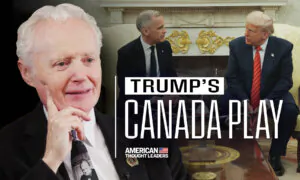
Is it possible that Trump actually, in some sense, wanted Mark Carney to win and become Prime Minister of Canada?
And how can the United States ensure the Chinese leadership upholds their commitments in a trade agreement, given their track record of not following through?
Views expressed in this video are opinions of the host and the guest, and do not necessarily reflect the views of The Epoch Times.
RUSH TRANSCRIPT
Jan Jekielek:
Victor Davis Hanson, so good to have you back on American Thought Leaders.
Victor Davis Hanson:
Thank you for having me.
Mr. Jekielek:
Victor, kind of hot off the presses, Kash Patel had an interview with Maria Bartiromo yesterday on Sunday, as we’re filming right now. He talked about a range of significant things, including moving out of the main FBI building here in Washington, D.C. But since we’re going to be focusing on foreign policy today, I wanted to ask you about this seemingly explosive information where he said that most of the terror suspects are actually coming through the northern border, along with an increase in organized crime since the southern border has been sealed, whether it’s the Chinese Communist Party, Iran, or Mexican cartels. What’s your take on that?
Mr. Hanson:
I think he’s reflecting the reality that the northern border, which is the longest border in the world between two sovereign nations, is naturally much more porous. There’s not a river like the Rio Grande. There’s not the Gulf that stops the border at about 2,000 miles in the case of Mexico. It’s actually much easier to come into Canada than it is to Mexico, and it’s less patrolled. Whether we like it or not, it seems like the Mexican government, because we have much more leverage over it, is much more responsive than the Canadian government, especially under Trudeau.
We’ll see what Mr. Carney does. But there’s been this tension with Canada, and maybe part of that tension is expressed in a less serious effort on their part to address this new surge of people that have ill intent toward the United States, as the southern border, which was the traditional entry into the United States, is now closed, and the northern border is still open.
Mr. Jekielek:
It makes me wonder about one of the things I’ve heard from numerous people. It was almost like the U.S. president had an interest in having Mark Carney elected because he kept talking about the 51st state and so forth, catalyzing Canadian nationalism and almost fueling the idea that the conservative leader was something like Trump, which Canadians wouldn’t like.
Mr. Hanson:
I think that’s kind of a constant in foreign policy. I remember the Soviets were always more attuned to a conservative president, even though that was more diametrically opposed to their own ideology. The idea that they were more candid or clearer about their opposition made it easier to understand what you were dealing with. I think Trump probably feels that with Poilievre; he would have to be careful what he said. He’d have to be careful because he was a kindred conservative, but with someone who was obviously antithetical to Trump, it is what it is. At that point in the campaign, he represented more of the Canadian views.
If you’re going to tell Canada it’s time you spent 2%, as you promised in 2014, of GDP on defense,= and you haven’t done it for 11 years—you’re only spending 1.37%—if you tell a fellow conservative that, it’s embarrassing for him. If you tell a liberal or someone on the Left that, then you have real pressure on him. I think that’s the idea. The same thing goes for the trade surplus. You don’t want to embarrass a fellow conservative and say, look, we’re running a $63 billion deficit with you guys. You have some tariffs that are asymmetrical. We want to correct that. But when you do it to someone who’s antithetical, you can be more honest and blunt. I think that’s what Trump is thinking.
Mr. Jekielek:
Let’s talk about the tariff regime in general. What do you make of this whole tariff implementation? What is Trump trying to do with that?
Mr. Hanson:
I think he’s 90% correct in what he’s doing. Where he errs, he feels because he has a whole agenda, and DOGE [Dept. of Government Efficiency] is not going to cut the amount of money that is necessary to make up for these tax breaks on tips, tax breaks on Social Security, tax breaks on first responders, or maybe tax breaks that he’s going to be in red ink for. He feels that the revenue from the tariffs, which is about 2% of the $5 trillion of federal revenue, and even if he were to get, as he says, a trillion dollars over a decade, you’re still talking about only $100 billion out of $5 trillion in revenue.
So, it’s a mistake to talk about these tariffs as a way to raise money. The better way to discuss it is that we are running a $1.2 trillion deficit that we have had for 50 years. In some cases, that allows our enemies to get a lot of foreign exchange, like China. They are investing it not in their people’s healthcare or housing but in rapidly building a huge navy, army, and air force. So he’s right about that, and they cheat.
The other problem is that he’s trying to tell our allies that the post-war order is now ossified. The post-war order was established because we emerged from World War II as the dominant power with the least amount of damage, in a world that needed industrial goods. For basically 80 years, we were willing to be asymmetrical with what became the EU, with Asia, Japan, and South Korea. The problem is that these deficits were tied to offshoring, outsourcing, and a diminished assembly and factory sector. I hesitate only because I work at the Hoover Institution. I’m lectured every day by our blue-chip economists that trade deficits don’t matter. I think they do, especially when they have force multipliers of a $2 trillion budget deficit and a $37 trillion national debt. It’s all connected.
So what Trump is trying to say is we’ve got to get government spending down. We’ve got to achieve a trade balance. We’ve got to address the debt because without any fiscal reform, we’re going to be weak abroad. It’s all part of a larger package of financial reform. Then we get to the question of fairness, symmetry, and how it’s tied, as you pointed out, with military readiness. Canada is very angry, and as you know, as a Canadian, at us, but they don’t. You can make the argument that the 51st state meme is Donald Trump trolling them in the way he talked about annexing Greenland or taking back the Panama Canal. That’s part of his art of the deal style. It’s not serious, I think.
But Canada won’t address these existential issues. For them to get to 2%, it’s about $40 billion, and they’re not going to do it, not for five more years. What they’re basically telling the rest of the NATO [North Atlantic Treaty Organization] alliance and the United States is we want to be members of NATO, but because we have two oceans like the United States, we’re really not in any existential threat from China or Russia. We are under the nuclear umbrella of the United States, and it’s going to build a missile defense system in Alaska that will cover us as well.
Toronto is closer to U.S. cities than most U.S. cities are to each other, so we’re just going to carry along with that. We have all sorts of statutes because we’re next to this big colossus that we don’t want to be dominated by. We have things about news suppression and acquisitions of media. We don’t want to be just, you know, ancillary in culture to the United States. We also have these domestic products that we have to protect, like eggs and poultry. We went around to $63 billion.
Then the next thing is the Canadians tell us—and I’m not trying to be too harsh on your countrymen—but they say, we give you all this oil. Ninety-five percent of our oil that we produce goes to you. And that’s true. We even give a discount. But when you look at the oil, it’s very heavy, very sulfur-laden, and very far from your east and west ports to get it out. It’s right across the border for us.
The Americans are saying, yes, but we’ve got this big energy market, and we’re right next to you guys. So you don’t need a lot of big, very long pipelines or trucks. How would you get it out anyway? More importantly, we have all these refineries that specialize in heavy oil, because we have some of the same stuff. If you were to try to truck it out or transport it to your two ports and then send it on the world market, you wouldn’t be as successful. This is a great deal for you.
All of these issues were predicated on the idea of past administrations. This is Canada. This is our friend. This is our ally. Just like Britain or Australia, we just don’t talk about these things. Trump comes in and says, that was then, this is now. We’re $37 trillion in debt. We’re sliding as a world power in the estimation of our enemies. China’s on the rise. We’ve got to make some corrections, and those corrections are very painful for everybody involved.
Mr. Jekielek:
There’s also this other dimension. As someone who lived in Vancouver for a number of years at one point in my life, you can’t imagine it as a Canadian, as a narco-trafficking hub for North America, which Sam Cooper has demonstrated extensively it has become.
Mr. Hanson:
You think of Canada as a signature Anglo-North American country. You don’t get the idea that it has greater open borders than we do as far as immigration. The liberal governments have really enshrined in Canadian politics that for us to grow, we’re going to have to open our doors and bring in immigrants from all over the world because now we are a multiracial, multicultural society.
The problem with that is that we know there is no successful multiracial democracy that is multicultural. India has terrible problems with a caste system and all sorts of tribalism. So does Brazil. these big democracies that are multiracial. The United States and Canada have been successful. In the case of Canada, it probably was more successful in the sense that it had a kind of uniform population until recently. We were more multiracial, but we had a single culture.
If you bring in millions of people, as Canada is trying to do, and you don’t inculcate them, and you follow our pattern of not acculturating, not assimilating, not integrating, then it’s a disaster of tribalism and sectarianism. That’s what everybody’s worried about in Canada, because we have the same problems here, but we’re trying to address it. But in your case, you guys are doubling down on it. And that seems to be what’s happening in Europe as well.
I think the Americans are saying, we kind of exported ideas, at least the Trump administration is saying, of multiculturalism, woke, transgenderism, and borderless utopias. You guys lapped it all up because we were culturally influential, and it was disastrous. And we’re going to rectify that now here at home. I think the world is saying, this is weird. Under Obama, Biden, and Clinton, we thought this was good, so we followed your lead. Suddenly, you’re saying close your borders and make a fair rather than free trade and have one culture and get rid of woke and DEI. It’s kind of a shock for a lot of foreign countries and there is a lot of anti-Americanism about it.
Mr. Jekielek:
Do you think that the world will also follow suit in kind of adopting the change in culture, given the frankly significant social strife you see in numerous European countries, for example, because of exactly the type of immigration you described?
Mr. Hanson:
Europe is very critical of our system. And no other country has ever successfully emulated this two-party system with these elections where the people vote in a party and there are no parliamentary coalitions. And we have no conception that a person can be a prime minister or president without being voted for. In other words, if the party caucus doesn’t like him, they get rid of him. It was a shock enough that we did that with a nominee with Harris and Biden. But essentially, the people did vote.
All of these other countries that are democratic have a different system. And the problem with their system is when they confront unorthodox changes that the people want, they have mechanisms to stop it, which we don’t have here because we have the midterm elections and we have the four-year elections, and it’s just a free-for-all. Anybody that wins can take power. And for the Europeans, and to a lesser extent, former Commonwealth countries of the British Empire, have the same system.
So when they see the Alternative for Deutschland [AfD] or conservative parties in the Netherlands or France, they just go paranoid and become very anti-democratic in their efforts to suppress them because the ruling powers think, you know, these people, they don’t trust the people like we do. They think these people are uneducated. They’re unwashed. They don’t know what they’re doing. We’re technocrats. We’re aristocrats. We’ve got to stop them. And then they end up hurting themselves by acting very anti-democratic.
Mr. Jekielek:
Victor, before I jump back to the whole tariff regime, something I’ve been thinking about recently, someone drew my attention to the idea that the spoils system, i.e., if you win, you get to select a whole bunch of people and put them into the bureaucracy to run things, and the people that were your political allies specifically, right? Someone pointed out to me that this is actually by design and actually provides a kind of check on growing corruption or something like that. I’m curious if you have any thoughts on that, because that kind of speaks directly to the issue you just described.
Mr. Hanson:
Our system has been abused recently when you think of Anthony Fauci and James Comey and Lois Lerner. But the system actually is accommodating. So when you have a new party come in, then they can change the cabinet-level appointees. They can change the head of the FBI. They can get the chairman of the Joint Chiefs, which is important.
Otherwise, you get something like the chaos of the first year of the Trump administration, where he brings these people in and they don’t agree with him. I’m talking about Rex Tillerson or Jim Mattis or John Bolton or people in the high levels of political appointments that try to sabotage a government. But then at the lower levels of the bureaucracy, they are protected by civil service, and they’re supposed to, as long as they’re apolitical. That system has worked pretty well in a way that allows a government to come in and do things because the people are all on the same page.
I can tell you that when Obama came in, he fired everybody on boards that were political appointees. I know Susan Rice got very angry and went in kind of a racist rant against Pete Hegseth because he fired her from the Defense Policy Board. She called him cis white male mediocrity. But she was appointed after Biden fired the previous Trump appointees. And she was a late appointee that was political. And that’s just our system. And it works pretty well because it gets everybody on the same page. And then if there are abuses or excesses, the voters can throw them out.
Mr. Jekielek:
Victor, I want to jump back to the whole tariff set. So do you agree with me? For me, when I looked at those initial tariff tables and the first foray, if you will, in Trump’s art of the deal using tariffs, was China really the focus? Does it continue to be that way given this 90-day reprieve that they’re now trying to extend?
Mr. Hanson:
Yes, China was the focus, but he understood there were problems in focusing on China because the Europeans run opportunistically. For example, when China initially said, we’re going to cancel all 737 purchases, well, Europe was delighted because they were going to sell them Airbuses. So the Europeans are the last people to engage with Trump.
He’s going to get a deal with India. He’s going to get a deal with the UK as he did. He’ll get a deal with South Korea, Japan, and Taiwan. He’ll get a deal with China. But the last people he will get a deal with are the EU because they’re opportunistic. They are as anti-Trump as the American Left. They take their cue from the American Left. If they are told by the American Left that cutting a deal with Trump helps him politically, then they will do the opposite, as long as they can.
The way that Trump is dealing with them is saying, we’re going to have more favorable tariff arrangements with countries that settle now rather than later. So he’s trying to create a psychological condition where, kind of like musical chairs, when the music stops, you want a chair. Otherwise, you’re too late. But I think it’ll be harder actually to get a deal with the Europeans than it will be with the Chinese.
The problem with the Chinese is that not just that the Americans are hooked on cheap stuff coming from China. And it was very weird to hear the Democrats say there won’t be enough Walmart stuff for people because they’re very critical of consumerism in general. And they were very critical, of course, at least at one time, of no-tariff Chinese dumping that took away American fabrication and assembly.
But there are other issues involved, and they are patent and copyright violations, monetary manipulation, dumping products, technological theft. Three hundred thousand students in the United States, maybe one or two, three or four thousand, are actively engaged in espionage. The Stanford Review just had a big story where I work that students are actively engaged in Chinese espionage. So how you address all of that at a time when China is becoming militarily closer to achieving military parity with the United States within five to ten years is tricky, and it’s bellicose. And we depend on it. It depends on us more. We found that out when they kind of caved. But it’s a very tricky thing to do.
The other thing about it very quickly is this is all so political. The Wall Street Journal was probably the worst offender. As soon as the tariffs were announced on Liberation Day and the market tanked, they ran stories, you remember, in the news and the op-eds. Recession, Trump’s ruined his 100 days, administration in chaos, administration in free fall, tourism down.
Then when you look at the actual data that was released in March and April, corporate profits are up, energy costs are down, GDP is going to be recalibrated and good, inflation pretty moderate, 2.3 %, I think, in April, job growth 100,000 more than we thought. So all the indicators were exactly opposite of what Wall Street was saying.
They had been telling us, whether it was Jason Furman under the Obama administration or Warren Buffett, they were saying the chief peril is debt, debt, debt, debt, trade deficits, budget deficits, national debt. And here was the first president that was talking about it. And then they would say, well, you know, there’s also uncertainty in the markets because of the Middle East and the oil and the war and Ukraine. And then this was the first president who was trying to get a ceasefire in Ukraine. So all the evidence belied the animus.
And then you said to yourself, why are they doing this? They were doing it because they couldn’t stand him for one reason. But the other is that 7% of Americans own 93% of the market capitalization, not the number of stocks, but the value. And 50% have 1% market capitalization. So what you basically saw was a small group of very, very elite people in the Acela Corridor, furious because in August, when the market hit 44,000, they were giddy. And now it had gone down to 40,000, where it was pretty much for much of the last few months before the big surge. It was actually where it got, it got down to where it was in August or September. And the market, I think, hit 44,000 in May.
So they were basically telling the American people, once the market reached its crescendo, we lock it in there and that’s ours forever. And anything that goes on is a loss. They never look at the other way that it was mostly 40,000, which they were giddy about. And when it went up, that was an unusual spike. And so now they’re mute because where are we? We’re right back where we were right before Trump assumed office. And so what was all that hysteria about? It was all about that 7% that was paranoid about their megaprofits.
I live in southwest Fresno County, I think the per capita income is about $17,000. When I go to the store or I go get gas and I talk to people, I can tell you I’ve talked to 400 strangers in the last year. Not one has ever mentioned the stock market. Not one. They don’t own one iota of stock. And if they have some in their retirement plan, they have no idea how much it is, but it’s not much.
And I can tell you what they talked about was the price of California gas, the price of California electricity, how terrible the infrastructure was, and the hyperinflation that has not ceased, I mean, that we’re stuck with from the Joe Biden prices. And so a lot of this is class differences. And I think that’s why this is so unusual to see a Republican president whose emphasis seems to be on the middle class that was a Democratic constituency.
Mr. Jekielek:
This is fascinating, too, because President Trump loves to talk about how well the stock market is doing. He clearly has a focus on that as well.
Mr. Hanson:
Yes, and he’s right about it. Even if you don’t own stock, everybody wants a strong stock market. But this insane paranoia that for one month they just lost their heads and said that because we don’t get to have 44,000, then the whole country’s falling apart and we’re going to be in a recession was ridiculous because there were no indicators. There were, A, no indicators that they usually count on. And then second, all of the issues that they had been warning long-term and they were furious about, he was trying to address.That was exactly what DOGE was trying to do. That was what people in the Republican House were fighting about. How do we cut the debt? How do we cut the budget deficit? And they can say all they want now about trade deficits not mattering.
But 20 years ago, Warren Buffett basically said, we’re running huge trade deficits. And at that time, there were $60 or $80 billion a year with China. And all the result is that they are accumulating foreign exchange and they’re going to use that foreign exchange to import sophisticated technology for military purposes, or they’re going to buy key real estate all around the world with foreign exchange. That’s exactly what they did in the Belt and Road Initiative. What was Warren Buffett saying now? Oh, trade deficits don’t matter. Jason Furman said, there’s a certain percentage where you cannot have a trade deficit larger than a percent of GDP. I think it was 3% or something. When it got over that, he was very angry and chastised, I think, the Biden administration. And now when it dipped below it, he said it didn’t matter. So there’s a deep, I think to understand American politics, there is a deep paranoia, loathing, visceral hatred of Donald Trump in the media, in academia, in the bureaucracy, in the foundations among the elite, and it clouds their empiricism. They cannot be disinterested. And that’s just the way it is. And the Wall Street Journal falls into that category.
Mr. Jekielek:
Victor, with respect to this, you said it’s going to be easier to make a deal with communist China than it is with the Europeans. I’m not aware of examples where China honors their side of any deal. I mean, maybe there are some small examples that I’m unaware of. But let’s say they make a deal. There’s this 90-day reprieve because of initial conversations. There’s been this criticism of the president that he’s very transactional. We can talk about that. But can you be even transactional with the CCP?
Mr. Hanson:
No, you can’t, and they’re like the Iranians, everything they say is untrue, and they have no intention of honoring it. I think what he’s trying to do is draw attention to the fact that when he went head to head with the Chinese, despite their suppression of the news, they were under more stress than we were. And I think that’s true. China experts have said there were people in the streets, they were idling factories, and that we could endure that.
So I think what he’s saying is, I’m going to put them on notice, but I can do this again. And for a period, they’re going to find that it’s in their self-interest to emulate or feign or at least follow 50% of what they do, or they’re going to get slapped again. And that is going to give us a window, and we have to seize the moment.
And in that window, I’m going to tour the world and get $10 trillion of foreign investment. And we’re going to make our own pharmaceuticals. We’re going to make a lot of, we’re not going to outsource technology. We’re going to do AI, biotech, and genetics. We’re going to do it all here. And we’re going to have all this foreign capital coming here. And we’re going to have all this foreign capital coming here. And by the time it’s going to give us a window where we don’t just collapse and be completely dependent on China as we were. And I think that’s the idea.
I don’t know if it’s going to work. People have said, oh, you don’t have enough skilled workers or your welfare programs are too lucrative. People won’t come out and work. You’re going to be short labor. These people are lying in the Middle East. They will not really put the money there. They’re just saying this. But I think that was the idea, at least, that he’s getting a huge, record amount of foreign investment. And the idea is that we’re going to produce stuff that we get from the Chinese that’s valuable.
And I think he doesn’t really care about dolls or cheap consumer commodities that they make very cheaply. But he’s talking about military parts, AI, very sophisticated technology, chips and things that he wants to be built here. And he wants no more reliance on China. And I think the Covid thing really shocked a lot of Americans, you know, when we couldn’t even make protective equipment and China was going to wink and nod and say, we’re trying to send it to you or we’re trying to say, sorry, we’re a little late, that kind of attitude.
Mr. Jekielek:
Victor, this is incredibly confusing to me because I agree with you. It was unbelievably shocking. And the CCP actually threatened to withhold some of those products, right? But that didn’t translate into America actually going all out to repatriate supply chains, especially on critical pharmaceutical precursors or PPE or whatever. I mean, that just didn’t happen, which is kind of shocking.
Mr. Hanson:
No, and it didn’t happen because there were so many people both Left and Right that were so heavily invested in China and fabrication. And for that to happen, you would have to make them either relocate here or relocate to Indonesia, the Philippines, or Vietnam. What Trump did is basically he called in during the campaign and then during the 100 days, all the people who shouldn’t like him for cultural, social reasons, and that was Marc Andreessen, Ben Horowitz, and David Sacks. Larry Ellison was favorable to him. Zuckerberg and Elon Musk, he won over right after the first assassination attempt. And also Jeff Bezos, he brought them all. I’m kind of generalizing, but Andreessen basically said this.
Trump got them all in and he said, you guys are being regulated to death in Europe. They don’t like you. They’re trying to suppress your products to promote their own domestic, less efficient, less competitive products. The Chinese, you may think you’re doing a lot over there, but all they’re doing is having you invest. They copy everything you do. They copy your business plan. And when they have squeezed you dry, they kick you out.
So I’m making you a deal, kind of like the war production board of World War II when Roosevelt called in his antithesis, William Knudsen, head of GM, Henry Kaiser, head of Kaiser Steel, and Henry Ford. He said, look, the New Deal is over with. We need to produce stuff. And I’m going to give you Willow Run to build B-24s. I’m going to give you the Alameda shipyards. I want a Liberty ship every week. He said, Mr. Knudsen, you just do what you have to do and I will protect you, but you’ve got to outproduce the world.
And so what Trump is trying to tell these guys is I’m not going to do, I’m not going to regulate you. I’m not going to go after you. I know you don’t like me, but if you bring your stuff back here and you invest here and you hire here, you’re going to get the most favorable climate possible from us, the government under one condition that you be American first, promote us, us, us, and I will protect you from the Europeans, the Chinese, the Japanese, anybody.
And they were shocked at that message because they had been told by Joe Biden in the case of Andreessen, he said, you know, they basically said these companies are going to be in AI and they aren’t. This is what you can do, and we expect a big contribution. I think Trump just thought these guys are smart. They don’t like me, but I can use them and they can use me and we can promote America. And I think, I don’t know if it’s going to work, but that’s his plan.
Mr. Jekielek:
How important is rebuilding U.S. manufacturing to this whole picture?
Mr. Hanson:
When we say manufacturing, the critics usually say the idea you’re going to lure all these Americans back to work, when the labor participation rate is 62% of able-bodied people, is unrealistic. That’s because of our generous safety net and a new culture that promotes working from home. These people are not going to go into the factory and stand there building phones all day like the Chinese do. So it’s a crazy idea.
But I don’t think that’s what he’s talking about. I think he’s talking about bringing in $10 trillion of foreign investment to create very sophisticated, automated robotic factories, and then getting a trained workforce. You can see his emphasis as he’s pushing for four-year colleges. But when you look at what he’s also promoting, he’s advocating for technical schools, community colleges, and two-year training programs. I think his idea is that we’re going to get some well-trained Americans, and it’s not going to be labor-intensive; it’s going to be very sophisticated. Maybe we can make things that really matter.
As for the other things that require huge workforces and repetitive labor, we’ll let other people do that, like the Chinese. That’s why I think China is very upset because it understands that what it really makes money on are industrial goods and technology that it has appropriated from Europe and the United States and ships back to us, as well as medical and pharmaceutical products from India and China. That’s what he’s aiming at. He’s trying to convey that we’re not going to have avionics coming from China, we’re not going to have computer chips coming from Taiwan, and we’re not going to rely on India for Augmentin or doxycycline. We’re just not going to do that anymore. So we’ll see how that works.
Mr. Jekielek:
With respect to the criticism that the president is purely transactional in his foreign policy, it’s very interesting to me that Marco Rubio is the Secretary of State and now also the National Security Advisor, at least for the time being. I can think of a few people—probably count them on one hand—who are as aware of, or were in the U.S. Congress regarding the Chinese Communist Party threat and as supportive of various Chinese dissidents. It seems to me that there’s something more happening here than pure transaction. I’m curious what your thoughts are.
Mr. Hanson:
There is. I think he’s trying to elaborate on the criticism that Trump received for his mercantilism. In his interviews, he’s trying to say that we’re realists, but we’re also idealists, and the two are not antithetical. What he’s reacting to is that he feels, in the last George W. Bush administration, in the eight years of the Obama administration, and in the four years of the Biden administration, we put human rights and idealism in a Wilsonian sense at the forefront, without understanding local customs and traditions. We tried to impose our values, sometimes forcefully in places like Afghanistan and Iraq, and sometimes through cultural initiatives like promoting transgenderism and gay marriage through USAID [United States Agency for International Development] in places like Pakistan or the Gulf. It didn’t work.
All it did was open those countries to mercantile arguments from China and illiberal regimes. This new nexus of North Korea, Iran, Russia, and China capitalized on the anger generated by our own cultural imperialism and our interventionism to nation-build, which was an utter failure. We witnessed an Orwellian situation in Afghanistan, where the world was watching a huge military that built a $300 million retrofitted Bagram and a billion-dollar embassy fleeing from terrorists while leaving behind $50 billion in munitions, all while displaying a pride flag on the embassy and George Floyd murals around Kabul.
They even had an $80 million gender studies program. What he was saying is that this is a form of cultural imperialism. While he acknowledges that there are universal ideas that transcend culture regarding freedom and human rights, Rubio argues that if you enter a country you don’t really understand and start dictating terms, there’s a good chance that country will align with our enemies, which ultimately harms both them and us.
One example is Joe Biden. When he came into office, we had the case of Mr. Khashoggi, who was dismembered by the Saudi secret services in a foreign embassy. He was a virulent critic of the Saudi royal family, and rightly so, everyone was furious. But then Biden was asked about it, and he was very derogatory, saying these people are tyrannical and not friends of the United States. He made some valid points given the history of 9/11, but the net result was twofold.
They started looking to cut deals with Russia and China, as did Iran, which I think was inevitable. Russia, China, North Korea, and Iran formed a nexus and began dealing with illicit oil sales to India and Turkey. Rubio would question the end result of that approach. It alienated people who had been pro-American and had slowly liberalized their societies. Even the worst critics of Saudi Arabia, Kuwait, Iran, or the United Arab Emirates would acknowledge that they are more liberal societies now than they were 40 years ago, largely due to Western investment and influence.
Rubio also points out the hypocrisy of blasting the Saudis as primitive while, during the midterms, they cut back on oil production, leading to $4 gas prices and public anger. While draining the petroleum reserve at a million barrels a day to save his party in the midterms, Biden then went to Saudi Arabia, essentially begging them to pump oil before the elections and not to align too closely with China. Yet, they insulted him, and it didn’t work either way.
What they’re saying is that we take the world as it is, trying to get 51% of the deal, acknowledging that we don’t have to be perfect to be good. We’re just trying to ensure that countries that don’t share our cultural and social values don’t end up in the orbit of illiberal regimes, similar to the Cold War dynamics. We supported many dictatorships, asserting that Spain, Portugal, and Greece were better than communist alternatives, and they would evolve, while a communist dictatorship would never change. If Saudi Arabia were under Chinese control, it would stagnate. But if it has good relations with us and is profitable, maybe it will evolve by osmosis. This has stirred significant anger.
Recently, Rich Lowry, Elliott Abrams, and others have criticized the administration for how they communicated their narrative. When they wrote that speech for Trump, rather than attacking previous administrations while overseas—something they are very sensitive about—they did just that. They criticized nation-building in Iraq and Afghanistan, suggesting that while those administrations meant well, the results were counterproductive. Afghanistan might have been better off under a king or in transition than under the Taliban. They could have acknowledged that they still value human rights.
In conclusion, Trump is staging a counterrevolution that is two-pronged. One aspect is to have a foreign policy closer to Israel, stopping the Iran bomb, and controlling China, which is accepted. The other, more controversial counter-revolution involves addressing the policies that allowed fentanyl to flood in, the asymmetrical nature of our alliances, and various social issues like biological males in female sports, DEI [Diversity, Equity, and Inclusion], and ESG [Environmental, Social, and Governance]. They argue these are endemic and institutional problems tied to high levels of government with organizations like USAID, certain NGOs, and foundations like the Tides Foundation and the Open Society Foundations.
Additionally, they criticize big blue-chip universities that bring in Chinese students, overcharge them, and bring in people from illiberal countries, often without our interests at heart. These institutions gouge us with grants, charge exorbitant overhead, defy Supreme Court rules, and practice endemic racism in admissions, retention, and graduation ceremonies. The student loan program allowed them to gouge the public and raise tuition above the annual rate of inflation.
So they looked at all of it, the media, and decided that in this counterrevolution, they were not just going to deal with the symptoms—close the border, try to find solutions—but address the root causes. So they’re going to tell the universities: no more federal money until you stop the antisemitism, you stop the surcharges, you stop the reverse racism, and you stop getting money from China and not reporting it—all of that. Then they looked at the foundations, and this is really happening just this week.
They’re saying that foundations with over $5 billion are going to start paying taxes on their interest income because they’re just funding one side. And then they’re telling the media, we’re going to get rid of NPR and PBS because they’re propaganda organs. Additionally, they’re looking at USAID and saying these are NGOs; they’re not USAID, just sinecures for Left-wing rotating politicians. So they’re trying to deal with the root causes, and that’s what worries the Democrats and the left because they’ve never seen an administration that would dare to do that, that would dare to question the source of their power.
The Trump administration is saying that on every single issue we ran on, it was 55-45, 70-30. There was no popular support for the Harris or Biden agenda, but those agendas were actualized because of these institutions. They would say that 51 intelligence authorities in the last debate right before 2020 lied to the people and said that the laptop was Russian collusion, or the Mar-a-Lago raid was an attempt to get him off the ballot in 25 states, or 93 indictments with these Left-wing blue-chip law firms like Perkins Coie, which was knee-deep in the Russian collusion hoax. They’re trying—I don’t know if they’re going to get away with it or not—but it’s an ambitious 360-degree effort to find out why an agenda that is so unpopular with the people was institutionalized over the last four years.
Mr. Jekielek:
Victor, you mentioned this foreign money and the universities. You specifically mentioned Qatari money. Qatar, of course, has kind of been a sanctuary for Hamas, for example. So explain to me how it makes sense for this jet to replace Air Force One. It might seem confusing to people given what you just described.
Mr. Hanson:
It’s a very complex story and I don’t think it’s quite what everybody thinks. They have the latest model 747, two of them. They decked them out as if they were the Titanic, they were beautiful inside. But they were built in 2013, so they’re 12 years old and very costly to run because they don’t make them anymore and they’re not fuel-efficient like a 777, a 787, or even a 757. So they put them on sale in 2020 for $400 million, and guess what? Nobody wanted to buy them. So they gave one to Turkey. They had two; Turkey took it for free.
According to Senator Mullin from Oklahoma, who has been adamant about this, discussions about the airplane started with the Biden administration. The argument was that when Donald Trump left office, he gouged Boeing and said, we are using the main Air Force One and the backup, and they are decrepit. They’re 40 years old. They come from the Reagan era, and they’re not up to snuff. We want two late-model 747s. They weren’t going to pay what Boeing wanted, so he cut a deal. They were so angry that they maybe slowed down. For those four years, they didn’t do anything. During the Biden administration, he didn’t press them.
Now, these two decrepit old 30- to 40-year-old 747s need to be replaced by two updated ones, but those are going to take maybe three to five more years. The idea was that Qatar wanted to unload one of these, which had no market value. At the price they wanted, nobody wanted to buy it. So they came to Trump and said, we’ll give it to the Air Force, and you can use it if these two old planes are no longer up to snuff until you get the two new ones, and then you can give it to your foundation. Everybody got angry.
Trump said, it’s kind of like the Reagan deal after he left office; the Air Force One that had been used by him and George H.W. Bush was given to the museum. But people said, no, it’ll be running. That was the key difference—it’ll be running. So you’re going to use it for your own personal use?
Well, he has a 757 at his disposal. We’re to believe that when he leaves in four years, the Air Force is going to give it to his foundation, and he is going to fly around the United States with this huge airplane that has refueling capabilities? It’ll be upgraded with another billion dollars or half a billion, so it can refuel. It’ll have rockets. It’ll have armor. It’ll have all the sophisticated things he doesn’t need as a private citizen. It’ll need three or four pilots. It will require hard-to-get parts and will be twice as expensive to run as his inefficient big 757. And we’re to believe that’s going to really help him? I don’t think so.
I think he went there wanting to get a lot of investment from Qatar and they wanted to get rid of this plane and couldn’t sell it. They looked around, talked to Biden, and thought, well, Biden talked to us about it and considered it, so we’ll just give it to you. Then Trump thought, as he said, Sam Snead, if you’ve got somebody who said you don’t have to make the putt, you just get an honor. He just thought, I’m not going to insult them. We have to find a way out where it’s a gift to the Air Force.
Where he erred is that he should have said, this plane is beautiful, but we’re going to have to consider it because we’re going to spend a lot of money to make it like the antiquated 747s that we have now. It has to have a lot of modifications, and the Air Force will do that. I don’t know whether it will be ready by the time the new ones come, in the last year of his presidency, but we’ll do it as a backup.
When it’s over, I think it’ll be a good thing for the Trump Foundation Library to put it out in the entryway or on the lawn somewhere or put a hangar over it. It’s so big and luxurious, it’ll be a nice tourist attraction. He could have done that easily. But I think once people started to criticize him, he doubled down and basically said, I’m not going to insult my host.
What were the Qataris doing? They were doing exactly what they did when they built a billion-dollar base. People forget that. They look right across. They’re terrified of the Iranians, the Saudis, and the Emirates, and they’re right in between. They play both sides, so they thought, we don’t trust the Iranians, but we can make money and be safe if we cut a deal with Iran to be their megaphone. Hamas won’t attack us if we let them stay here, but the Saudis and everybody hate us for that because these groups are trying to overthrow them. So we’re going to build a billion-dollar base, and I’ve seen it before.
I went to Iraq twice and we stopped once on the way. It’s huge. Then they spent another billion about ten years ago. So this whole argument is kind of ridiculous because we, the government, under several administrations, took a $2 billion gift from Qatar to put our base there when it should have been somewhere else. It protects Qatar from our friends and our enemies, both of whom really hate it. But they’re not going to touch it because it’s the biggest base in the Middle East and the most sophisticated. It’s the nicest. They built it at their own expense and then gifted it to us.
The other irony about the whole thing is reports say that since 1980, Qatar and communist China have contributed somewhere between $50 billion and $60 billion to universities—not just universities, but to Harvard, Yale, Princeton, and Stanford. These universities lapped it up like milk; they just loved it. They were fined in part by the previous Trump administration for not reporting it. I know Stanford took millions of dollars and did not report it, and they were fined in the Trump administration. So you have the critics of this whole deal, mostly academics and people who have been on the trough from Qatar for years. It was a matter of messaging, but it was much more complex than the media suggested.
Mr. Jekielek:
The other dimension here is the prospects of Syria actually joining the Abraham Accords. Is that something that you see? I wasn’t expecting that one. What do you think?
Mr. Hanson:
I think what happened is that that area had been so anti-American, and the Alawites were this kind of weird, quasi-Shia religion that was not representative of 80% of the population. It had done such damage in the area as a transit point for Iran to disperse a lot of its subsidies and munitions to Hezbollah and the Houthis and Hamas, that when it fell into that vacuum, a lot of people took up the vacuum, and they were not always hostile to the United States.
So the Kurds came in and created an enclave. Then the Turks, to stop them, came in and created a border enclave. And then the Israelis came in and said, to protect the Druze, we’re going to put up this former guy that we’ve rehabilitated who was in ISIS and stuff. And he’s going to turn this into a pro-Sunni government for the first time that represents the majority of the population.
Then all of these groups came to, I think, the Trump administration, as did the Gulf states. And they said, yes, this guy’s a terrorist, but he’s letting Turkey have a lot of influence. And we don’t have cross-border issues. The Kurds are willing to cooperate now. They’ve said they’re going to establish a kind of peace treaty if they get an area adjoining theirs. And the Israelis kind of like this. It’s much better than Assad for them because they can protect the Druze. They have a buffer, and there’s no Iranian influence. So just recognize him, and then it’ll be better, and we’ll handle it.
So I don’t know if it’s going to work, but I get the impression that it’s not going to be a place where Russian pilots fly over and Israeli pilots are bombing, and there are terrorists that are anti-Western. There may be terrorists, but they may be directed in other directions. I don’t know. But all of these interests felt that it was superior to the Assad regime. And most of the interests were pro-American.
They came to the Trump administration and said, you’ve got to talk to this guy. He’s transactional, and we’ll help, we’ll help, we’ll pay the tab and give him money to rebuild the country. He’s promised to protect all these different ethnic groups, and all the border countries that are pro-American want a deal. And that’s what Trump did.
Mr. Jekielek:
Do you think that’s realistic?
Mr. Hanson:
I don’t know. I don’t know enough about him. I think what’s strange about it is that I think he was born in Saudi Arabia, and I think he’s more prone to the pressures from the Sunnis. But I’m not sure that his purpose is to overthrow as many in the bin Laden or ISIS fashion that he used to be, to overthrow corrupt but pro-American Gulf monarchies or the Jordanians or the Egyptians. I don’t think he thinks that.
I think he wants to evolve into one of those types of governments, which would be autocratic but pro-Western. The neighborhood seems to feel more comfortable with him than with the Assads. Is it 51% better? And Russia’s out of the picture. Iran is out. That’s the main subtext. Everybody’s looking at this and saying, there’s no Iranians now. This guy hates Iranians, and they’ve killed a lot of Iranians. There’s no Hezbollah, and there are no Russians. They’re all losers. What’s going to replace those three entities is more or less favorable to us.
Mr. Jekielek:
That is Lee Smith’s argument—that this is a much better arrangement simply because Iran is no longer a player and is actively being kept out of there.
Mr. Hanson:
Yes. I think the Israelis said, the Druze are always in danger. We have a lot of Druze, and the Assad government was not protective of them. So we’re going to protect them now. That means we’re going to go into Syrian space, and there are no Russians to worry about. I think the Kurds said there are a lot of Kurds there, and now we’re going to protect them.
And the Turks said they’re going to basically de facto push our influence beyond the border. And this guy, who’s weak, I think they’re going to have problems if he gains control and actually forms a government that has public support. Then he’s going to have to reclaim these borders from all these areas that have been de facto lost to him.
Mr. Jekielek:
Victor, this has been by far the most pro-Israel administration in memory. I think you might agree with that. Also, there’s a reported schism between Netanyahu and Trump at the moment. What do you make of that?
Mr. Hanson:
It’s hard to know. I don’t know why he didn’t stop with Israel. He’s the most pro-Netanyahu because he’s very different from Biden and Obama. First of all, there’s nobody trying to overthrow the Netanyahu government. Biden was actually doing that, and so was Obama. He’s given them a blank check. He’s not going to suspend 2000. He just said, whatever you need to do, vis-a-vis the Houthis, Hamas, just do it, and we will supply you with the weapons. That’s new.
Huckabee is the ambassador. He’s very close to Trump. So they’ve got that. And then they are saying to him, where you get the tension is in two sections. The Israelis say, we have emasculated Hamas and Hezbollah for a year or two. We’re both working on the Houthis. We have demonstrated you can go into Iran with impunity and destroy their air defenses. We have a brief window. Now is the time to take out all of these nuclear facilities. They’ll lie about it, but you cannot deal with these people.
And the Trump administration is saying to them, we agree, but this is contrary to the MAGA covenant. The MAGA covenant we ran on said no optional Middle East wars, no foreign entanglements. It’s always better to jawbone than to go to war. That’s the MAGA, the J.D. Vance, the Tucker Carlson group. So what Trump is trying to do is thread the needle.
He’s saying to Israel, let’s just get six or seven months of negotiation. The Israelis say it’s a waste of time; they’ll not honor it. They’ll never give up on this thing. He said, well, if they won’t give up, we’ll negotiate to the point where they have to shut up or put up. If you’re right, and just yesterday they said they’re never going to get, then we have a case to be made to our MAGA base. We can say, do you want a nuclear weapon with these people? They’re going to threaten Europe. They’re going to threaten Israel, and they’ll eventually threaten us. They’re close with the Russians and Chinese, and they’re vulnerable now. We tried to have peace with them, and we tried to negotiate with them and go through the motions.
You may be right. The Israelis say it’s a waste of time. I think sometime in late summer or fall, they’re going to conclude that you can’t deal with the Iranians. But they made the effort, and that was good public relations. Either we, the Israelis, or both are going to take them out. I think that’s what will happen, and that’s going to be very controversial because Trump is, as we said, a transactional diplomat, and he does not want disruption in the Middle East.
He does not want the price of oil to go high. He does not want increased terrorism. The Iranians have tried to kill him in the past. We have an open border, as we discussed with Canada. He thinks, you know what, I can deal with these people. I killed Soleimani. Everybody knew that he was a terrorist. He was responsible for thousands of American deaths during the Iraq war. Obama didn’t do anything. Even George W. Bush was afraid to get rid of him. I got rid of him.
And then the Iranians wanted to retaliate and save face. I said to them, if you touch one American in Iraq when you retaliate, we’re going to take you out. He gave them a list: here’s your harbors, here’s your military. Then the Iranians said, well, we’ll notify you in advance. Just keep everybody in your base. That’s what happened.
Critics of Trump said, well, some Americans had some shell shock. But basically, we knew the missiles were coming. We stayed in the base. Then Iran lied and told their people that they sent a barrage into Iraq to make the Yankee imperialists pay for what they did. That’s how Trump is transactional. There was no war. The main point was he got rid of Soleimani without having a war. I think that’s how he operates. But I don’t think that is a solution. He did it with North Korea as well, and then Biden kind of let up on them.
But I just think if you are on record as Rubio and even Vance and Trump are, that they cannot enrich to 90 percent and they keep enriching, then there’s no other solution. It’s a very tricky operation. I think the administration is also not convinced that they don’t have bombs and that there are other facilities that have either just recently been discovered or that there are others that haven’t been discovered. They keep talking about all the places that we know about, but given what we know about the theocracy, there are probably a lot of places where they’ve been enriching, and they may have two or three bombs.
That is also something they’re very worried about—that they could send one into Israel. Everybody says, well, the Iron Dome will knock them down. Well, the other day the Houthis sent one in, and it hit almost at the airport in Tel Aviv. If that had been an Iranian missile, you know, they sent, I think, 500 total missiles in those two separate attacks. Everybody said they knocked down 95% of them. But there were about seven or eight missiles that got through. If one had been nuclear, it would have been catastrophic. So there are a lot of reasons to be very careful, is what I’m saying.
Mr. Jekielek:
Victor, this has been a fantastic conversation. I want to finish up with two things. One is just a quick comment. How valuable is Israel to the U.S. in its position in the Middle East? And then I want to just talk a little bit about the MAGA covenant in Ukraine and Russia.
Mr. Hanson:
It’s very valuable for a variety of reasons. It is the most technologically sophisticated country in the world per capita. We have a wonderful partnership with them in military technology and intelligence. It is everything you would want in an ally in this sense. It is democratic, pro-American, sophisticated, and surrounded by 500 million people who at various times have all been enemies of the United States. We have a tenuous relationship with the Arab Muslim world. The Left-wing argument that it is a colonial power that puts us at odds, which I think is also the former Pentagon’s attitude, is false. The Jewish people have been there longer than anyone.
When you talk about the one issue that people criticize in the American relationship, it’s the Palestinians. We don’t talk about the one million Jews who were ethnically cleansed after the ‘48, ‘56, and ‘67 wars from Baghdad, Cairo, and Amman. We don’t talk about the approximately 150,000 to 250,000 Cypriots who were ethnically cleansed in 1973. Thousands were killed by the Turks. They are unlawfully occupying the northern part of Cyprus and Nicosia.
No one talks about it. They are not recognized by any country in the world. I’ve never heard anybody talk at Columbia about the illegal actions. Nobody talks about the 13 million Germans who, at the same time the Palestinian question arose, were forced to leave areas, not just from Poland, but from places in Pomerania and East Prussia. Two million died.
I don’t know that anybody in their right mind would say a German today should shake the keys and say, “My house in Danzig was lost; it was German for a thousand years, and now it’s called Gdansk, and I want to go back.” That’s what Palestinians do. I don’t think there’s anybody who cares about the, it’s sad, the 500,000 Volga Germans who were ethnically cleansed by Stalin. So why is this one particular issue, as important as it is, so exceptional?
All of the human rights advocates don’t give a blank about any of these other groups. I think some of it is anti-Semitism. Some of it is the oil-producing power of the Middle East. Some of it is the fear of Islam and radical Islamic terrorism. So that is the issue that people use. That’s the only issue I know of that people use to question the relationship we have with Israel. But Israel has been our closest ally.
The final point is that the criticism of Israel is different today and much more serious than it was 50 years ago. Fifty years ago, it came from the paleo-Right. The Pat Buchanan types would say, “Oh, they’re going to get us into a war,” or “These people are too aggressive,” reflecting old anti-Semitism. Today, it’s much more insidious because it comes from the Left. It not only comes from the Left but also from Middle Eastern students in European universities and here.
To be honest, it comes from our DEI initiatives. We have a long history of Al Sharpton saying, “dim Jews,” and Jesse Jackson talking about “Hymietown.” We had Farrakhan speaking about gutter religion. We had Black Lives Matter showing posters with hang gliders glorifying murder right after October 7th. We have constituencies that hate Israel and do not like Jews, who feel protected because they see themselves as DEI victims. So you can’t criticize Middle Eastern students. You can’t criticize Black Lives Matter or some of the minority communities. That’s dangerous. Then, on to your question about Ukraine.
Mr. Jekielek:
The question is this. I think part of the MAGA covenant, if I’m reading your meaning of the term correctly, was that Trump needs to stop the Russia-Ukraine conflict, right?
Mr. Hanson:
What’s funny about this is that in the last four administrations, Putin left his borders, as we all know. He went into Georgia and Ossetia under George Bush when he was bleeding in Iraq and was a lame duck. He went into Crimea and the Donbas in 2014. I think that had a lot to do with the 2012 hot mic incident, where Obama basically said to Medvedev to tell Vladimir that if he would be flexible and not cause trouble, then I’ll be flexible on missile defense. We dismantled missile defense in the Czech Republic, and then he was flexible during Obama’s last election.
As soon as Obama was elected, a year-and-a-half later, he went in. Then he went in under Biden. Why did he go in under Biden? I think it was the humiliation of Afghanistan. Then Biden said stupid things like, if it’s a minor invasion, I might not react the same way. He put a hold on offensive weapons as soon as he came in. The point I’m making is that Putin always looks to recapture the Soviet Union’s borders if he senses weakness in the West. But he didn’t side with Trump because he felt that what Trump had done—getting rid of Soleimani or Baghdadi or destroying his Wagner group—made him unpredictable and dangerous.
The other interesting thing about Trump is that I don’t know of another president—correct me if I’m wrong—who talked about Ukraine and humanitarian issues. I never heard Joe Biden say, this is awful; this is the worst battle since Stalin. There are now a million-and-a-half dead, wounded, and missing Ukrainians and Russians. And for what? I never heard Obama say that. I never heard Susan Rice say that. I never heard John Bolton say that. The only person I ever heard was Trump. He said, this is a waste.
Maybe it was because he’s a builder, or maybe he thinks war is not profitable. I don’t know what it is, but he was the only one talking about Stalingrad, Verdun, and the human cost. I think he really believed that he doesn’t understand why, right on the doorstep of Europe, this is going on when there’s no military solution. We hear one day that the Russian army is being depleted, that they can’t get recruits, that they’re losing two soldiers for every one Ukrainian.
The next day, we’re told that Ukraine has lost 12 million people from refugees that have left the country. The average age of a Ukrainian soldier is in his 30s. They can’t hold back this huge juggernaut of 140 million people, with 30 times the territory, and 10 times the resources. You hear both narratives, but they have one thing in common: nobody is going to get their agenda realized.
So Trump comes along with a transactional approach. He really wants to stop the killing. In his matrix, it’s not about giving Ukraine more weapons because they’ll never be able to beat this colossus. He thinks, perhaps naively at first or maybe more realistically, that he had a relationship with Putin illustrated by the fact that Putin never invaded during his administration. So he started out by pressuring Ukraine, saying, I’ll talk to Putin and we’ll get a deal.
That didn’t happen, and now I think he thinks we’re going to have a North Korean/South Korean-like DMZ, just stop everything where it is, and we’ll negotiate the border after the ceasefire. We might have a rare earth concession barrier where we have a lot of investment to pay for rebuilding Ukraine and for people who have profit. We’ll probably end up arming Ukraine to the teeth, telling Putin it won’t be a NATO issue. You invaded. Maybe you can go back and tell the Russian people you lost a million Russians because you wanted to ensure that, or maybe you can say that they would have taken Crimea and Donbas, and now they agree that they’re Russian forever. Or you got 40 miles or 50 miles beyond the border; you can say all that.
We can tell Ukraine they were heroic; they saved their country. They lost 10 percent of it, 15 percent, but they’re kind of like Finland in 1940. The Finns stopped them for four months, and then they gave up 10 percent of their country but ended up autonomous and neutral. You can maybe join the EU, but you’re not going to join NATO. I think that’s the deal everyone knows.
Now, it’s just a matter of to what degree Putin feels he can go. The only thing stopping the deal right now is that Putin knows he started the war, conducted it savagely and incompetently, and he has to go back to an autocracy and tell the people in the apparatus that they’ve lost a million people. They’ve basically destroyed their military for a decade. They’ve lost any shred of legitimacy abroad. They’re broke. And it was all for nothing.
So what he’s trying to do right now is get more so he can go back and say, this is what I got, and we’re saying no more. Ukraine is living with that, basically saying, stop it right now; we’re the heroes. We lost something. Fortify this DMZ, fortify us, and they won’t do it again. That’s not a good solution, but it all depends on a coup.
Mr. Jekielek:
Victor, this has been an absolutely fascinating conversation for me. It seems to me like you’re kind of extending this counterrevolution idea I’ve heard you mention a number of times. This is really a counterrevolution in foreign policy, isn’t it?
Mr. Hanson:
Yes, it’s in everything. It’s trying to address the progressive project domestically, financially, economically, culturally, socially, diplomatically, and militarily. And Pete Hegseth is saying, we’re not going to have DEI. We were short 45,000 recruits, and we were told that was inevitable because of gangs and poor physical condition of our youth. Then suddenly, it just disappeared. 45,000 people joined, and we know that these 45,000 people joined the military.
We know two things about them: they were mostly white males, inordinately from rural areas, and they felt unfairly ostracized under the DEI programs, the vaccination program, and all of that. We also know that statistically, they die at double their numbers in the demographic in Afghanistan and Iraq, accounting for about 72% of the fatalities, while making up about 33 or 34% of the population—white males. They were very integral to combat units, and they were not joined.
We also know that the 45,000-person shortfall was, in large part, white males. When Mark Milley, Lloyd Austin, or the head of naval operations stated they were going to go after white rage, white supremacy, and white privilege, as they did in congressional testimony, and they did not produce any proof of that, people felt it was an inhospitable workplace and acted accordingly. So we’re seeing a revolution in the military. We’re seeing it everywhere. And like all counterrevolutions, it has a counter-counterrevolution.
But there’s no margin of error. That means that every step the Trump team takes must have good messaging, and they have to explicate it. If they’re going to deal with mercantilism, which has its own logic, they need to present the whole story about the plan. We have an ethics czar, and nobody in the family is going to profit from foreign policy. We saw what the Bidens did. So they must be very careful because they have a thousand eyes watching them and hoping they fail. The entire establishment in America wants them to fail. It’s clear about that.
Mr. Jekielek:
Victor Davis Hanson, it’s such a pleasure to have you on the show.
Mr. Hanson:
Thank you.