October 21, 2025
The Upgrade
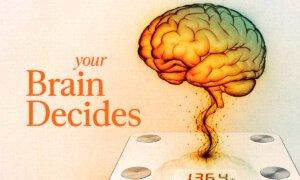
Your Brain Craves Beauty–Here’s Why

Is beauty truly in the eye of the beholder? Contemporary neuroscience hints that a certain type of beauty may be hardwired into our brains, and that different types of beauty have a measurable impact on our physical and mental health.
From fine art to music and nature, beauty may just have the power to heal. Learn what kinds of beauty our brain likes the most and how to find it in your life.
📖 Sources:
🖼️ Neural Correlates of Beauty
https://ept.ms/NeuralCorrelatesBeauty
🖼️ First Impressions
https://ept.ms/FirstImpressions
🖼️ Neuroaesthetics
https://ept.ms/Neuroaesthetics
🖼️ The golden ratio as an ecological affordance leading to aesthetic attractiveness
https://ept.ms/GoldenRatio
🖼️ View through a window may influence recovery from surgery
https://ept.ms/RecoveryFromSurgery
🖼️ The health benefits of the great outdoors
https://ept.ms/outdoors
🖼️ Computation of a face attractiveness index based on neoclassical canons, symmetry, and golden ratios
https://ept.ms/GoldenRatio_Science
🖼️ The Role of Nature in Coping with Psycho-Physiological Stress
https://ept.ms/RoleOfNature
🖼️ Ten years of a model of aesthetic appreciation and aesthetic judgments
https://ept.ms/Aesthetic
🖼️ Aesthetic preference for art emerges from a weighted integration over hierarchically structured visual features in the brain
https://ept.ms/ArtEmerges
🖼️ Visits to figurative art museums may lower blood pressure and stress
https://ept.ms/LowerBloodPressure
🖼️The effect of music intervention in stress response to cardiac surgery in a randomized clinical trial
https://ept.ms/MusicIntervention
🖼️ Great Music and the Fibonacci Sequence
https://ept.ms/GreatMusic
🖼️ The Creation of Adam — Michelangelo, 1508–1512
🖼️ The School of Athens — Raphael, 1509–1511
🖼️ View of Lake Lucerne from Seelisberg — Alexandre Calame, 1862
Read More




Related Videos

The Upgrade

The Upgrade

The Upgrade

The Upgrade

The Upgrade


The Upgrade

The Upgrade

The Upgrade

The Upgrade



The Upgrade