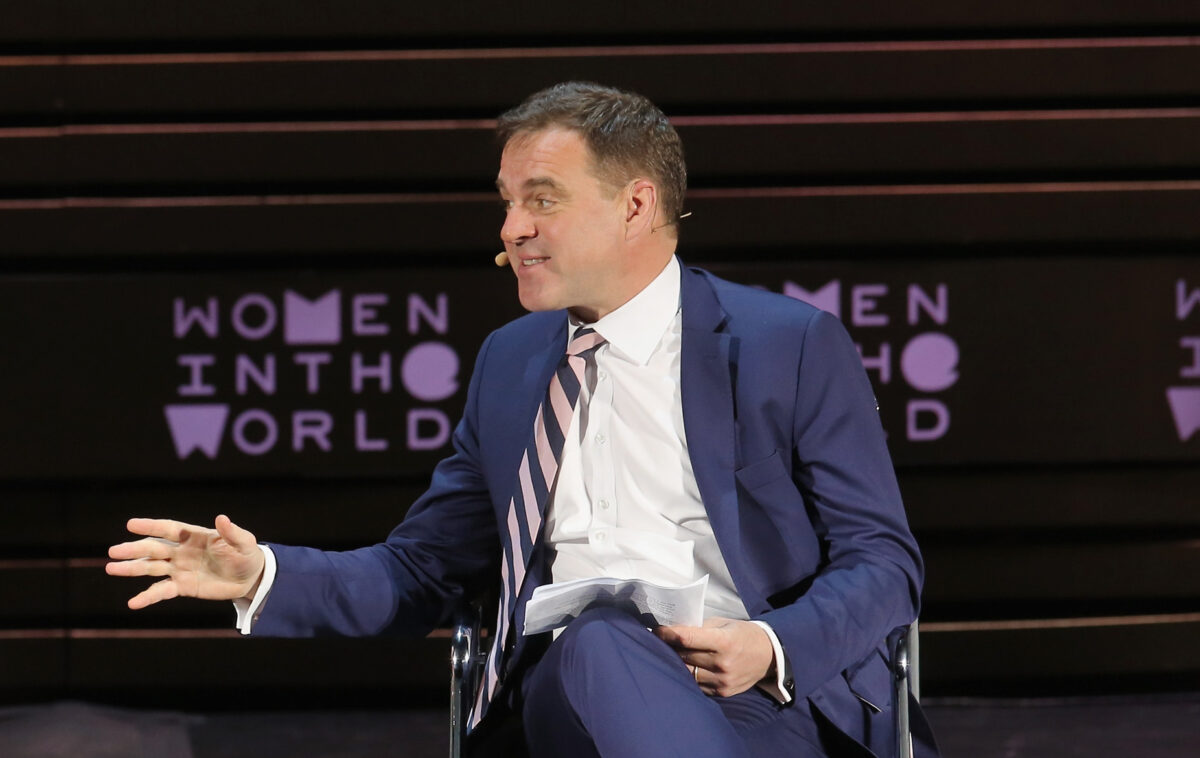

The Stanford Graduate School of Business sponsored the Academic Freedom Conference, a two-day seminar in favor of free speech on Nov. 4 and 5, in response to what some prominent professors are calling a “loss of academic freedom” that’s underway at many Western universities.
Stanford economist John Cochrane is taking a stand against these now commonplace practices, wherein punitive actions are exacted against professors and students who indulge in opinions or scientific inquiries that challenge the status quo.
Canadian professor Patrick Provost was suspended in June for stating that “the risks of COVID-19 vaccination in children outweigh the benefits.” University of Pennsylvania Law School professor Amy Wax is now facing potential termination for her comments on affirmative action, the average performance of black students, and other comments. Just two months ago, New York University professor Jonathan Haidt resigned after refusing a newly adopted requirement that researchers explain how their work advances “equity, inclusion, and anti-racism goals.”
“The mission of the university is the pursuit of truth and the advancement and dissemination of knowledge. A robust culture of free speech and academic freedom is essential to that mission,” reads Cochrane’s open letter, which was signed by more than 900 prominent scholars, including renowned Harvard cognitive scientist Steven Pinker.
In addition to the letter, Cochrane organized the conference in Palo Alto, California, known as the “birthplace of Silicon Valley.”
Cochrane, a free-market economist and senior fellow at Stanford’s Hoover Institution, believes freedom of intellectual pursuit is in peril at many Western universities. The conference, however, was sanctioned by Jonathan Levin, the business school’s dean, Cochrane said in his opening remarks during the conference.
Before the conference began, it received criticism from the academia-centric publisher The Chronicle for Higher Education, accusing the event of “propping up figures who are threatening democracy and public health.”
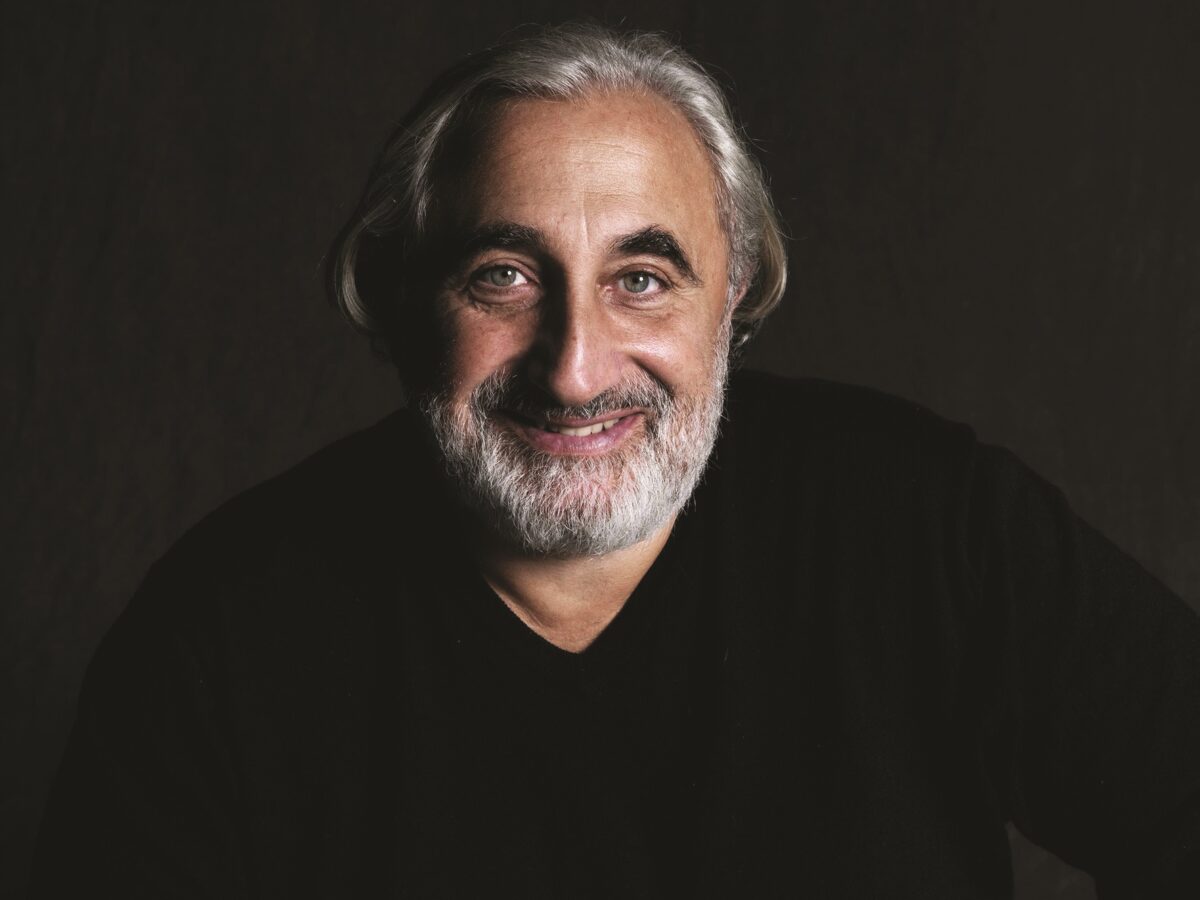
Speakers included many famous names, including marketing professor and behavioral scientist Gad Saad, historian Niall Ferguson, tech billionaire Peter Thiel, Stanford medical professor Jay Bhattacharya, and Canadian clinical psychologist Jordan Peterson.
During the pandemic, Bhattacharya made headlines for his “Great Barrington Declaration,” a public policy recommendation on COVID-19 that advised against lockdowns and was signed by more than 60,000 public health professionals.
“Universities and professional societies are failing to resist such illiberal forces—which have arisen many times throughout history, from all sides of the political spectrum—and to defend academic freedom and freedom of speech,” Cochrane stated in the open letter.
Climate of Fear
Pulling talent from universities across the country, speakers hailed from Princeton, Rutgers, Georgetown, Duke, and more. A common concern among conference attendees was a feeling of uneasiness when discussing certain ideas on their respective campuses.
“University of Chicago is seen as the paramount free speech university. … That’s true, but there’s stuff bubbling beneath the surface,” said Jerry Coyne, a biologist from the university. He describes a climate of fear that grips his colleagues, and not only on the right. “Even for a good liberal, the moniker racist or transphobe is horrifying and it makes you just shut up.”
A lone undergraduate student among the speakers, Mimi St Johns, critiqued one of Stanford’s engineering courses called “Expanding Engineering Limits: Culture, Diversity, and Equity,” saying the course’s core focus was “exploring the intersectionality of who is an engineer instead of actually doing the concrete math and programming.”
Intersectionality deals with analyzing individuals who belong to multiple groups labeled as disadvantaged. Stanford’s website states the purpose of the course is to “consider how cultural beliefs about race, ethnicity, gender, sexuality, abilities, socioeconomic status, and other intersectional aspects of identity interact with beliefs about engineering, influence diversity in the field, and affect equity in engineering education and practice.”
“What will American engineering look like in 10 to 20 years if the country’s brightest students feel like they can’t work on many issues due to ‘equity concerns’?” St Johns asked conferencegoers.
An article in The Stanford Review by St Johns further demonstrates the pervasiveness of identity politics in undergraduate curricula, covering a computer science professor who suggested classrooms “remove references to ‘very masculine or heavily CS-stereotyped movie posters’ and self-censor ‘anecdotes about … childhood or daily life that may cause students to feel excluded for economic reasons.’”

Peter Thiel
St Johns is editor-in-chief of The Review, which was founded by Thiel in 1987.
When it was his time to speak, the PayPal cofounder shared his diagnosis of what’s afflicting universities today, suggesting it might be rooted in a deeper pessimism within modern culture.
Thiel targeted an engrained attitude of futility as the main culprit for the lack of academic progress over the past few decades and for the atmosphere of intolerance.
“This is the zeitgeist on the other side … it is, ‘We’re not going to make it for another century on this planet and therefore, we need to embrace a one-world totalitarian state right now.’”
Optimism and Hope
In addition to diagnosing the free speech crisis in academia, many speakers put forth words of optimism and hope.
Offering advice to those who might be ostracized from civil society due to their views, Peterson, professor emeritus of psychology at the University of Toronto, stressed the importance of having a support group of close friends and family, saying he’s certain he wouldn’t have overcome his hardship without them.

Others proposed solutions for how academics might fight back against censorship and intolerance.
Cochrane encouraged private investment into new universities with a meritocratic focus, jokingly pleading with Thiel to put up some capital. He also suggested that STEM faculty overhaul their respective admissions processes, which are currently run by unspecialized bureaucrats.
Saad kept it simple, “The reality is, everybody has to be able to speak with this kind of boldness, and I think that the problem would go away pretty quickly.”
Cochrane also put forward a similar approach.
“Bad ideas are defeated only by argument and persuasion, not by suppression.” This also includes the push to introduce critical race theory into public schools. Instead of banning them, he says, teachers should be allowed to discuss it as long as opposing ideas are also permitted.
“These restrictions are counterproductive,” he writes in the open letter.
“Public high-profile victims are the tip of the iceberg. An atmosphere of fear and self-censorship pervades academia,” according to Cochrane, who says that the loss of academic freedom is partly the fault of university leaders.
The scholars who signed the letter called for all universities and professional associations to follow free-speech principles and maintain institutional neutrality on political and social issues.
 Friends Read Free
Copy
Facebook
Tweet
Friends Read Free
Copy
Facebook
Tweet