
Commentary
Michael Kleinman, head of U.S. policy at the Future of Life Institute—a group that has been warning for decades about the risks of artificial intelligence (AI)—recently issued a blunt warning that Congress is moving too slowly on AI regulation while unsafe systems are already harming families.
His alarm is justified, but the political battle over who should regulate AI is overshadowing a deeper problem.
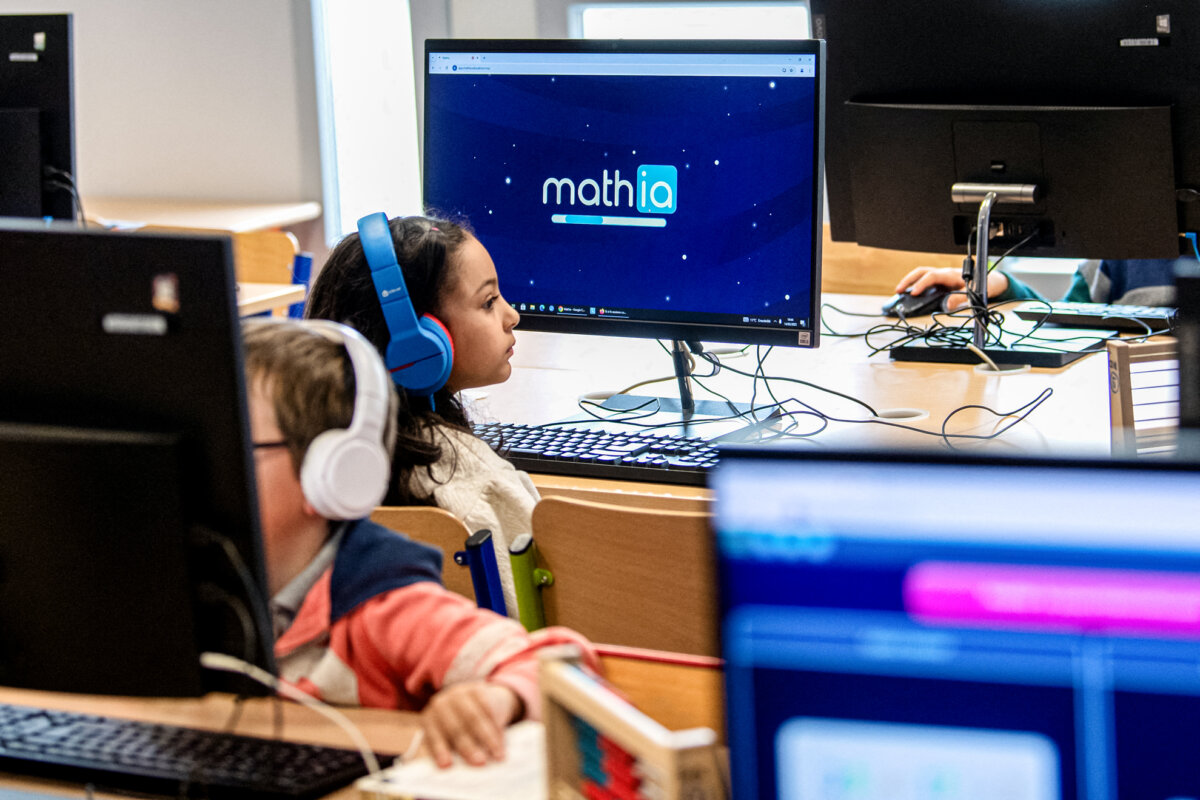
While lawmakers argue about jurisdiction, schools are rolling out AI tools to tens of millions of children, often with no safety standards, no transparency, and no meaningful adult understanding of what these systems actually are. An October report released by the Center for Democracy and Technology states that 85 percent of teachers and 86 percent of students used AI in the 2024–2025 school year and that it is hurting students’ ability to develop meaningful relationships with teachers.
Nevertheless, programs marketed as “AI literacy” are appearing in K–12 classrooms across the country. Federal initiatives are directing schools to adopt AI challenges and tutors. And many school districts, eager not to fall behind, are adopting whatever tools arrive at their door.
This push assumes that adults understand AI well enough to teach it to children. But most parents, teachers, and even policymakers still carry deep misconceptions about what AI is, how it works, and the risks it poses. These misconceptions are not superficial—they are structural blind spots that shape the entire national conversation.
Before America goes any further in bringing AI into classrooms, we need to confront these misconceptions honestly. These are not all the misconceptions, but they are the most widespread and already silently shaping policy, education, and public understanding:
Misconception No. 1: ‘AI Is Just a Tool’
Many people imagine AI the way they imagine a car or a calculator: a useful, predictable machine that does what we tell it to do. But a car designer knows exactly how a steering wheel will behave. A calculator cannot generate new ideas, mimic human emotion, or produce false information with total conviction.
AI is fundamentally different. It learns patterns from enormous amounts of data. It can generate ideas, arguments, essays, and emotional language without any human-like understanding.
The comparison to previous inventions is not accurate. A car builder in 1900 understood the basic form and limits of what they were creating. Today’s AI developers openly admit they do not fully understand how these models reach certain outputs, and they cannot predict all failure modes. That is not “just a tool.” AI is a system with emerging behaviors.
Misconception No. 2: ‘AI Is Neutral’
AI is trained on vast amounts of text created by humans and filled with human biases. When a child asks an AI system about history, morality, or even how to handle a social conflict, the answer they receive is shaped by patterns in the data, not objective truth.
This illusion of neutrality is dangerous. Children often assume confident language equals accuracy. When the system is wrong, biased, or incomplete, they have no way to know. And the adults guiding them rarely know either.
Misconception No. 3: ‘AI Is Controllable by Its Creators’
Many assume that because humans built AI, humans fully control it. But AI systems do not operate through hand-written code in the traditional sense. Their behavior emerges from training, not from explicit instructions.
Developers can influence direction but not with the reliability people are used to expecting from human-coded software programs. Guardrails can reduce harm but do not eliminate it. Even the companies building these models routinely describe their outputs as “unpredictable.”
If adults misunderstand this, they cannot responsibly teach children to rely on these systems or regulate them.
Misconception No. 4: ‘The Experts Know Where This Is Going’
This may be the most consequential misconception of all.
In most fields, experts disagree within a limited range. But in AI, top researchers hold wildly different views. Some say AI will help cure diseases. Others—such as Nobel Prize-winner Geoffrey Hinton, called the “Godfather of AI”—have warned of existential risks. When respected scientists estimate even a 10 percent to 30 percent chance of catastrophic outcomes, that tells us not that disaster is inevitable but that the trajectory is unknown.
We would never consider building a physical bridge if we expected its failure rate to be between 10 percent and 30 percent, so how can we implant a technology with the same level of potential “catastrophic” rate into an already stressed K–12 education system?
Misconception No. 5: ‘Children Need AI Early to Stay Competitive’
This argument is everywhere, but it is not grounded in evidence.
Children do not need AI to learn how to think; they need the opposite. They need slow reasoning, memory, imagination, human behavior, and faces to model, as well as the experience of learning through challenge. If they rely on AI too early, they outsource the very cognitive foundations that education is supposed to build.
AI may become part of the future economy. But early dependency is not literacy.
These misconceptions matter because they shape the decisions being made today. Millions of children are already using AI-powered tools daily. Schools are being told that this “future readiness” is unavoidable. And teachers, who are already overloaded, are pressured to adopt systems they barely understand.
Meanwhile, lawmakers argue over whether states should be allowed to regulate AI at all. But even regulation is not enough. You can operate an airplane without needing every passenger to understand aerodynamics. AI is different. It interacts with children’s thinking, identity formation, sense of truth, and ability to discern reality. It shapes not just what children know but fundamentally how they think.
That means that adults need their own AI literacy before they can give it to the next generation. Adults need to know that AI literacy is not “knowing how to use a chatbot.”
Real AI literacy is understanding:
- What AI is and is not
- Where it fails
- Why it fails
- How it shapes thinking
- Who controls it
- What its creators admit they do not know
Until educators, parents, and policymakers grasp these basics, AI in schools is experimentation, not education. Children should not become the test subjects in a national race to “not fall behind.” They deserve better than adults pretending to understand a technology that experts themselves still debate.
Before we push AI deeper into childhood classrooms, we must pause and correct the misconceptions that shape our decisions. And only when adults truly understand what AI is, what it isn’t, and what it might become, can we safely decide how much of this technology belongs in the lives of the children we are responsible for protecting.
Views expressed in this article are the opinions of the author and do not necessarily reflect the views of The Epoch Times.
 Friends Read Free
Copy
Facebook
Tweet
Friends Read Free
Copy
Facebook
Tweet