
Commentary
War often tempts analysts to focus on political headlines, and events at sea or in the air. That is a mistake in the Iran conflict. The decisive terrain in the current confrontation with Iran is economic, systemic, and ultimately political. What we are witnessing is not simply a naval contest in the Persian Gulf. It is a test of whether a regime built on circumvention can survive when that option is removed.
For decades, Tehran’s strategy was coherent. It offset American financial pressure by exporting oil to China through opaque channels, while deterring direct confrontation through asymmetric tactics. Harassment in the Strait of Hormuz, deniable attacks on shipping, and a dispersed network of proxies allowed Iran to raise the cost of Western pressure without exposing itself to decisive retaliation. It was a strategy of disruption, not control, but for years it proved sufficient.
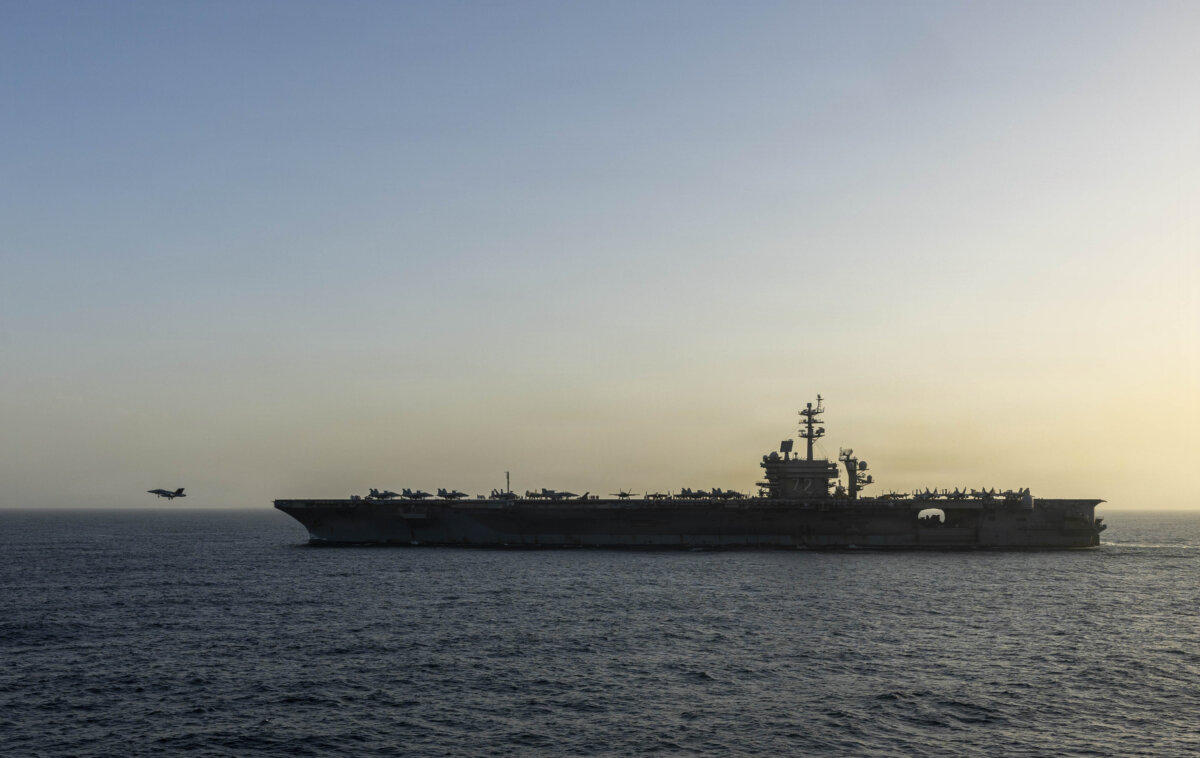
That model is now failing. The United States has shifted the axis of the conflict in a way that Iran did not anticipate. By imposing a comprehensive naval blockade on Iranian ports, Washington has not simply responded to Iranian harassment in the Strait—it has removed Tehran’s primary economic workaround.
The so-called shadow fleet, which relied on dark transfers and informal logistics chains to move oil to China, has been effectively neutralized. By available reporting, not a single Iranian cargo has successfully breached the blockade. This is not a symbolic measure. It is operationally effective and economically consequential.
The numbers tell a stark story. Only about 40 percent of Iran’s trade can be redirected through alternative routes such as rail or overland corridors. That is not a viable substitute for maritime exports in an economy dependent on oil revenue. Forty-four commercial vessels have already been turned back. The currency has collapsed, now trading at roughly 1.81 million rials to the dollar, with more than a million people out of work and food prices rising sharply.
This is where the imbalance becomes clear. Iran can still disrupt. It can threaten undersea cables, deploy unconventional maritime assets, and attempt to reignite a broader crisis in the Strait of Hormuz. But disruption does not generate revenue. The United States, by contrast, does not need to escalate kinetically to achieve its objectives. The blockade itself is the pressure point.
Inside Iran, the political consequences are already visible. Moderates understand the arithmetic and are seeking an off-ramp before economic deterioration becomes political instability. Hardliners are reaching for escalation, not because it is strategically sound, but because it is the only lever remaining to them. Their logic is to drive oil prices higher and force Washington to reconsider.
That is a high-risk proposition. It assumes the United States lacks the resolve to sustain pressure and that global markets will compel a reversal. Neither assumption is strong. Washington has structured this campaign to avoid open ended commitments while applying continuous pressure where it matters most.
This aligns with a broader pattern. When the United States combines military presence with economic leverage and maintains discipline in execution, it tends to prevail on favorable terms. Iran’s options are narrowing, and time is no longer on its side.
Pressure wins.
Views expressed in this article are the opinions of the author and do not necessarily reflect the views of The Epoch Times.
 Friends Read Free
Copy
Facebook
Tweet
Friends Read Free
Copy
Facebook
Tweet