
Commentary
The first installment of this series on the lessons that America’s Founders drew from Rome summarized the dominant position of Roman writings in the Founding Era educational curriculum and the popularity of ancient Rome with the general public.
This second installment thumbnails the sweep of Roman history, and then focuses on the time period and writings of most interest to the American Founders.
The Sweep of Roman History
The Roman state, together with its Byzantine successor, existed for about 2,000 years. According to tradition, Rome was founded in 753 B.C.E. as a small city-state, ruled by a king with the assistance of a senate or council of elders. In 509 B.C.E., a revolution overthrew the monarchy and established an aristocratic republic. The king was replaced by two annually elected executives, initially called praetors (leaders) but eventually renamed as consuls. The praetors continued as judicial officers.
Romans showed an aptitude for war and gradually absorbed other peoples, either by conquest or alliance. By the year 287 B.C.E., Rome had become the dominant power in Italy. However, the fact that all male citizens were subject to military service had domestic consequences: Men who served in war had a claim to a say in government. That year witnessed the adoption of the Hortensian Law. It allowed an assembly composed only of the common people (the plebeians) to enact laws without regard to the wishes of the aristocracy.
Still, the aristocracy remained powerful, and Rome never became a constitutional democracy in the modern sense.
Over the ensuing century and a half, Rome waged three successful wars with the north African state of Carthage and four with Macedonia, enabling it to extend its influence around the Mediterranean. This expansion also had domestic consequences: It created severe strains on the Roman republican constitution and gave more power to military commanders. After a series of civil wars and several dictatorships (including the dictatorship of Julius Caesar), the constitution underwent a fundamental change. Caesar’s grandnephew and heir, Octavian, became the most influential man in the state. He assumed the name Augustus (“revered”) and is considered the first Roman emperor. Historians commonly designate his reign as extending from 27 B.C.E. to 14 C.E. Thus, as the New Testament reports, Augustus was emperor when Jesus of Nazareth was born.
For more than 160 years following the death of Augustus, republican institutions continued to exist side by side with the imperial authority. The Senate continued to meet—and in some ways expanded its power. Consuls and other magistrates were still elected, either by the popular assemblies or by the Senate. In theory, the emperor was merely the first citizen, or princeps. For this reason, historians call the period from the ascension of Augustus until the death of Marcus Aurelius in 180 C.E. the principate. It was during this period that the Roman Empire was most prosperous and reached its greatest extent.
The century following the principate, however, was a very unsettled time. The empire almost collapsed under the challenges of civil war, plague, and foreign invasion. The emperors became mere military dictators, and most of them died in war or from assassination. Fortunately, near the end of the period a series of hardworking and capable emperors managed to stabilize the situation. The last of these was Diocletian, who assumed office in 284. He reorganized the empire into an oriental-style despotism, but with separate emperors in the east and west. Thus began the period known as the Dominate—a word reflecting the emperor’s status as absolute dominus, or lord.
The stability of authoritarian government came at the cost of freedom, prosperity, and strength. Many citizens fled the empire for freer lands to the north and east. At the same time, military pressure from the north and east caused the weakened empire to lose large swaths of territory, particularly in the west. In 476, Rome and Italy came under Germanic (“barbarian”) rule.
However, emperors continued to reign from the eastern capital at Constantinople (modern Istanbul), and one of them—Justinian (who reigned from 527 to 565)—even recaptured Italy and some other western provinces. After Justinian’s death, however, the eastern empire gradually became little more than a large Greek state. Historians call it the Byzantine Empire, and it lived on until 1453.
This video illustrates the expansion and contraction of Roman and Byzantine territory over time. The timeline summarizes the full sweep of Roman history:

Founding Era Favorites
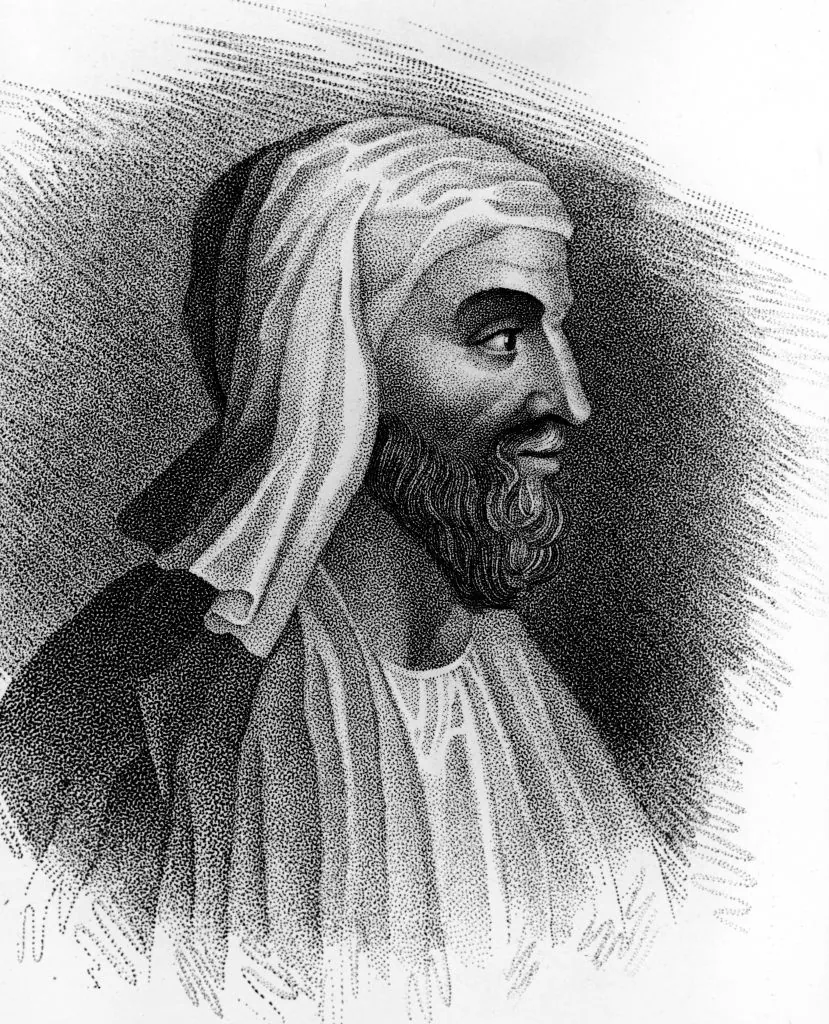
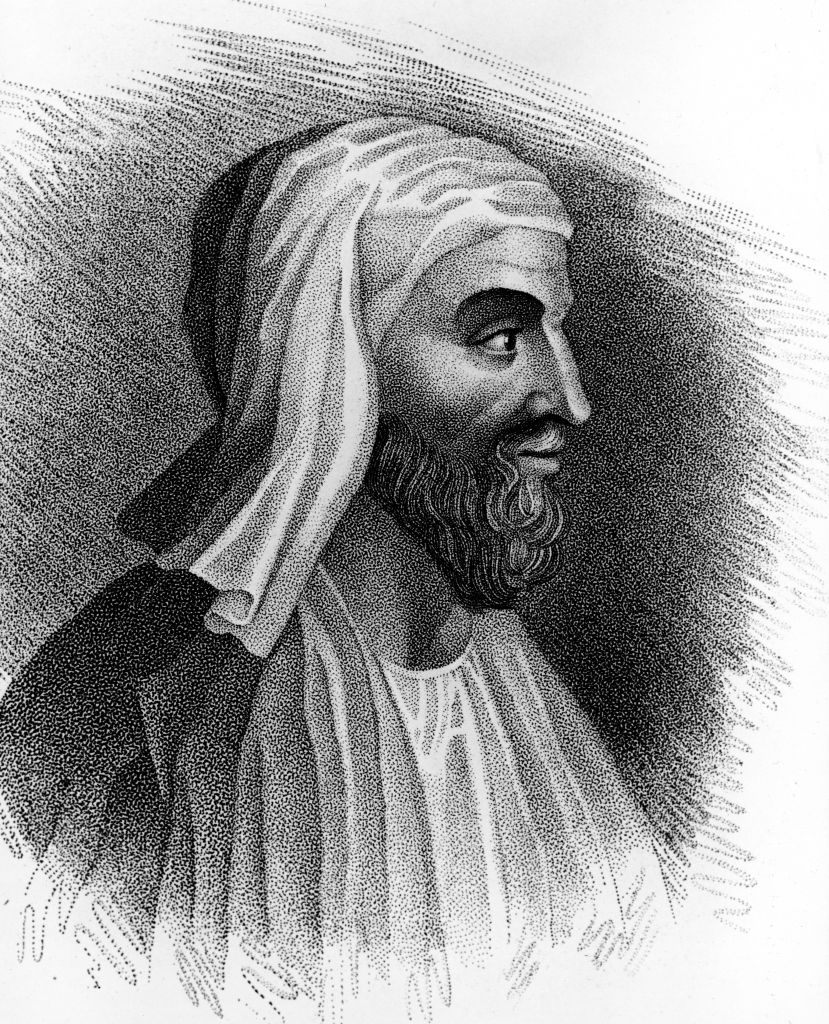
The American founding generation showed little interest in Roman history before the republic or after the early principate. All of their favorite writers lived between 200 B.C.E. and 120 C.E., and the stories they told were of that period and of the old Roman republic. Among the authors read by the American Founders, six stand out as particularly influential on the Constitution: Polybius, Cicero, Virgil, Livy, Tacitus, and Plutarch.
Polybius
Polybius (circa 200 B.C.E. to circa 118 B.C.E.) was a Greek who became famous writing about Rome. He was born in Megalopolis, in southern Greece. Polybius’s father was on the town council, and when Polybius was about 30, he was elected as a councilor as well. At the time, the Greek states were still independent. Rome—anxious to assure that they did not ally themselves with its enemies—demanded that Greece send hostages to Italy. Polybius was among those sent.
The hostages were treated well and allowed considerable freedom of movement. Polybius impressed leading Romans and became the mentor of the patrician Scipio Aemilianus—the man who eventually would destroy Carthage. Scipio was enthusiastic about learning, and through him, Polybius became acquainted with some of Rome’s best scholars. Eventually, he became a Roman citizen and a magistrate, and led diplomatic delegations and a voyage of discovery down the western coast of Africa.
Polybius wrote a history of Rome for his fellow Greeks to explain why the republic had been so successful. That history proved to be influential on the American Founders’ constitutional thinking.
Cicero
Marcus Tullius Cicero (106 B.C.E. to 43 B.C.E.) was born in Arpinum (now Arpino), in Italy, about 50 miles southeast of Rome. His father sent him to Rome to be educated, and he made his mark through the sheer force of his personality, his ability as a lawyer, and the power of his oratory. After election to several lesser offices, he served as consul (63 B.C.E.). While in that position, Cicero suppressed a dangerous rebellion led by one Lucius Sergius Catilina (whom English speakers call “Catiline”).
Cicero’s greatest contribution came later: He wrote a series of essays and dialogues synthesizing Greek ideas (and his own) for a Latin audience. During the centuries between the collapse of the empire in Europe and the modern era, Cicero’s writings were central to the educational canon. His views of government and civic obligation were immensely influential with the American Founders.
Virgil
Publius Vergilius Maro (70 B.C.E. to 19 B.C.E.)—whom we call Virgil or Vergil—was yet another product of a family prominent only locally. He was born in a small place called Andes, near Mantua, in northern Italy. He did not pursue a political, legal, or military career, but decided to write poetry. After some youthful efforts—of which the Moretum (mentioned in our first installment) may be one example—he published “The Eclogues,” a series of 10 pastoral poems averaging about 83 lines each. “The Eclogues” made Virgil famous. He followed with his long agricultural poem, “The Georgics,” and with “The Aeneid,” a grand epic on Roman origins.
The American Founders frequently quoted other Roman poets. But as the Great Seal of the United States testifies, Virgil was their favorite. During the constitutional debates of 1787–1791, he was quoted so often he became the de facto poet laureate of the American Founding.
Livy
Titus Livius (64 or 59 B.C.E. to 19 C.E.) lived through the last years of the Roman republic and throughout the reign of Augustus. He was born in Patavium—modern Padua—in northeastern Italy, just west of Venice. Like all of the other authors examined here, Livy’s family was, at most, only locally prominent. Like Virgil, he chose not to pursue a civic career, instead electing to write history. His vivid portrayals of republican heroes, exemplifying Roman courage and virtue, appealed enormously to the Founders.
Tacitus
Cornelius Tacitus (56 C.E. to circa 120 C.E.) lived during the height of the Roman Empire. He was born into a family so obscure that we do not know his birthplace—although some speculate that it was in northern Italy or Gaul (France). As a boy, however, Tacitus showed promise and was educated in Rome. Like Alexander Hamilton, he compensated somewhat for his modest origins by marrying into a leading family.
Tacitus rose through the ranks of civil office, becoming consul for part of the year 97. He later served as governor of one of Rome’s most important provinces.
Scholars rate Tacitus as perhaps the greatest of all Roman historians. He focused on the history of the Empire during the 80 years after the death of Augustus. His was largely a tale of misrule and corruption. Eighteenth-century Americans who found Livy’s history to be rich in positive examples found Tacitus’s account to teem with sobering but useful negative examples.
Plutarch
Plutarch (46 C.E. to after 119 C.E.) was, like Polybius, a Greek who wrote about Rome. He was born in Chaeronea, a small village in Greece. His father was a biographer and philosopher, and Plutarch studied in Athens, then a university town. On trips to Rome, he befriended influential people, including, perhaps, the Emperors Trajan (who reigned from 98 C.E. to 117 C.E.) and Hadrian (117 C.E. to 138 C.E.). But he always returned to Chaeronea, where he lived and operated a school.
The American founding generation admired Plutarch’s essays on morals, but it was his biographies of great Greeks and Romans that captured their imagination.
Note a common fact about these six authors: All rose to fame and influence from modest origins—a testimony to the upward mobility of Roman society during the popular republic and the principate.
Next Installment: Lessons the Founders learned from the Romans
Robert G. Natelson, a former constitutional law professor who is senior fellow in constitutional jurisprudence at the Independence Institute in Denver, authored “The Original Constitution” (4th ed., 2025) and is a contributor to the Heritage Foundation’s “Heritage Guide to the Constitution.” He also researched and wrote the scholarly article, “Virgil and the Constitution,” whose publication is pending in Regent University Law Review.
Views expressed in this article are the opinions of the author and do not necessarily reflect the views of The Epoch Times.
 Friends Read Free
Copy
Facebook
Tweet
Friends Read Free
Copy
Facebook
Tweet