
Commentary
It was touted as the most important strategic alliance in the world, but the Five Eyes network—based on the UKUSA Accords of 1946 and earlier—had fallen into disunity and disutility by 2020 at the latest. Nobody seemed to notice: the processes continued; the results did not.
I noted, on Feb. 13, 2020, at the Australia-Canada Economic Leadership Forum, in Melbourne, Australia, in the bilateral Australia-Canada context:
“The UKUSA Accords—Five Eyes—have commoditized the Australia–Canada intelligence exchange, and this has removed much of the value of the process. Traffic volume does not equate to quality intelligence or quality strategic analysis.”
Five Eyes, by 2025, was, however, being deliberately bypassed by the United States under President Donald Trump’s policy of breaking down old alliances and structures and rebuilding a new U.S. strategic architecture “closer to his heart’s desire.”
The U.S. edition of the UK publication, The Spectator, noted in an article by James Tidmarsh on Nov. 18, 2025, entitled “Why Trump is freezing out Five Eyes allies”:
“The most powerful intelligence alliance in the world is breaking up. In January [2025], Donald Trump restricted intelligence-sharing on Russia and Ukraine, cutting allies out of negotiations and freezing certain channels entirely. Then in March [2025] came the so-called ‘Ukraine intel blackout’, an unprecedented freeze that shut Britain and Australia out of updates on Russian troop movements. And last month [October 2025], the Dutch said they were scaling back intelligence-sharing with America over fears of ‘politicization’.”
The article went on to note:
“Trump tends to treat intelligence as leverage, a tool to reward countries that fall in line with Washington and punish those that don’t.”
The reality was that, by 2020 or so, the Five Eyes member states had only some unifying or common threads of strategic priority, and many differing approaches to global issues. In other words, because of the drift in communications between the five member states, the Five Eyes Accord had to some degree lived beyond its era of primary purpose.
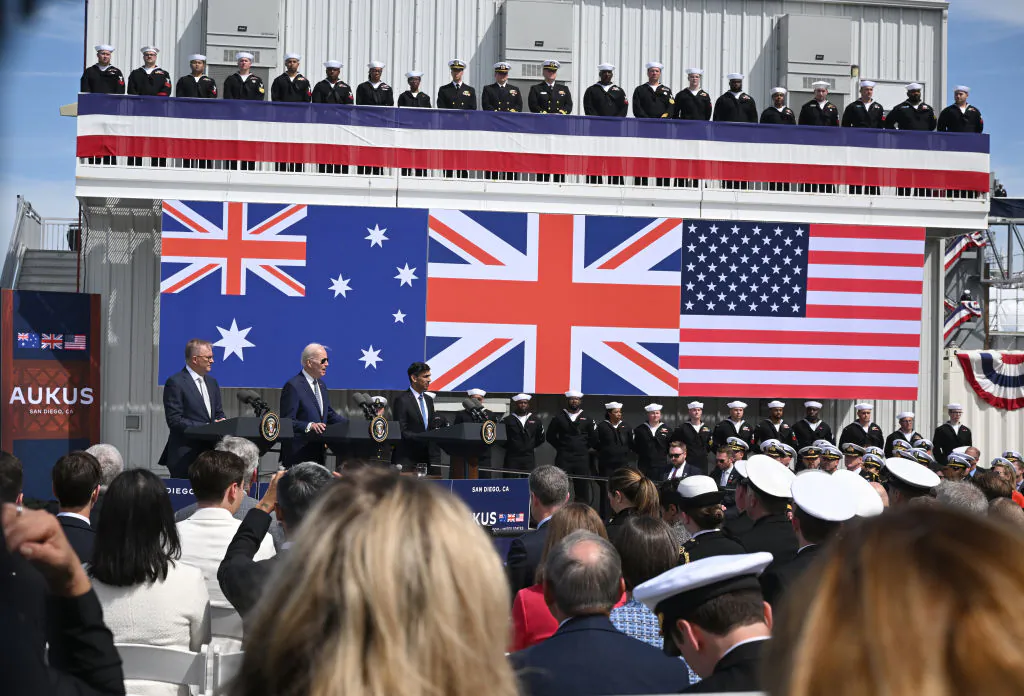
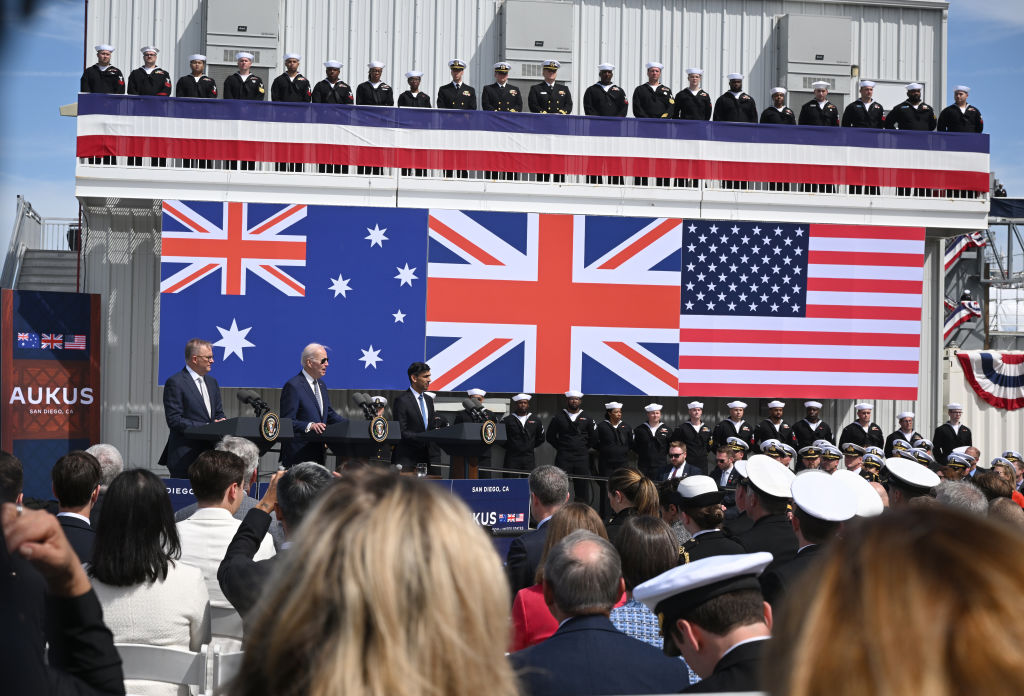
All treaties and alliances have their lifespan and are best either abandoned or updated when the original purpose has been served. What was significant was that it was the four states other than the United States that had not fully recognized the diminishing utility of the Five Eyes agreement. There was some suggestion that it had already been overtaken by the creation in 2021 of AUKUS—the Australia-United Kingdom-United States alliance.
On Dec. 16, 2021, I produced a report entitled “AUKUS Takes Shape, and Five Eyes Essentially Becomes Three Eyes,” as AUKUS effectively excluded Canada and New Zealand from its framework. Subsequent Five Eyes gatherings saw Canada and New Zealand omitted from AUKUS-core discussions on certain matters. I subsequently asked whether AUKUS was to be the last of the old-style (20th-century-plus) alliances, or the first of a new-style 21st-century alliance, which it could well have been.
However, it is now shaping up that AUKUS may have also been deprioritized by President Trump in his second administration, which began in 2025. Trump’s strategic realignment has led to a preference for new bilateral or trilateral frameworks aligned more tightly with current U.S. interests. He has yet to formally alter or terminate AUKUS, possibly due to enduring historical ties with the United Kingdom and the strategic necessity of Australia’s location—as seen in World War II—as a key staging ground for operations in East Asia and the Indian Ocean.
The four partner states to the United States in the Five Eyes accords have, at times, diverged from Washington’s current strategic approach. While their elected governments have aligned at various points with both Democratic and Republican U.S. administrations, the Trump administration has shown less inclination to engage deeply with their current leadership. This shift reflects broader changes in the nature of alliances—increasingly transactional, interest-based, and adaptive.
Significantly, at the working level within the intelligence and defense communities of all Five Eyes member states, cooperation continues effectively. For instance, Australia has pursued strategic minerals cooperation and maintains strong defense integration with the United States, hosting thousands of U.S. personnel. Similarly, the U.S. continues to integrate personnel from Five Eyes countries into its command structures.
The question is where all Five Eyes parties go from here.
President Trump has emphasized a strategic vision in which all allies are evaluated equally, with no guaranteed privileges. The four traditional partners have not yet indicated a shared recognition that a new global strategic architecture is emerging—one in which threat assessments of Russia and the People’s Republic of China (PRC) are shifting.
It seems possible that leadership changes may occur in the UK, Australia, and Canada in the near future, with potential implications for renewed alignment. Whether such shifts would restore deeper collaboration with the United States remains to be seen.
Could the Five Eyes alliance gradually fade, giving rise to a new intelligence-sharing framework, such as a proposed CANZUK alignment—involving Canada, Australia, New Zealand, and the United Kingdom?
One of the fundamental forces already reshaping the global order is the tapering influence of the PRC as a short-term disruptor. As that recedes, new power dynamics will emerge.
The critical question is whether the CANZUK states will follow a U.S.-led vision or chart their own path in the evolving strategic landscape.
Views expressed in this article are the opinions of the author and do not necessarily reflect the views of The Epoch Times.
 Friends Read Free
Copy
Facebook
Tweet
Friends Read Free
Copy
Facebook
Tweet