Commentary
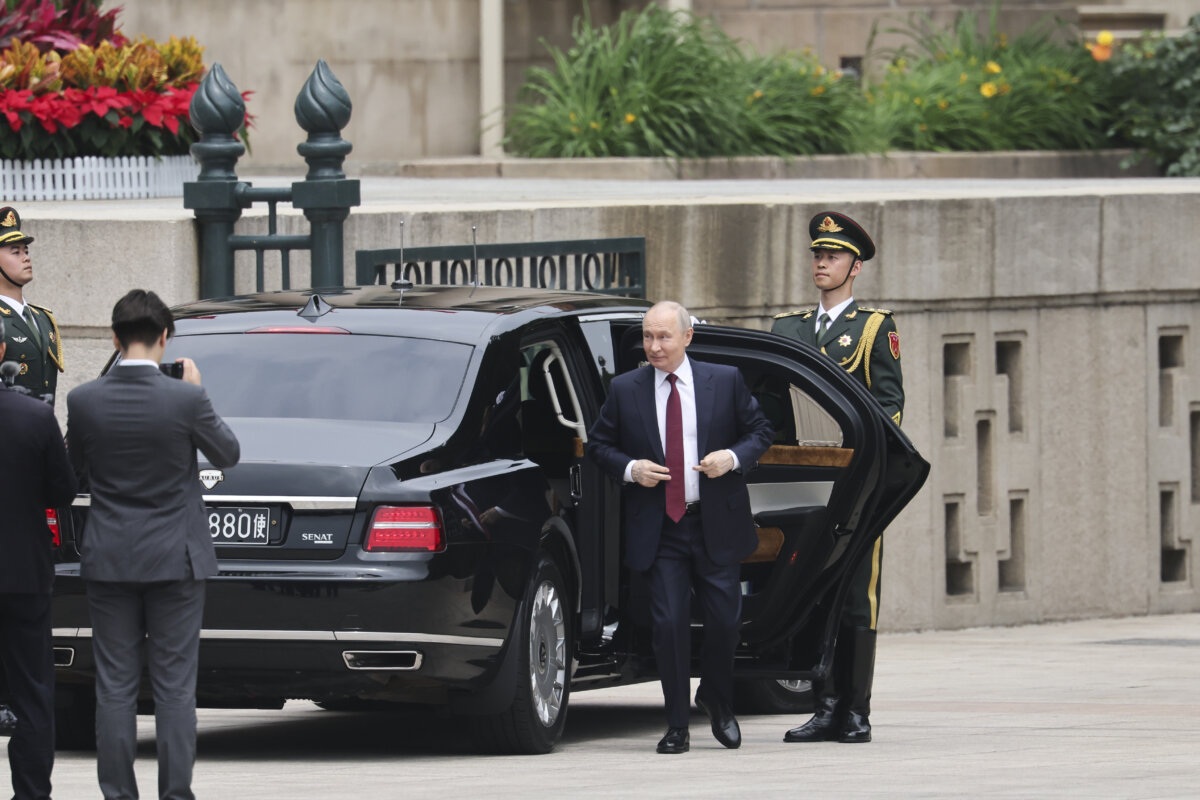
Just days after U.S. President Donald Trump departed Beijing following his summit with Chinese leader Xi Jinping, Russian President Vladimir Putin arrived in the Chinese capital, underscoring Beijing’s increasingly delicate effort to balance ties with two rival powers whose relationships with China are moving in sharply different directions.
The back-to-back visits offered a revealing contrast.
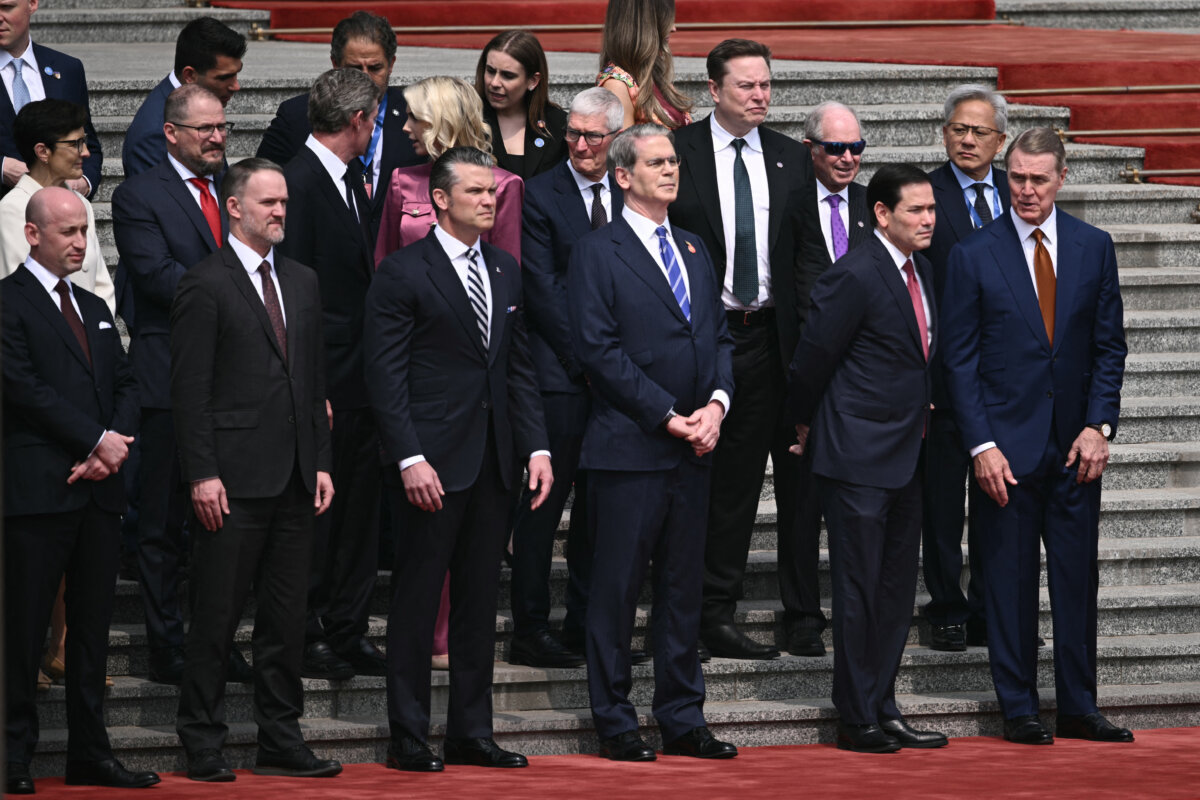
Trump’s trip produced no joint statement, no signed agreements, and no joint press conference. So far, there have only been official announcements of Boeing jet purchases and tariff reductions.
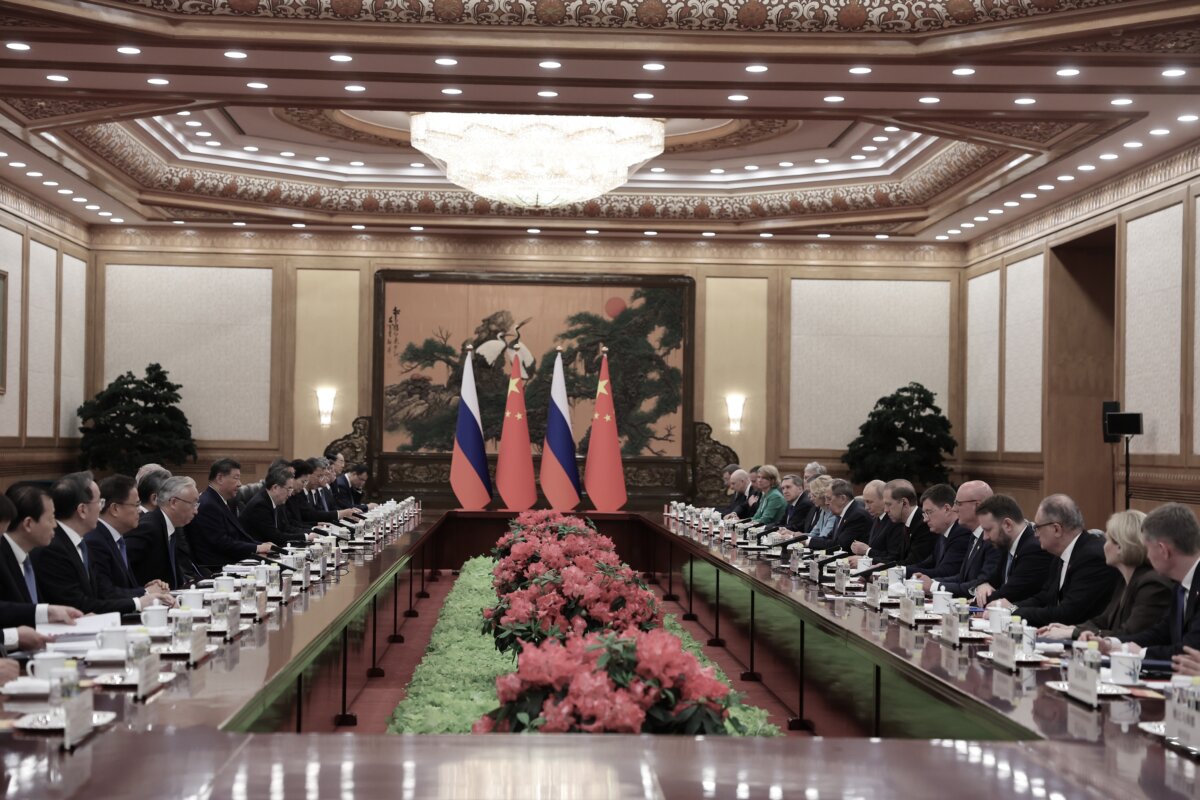
Putin’s visit, by comparison, produced a joint declaration on deepening China–Russia strategic coordination, multiple cooperation agreements, and a highly choreographed display of political solidarity between Beijing and Moscow.
Together, the meetings highlighted the underlying reality of the triangular relationship among China, Russia, and the United States. Washington and Beijing remain strategic rivals despite efforts to stabilize relations, while Beijing and Moscow continue to present themselves as geopolitical partners, even if tensions and mistrust linger beneath the surface.
A Lower-Level Welcome
At first glance, Putin appeared to receive a less prestigious reception than Trump.
Chinese Foreign Minister Wang Yi greeted Putin at the airport, while Trump had been welcomed by Vice President Han Zheng, whose rank in China’s political hierarchy is considered slightly higher. The distinction was subtle but noticeable.
The Kremlin dismissed comparisons over ceremonial treatment, saying there was no need to compare protocol details and that the substance of the visit mattered more than optics.
Yet the substance itself was striking.
China and Russia issued two major joint statements. The first reaffirmed the countries’ “comprehensive strategic partnership” and extended the China–Russia friendship treaty, originally signed 25 years ago under Chinese leader Jiang Zemin.
The treaty has long carried symbolic sensitivity inside China because it effectively formalized long-standing territorial arrangements inherited from earlier agreements with Russia, including territories ceded during the Qing dynasty that some Chinese nationalists still regard as historically contested.
The renewal of the treaty reinforced the Chinese Communist Party’s long-standing prioritization of strategic alignment with Moscow over nationalist territorial claims.
A Joint Vision Against Western Dominance
The second declaration carried even broader geopolitical significance.
Titled a statement on “multipolar world” and a “new international order,” the document criticizes unilateralism, opposes what it describes as hegemonic behavior, and defends the authority of the United Nations and international law over what Beijing and Moscow often characterize as a Western-led “rules-based order.”
Although the United States was not named directly, the message was unmistakable.
The language echoed years of Chinese and Russian criticism of U.S. global influence and Western security alliances. One section condemned the “unrestrained expansion of military alliances”—widely interpreted as a reference to NATO enlargement, a central justification used by Moscow for its invasion of Ukraine.
Yet the same statement also called for disputes to be resolved peacefully through dialogue, creating an apparent contradiction given Russia’s ongoing war in Ukraine.
The two leaders also oversaw the signing of roughly 40 cooperation agreements covering trade, technology, education, and other sectors.
Despite the carefully staged symbolism of equality between the two powers, the underlying balance in the relationship has shifted noticeably since the start of the Ukraine war.
Once considered the senior partner, Russia has become increasingly dependent on China economically and diplomatically as Western sanctions deepen Moscow’s isolation.
With the war continuing to strain Russia’s economy and military resources, Beijing remains one of the few global powers both capable of and willing to provide meaningful political and economic support.
What remains less clear is how far China is willing to go.
While Beijing has strengthened trade ties with Moscow and provided dual-use technologies that Western officials say support Russia’s war effort, it remains uncertain whether China would openly escalate military assistance at the risk of severely damaging relations with Europe.
No Illusions in US–China Relations
If the Putin meeting showcased strategic alignment, Trump’s visit highlighted the limits of any U.S.–China rapprochement.
Xi emphasized the need to avoid what scholars call the “Thucydides Trap”—the political theory that conflict becomes likely when a rising power threatens an established hegemon.
The phrase has become a recurring theme in Xi’s rhetoric about U.S.–China relations, reflecting Beijing’s view that global power is shifting away from the West and toward China.
However, the concept also carries implicit assumptions that China is a rising challenger and the United States is a declining power.
Trump has repeatedly rejected that premise.
During the visit, he stressed that the United States remained stronger than ever, reflecting a fundamental divide between Washington and Beijing over the future global order.
For years, Xi’s broader political messaging—including references to “the East rising and the West declining” and calls for a “community of common destiny”—has signaled Beijing’s ambition to reshape international power structures in ways more favorable to China.
That strategic rivalry persists regardless of diplomatic optics.
Taiwan Emerges Again as a Flashpoint
The most consequential development may have come after Trump left Beijing.
Speaking to reporters before boarding Air Force One at Joint Base Andrews, Trump confirmed that he intended to speak directly with Taiwanese President Lai Ching-te.
“I’ll speak to him,” Trump said. “I speak to everybody. We have that situation very well in hand. We’ll work on that, the Taiwan problem.”
If such a call were to take place, it would carry enormous symbolic significance.
Since Washington switched diplomatic recognition from Taipei to Beijing in 1979, there has been no publicly known direct conversation between the sitting leaders of the United States and Taiwan.
In 2016, then-Taiwanese President Tsai Ing-wen had a congratulatory phone call with then-President-elect Trump after his election victory. That call triggered sharp protests from Beijing and raised concerns that Trump was willing to challenge long-standing diplomatic norms governing U.S.–Taiwan relations.
This time, the stakes could be higher because the conversation would likely involve substantive policy issues rather than a ceremonial exchange.
The discussion could involve arms sales, Taiwan’s defense spending, semiconductor production, or supply-chain relocation to the United States.
Unlike previous frameworks governing U.S.–Taiwan relations—including the Taiwan Relations Act, the U.S.–China communiqués, and the “Six Assurances”—direct leader-level coordination between Washington and Taipei has historically been limited.
Trump’s willingness to engage Taiwan’s president directly suggests a greater readiness to test Beijing’s red lines.
At the same time, Lai has not dramatically altered Taiwan’s cross-strait policy since taking office, instead maintaining the island’s long-standing status quo position.
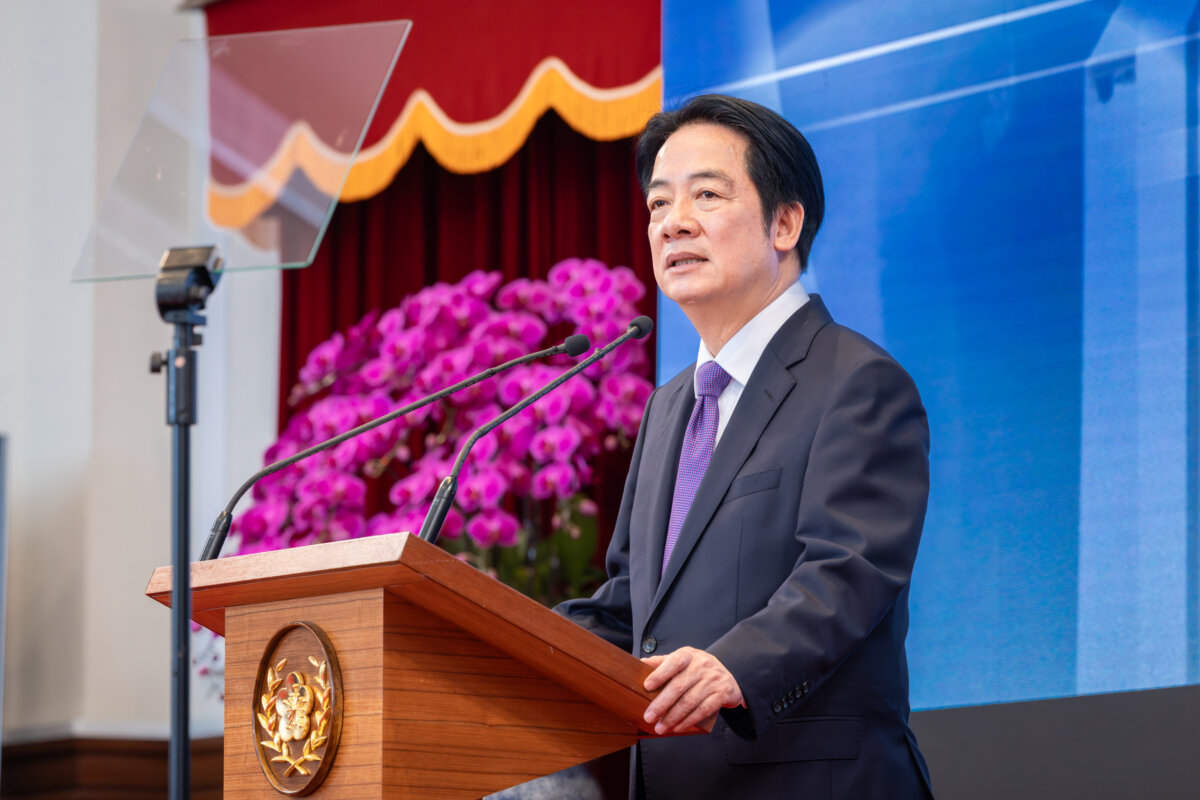
Beijing, however, continues to portray Taiwan-related developments as moves toward formal independence, even as it increases military and political pressure on the island.
Trump appeared to acknowledge the sensitivity of the issue when he later referred to the “Taiwan problem,” although it remained unclear whether he was referring to tensions with Beijing, arms sales disputes, or broader regional instability.
Whatever the content of a future Trump–Lai conversation, the act of holding the call itself could prove more significant than any single policy announcement. This is another sign that the geopolitical balance among Washington, Beijing, and Moscow remains unsettled and increasingly volatile.
Michael Zhuang contributed to this commentary.
Views expressed in this article are the opinions of the author and do not necessarily reflect the views of The Epoch Times.
 Friends Read Free
Copy
Facebook
Tweet
Friends Read Free
Copy
Facebook
Tweet