
Commentary
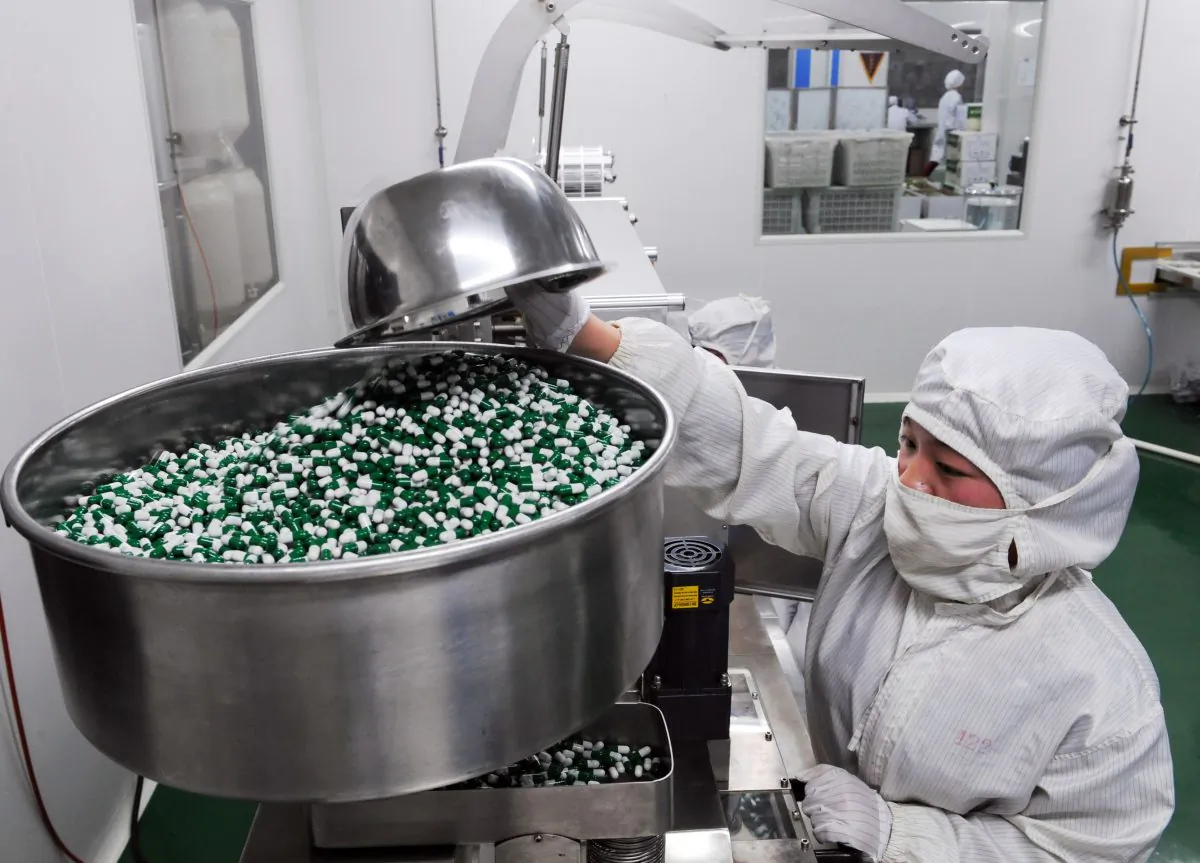
China has quietly positioned itself as the dominant force in America’s pharmaceutical supply chain, and Americans are paying for that in ways that go far beyond a higher price at the pharmacy counter.
China is the United States’ largest foreign supplier of critical pharmaceutical inputs by volume, accounting for 39.9 percent of imports in 2024, according to U.S. government data. For specific drug categories, the dependence is far more alarming. The United States relied on China for 99 percent of its imported prednisone, 92 percent of its penicillin and streptomycin, and 94 percent of its first-aid kits in 2024 alone.
In fact, nearly 700 medicines approved for use in the United States depend on at least one chemical produced solely in China, according to an October 2025 analysis by U.S. Pharmacopeia. That includes widely prescribed antibiotics such as amoxicillin, along with drugs for heart disease, seizures, cancer, and HIV.
This isn’t a coincidence. It’s the result of a deliberate, state-directed strategy.
The ‘Made in China 2025’ Blueprint
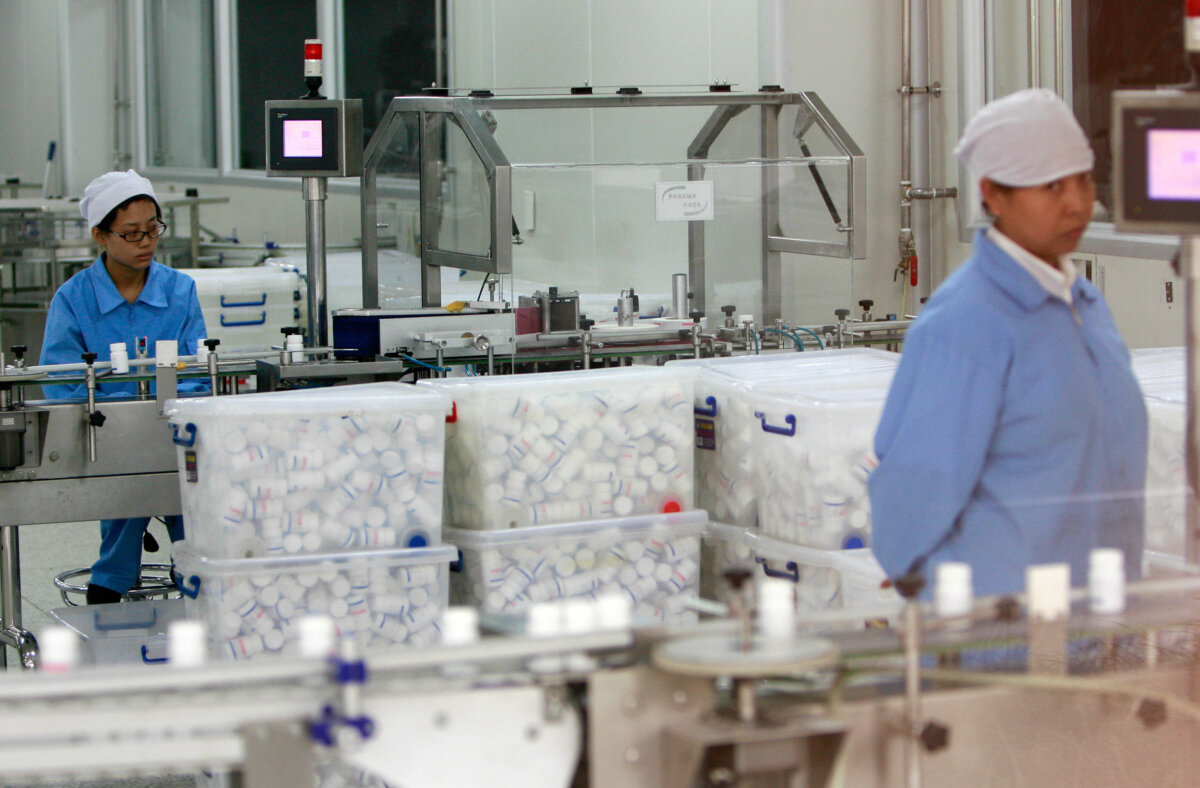
In 2008, Beijing formally designated pharmaceuticals a “high-value-added industry” and flooded the sector with subsidies, export incentives, and state-backed investment. The goal wasn’t simply to manufacture drugs cheaply, but to control the entire supply chain, from the chemical building blocks to the finished pill.
The strategy worked. Today, China controls approximately 70 percent to 80 percent of global antibiotic active pharmaceutical ingredient (API) production and roughly 80 percent of the intermediates used worldwide to manufacture APIs, the U.S. Pharmacopeia report found. Forty-one percent of key starting materials, which are the chemical foundations from which APIs are synthesized, come from China.
U.S.–China Economic and Security Review Commissioner Michael Kuiken said it plainly in a 2025 hearing: “It seems in the pharmaceutical space that we are dependent, or nearly totally dependent, on China. I don’t see us leading in that space at all.”
The U.S. pharmaceutical trade deficit reflects exactly that: $139.5 billion in 2024, up from $102.3 billion the year before, according to figures released by the Bureau of Economic Analysis in February 2025.
A Weaponizing Medicine
The truth is that for Beijing, medicine is another key front in the battle against American hegemony. China’s state-controlled Xinhua News Agency made that clear during the COVID-19 pandemic, warning that Beijing could “announce strategic control over medical products and ban exports to the United States” and saying that America would then “fall into the hell of a new coronavirus pneumonia epidemic.”
That wasn’t idle rhetoric. It was a preview of what weaponized pharmaceutical dependence actually looks like.
The Brookings Institution has documented three scenarios through which China could leverage this control: deliberate export restrictions to gain geopolitical leverage, competition for scarce supply during global emergencies, and system-wide disruption that ripples through U.S. and global supply chains.
China has already shown its willingness to use trade and market access measures to pressure partners. Applying that same playbook to pharmaceuticals is a strategic option Beijing holds in reserve.
Little Oversight, Lesser Quality, Higher Contamination
Beyond the geopolitical risk is a quieter, more insidious danger concerning the quality of what’s actually coming out of Chinese pharmaceutical facilities.
In 2025, the U.S. Food and Drug Administration (FDA) cited two Chinese API producers for quality control issues. That wasn’t the first time. Chinese pharmaceutical manufacturers have demonstrated a repeated pattern of violating FDA regulations. Furthermore, inspections, which are infrequent at best, have proven woefully inadequate at maintaining consistent standards.
The lack of U.S. government oversight in the production of our medicines is staggering. The FDA inspects Chinese labs even less frequently than Indian labs, and that bar was already low.
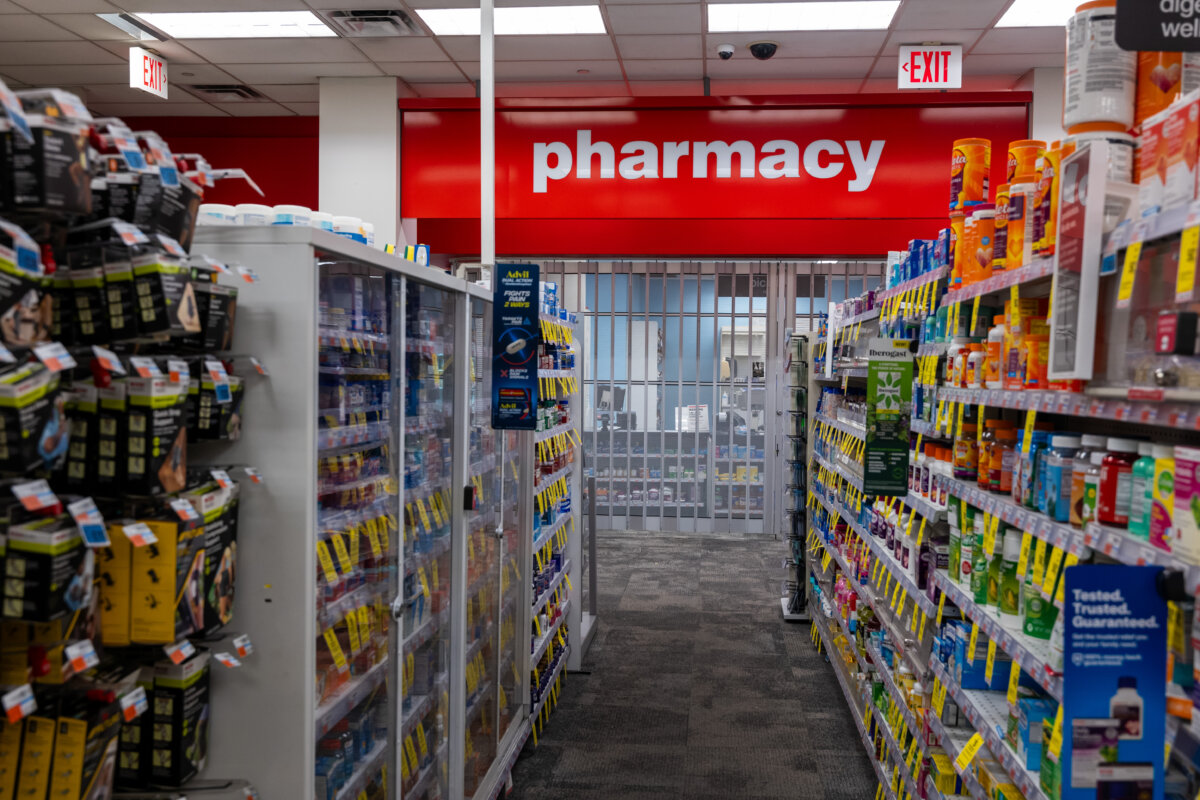
It’s no stretch to say that the most dangerous drugs on the market are those that Americans take every day. Generic medications account for more than 90 percent of prescriptions dispensed in the United States. In 2024 alone, Americans took 187 billion generic tablets and capsules, or roughly 550 pills per person. Unfortunately, these are also most prone to underperformance or contamination.
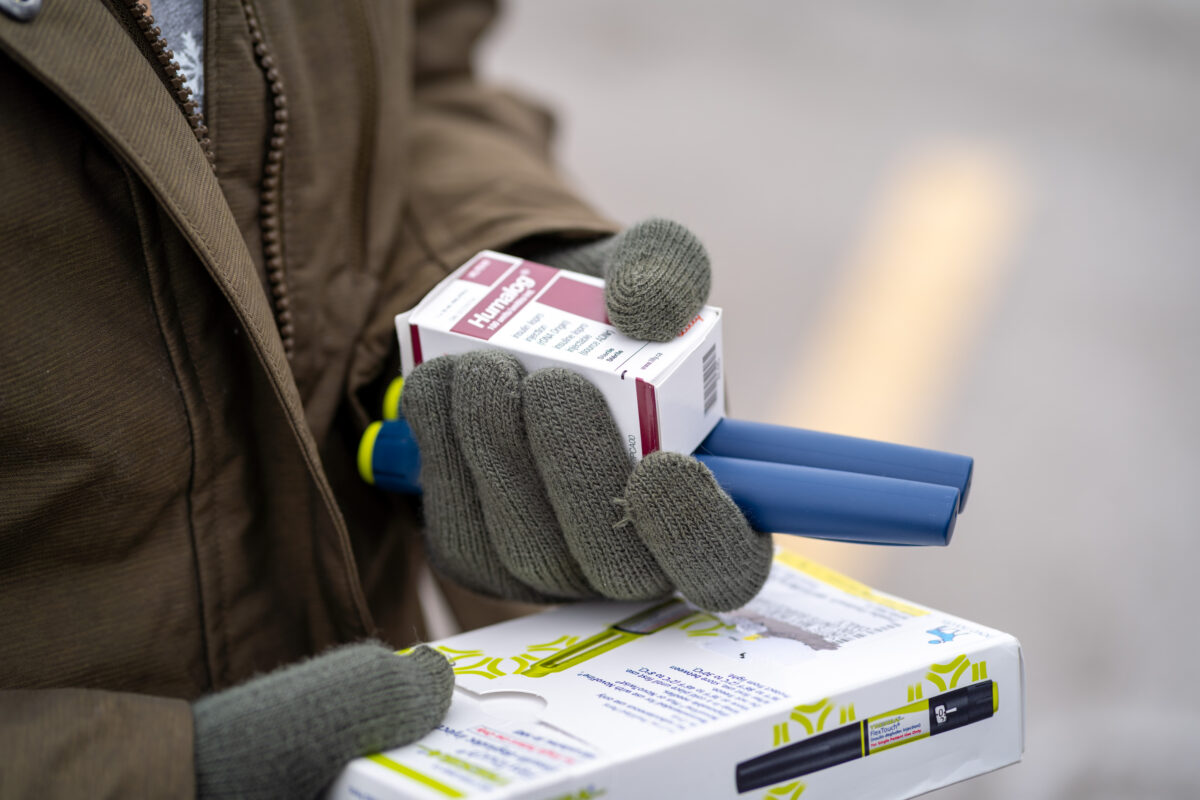
China has a near-monopoly on some of the most common medications used to manage widespread chronic diseases. Those include metformin for diabetes (of which China controls more than 80 percent of the global metformin API market), statins for high cholesterol, selective serotonin reuptake inhibitors for depression, blood pressure medications, and antibiotics.
A Poison Pill Collusion?
The consequences of unregulated or poorly regulated Chinese pharmaceutical manufacturing are not theoretical. They’ve already killed Americans.
The most egregious example is the 2008 heparin disaster. Baxter International sourced its blood thinner heparin from a Chinese facility in Changzhou. That facility’s crude heparin had been adulterated with over-sulfated chondroitin sulfate, a cheap substitute that costs approximately $20 per kilogram compared with $2,000 per kilogram for genuine heparin.
Congressional testimony described the cheap substitution problem in China as “a deliberate scheme,” with contamination traced to at least 12 Chinese source facilities and detected in 11 countries. The FDA had never inspected the Chinese plant before approving Baxter’s application to source its API from it. By the time the agency acted, at least 81 Americans were dead and 785 severely injured.
Evidently, the Chinese communist regime has no regard for American lives.
In 2018, the Chinese manufacturer Zhejiang Huahai Pharmaceutical was found to have contaminated valsartan, a widely prescribed blood pressure medication, with N-nitrosodimethylamine, a probable human carcinogen linked to liver, stomach, colorectal, and prostate cancer.
As unbelievable as it sounds, the contamination had been occurring for six years, since 2012. An FDA inspector visited the plant in 2017, documented serious deficiencies, and recommended a warning letter. The FDA declined to issue a warning letter and allowed the company to self-correct.
Even thereafter, the full recall didn’t come until July 2018. By early 2025, 1,303 claims remained pending in multidistrict litigation, with evidence that Zhejiang Huahai had destroyed discovery documents requested by plaintiffs’ counsel.
The Cost to American Health and Wallets
America’s pharmaceutical dependence on China is staggering and accelerating. U.S. pharmaceutical imports rose to $215 billion in 2024 from $73 billion in 2014.
And yet, drug shortages are common and rising.
So far, the number of active drug shortages is 223, up for the second quarter in a row, according to the American Society of Health-System Pharmacists. But thankfully, that number is lower than the all-time high of 323 in the first quarter of 2024. Nonetheless, the outcomes of these shortages are predictable: delayed surgeries, less effective alternatives, medication errors, and, in the most serious cases, preventable death.
What’s more, Americans already pay 2.78 times more for drugs than people in other developed countries. As tariffs and supply disruptions push costs higher, those prices will climb further.
Is America Losing the Biotech Race?
America’s pharmaceutical dependency extends beyond manufacturing. In 2024, China developed 30 percent of the world’s new innovative drugs, more than the entire European Union, according to the Information Technology and Innovation Foundation.
In 2025, Chinese biotech companies generated a record $135.7 billion in license-out transaction value, nearly triple that of the year before, according to data from the National Medical Products Administration. As a result, one-third of the new compounds in U.S. pharmaceutical pipelines now originate from Chinese companies.
In March 2026, Pfizer CEO Albert Bourla bluntly warned that for the first time in recent decades, “U.S. dominance in biotech technology is [being] challenged by a competitor, and that’s China.”
Former FDA Commissioner Scott Gottlieb has echoed the warning: “If we are not careful, every drug could be made in China.”
The Bottom Line
Communist China has deliberately weaponized pharmaceuticals. Every time a patient swallows a blood pressure pill, a diabetic takes metformin, or a hospital patient receives heparin, there is a meaningful risk that a Chinese facility was involved with no American oversight.
The heparin deaths in 2008. The valsartan cancer scandal from 2012 to 2018. The drug shortages hit record highs in 2024. These aren’t accidents; they’re policy.
The U.S. government is being urged to act, but will it?
Views expressed in this article are the opinions of the author and do not necessarily reflect the views of The Epoch Times.
 Friends Read Free
Copy
Facebook
Tweet
Friends Read Free
Copy
Facebook
Tweet