
Commentary
Canada’s federal NDP members had two paths to choose from after the last election. They could retain ideological purity even if it leaves them unelectable, or they could take a pragmatic stance and move to the middle in hopes of winning a significant parliamentary presence. With the performance they offered at their leadership convention and with the statements made by their newly crowned leader, Avi Lewis, it’s clear that the membership decided to take a sharp turn to the left.
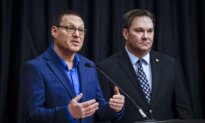
Accepting a role as the left-wing conscience in federal politics may suit the federal leadership and membership of the NDP well, but it could spell political disaster for the provincial wings of the party. Alberta NDP Leader Naheed Nenshi released a statement distancing himself from the federal party within hours of Lewis’s win. In Saskatchewan, NDP leader Karla Beck went a step further, issuing an open letter saying she refuses to even meet with Lewis unless he dramatically changes his policy stances. Both provincial leaders understand that it’s political suicide in their provinces to be associated with the anti-oil and gas position the federal NDP holds.
Conservative premiers in the Prairies didn’t waste any time using Lewis’s win as a hammer on the NDP leaders in their provinces. Premier Danielle Smith called Lewis a communist and tried to link him to Naheed Nenshi. Premier Scott Moe said, “Avi Lewis’ destructive policies are now the Saskatchewan NDP’s destructive policies.”
The problem the provincial NDP leaders have is that their parties are constitutionally bound at the hip with the federal entity. In the Alberta NDP, the second line of their party constitution affirms that they are a wing of the federal party, saying, “The Party shall constitute a section of the New Democratic Party of Canada.” The parties aren’t separate entities. One is a section of the other.
Not only that, but if there is a conflict between the federal and provincial wings, the provincial party must defer to the federal party. The federal party constitution states, “Each province of Canada shall have a fully autonomous provincial Party, provided its constitution and principles are not in conflict with those of the Federal Party.”
No other political parties in Canada operate this way. There are close associations between the federal Liberals and provincial Liberal parties, just as there are between the Conservative Party of Canada and other provincial Conservative parties, but they are all totally independent of each other. The NDP labels itself as a democratic socialist party and that means abiding by principles of centralized leadership.
The association with the federal NDP is going to hang like an anvil on the necks of the provincial NDP leaders with aspirations of winning government. The federal NDP has never been in contention to win enough seats to form a government, thus making it easier for them to write off that ambition. Provincial parties have won governments many times, though, and they did so through moderating their policies. It puts the tactics and goals of the provincial and federal wings in conflict with each other.
The members of NDP wings in the West must do some soul searching. They could decouple from the federal party through a provincial convention and write a new constitution for themselves, but such a move risks a rift within their own party. If Naheed Nenshi broke the Alberta branch of the party away from the federal entity, it’s possible a group of NDP loyalists would stick it out with a smaller party while Nenshi leads a more Liberal-style of party. That party balance of NDP and Liberals in Alberta kept the Conservatives in power from 1971 until 2015 as the left split the vote. Saskatchewan’s NDP runs a similar risk. (There have already been some moves by the Alberta NDP to separate from the federal one, with provincial members voting in 2025 to end automatic joint membership with the federal NDP.)
Perhaps with a little more time in his role as the federal NDP leader, Lewis will feel he must moderate some of his stances for the sake of the provincial wings of the party. Provincial leaders could be quietly reaching out to him to try to find a compromise.
The potential internecine battles within the NDP are a political gift for provincial Conservative leaders, but Lewis’s unapologetic hard-left approach is a problem for Pierre Poilievre. Conservative parties need a competitive NDP to split the progressive vote in order to win. The NDP under Lewis is unlikely to broaden the support of the party. Prime Minister Carney will be more than happy for Lewis to stay just as he is.
The NDP is a political force in Canada, but more as a spoiler for others than a party that may form a government. Avi Lewis may appeal to the ideological purists, but he could shatter the party’s provincial presence in the process. This year could be the beginning of the end of the NDP as Canada knows it.
Views expressed in this article are the opinions of the author and do not necessarily reflect the views of The Epoch Times.
 Friends Read Free
Copy
Facebook
Tweet
Friends Read Free
Copy
Facebook
Tweet