
Commentary
Canada has experienced unity challenges since the 1980s. Secessionism has flared and faded in Quebec and the West several times. But the country has never seen independence movements garnering support so sharply in multiple regions as we are right now. The Parti Québécois is surging in support in Quebec and is well poised to win this fall’s election. In Alberta, a referendum on independence is looking likely to be held on Oct. 19, and Saskatchewan has been seeing groups promoting secession grow and organize.
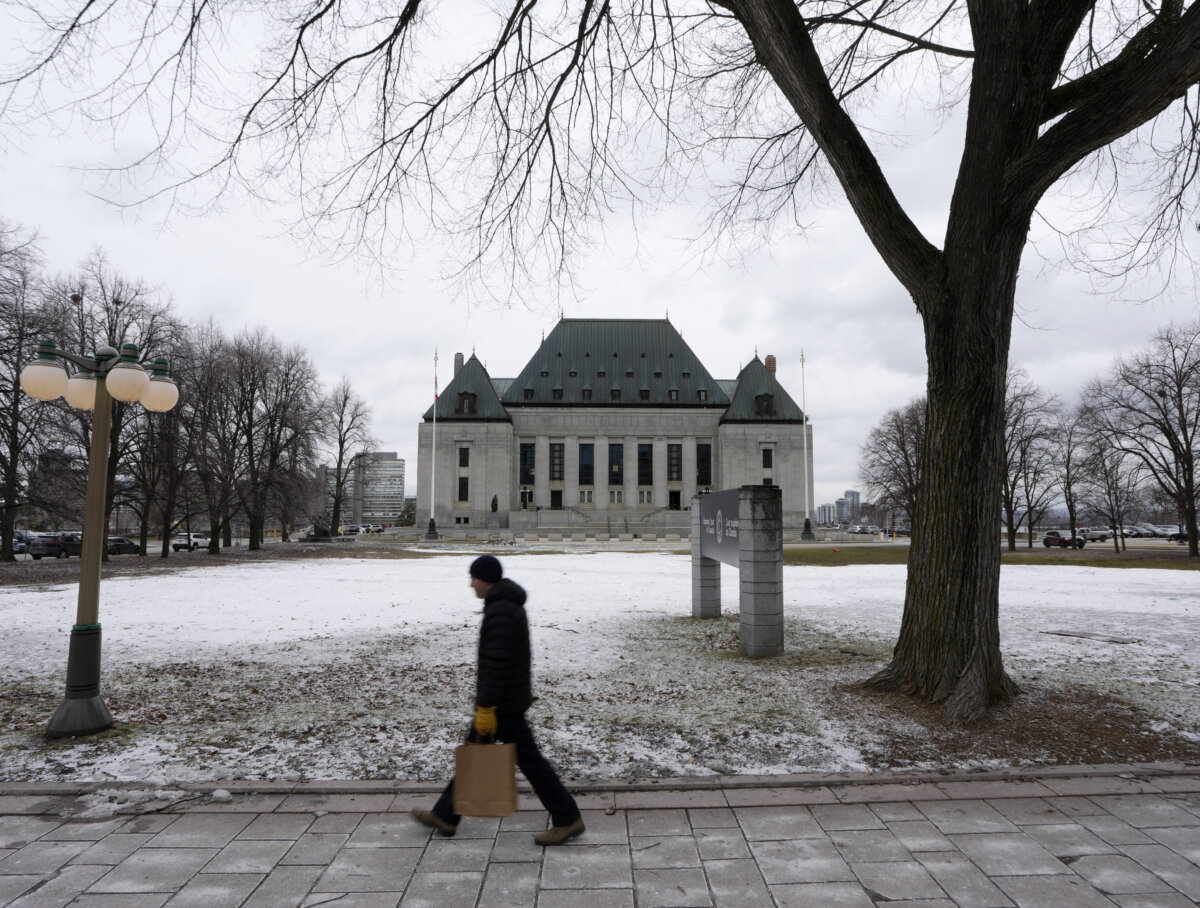
Rather than trying to address the issues at the root of growing national disunity, however, the federal government is pouring gasoline onto the fire by trying to defang the notwithstanding clause in the Charter of Rights and Freedoms. The government is an intervener in the English Montreal School Board v. Attorney General of Quebec case, which is currently before the Supreme Court of Canada, and is arguing that courts should be allowed to issue non-binding declarations on Charter violations.
It is an odd request, and if the Supreme Court grants it, Canada’s current unity challenges could explode into a full-blown crisis.
The notwithstanding clause was inserted as Section 33 in the Charter of Rights and Freedoms as a compromise by the federal government to get Alberta, Saskatchewan, Manitoba, and Newfoundland, who demanded it as a condition of signing on to patriate the constitution in 1982. Quebec didn’t participate in those negotiations, but ironically became the province to use the notwithstanding clause the most in subsequent years. The clause gives governments the ability to implement policies even if they run afoul of the Charter. It is considered a safeguard against activism from unelected judges and to preserve parliamentary supremacy. It puts Supreme Court justices at something of a conflict of interest when they are asked to rule on an item that holds their power in check.
The notwithstanding clause can be used after losing a court ruling on a policy, or it can be used pre-emptively when a policy is created by a government but is expected to run afoul of the Charter. Between 1982 and 1985, the Parti Québécois government inserted the clause into every piece of legislation it created. Alberta, Saskatchewan, and Ontario have all used the notwithstanding clause at times, too. It’s debatable whether the provinces should have applied the clause to the laws that they did, but it isn’t debatable that the use of the clause is within the constitutional authority of the provinces. To try to undercut that provincial right is to blow up the already shaky relationship some of them hold with Ottawa.
The notwithstanding clause isn’t something that applies to the Canadian Constitution—it is a part of the Constitution, and no changes should be applied to its use or existence without following the constitutionally entrenched formula for change. That means seven out of ten provinces, representing half of the population of the country, must support that change. The bar to change the constitution is set high for good reason. The document is supposed to protect citizens from overreach by the government or unelected judges.
In trying to change the notwithstanding clause in a backdoor way through the courts rather than through the proper legislative avenues, Ottawa is weakening the Constitution itself. By asking the Supreme Court (whose judges are appointed by Ottawa) to impose new substantive limits or oversight mechanisms that do not appear in the text of Section 33, the government is effectively asking the judiciary to rewrite the constitutional compromise that holds the federation together.
How can provinces and citizens be expected to respect the law of the land when the federal government won’t respect the spirit of it?
On top of all that, the Liberal Party will be debating a motion at its upcoming convention to use the power of disallowance to strike down provincial laws that may violate the Charter. The federal government hasn’t used disallowance since the 1940s, and for good reason. Such a move against provincial authority could shatter the country. While Justice Minister Sean Fraser has ruled out using disallowance, the fact that his party is discussing its use is putting provincial governments on edge.
With so much on its plate already, why is Ottawa seeming so eager to get into a pitched battle with the provinces?
If there are concerns over Quebec’s secularism law or Alberta’s dealings with teachers’ unions, it’s up to the citizens of those provinces to hold their provincial governments to account—not the federal government.
If Ottawa can’t resist the temptation to keep making power grabs upon provincial authority, it will unify citizens—but not in the way it may want. It will unify them under the banners of secessionist movements.
The federal government and the Supreme Court must leave the notwithstanding clause alone, or they could provoke a unity crisis that could lead to the end of the federation. They are playing with fire.
Views expressed in this article are the opinions of the author and do not necessarily reflect the views of The Epoch Times.
 Friends Read Free
Copy
Facebook
Tweet
Friends Read Free
Copy
Facebook
Tweet