
Commentary
The Liberal Party of Canada has long been a political chameleon. It has been able to pragmatically adapt to contemporary issues and position itself toward the political centre of things. When the party drifts too far to one side of the spectrum, as happened under Justin Trudeau, it can reinvent itself and reset the electoral clock, as it did with Mark Carney. It’s an infuriating ability for partisan Conservatives to watch, and it has kept the Liberals as the predominant party in power for decades.
The Liberals do have one ideological blind spot, though. That’s with gun control. The party has been trying to register, ban, or purchase legal firearms from Canadians for over 30 years with no success. Despite the constant failures of their firearm policies, the Liberals stubbornly march onward while neglecting the true source of firearms used in crimes.
In 1993, the Liberal government under Jean Chrétien introduced the national long-gun registry. The program was fiercely opposed in rural regions as well as by urban firearm owners. It was suspected that the registry was a precursor to future firearm bans, as had happened in Australia, where a registry led to blanket firearm bans and seizures. Canadian firearm owners were reticent to cooperate.
The registry ran into problems right out of the gate. The Liberal government assured Canadians the registry would cost a mere $2 million in tax dollars. It was a ridiculously low budget for such an ambitious endeavour, and bureaucrats were soon repeatedly asking for more funds. By 2002, the auditor general issued a report showing the registry would cost taxpayers over $1 billion by 2004. People were shocked, and demands mounted to end the registry. Undeterred, the Liberals literally doubled down, and the cost of the registry mounted to over $2 billion before it was finally scrapped by the Harper government in 2012. The registry’s budget had been blown by a whopping 100,000 percent!
Not only had the registry cost well beyond initial estimates, but it had failed to register nearly enough firearms to become an effective program. Only 5.8 million firearms were registered. Canada’s civilian population is estimated to own close to 13 million firearms. The accuracy rate of the registry was questioned as well. Despite all this, the Liberals refused to back down, and it took a change of government before the beleaguered registry was finally put to rest.
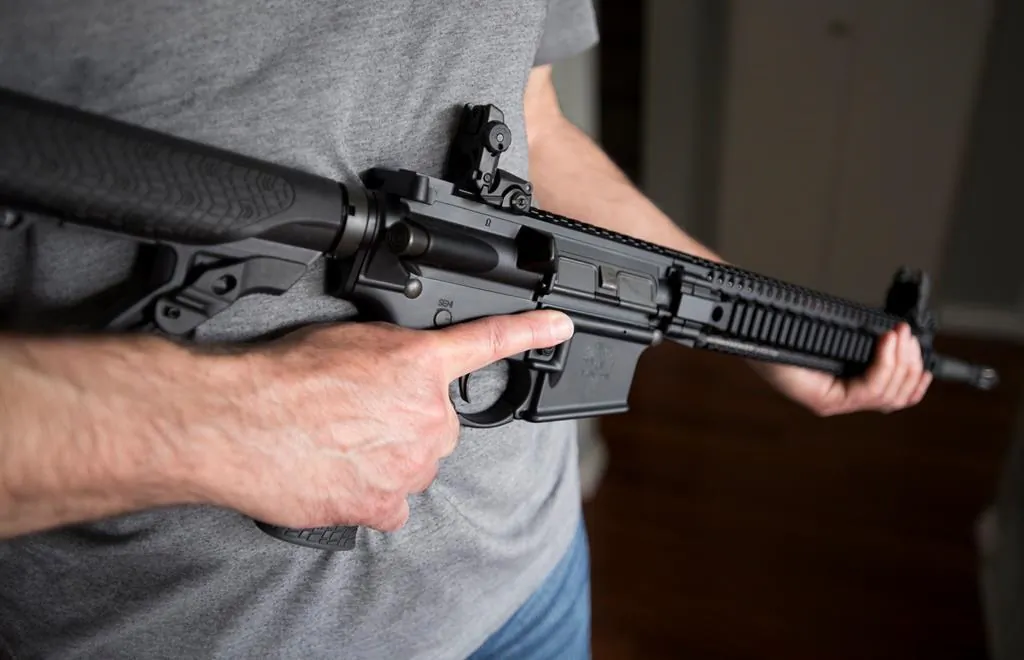
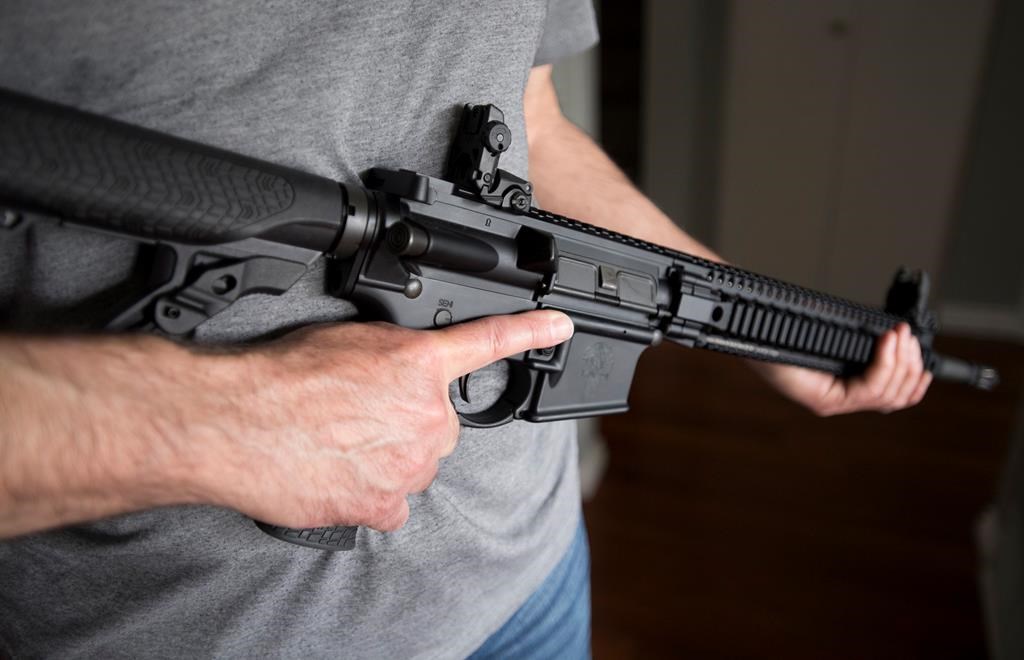
The Trudeau government set its eye on firearms after a mass shooting in Nova Scotia in 2020. Instead of trying to create a registry, though, the government created a list of newly banned firearms starting with 1,500 makes and models, and has continued to expand it to include over 2,500 types of firearms today. The list of banned firearms appeared arbitrary and was widely panned by firearm enthusiasts, as many of the banned models were simply sporting rifles with non-conventional appearances.
Without a registry, the government didn’t know who had which firearms and counted on people to simply turn their newly banned items of property over to police departments. Amnesties were offered, and the dates kept being extended as few firearms were turned in. Firearm owners appear ready to wait out the government.
Finally, the government offered buybacks and set deadlines in a pilot program. The trial encompassed the relatively small area of Cape Breton, Nova Scotia, and it was widely promoted and advertised. After six weeks, 16 people turned in a grand total of 25 guns. The pilot program wasn’t just a failure—it was an embarrassment.
Still, the Liberals remain undeterred. Public Safety Minister Gary Anandasangaree said, “As an overall pilot, I believe it is successful.” How bad must it get to be considered a failure?
Premiers on all sides of the political spectrum, from Danielle Smith to Wab Kinew, are saying they won’t cooperate with the program. Without provincial cooperation, the gun buyback scheme has little hope for success.
Most of the firearms used in crimes in Canada of late have been found to be smuggled in from the United States. Chasing after law-abiding firearm owners won’t have a significant impact on crime. In fact, it is drawing on limited police resources, which could be dedicated to battling gang warfare with smuggled guns.
The Carney government has an opportunity to make one of those policy pivots the Liberals are so well known for. They can drop the misguided and failing gun bans and announce a crackdown on illegally smuggled guns. It would save them resources and could actually impact violent crime levels in Canada.
Despite what appear to be clear benefits in dropping the gun bans, the Liberal government appears steadfast on the issue. It’s an ideological hangup that they just can’t seem to let go of. Hopefully, Carney’s instinct for political pivots kicks in so we don’t need to witness the continued failure of the program until a change of government takes place.
Views expressed in this article are the opinions of the author and do not necessarily reflect the views of The Epoch Times.
 Friends Read Free
Copy
Facebook
Tweet
Friends Read Free
Copy
Facebook
Tweet