
Commentary
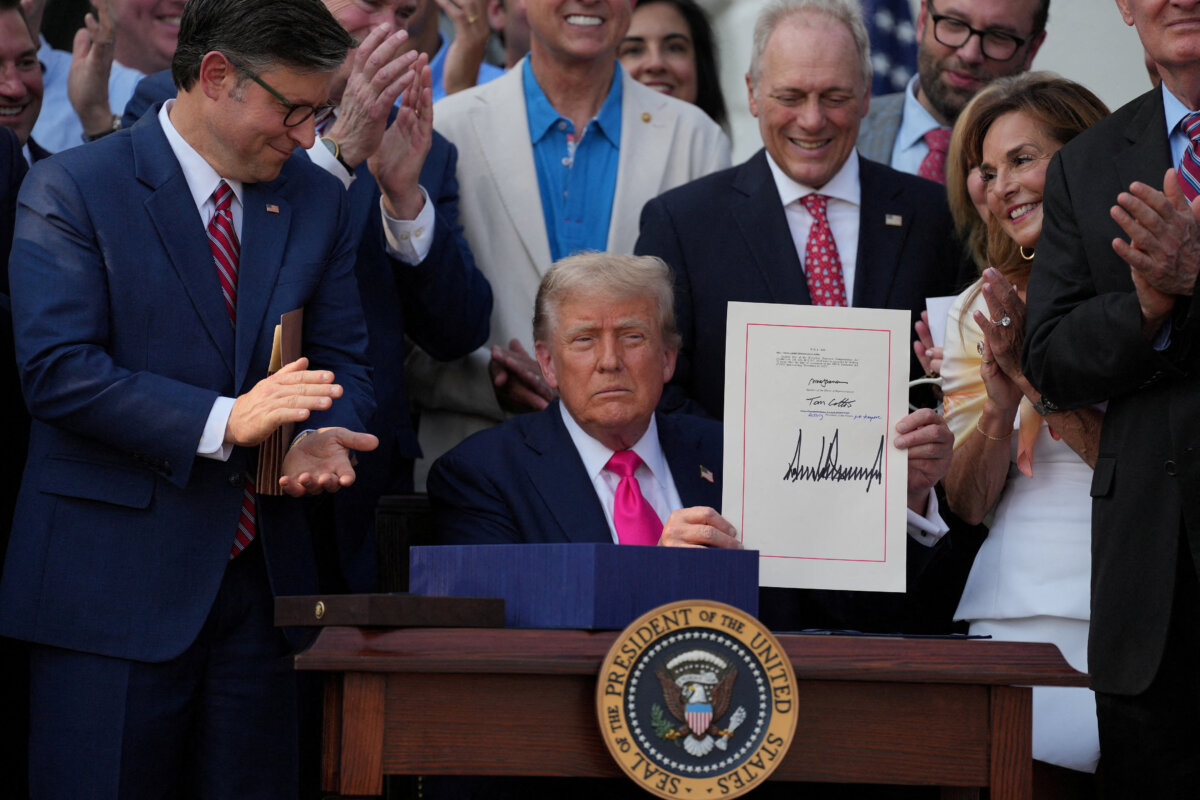
President Trump has been boasting that his One Big Beautiful Bill (OBBB) eliminated income taxes on Social Security. But did it? The answer is, sort of.
There is no explicit repeal of taxes on Social Security benefits in the OBBB. However, the law provides taxpayers over the age of 65 with an additional deduction of $6,000 for individuals and $12,000 for couples. This deduction is phased out based on income, starting at $75,000 for individuals and $150,000 for couples. The deduction decreases by 6 percent for income above these thresholds and is fully phased out at $175,000 for individuals and $250,000 for couples.
There are various estimates of how many people will benefit from this new provision. Most analysts expect that about 85 percent to 90 percent of Social Security recipients will pay no federal income tax on their benefits. However, approximately 40 percent of Social Security recipients were already paying no tax on their benefits because their income was below the taxable threshold. When you exclude that group, about 34 million seniors (roughly half of all Social Security recipients) are expected to see some reduction in their income taxes as a result of the new provision.
The downside is that this change puts more financial pressure on Social Security’s solvency. Taxes collected on benefits currently go directly into the program’s trust fund. It is estimated that the new deduction will reduce the fund’s income by about $30 billion annually.
Before this change, Social Security trust funds were projected to be depleted by 2033. Because benefits now exceed incoming tax revenue, the program will be unable to pay full benefits after that year. If Congress does not act, benefits will have to be cut by about 20 percent.
According to the Committee for a Responsible Federal Budget, the new provision likely moves that date forward by one year, to 2032.
Laying aside the fiscal implications, the provision is clearly a political win for Trump. CNN and MSNBC can, and will, relentlessly fact-check his exaggerated claim that the OBBB “eliminated taxes on Social Security.” But the roughly 34 million seniors who will see a smaller tax bill for this year are unlikely to be swayed by these technical clarifications. As political pundits often say, “If you are explaining, you are losing.”
As for Social Security hitting the wall in 2032 instead of 2033—well, Trump will be long gone by then. By the way, did I mention that the deduction expires in 2029? I wonder what the significance of that date is.
From RealClearWire
Views expressed in this article are the opinions of the author and do not necessarily reflect the views of The Epoch Times.
 Friends Read Free
Copy
Facebook
Tweet
Friends Read Free
Copy
Facebook
Tweet