
Commentary
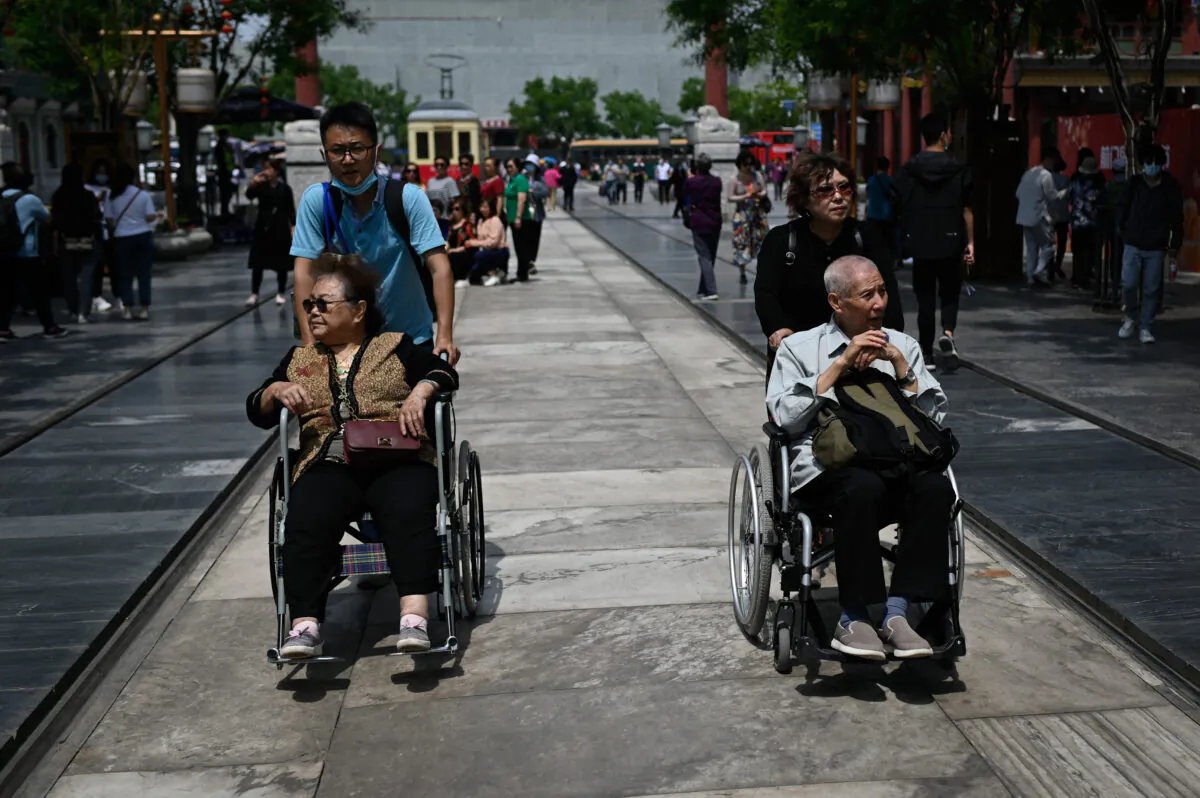
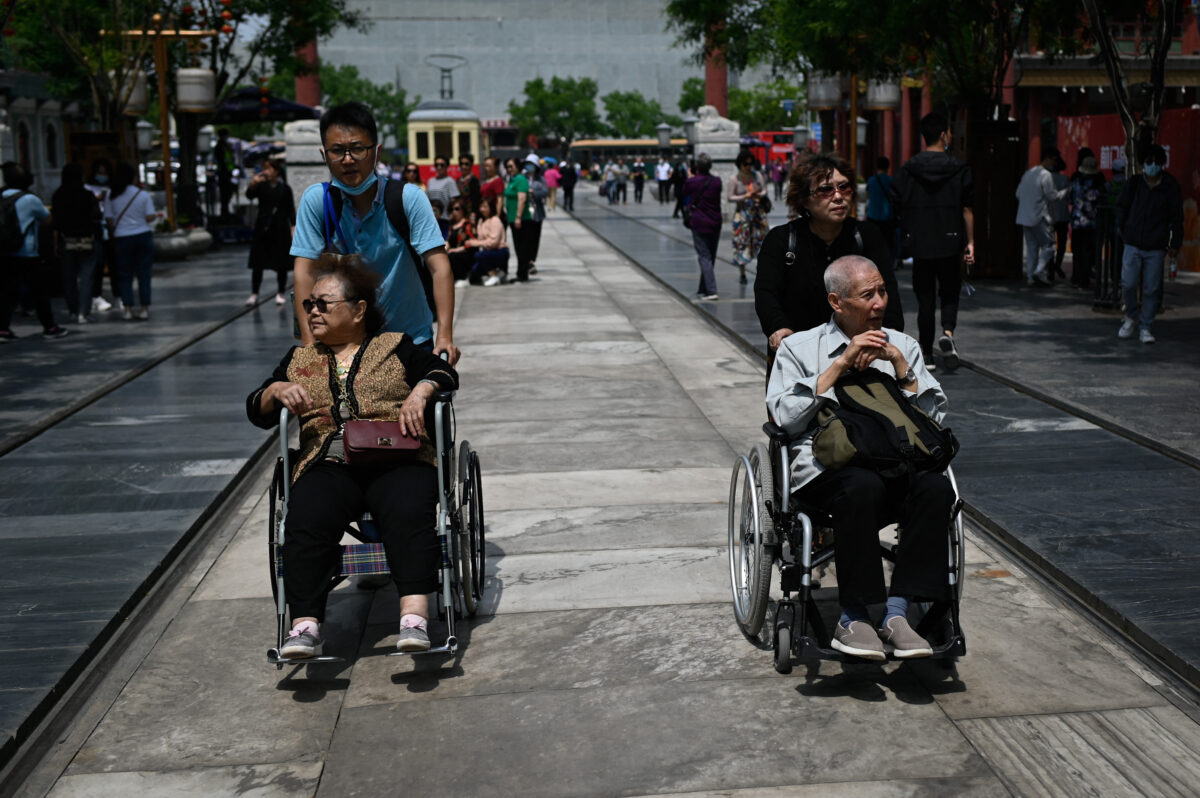
A major long-term obstacle to China’s economic development is its rapidly aging population. However, this isn’t a natural demographic shift; it’s a distorted result of the Chinese Communist Party’s one-child policy. This coercive, state-led policy has inflicted deep and lasting harm on Chinese society.
By the end of 2024, China’s population aged 65 and older had reached 220 million—15.6 percent of the total population—far exceeding the global average of 10.2 percent. This makes China home to the world’s largest elderly population.
This abnormal aging process in China is most evident in two ways.
First, the speed of aging is extremely rapid—more than twice the global average.
In 2020, China entered the category of an aging society, defined as having 7 percent to 14 percent of the population aged 65 and older. By 2021, it had already become an aging society, with seniors accounting for 14 percent to 20 percent of the population. According to China’s demographic scholars, the country is expected to become a “super-aged” society—defined as having more than 20 percent of the population older than 65—by roughly 2033.
From there, the elderly share will keep climbing—reaching 37 percent by 2060 and stabilizing briefly before rising again to about 46 percent after 2080. By then, nearly half of China’s projected 800 million people will be senior citizens.
Whereas most early-aging countries, such as France, Sweden, and the United States, took about 80 years to move from mild to severe aging, China will make the same transition in just 30 years. This trajectory reflects a severe distortion in China’s population structure.
Another key feature of China’s demographics is that it is aging before becoming rich.
Most developed countries become aging societies at a much higher level of prosperity. For instance, in 1950, approximately 8 percent of Americans were older than 65 years old, and the U.S. per capita gross domestic product (GDP) was about $1,974, equivalent to more than $25,000 today.
In contrast, when China entered its aging phase in 2000, its GDP per capita was less than $1,000. Its population began aging before achieving widespread wealth. By the time it became an aged society in 2021, its GDP per capita had improved to $12,618, although it was still far behind that of developed countries.
U.N. data show that China’s aging has far outpaced its economic development. Ironically, the Chinese Communist Party (CCP) justified the one-child policy as a means to boost economic growth—yet it has ended up stunting it.
The contrast between China and India makes the abnormality even clearer.
China and India are the world’s two most populous nations. The CCP came to power in 1949, while India became a republic in 1950. In 1951, India had a population of about 361 million, while China’s was a little more than 550 million. Both countries had very young populations. At the time, China’s median age was just 22.7, with only 4.4 percent aged 65 and older.
But decades later, China became an aged society, while India has remained remarkably young.
According to the World Bank’s collection of development indicators, in 2024, India’s elderly population share was reported at 7.1 percent. In contrast, official data show that China’s elderly population share reached 15.6 percent in the same year.
Moreover, the percentage of elderly Indians will remain below 20 percent until 2063 and will not reach 30 percent until 2100, according to the Pew Research Center, citing U.N. data. These trends indicate a favorable demographic future for India, as opposed to the crisis looming over China.
China’s population is facing low birth rates and rapid aging. Its median age is about 40, nearly 15 percent of its population is elderly, and fewer than 16 percent are younger than 15.
By comparison, today’s India often boasts about its young, abundant workforce. With a median age of about 29, India has one of the youngest populations in the world. Nearly a quarter of the population is younger than 14, and the elderly population is half that of China’s.
China’s aging crisis differs significantly from that of some developed countries that have long been considered aging societies. China’s challenge is primarily driven by a dramatic decline in births, a phenomenon that demographers call “bottom aging.” This occurs when the base of the population pyramid shrinks because of fewer births. In contrast, “top aging” occurs when longer life expectancy expands the top of the pyramid. In China’s case, falling birth rates are the key factor.
From 1953 to 1982, the proportion of the elderly in China increased only slightly, from 4.4 percent to 4.9 percent. But after the CCP strictly enforced its one-child policy starting in 1979, the percentage of the elderly population grew rapidly. By 2000, it had reached 7 percent, marking China’s entry into “mild aging.” In just 18 years, from 2000 to 2018, the elderly share rose by an additional 3.1 percentage points.
According to the CCP’s own statements in 2013, the one-child policy prevented more than 400 million births. Behind this figure lies an enormous amount of suffering. Harsh slogans from that time period offer a glimpse into the brutality of its enforcement: “Better to build 10 more graves than allow one more child,” “Abort it if it can be aborted; induce it if it can be induced; under no circumstance let it be born,” and “One person breaks the rule, the whole village gets sterilized.”
The CCP imposed draconian population controls on an entire society, stripping citizens of their reproductive rights and leaving behind a deeply distorted population structure.
The damage it has caused in China, including the rapid aging we see today, is not something one generation alone can fix.
Olivia Li contributed to this report.
Views expressed in this article are the opinions of the author and do not necessarily reflect the views of The Epoch Times.
 Friends Read Free
Copy
Facebook
Tweet
Friends Read Free
Copy
Facebook
Tweet