Commentary
One of the epigraphs to the late Richard Pipes’s great book “The Russian Revolution” cites the Russian minister of justice in 1915, who said, “The paralytics of the government are struggling feebly, as if unwillingly, with the epileptics of the revolution.”
Our contemporary political and cultural life often seems like this, although who the revolutionaries are and who the government is may often be unclear. Many governments appear paralyzed in the face of powerful intellectualized bureaucracies that have taken on the self-appointed task not only of reforming society, but also of creating the New Man, as the Bolsheviks did. The New Man is the one who will not merely act in the prescribed manner, but also think in it, which is to say that he will think what the intellectualized bureaucracy thinks and prescribes.
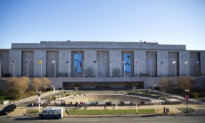
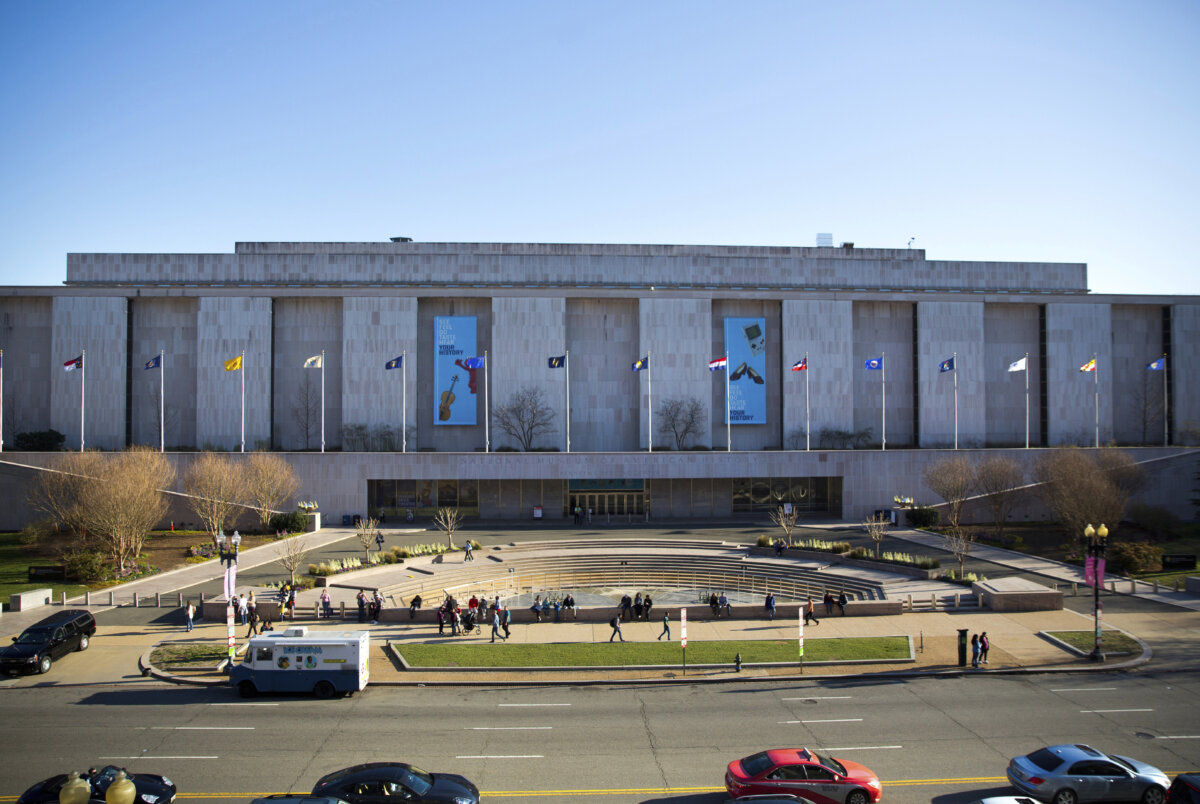
With regard to important U.S. museums, President Donald Trump is more of a revolutionary than a member of the government. He wants to reverse the current direction in which the museums have long been traveling. His frustration with them is understandable. Not in the United States alone, but elsewhere, visitors to museums are increasingly badgered by descriptions of contents that are about as dispassionately informative as those of the exhibits in the old Soviet museums of religion and atheism.
The choice of exhibits, moreover, is often politically extremely tendentious. This is so much the case that when one visits an exhibition in which neither the exhibits nor the labeling dwell too much on the oppressive conditions under which its exhibits were produced—an oppression that, of course, supposedly continues unabated—one almost sighs with relief.
The president has recently drawn attention to art and other exhibits at the Smithsonian Institution that appear to him to be anti-American, for example, a papier-mâché Statue of Liberty in which the figure of Liberty holds aloft a tomato rather than a torch and carries a basket of tomatoes rather than a tablet with the date of the Declaration of Independence. This statue was created by Kat Rodriguez in 2000 and was used by striking immigrant farmworkers to draw attention to their low pay and demand what they considered a fair wage.
Another work of art to which the president objected was a portrait of a black transsexual woman posing as the Statue of Liberty.
Both these works might be construed as casting ironic doubt on, or mocking, the U.S. ideal of liberty. However, this is not the only possible interpretation of them; they might rather be construed as a tribute to the ideal, however imperfectly achieved. No human ideal is ever fully reached, no history a straightforward ascent to perfection. A person who complains of a broken promise still believes in the possibility of that promise being kept.
A spokesman for the White House, Davis Ingle, is reported by The Washington Post as having written, “Taxpayer money should not be used for things that pit Americans against one another.”
This seems to me to bespeak a crude misunderstanding of what an institution such as the Smithsonian is, or at least ought to be, for. It is not for inspiring patriotism or confirming any particular view of history. Its criteria for collecting such items as the president has decried ought to be whether the objects collected will interest people a hundred years hence, either from a historical or from an artistic and aesthetic point of view.
The judgment of the curators may be mistaken, but it should not be criticized because the objects collected do not accord with one’s own political or ideological outlook. A more justified criticism would be that curators collected work that presented only one particular outlook because that outlook was the one to which they adhered and that they thus became propagandists rather than curators.
When I go to an exhibition of the jewels of Muslim art, I do not thereby believe in, or in any way support, Islam. While I detest the way in which transsexualism has been turned into an ideology—an ideology that I consider dull, false, mendacious, and harmful—I do not exclude the possibility that one or some of its adherents might produce artistic work of value that was inspired by it. In any case, its products will one day be of historic interest.
I would cite here the case of David King (1943–2016). A designer of pronounced left-wing views, he accumulated a quarter of a million posters, photographs, and visual documents from the Soviet Union, in which the crimes and lies of the regime could be traced. He published a famous book titled “The Commissar Vanishes,” which demonstrated from his own collection the way in which once prominent people were removed from photographs in Stalin’s time once they fell out of favor and were killed.
His collection of early Soviet propaganda posters was by far the finest in the world outside Russia, and it must be admitted that, however repugnant the regime, its early posters were both effective and of great aesthetic merit. On more than one ground, therefore, they deserved to be collected and preserved. King, who arranged for the Tate Gallery in London to inherit his collection, performed a signal service not only to his country, but also to the whole world, and this is so irrespective of howsoever detestable you think the Soviet regime, perhaps especially if you think it detestable.
We should try to not let ourselves be defined by our enemies, especially those with a silly or odious ideology. Of course, this is easier said than done. It is much easier, and always tempting, to fight an orthodoxy with an orthodoxy of one’s own, but no orthodoxy is the friend of freedom. The first freedom it destroys is your own.
The problem, to which I admit that I do not have a perfect solution, is this: The direction of many cultural institutions has been captured by those with deeply subversive ideologies. It is not surprising that they call forth a reaction that seeks to impose a different and opposite orthodoxy. Personally, I do not look forward to a world in which there is an endless cycle of ideological subversion and revenge, in which an ideology of one kind or another decides all questions. He who lives by politics dies by politics.
Correction: A previous version of this article misspelled the name of White House spokesman Davis Ingle. The Epoch Times regrets the error.
Views expressed in this article are the opinions of the author and do not necessarily reflect the views of The Epoch Times.
 Friends Read Free
Copy
Facebook
Tweet
Friends Read Free
Copy
Facebook
Tweet