
Commentary
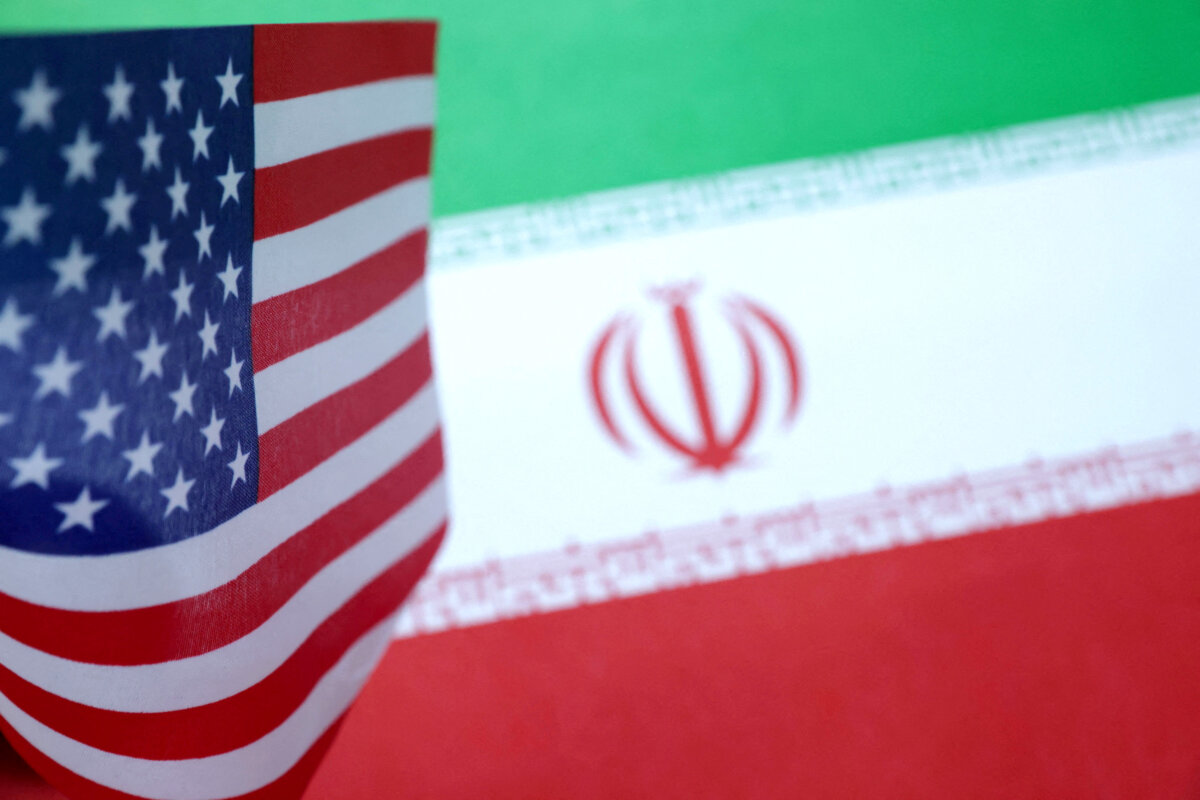
How close is the time when Iran—perhaps when its clerics, or at least the present clerics, have dropped from power—will anxiously court a revived strategic relationship with Israel and the United States?
Recent events have essentially eliminated the rationale that Iran had in 1979 under Ayatollah Ruhollah Khomeini for declaring the United States, Israel, and the UK—formerly Iran’s major allies—as the great enemies of Tehran.
Iran’s kinetic war with Israel disappeared from political and media priority almost immediately after the United States delivered its significant aerial strike against nuclear facilities on June 21 and June 22, with Operation Midnight Hammer. But that capping, for the time being, of military action involving Iran, Israel, and the United States did not resolve the question of the future of Iran and strategic events surrounding it.
The Shi’a clerical movement, which claimed power in the wake of the departure of the shah from power in February 1979, remains in power. Its bases of power, the Islamic Revolutionary Guard Corps (IRGC) and the paramilitary Basij corps, remain intact but are seriously weakened in physical and prestige terms by the Israeli operations—the Twelve-Day War (June 13–June 24). In some ways, it has become more ruthless and defensive in suppressing opposition from the streets.
There was no immediate or synchronized uprising of the Iranian population in the wake of the Israeli and U.S. attacks, largely because the IRGC and clerics under Supreme Leader Ayatollah Ali Khamenei had been so effective in breaking up any cohesiveness among opposition groups. However, as with the situation in the cities of the People’s Republic of China (PRC), the youth of Iran—largely the so-called Gen Zers and millennials—have become almost recklessly aggressive against security authorities. All they lack is leadership and coordination, and that could be triggered as the clerical authorities and IRGC continue to lose control.
With Iran and the PRC, it is less the drive to overthrow an administration—regardless of how despised it is—than it is the wait for the collapse of an overstructure that has lost viability, energy, and confidence.
The loss of leadership energy in Iran is now accelerating, but largely as a result of corruption and misgovernance in key areas, particularly in water supply. Iran derives most of its water for agriculture (which consumes some 90 percent of water supplies) and public use from underground aquifers that are now largely depleted, resulting in areas of land subsidence. Also, the management of river flows has been poor (again, as in mainland China), with the result that Iran’s five-year-plus drought is now reaching critical levels.
Significantly, the uncontrolled and unplanned dam-building program has become the focus in recent years of mass protests by farmers. The program began under the IRGC’s dam-building subsidiary firm, Sepasad, which was created in 1992 under the Khatam-al Anbiya Construction Headquarters. As with the PRC, Stalinist-type dam construction has created havoc.
Thus, the youth protests gain common ground with the farmers of Iran, who have long been major protesters against the ignorance of the clerical government in matters of national management. All of this, too, comes at a time when Russia—which needs Iran for its overland access to the Indian Ocean and Asian trade—is poorly placed to assist the clerics.
Iran is the critical access point to and from Central Asia, making it even more important to the United States than it was during the 1970s when the United States (under President Richard Nixon) and Iran (under the shah) were in strategic accord. So Iran is the prize: for the Central Asian states, Russia, and the United States.
Equally, Iran is seen as the competitor for geostrategic leverage by Turkey, which is the covert enemy not only of Iran but also of Israel, Egypt, Saudi Arabia, and the West. Turkish President Recep Tayyip Erdogan has no hesitation in expressing this explicitly.
Iran, today, in many respects has lost the rationale for its “war on the West,” which it began largely as a defensive measure. And it has great incentive to return to the prosperity of the 1970s that was in part derived from its strong relationship with Israel, the United States, and Western Europe.
If the clerics were capable of seeing this—and they may be too far lost to be able to change—they could possibly even volunteer to participate in the reconstruction and management of a post-Hamas Gaza under U.S. President Donald Trump’s Sept. 30 peace plan. If not, their successors in Tehran might be ready for that.
Views expressed in this article are the opinions of the author and do not necessarily reflect the views of The Epoch Times.
 Friends Read Free
Copy
Facebook
Tweet
Friends Read Free
Copy
Facebook
Tweet